Buy Tenor Banjo Music: The Collector’s Guide to Authentic Irish Recordings
- Paraic Mac Donnchadha

- 6 days ago
- 13 min read
The most soul-stirring Irish music isn't found on a generic "Best of Celtic" compilation in a tourist gift shop. If you want to buy tenor banjo music that actually carries the pulse of a late-night session, you have to look toward the masters who live and breathe the tradition. You've likely felt the frustration of downloading a track only to find it sounds thin; or worse, it completely lacks the rhythmic lift that makes the tenor banjo so iconic. It's a common struggle for collectors who crave the authentic "clack" of the plectrum and the nuanced phrasing of regional styles like East Galway.
We're going to bridge that gap today. You'll discover how to build a library of recordings that preserve the bright, punchy tone of the instrument while supporting the independent artists who keep these tunes alive. We will look at why physical CDs still hold a legendary status for collectors, especially when they come packed with detailed liner notes that act as a roadmap through musical history. From understanding regional ornamentation to ensuring you get high-quality audio files, this guide ensures your collection is as storied and vibrant as the tradition itself. Let's get into the heart of the rhythm.
Table of Contents
What to Look for When You Buy Tenor Banjo Music in 2026
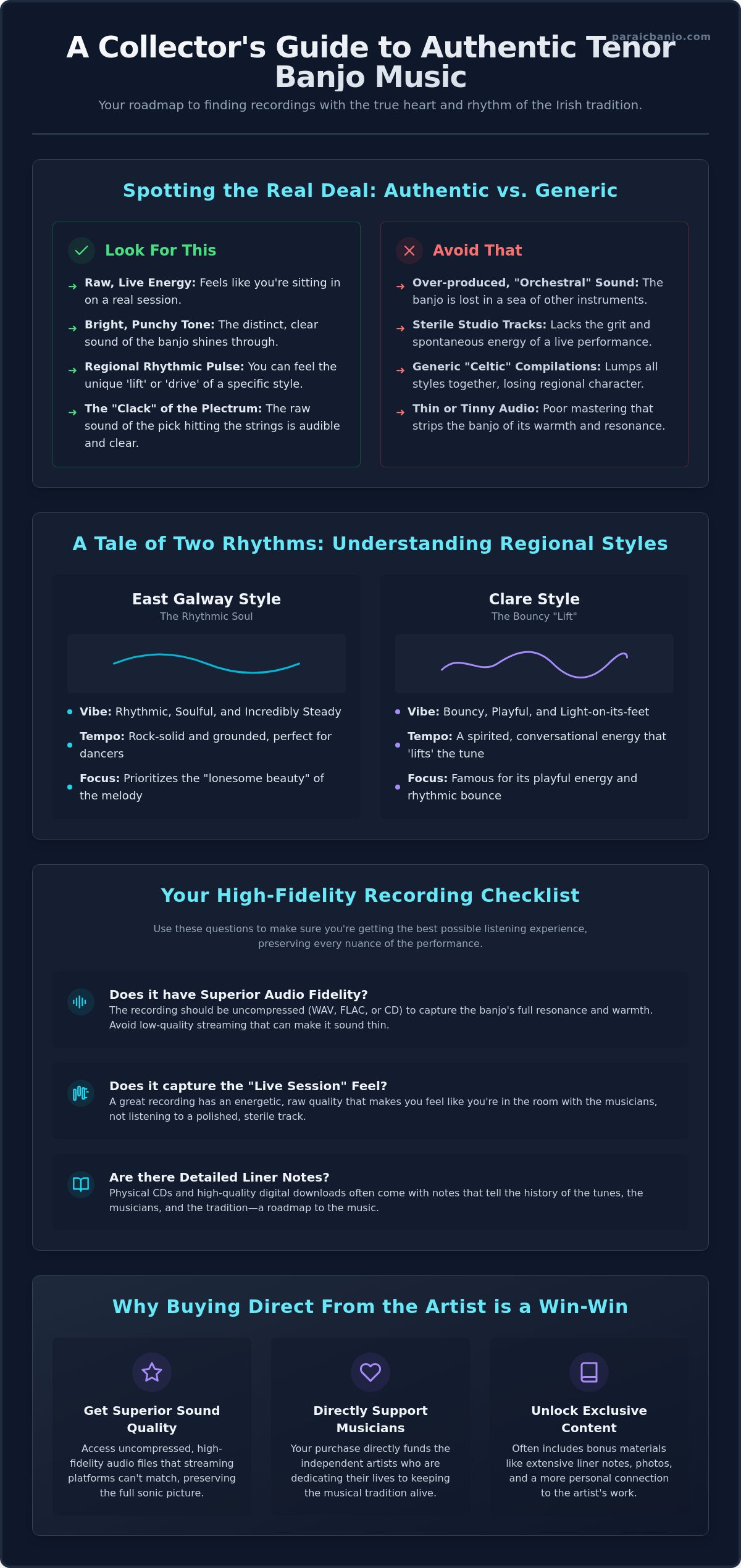
Searching for the right album can feel like wandering through a maze of over-produced background music. When you want to buy tenor banjo music, you're usually looking for something that bites. You want the snap of the strings and the drive of the rhythm. True Irish traditional music isn't a dusty relic; it's a living, breathing standard of authenticity. A great recording should feel like you've just pulled up a chair in a crowded pub in East Galway. It should be raw, energetic, and unapologetically honest. Avoid albums that sound too polished or "orchestral," as these often strip away the very grit that makes the banjo so compelling.
To truly appreciate what you're hearing, it helps to understand the history of the banjo and how it transitioned from a four-string rhythm instrument into a melodic powerhouse in Irish circles. This evolution is best heard in recordings that prioritize the "lift" of the tune. Look for artists who value the regional pulse over flashy speed. A recording that captures a lifetime of dedication, like the 18 tracks found on the album Not Before Time – 39 Years in the Making, provides a much deeper experience than a generic compilation ever could.
Instructional Books vs. Artist Albums
Don't confuse a tutorial with a performance. Method books are vital for learning fingerings, but listening to a master is how you learn the soul of the music. Artist albums offer both listening pleasure and immense learning value because they showcase "setting"—the way a tune is paired with another to create a set. When you buy tenor banjo music from a seasoned player, you're getting a curated journey through specific tune selections. These recordings teach you the subtle variations and ornaments that a book simply cannot describe. It's the difference between reading a recipe and tasting a meal prepared by a master chef.
The Importance of Audio Fidelity
The tenor banjo lives in a very specific frequency range. If the mastering is poor, the instrument can sound tinny, harsh, or thin. High-fidelity audio is non-negotiable for collectors. While compressed streaming is convenient, it often loses the "bottom end" of the banjo's resonance. This is why many audiophiles still view the physical CD as the gold standard. It offers uncompressed sound and space for detailed liner notes that provide essential historical context. If you prefer digital, always opt for high-quality Digital Tracks or full albums from sources that guarantee high bitrates. You want to hear every plectrum stroke as if it's happening right in front of you. It's about preserving the warmth of the wood and the bright ring of the strings. Don't settle for less than the full sonic picture.
Understanding Regional Styles: East Galway and Clare Banjo
When you decide to buy tenor banjo music, you aren't just purchasing a collection of notes. You're investing in a piece of geography. In the world of Irish traditional music, where a player is from often dictates the very soul of their rhythm. The "holy grail" for many serious collectors is finding that perfect balance between the East Galway and Clare styles. These aren't just labels on a map; they represent two distinct heartbeats. While many generic recordings lump everything together under a broad "Celtic" banner, the seasoned ear looks for the specific regional nuances that make a tune truly breathe.
Contrast is what makes this tradition so vibrant. The East Galway style is often described as rhythmic, soulful, and incredibly steady. It doesn't rush. It lingers on the beauty of the melody. On the other hand, the Clare style is famous for its "lift." It’s bouncy, light on its feet, and possesses a playful energy that feels like a spirited conversation. For a scholarly analysis of the Irish tenor banjo, researchers often explore how these pockets of style were shaped by the local community and the needs of the dancers. Páraic Mac Donnchadha spent 39 years honing his craft to bridge these two storied traditions, capturing the essence of both in a way that feels entirely natural.
The Rhythmic Soul of East Galway
The East Galway style is built on a foundation of "lonesome" beauty and a rock-solid tempo. It’s a style that prioritizes the integrity of the tune over flashy, unnecessary speed. If you're a session player or a fan of traditional dance, this is the music that keeps your feet grounded while your heart follows the melody. To get a deeper look at these rhythmic differences, you can explore this guide on East Galway vs Clare music. This steady pulse is what allows the banjo to be a driving force in a session without ever overpowering the other instruments.
Why Style Matters for Your Collection
Why should regionality matter for your library? It dictates the entire repertoire and the "feel" of the tracks you choose. A Clare-style recording might feature bouncy jigs that skip across the room, while an East Galway set might lean into a reel with a more grounded, driving pulse. When you look to buy tenor banjo music, seek out recordings that capture this authentic session atmosphere. It’s about more than just the audio; it’s about preserving the "old-school" rhythms that have been passed down through generations. If you want to experience this firsthand, Páraic's debut album offers a masterclass in how these styles can coexist, providing a rich, varied listening experience that honors the past while feeling incredibly fresh. Take a moment to listen to the nuances in his playing; you'll hear the history of the West of Ireland in every pluck.
The Checklist for a High-Quality Banjo Recording
When you're ready to buy tenor banjo music, don't just grab the first album with a green cover and a fiddle on it. A truly great recording is a curated experience that requires a specific set of ingredients to feel right. For collectors, the goal is to find an album that sounds like a living session rather than a sterile studio project. You want to hear the "clack" of the plectrum and the rhythmic drive that defines the Irish tradition. A checklist helps you filter out the generic noise and find the gems that actually belong on your shelf.
Start with the artist's pedigree. Has the musician spent decades in the tradition? For example, Páraic Mac Donnchadha's debut album was 39 years in the making. That kind of timeline isn't just a marketing point; it's a guarantee that every note carries the weight of a lifetime’s passion. You should also look for track variety. A high-quality collection shouldn't just be a wall of fast reels. It needs the contrast of bouncy jigs and stately hornpipes to show the full versatility of the four-string tenor. Before you buy tenor banjo music, check if the recording was done "live." This doesn't necessarily mean a concert with a cheering crowd, but rather that the musicians played together in the same room. This captures the infectious energy and subtle interplay that solo tracking often misses.
Capturing the Session Energy
Authenticity often lives in the "flaws." In a real Irish session, the music breathes. There's a pulse that comes from the banjo, fiddle, and piano working in sync. When you listen to a soulful banjo performance, you aren't just hearing a melody; you're hearing the conversation between instruments. The guest musicians should complement the banjo, not bury it. Look for albums where the accompaniment understands the regional pulse, providing a solid foundation for the banjo’s bright, punchy tone to shine through. It’s that raw, unpolished grit that makes a recording feel like home.
The Value of Deep Liner Notes
Purists and collectors know that the music is only half the story. The best albums act as historical resources. This is why detailed liner notes are essential. They tell you who the tunes came from, where they were learned, and why they matter to the artist. This context is what elevates a CD from a simple playlist to a piece of history. Citing sources is a long-standing tradition among Masters of the Banjo, as it honors the generations who kept these melodies alive. If you want to dive deeper into what makes a physical release special, you can explore our guide on the best traditional irish session music cd options for collectors. These notes turn your listening session into a masterclass in Irish culture. Don't settle for a digital file with no background; get the full story.
Why Buying Direct from the Artist is the Best Choice
Choosing where to spend your money is just as important as choosing what to listen to. In a world dominated by massive streaming platforms, the personal connection between the listener and the maker often gets lost in the shuffle. When you buy tenor banjo music from an independent artist's own site, you're doing more than just adding a file to your phone. You're ensuring that the tradition continues. You're funding the next project and helping a seasoned master keep their craft alive. It's about taking a stand for quality over convenience. It's about making sure the music you love has a future.
There's also a significant technical advantage to the direct approach. When you skip the middleman, you often get access to high-quality, uncompressed audio files. These files haven't been squeezed through a generic platform's processing, which means you hear the banjo's bright, punchy tone exactly as it was recorded in the room. This direct relationship also means you're the first to hear about new releases, limited editions, or stories from the road. You aren't just a customer; you're part of a dedicated community that values the weight of a 39-year musical journey.
The Independent Music Movement in 2026
Collectors in 2026 are increasingly turning their backs on giant, faceless platforms. These sites often take a massive cut of every sale, leaving the person who actually played the music with very little to show for their effort. By choosing to buy traditional irish music direct from artist, you make sure your support goes straight to the source. This direct support is what allows projects like "Not Before Time" to exist in their most authentic form. It’s a way to say that you value the decades of sweat and practice that went into every single track. It’s an investment in the heritage of the West of Ireland.
Exclusive Content and Limited Editions
There is a unique charm to holding a physical CD in your hands. While digital is great for on-the-go listening, the "Not Before Time" physical CD is a piece of art in itself. It’s not just about the plastic disc; it’s about the full historical context. You get the detailed liner notes, the stories behind the tunes, and the professional artwork that sets the mood for the music. If you want to order irish cd online, doing it through the artist's official storefront is the only way to guarantee you're getting an authentic copy. This isn't mass-produced stock sitting in a giant warehouse. It's a personal statement from the musician to you. Ready to add a definitive piece of East Galway history to your collection? You can get your copy of Not Before Time directly from the source and start your journey today.
Not Before Time: A Masterclass in the Irish Tenor Banjo
If you've been searching for a single project that encapsulates everything we’ve discussed, the regional pulse, the live energy, and the deep historical context, then look no further. Páraic Mac Donnchadha's debut album is more than just a collection of tunes. It is a landmark release that serves as a definitive statement on the instrument's role in the West of Ireland. When you want to buy tenor banjo music that carries the weight of a significant career milestone, this is the project that sets the standard. It isn't just a digital storefront item; it's an invitation into a storied musical tradition that has been decades in the making.
This album doesn't feature the sterile, over-produced sound found in many mass-market recordings. Instead, it captures the raw, infectious enthusiasm of a live session. By collaborating with a group of expert guest musicians, Páraic has created a full, resonant sound that mirrors the energy of a late-night session in a Galway pub. Whether you are a long-time collector or a newcomer to the tradition, this recording offers a rich, sensory experience that highlights the banjo’s bright, punchy tone without ever losing its rhythmic soul.
39 Years in the Making
The title isn't a clever marketing hook. This album truly took 39 years to reach your ears. Páraic spent those decades immersed in the sessions of East Galway and Clare, absorbing the nuances of every reel and jig. This long-term development has added a layer of legendary status to the debut. You can hear that history in the "Not Before Time" milestone. His playing style is a unique blend of the steady, soulful pulse of East Galway and the bouncy, lifted energy of the Clare tradition. It’s a rhythmic journey that feels deeply personal, balancing professional pride with a warm, inviting spirit that makes you feel like you're right there in the room.
What’s Inside the Collection?
Inside this collection, you'll find a massive 18 tracks that span the full spectrum of Irish traditional music. It’s a versatile mix of reels, jigs, and hornpipes that showcases Páraic's mastery over the four-string tenor. You can choose to buy tenor banjo music in the format that best fits your lifestyle, but we have a specific recommendation for true collectors.
Digital Album: Perfect for those who want high-quality, uncompressed files for immediate listening on the move.
Physical CD: The gold standard for purists. It includes the detailed liner notes and historical context we've discussed.
Individual Tracks: Ideal if you’re looking to add specific tunes to your practice repertoire.
Actionable Tip: If you're often on the go, start with the digital tracks to get the music into your ears immediately. However, to truly support the craft and access the full historical roadmap of these tunes, the physical CD is the way to go. It’s a piece of history you can hold in your hands. Don't wait another 39 years to experience this; get your copy today and join the tradition. Good luck with the listening!
Bring the Spirit of the Session Home
Collecting authentic music is about more than just filling a shelf. It's about preserving a pulse that has traveled through generations. You now know that the best recordings capture the raw interplay of a live session and honor the specific rhythmic nuances of places like East Galway. When you choose to buy tenor banjo music directly from an artist, you're becoming a vital part of that living history. It ensures the music remains as vibrant and punchy as the day it was first played. Páraic’s debut is a definitive statement of a lifetime's passion. With 18 tracks recorded live and a heritage 39 years in the making, it offers a depth that mass-market releases simply can't match. Whether you want the tactile experience of a limited edition physical CD with its rich liner notes or the immediate convenience of a digital album, the choice is yours. Explore the 'Not Before Time' Album and Buy Direct from Páraic Banjo. The tunes are waiting for you. Let’s keep the music playing!
Frequently Asked Questions
Where can I buy authentic Irish tenor banjo music online?
The most reliable way to buy tenor banjo music is directly through an artist's official website or specialized traditional music storefronts. This ensures you receive high-quality audio files or authentic physical copies while supporting the musician directly. For a landmark collection of East Galway and Clare styles, you can visit paraicbanjo.com to explore the latest releases.
Is it better to buy a physical CD or a digital download for Irish music?
Your choice depends on whether you value historical context or immediate portability. A physical CD is the preferred choice for collectors because it includes detailed liner notes that explain tune histories and sources. Digital downloads are excellent for convenience, allowing you to start listening to high-quality tracks on your devices the moment you complete your purchase.
What is the difference between 17-fret and 19-fret tenor banjo music?
The difference involves the instrument's tone and scale length, which is the distance between the nut and the bridge. A 17-fret banjo has a shorter neck and often produces a warmer, "plunkier" sound that some players find easier for fast fingering. The 19-fret banjo is the modern standard for Irish sessions, offering a brighter and more resonant tone that cuts through the sound of other instruments.
How can I support independent Irish traditional musicians directly?
You can support artists by purchasing music through their personal websites instead of using giant streaming platforms. Large platforms often take a significant cut of every sale in platform fees, leaving very little for the creator. Buying direct ensures the artist receives the maximum benefit, which helps them fund future projects and keep the tradition alive.
What are the best Irish banjo albums for beginners to listen to?
Beginners should seek out albums that emphasize a steady rhythm and clear melodic phrasing. Recordings by masters like Barney McKenna or the 18 tracks on Páraic Mac Donnchadha’s debut are perfect examples. These albums allow you to hear the nuances of the plectrum work and understand how different reels and jigs are traditionally paired together in sets.
Do digital music downloads include liner notes and tune histories?
Most digital downloads do not automatically include the extensive printed liner notes found in a physical CD case. If you are interested in the "source" of a tune or the stories behind the music, the physical version is usually the better investment. Always check the product description, as some artists may provide a digital PDF booklet with their full album downloads.
Is Páraic Mac Donnchadha's 'Not Before Time' album available internationally?
Yes, the album is available for international shipping to collectors worldwide. You can order the physical CD through the official website, though it is a good idea to check the current 2026 international shipping rates during checkout. Digital versions of the album and individual tracks are also available for instant access regardless of your geographic location.
What makes the East Galway banjo style different from others?
The East Galway style is characterized by a steady, soulful pulse and a grounded rhythmic drive. Unlike some regional styles that focus on a very light or bouncy "lift," the East Galway approach is often described as more emotive and "lonesome." It prioritizes the integrity and feeling of the melody, creating a powerful experience for both the listener and the dancer.


Comments