Exploring the Best Instrumental Irish Music: A Guide to Authentic Sounds in 2026
- Paraic Mac Donnchadha

- Jul 2
- 12 min read
What if that "Irish relaxation" playlist you've been looping is actually stripping the soul right out of the tradition? It's a common frustration to feel overwhelmed by generic sounds when you're simply looking for the best instrumental irish music that feels alive and honest. You want the snap of a well-played reel and the rhythmic lift of a jig that makes your heart race, not musical wallpaper that lacks a pulse.
I've spent nearly four decades immersed in these rhythms, and I know how hard it can be to distinguish authentic regional styles from commercial fluff. In this guide, you'll discover how to identify truly soulful recordings and connect with the history behind every string and bellows. We'll explore the technical mastery that defines the tradition and look at a landmark project, Not Before Time – 39 Years in the Making, which serves as a definitive statement of a life dedicated to the banjo. It's time to move past the generic and find the music that actually tells a story.
Table of Contents
What Defines the Best Instrumental Irish Music?
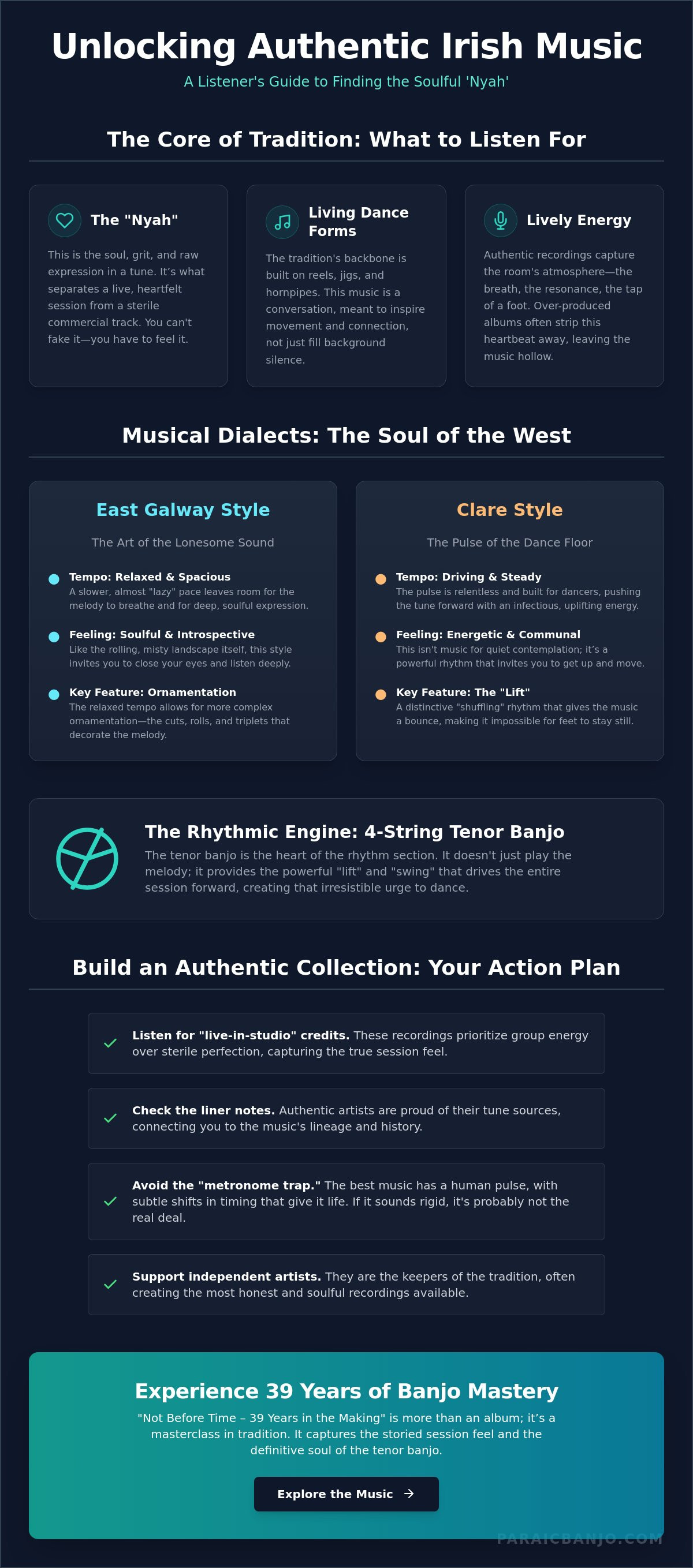
Authenticity in traditional music isn't about clinical perfection or expensive studio gloss. It's about a specific, almost magical quality we call the "nyah." This word describes the soul, the grit, and the raw expression found in the heart of a tune. When you're searching for the best instrumental irish music, you aren't just looking for notes on a page; you're looking for that feeling of a live, acoustic interaction that makes the hair on your arms stand up. It's the difference between a generic "Celtic" track designed for a spa and the driving, rhythmic pulse of a reel played in a crowded kitchen.
The true backbone of this heritage lies in dance forms like reels, jigs, and hornpipes. These aren't just historical artifacts. They are living, breathing conversations. To understand how these sounds evolved from ancient roots to the vibrant sessions we see today, exploring the History of Irish Music provides essential context. Real traditional music thrives in the "session," an informal gathering where musicians respond to one another in real-time. This organic energy is what you should seek out in a recording. If you want to hear this authenticity in its purest form, you can find it in the tracks of Not Before Time – 39 Years in the Making, which captures that storied session feel with every strike of the pick.
The "Lively Energy" Factor
The most honest recordings often capture the atmosphere of the room itself. You should be able to hear the musician’s breath, the subtle resonance of the wooden instruments, and even the rhythmic tap of a foot on a floorboard. These aren't mistakes; they are the heartbeat of the performance. Over-produced albums often strip these away, leaving the music feeling hollow. Actionable tip: When browsing for new albums, look for "live-in-studio" credits. These recordings prioritize the collective energy of the performers over individual track editing, resulting in a much more infectious sound.
Melody vs. Rhythm: A Delicate Balance
In the Irish tradition, instruments like the tenor banjo, fiddle, and flute do double duty. They carry the melody, but they also provide the drive. This is often called the "lift" or "swing" of the music. It's a rhythmic bounce that makes it impossible to keep your feet still. Avoid the "metronome trap," where music is technically flawless but sounds stiff. Instead, listen for subtle variations in timing and ornamentation that give a tune its unique character. If you're ready to experience this balance for yourself, you can explore individual digital tracks from my latest collection to hear how rhythm and melody intertwine.
The Rhythmic Soul of the West: Regional Styles Explained
Think of regional styles as musical dialects. Just as a Dublin accent sounds nothing like a Cork one, the way a musician from Galway "speaks" through their instrument is worlds apart from someone in Clare. If you're hunting for the best instrumental irish music, you need to know which dialect speaks to your soul. This isn't just academic trivia; it's the secret to building a collection that has depth and variety. When you can hear the difference between a rolling Galway reel and a driving Clare jig, the music stops being a background blur and starts becoming a story.
Understanding these roots makes you a far more discerning listener and collector. It allows you to appreciate the technical choices a musician makes, like why they might slow down a tune to let the melody breathe or why they push the rhythm to drive a dance. It’s about moving beyond the surface and connecting with the generations of players who shaped these specific sounds.
East Galway: The Art of the Lonesome Sound
East Galway is often celebrated for "The Art of the Lonesome Sound." It’s a style defined by a relaxed, almost lazy tempo that creates space for deep, soulful ornamentation. Ornamentation refers to those little extra notes, such as cuts, rolls, and triplets, that decorate the main melody. Because the pace is slower, the musician can pack in more feeling and complexity. The music feels like the landscape itself; rolling, green, and slightly misty. For a much deeper dive into these nuances, check out my guide on East Galway vs Clare music.
The Pulse of Clare
Then you have the Pulse of Clare. This is music built for the floor. It’s famous for its "lift" and a distinctive "shuffling" rhythm that makes it impossible for dancers to stand still. In Clare, the relationship between the music and the traditional set dances is inseparable. The pulse is steady and driving, pushing the tune forward with an infectious energy. While East Galway invites you to listen, Clare invites you to move. In the hands of a seasoned player, these two styles often blend, creating a sound that is both technically rich and rhythmically powerful.
To become a better collector, try this: listen to the same tune played by musicians from different counties. You’ll notice how the "swing" changes. This is a great exercise when you are Curating Irish Music for your own library. It helps you move past generic playlists and find artists who truly represent their roots. If you want to hear how these regional influences come together after a lifetime of playing, you can explore the digital tracks on my debut album, where the East Galway lonesome sound meets the driving rhythm of the session.
The Tenor Banjo: A Masterclass in Rhythmic Instrumentation
If you've ever sat in the corner of a pub during a lively session, you've felt the tenor banjo. It isn't just a melody instrument; it's the engine room. It drives the whole room. While many people searching for the best instrumental irish music might assume all banjos are the same, the Irish tenor banjo is a different beast entirely from its American bluegrass cousin. It provides a sharp, percussive snap that cuts through the sound of fiddles and flutes, giving the music its characteristic drive.
In the Irish tradition, we use a 4-string tenor banjo played with a single plectrum, which is just a fancy word for a flat pick. This choice is intentional. Unlike the finger-picked 5-string style used in bluegrass, the plectrum allows for a rhythmic heartbeat that mimics the pulse of a dancer’s feet. It’s about more than just playing the notes; it’s about the strike and the lift that follows.
From New York to Galway: A Brief History
The banjo’s journey into the heart of Ireland is a fascinating story of migration. It actually started in the jazz bands of New York in the early 20th century. When Irish immigrants returned home, they brought these loud, metallic instruments with them. Musicians quickly realized that the banjo’s percussive nature was perfect for the complex Celtic reels and jigs played in large dance halls. To understand how these instruments fit into the wider tradition, reading about What Defines Traditional Irish Music helps connect the dots between ancient oral traditions and the modern session instruments we love today.
What to Look for in a Banjo Soloist
A great banjo soloist makes the instrument "sing." Even though the banjo is naturally percussive, a master can use soulful phrasing to make a slow air sound as fluid as a human voice. Clarity of note is the first thing you should listen for. Even at high speeds, each note should be distinct and crisp. The right hand is everything here. It creates the "backbeat," that subtle emphasis on the off-beat that makes you want to tap your foot. Without that rhythmic precision, the music loses its soul.
Actionable Tip: When you're listening to the best instrumental irish music, keep your ears open for "triplets." These are rapid-fire, three-note bursts played on a single beat. They are the signature of a master banjo player. If the triplets sound muddy or rushed, the soul of the tune is lost. If you want to hear this technical precision in action, you can explore the individual digital tracks from my debut album, Not Before Time – 39 Years in the Making. It’s a project that captures nearly four decades of refining that specific rhythmic snap.
How to Curate Your Own Collection of Authentic Irish Music
Building a library of traditional music is like gathering stories for a long winter’s night. You don’t just want any sound; you want the best instrumental irish music that carries the weight of history and the joy of the session. To find these gems, you have to look beyond the "top hits" lists on streaming platforms. Those lists are often curated by algorithms, not by people who have spent their lives in the corner of a pub with a banjo in their lap. Real curation starts with looking for the source of the tunes. Authentic recordings always credit where the music came from, whether it was learned from an old neighbor or a legendary fiddle player from forty years ago.
I always suggest prioritizing independent releases. When an artist sells direct, they aren’t trying to polish the soul out of the music to fit a commercial radio format. They are giving you the "nyah"—that raw, honest energy we talked about earlier. Supporting the artist directly is the only way to ensure these niche traditions survive for another generation. It keeps the music in the hands of the players rather than the corporations.
The Purist’s Checklist for New Albums
When you're browsing for something new, look for these markers of quality. Does the album feature traditional tune sets, like three reels played in a row with increasing energy? Are the instruments purely acoustic and clearly identifiable? A master musician will usually explain their personal connection to the tunes in the notes. For a list of specific recommendations to get you started, I’ve put together a guide on Exploring the Best Traditional Irish Session Music CDs for Collectors in 2026. It highlights recordings that capture that elusive "live" feel without the distraction of artificial reverb.
Buying Direct vs. Streaming
Streaming is convenient, but it often fails the music. The compressed audio on most sites can’t capture the subtle resonance of a well-made tenor banjo or the sharp snap of a plectrum on a string. High-quality digital downloads, like FLAC or WAV files, offer a far superior listening experience. Even better, physical CDs come with detailed booklets that provide historical context you just can’t get on a screen. If you're unsure where to start, follow this how to buy traditional irish music direct from artist guide to ensure you’re getting the best audio quality possible.
If you're ready to add a definitive piece of East Galway tradition to your library, you can buy the Not Before Time – 39 Years in the Making Physical CD or Digital Album directly from my store today. Every track is a celebration of the music I've lived and breathed for nearly four decades. It’s an easy way to ensure your collection starts with a foundation of true authenticity. Happy listening!
Not Before Time: Experience 39 Years of Banjo Mastery
After nearly four decades of playing in kitchens, pubs, and on festival stages, I finally felt the time was right to put my own definitive statement on record. Not Before Time – 39 Years in the Making is more than just a debut album. It’s a collection of stories, friendships, and technical refinements that could only come from a lifetime of immersion in the East Galway and Clare traditions. When people ask what defines the best instrumental irish music, my answer is always the same: it’s the sound of a musician who has stopped trying to impress and started trying to express. This album is the result of that long, patient journey.
Recording this project wasn't about studio perfection. It was about capturing the raw, live energy of a real session. With 18 tracks of pure, rhythmic banjo, I wanted to showcase the "lift" that keeps a room moving. I was joined by world-class accompanists who understand that the banjo is the engine room, ensuring every reel and jig has that essential driving heartbeat. If you’ve been searching for a recording that feels like sitting in the middle of a legendary session, this is it.
Inside the 18 Tracks
The album features a carefully selected mix of driving reels and bouncy jigs. I’ve spent years honing these sets, and each one has a specific "pulse" that honors the dancers who originally inspired them. One thing I’m particularly proud of is the extensive liner notes. As an educator at heart, I felt it was vital to preserve the history behind these tunes. You’ll find background info on the musicians who taught me and the regional styles that shaped my pick-work. It’s a balance of technical brilliance and a warm, inviting spirit that makes the tradition feel accessible to everyone.
Own a Piece of Musical History
This project is available in formats that respect the listener's preference for quality. You can choose a limited-edition physical CD, which includes the full booklet of historical notes, or a high-quality digital download. Actionable Tip: When you get your copy, start with Track 1. It’s designed to hit you with that immediate rhythmic "lift" that defines my style, setting the tone for the entire musical journey. Ready to hear the real thing? You can order "Not Before Time – 39 Years in the Making" directly from Páraic here. It’s a relief to finally share this work with you. I hope it brings as much joy to your ears as it has to my hands over the last 39 years. Enjoy the tunes!
Start Your Journey into Traditional Rhythms
You’re now equipped to look past the generic playlists and find the music that truly breathes. Remember to listen for that soulful "nyah" and the distinct rhythmic dialects that make East Galway and Clare music so unique. By choosing independent artists and high-fidelity recordings, you’re doing more than just listening; you’re helping a storied tradition thrive. Finding the best instrumental irish music is about connecting with the pulse of the performer and the history they carry in their hands. It’s been a relief and a joy to finally put my own journey into words for you.
My debut album, Not Before Time – 39 Years in the Making, was created specifically to bridge the gap between commercial sound and authentic tradition. It features 18 tracks recorded live with expert musicians to capture the real session spirit, complete with detailed historical liner notes that explain the roots of every tune. Bring the heart of Ireland home—Order "Not Before Time" on CD or Digital here. Take these tunes with you and let the rhythm of the West become a part of your daily life. Keep the music alive and enjoy every strike of the pick!
Frequently Asked Questions
What is the most popular instrument in Irish music?
The fiddle is widely considered the most popular instrument in the tradition, but the tenor banjo has firmly established itself as the engine room of the modern session. Its sharp, percussive snap provides a rhythmic clarity that helps define the best instrumental irish music today. While the fiddle carries soaring melodies, the banjo adds the driving heartbeat that keeps the dancers on the floor.
How can I tell if an Irish music album is "authentic"?
Authenticity usually starts with the liner notes; look for recordings that explicitly credit the "source" of their tunes. Truly traditional albums prioritize acoustic instruments and avoid heavy electronic production or artificial reverb that masks the natural sound. If an artist explains their regional style or the history of the tunes they play, you've likely found a recording with real soul and integrity.
What is the difference between a jig and a reel?
The main difference lies in the time signature and the resulting "feel" of the music. A reel is played in 4/4 time, creating a steady one-two-three-four pulse that feels like a constant forward drive. A jig is played in 6/8 time, giving it a characteristic bouncy or "triplet" rhythm. Think of a reel as a brisk walk and a jig as a light, rhythmic skip.
Is the tenor banjo hard to learn?
It certainly requires dedication, particularly when mastering the rapid-fire right-hand "triplets" that define the Irish style. While the left hand handles the melody, the right hand provides the rhythmic lift that makes the instrument sing. It is an incredibly rewarding choice for anyone who loves the intersection of melody and percussion. Just remember that patience is your best friend when starting out.
Why should I buy music direct from the artist?
Buying direct ensures that the musician receives the majority of the financial support, which is vital for preserving niche traditions. It allows artists to fund future projects and continue recording rare tune sets that might otherwise be lost. When you bypass the big streaming platforms, you are making a personal investment in the survival of the best instrumental irish music and its history.
What makes East Galway music different?
East Galway music is famous for its relaxed tempo and "lonesome" melodic quality. Unlike high-speed styles found in other regions, this tradition emphasizes soulful ornamentation and complex variations. It is a style that invites you to sit back and really listen to the nuances of the melody. This slower pace allows the musician to pack more emotion into every single note.
Can I download traditional Irish music in high quality?
Yes, and you absolutely should if you want to hear the full resonance of the instruments. Most independent artists offer their work in FLAC or WAV formats, which provide far superior sound quality compared to the compressed audio of standard streaming services. These high-fidelity files capture subtle details, like the strike of a plectrum or the breath of a flute player, that make a recording feel alive.


Comments