Notable Debut Albums in Irish Traditional Music: A Collector’s Guide
- Paraic Mac Donnchadha

- Jul 6
- 13 min read
The most legendary Irish traditional albums weren't born in a high-tech studio; they were forged over decades in the crowded backrooms of rural pubs. If you've ever felt the frustration of hitting play on a folk playlist only to hear over-produced tracks that lack the grit of a real session, you aren't alone. Finding the notable debut albums in irish traditional music that capture the "pure drop," or the authentic, unadulterated sound of the tradition, can be a challenge when you're wading through commercial noise.
This guide will help you cut through that confusion and discover the landmark recordings that shaped the instrumental tradition. You'll learn exactly how to spot the difference between a commercial product and a lifelong musical statement. We'll break down the technical nuances of solo fiddle and banjo playing, explore the driving lift of Clare versus the smooth, melodic flow of East Galway, and show you why those detailed liner notes are your best friend for building a serious collection. Whether you're looking for a physical CD to treasure or digital tracks for your next practice, understanding these roots changes how you listen forever. It's time to find the music that truly speaks to the soul of the craft.
Table of Contents
What Makes an Irish Instrumental Album Truly Essential?
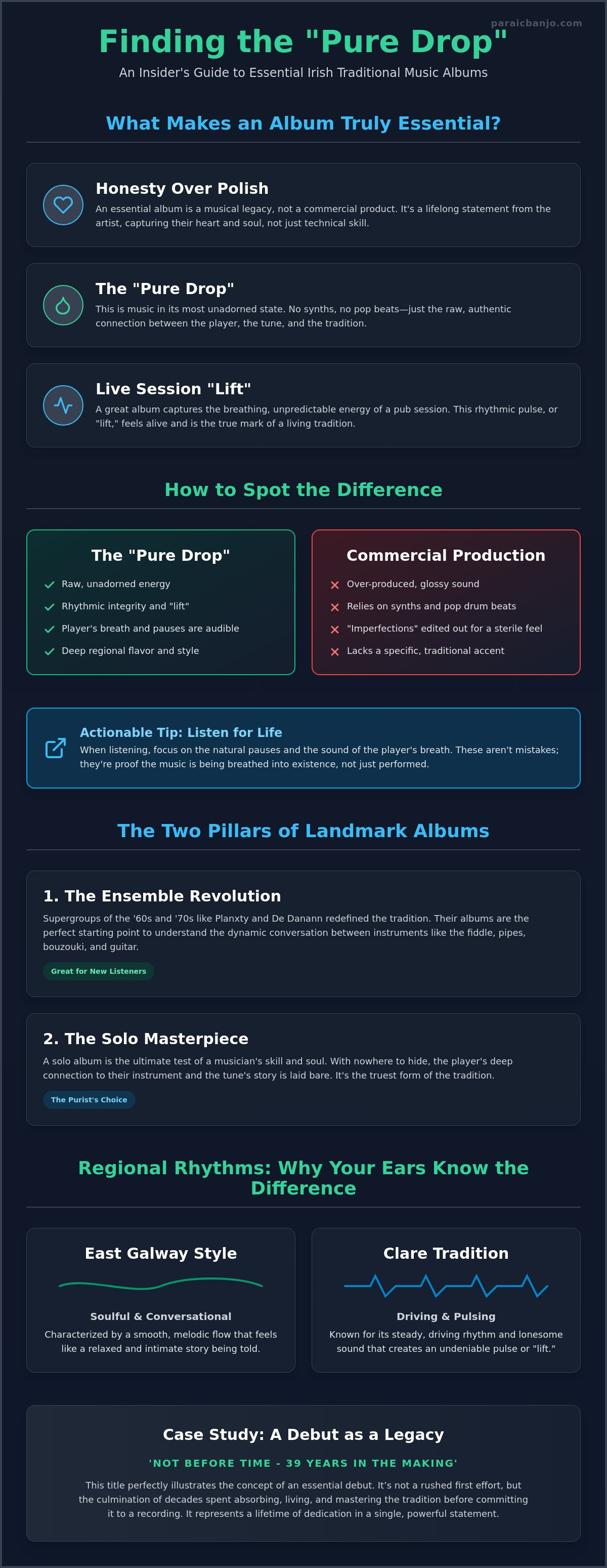
In the world of trad, an "essential" recording isn't defined by chart positions or glossy production. It's defined by honesty. When we look at the most notable debut albums in irish traditional music, the common thread isn't how fast the fingers move, but how much of the player's heart is laid bare on the track. These recordings act as a definitive statement, often representing a lifetime of dedication rather than a trendy experiment. They aren't just studio projects; they're legacies caught in amber. To be truly essential, a debut must carry the weight of tradition while still sounding like a fresh, urgent conversation between the artist and their instrument.
The Magic of the Pure Drop
The term "Pure Drop" gets thrown around a lot in sessions, but it's more than just a catchy phrase. It refers to Irish traditional music in its most unadorned state. Think of it as the opposite of over-produced commercial folk. There are no synthesizers here, no pop drum beats, and no artificial sweeteners. This mastery is the backbone of our cultural identity because it relies on the raw connection between the player and the tune. You can tell a soulful player from a merely technical one by how they handle the quiet moments. It isn't about rushing to the finish line; it's about the nuance of the phrasing and the depth of the regional flavor.
Capturing the Session Energy
The biggest hurdle for any artist is bringing the wild, unpredictable energy of a pub session into the sterile environment of a recording booth. Purists and collectors look for "lift," that rhythmic pulse that makes you want to tap your foot or reach for a pint. A great debut captures this pulse without needing a metronome or a heavy-handed producer. It feels alive, breathing, and slightly dangerous. It’s the difference between a museum piece and a living tradition.
Actionable Tip: When you're listening to a new album, pay close attention to the natural pauses and the sound of the player's breath between phrases. These "imperfections" are actually signs of authenticity. They prove the music is being breathed into existence in real time, not snapped to a digital grid. This is what separates the "pure drop" from the commercial noise.
Finally, an essential debut honors its roots. Whether it's the relaxed, soulful rhythm of East Galway or the driving, lonesome sound of the Clare tradition, the music must have a home. This is why a project like Not Before Time - 39 Years in the Making resonates so deeply with the community. It isn't a rushed collection of tunes. It's the result of decades spent absorbing the tradition before finally committing it to a Physical CD or Digital Album. When you seek out notable debut albums in irish traditional music, look for that connection to the past that still feels vibrantly alive today. It makes all the difference in how the music hits your soul.
The Pillars of the Irish Instrumental Tradition
The history of Irish music changed forever when the first microphone was placed in front of a fiddle. Before the mid-20th century, this music lived in kitchens and dance halls, passed from hand to hand like a secret. When recording technology evolved from the crackling 78s of the early 1900s to the high-fidelity independent releases we see today, it allowed the world to finally hear the intricate details of our craft. While many collectors start with the high-energy sound of a full band, the most notable debut albums in irish traditional music often fall into two distinct camps: the ensemble revolution and the solo masterpiece.
From Dance Halls to Global Stages
The 1960s and 70s sparked a renaissance that saved the tradition from fading into the background. Supergroups like Planxty and De Danann didn't just play tunes; they redefined how instruments interacted. They introduced the bouzouki and guitar into modern arrangements, creating a lush, percussive bed for the melody to sit on. These "pillar" albums are still the starting point for every new student today because they show how a group can maintain its "lift" while adding complex layers. If you're new to collecting, starting with an ensemble debut helps you understand the conversation between the pipes, the flute, and the strings.
Solo Mastery: The Expert’s Choice
For the purist, there's no hiding in a solo album. It's the ultimate test of a musician's mettle. Many experts consider a solo debut to be the "truest" form of the music because it allows you to hear a single instrument's rhythmic nuances without distraction. Whether it's the lonesome, crying sound of a solo fiddle or the driving pulse of a rhythmic tenor banjo style, these recordings tell a deeper, more personal story. They capture the specific ornaments and variations that define a player's unique voice.
Actionable Tip: To truly appreciate solo mastery, try listening to the same set of tunes played by an ensemble and then by a solo artist. Notice how the solo player has more room to "bend" the rhythm and add subtle flourishes that might get lost in a group setting. This exercise helps you develop an ear for the technical qualities that make notable debut albums in irish traditional music stand out.
Modern recording has given us the best of both worlds. We now have access to independent releases that combine the clarity of the studio with the raw spirit of the session. It's a long way from the old dance halls, but the heart remains the same. If you're looking to hear this evolution in action, you might enjoy exploring the individual digital tracks from recent landmark debuts. They offer a perfect window into how today's masters are honoring the pillars of the past while carving out their own space in the tradition.
Regional Flavours: Why Galway and Clare Rhythms Define a Great Debut
If you want to know if a musician really knows their stuff, ask them where their music comes from. In our tradition, regionality isn't just a fun fact; it's a seal of quality. When you explore the most notable debut albums in irish traditional music, you'll quickly realize they aren't just collections of random tunes. They are maps of specific landscapes. Serious collectors don't just lump everything under "trad." They categorize their libraries by county or regional style because the rhythm of a reel in East Galway is a world away from the pulse of a reel in Clare.
The Rhythmic Soul of East Galway
The East Galway style is famously relaxed and soulful. It’s often described as a "conversation" in music. Instead of a frantic race, the tempo is held back just enough to let the melody breathe. This allows for intricate ornamentation and a deep, rhythmic swing that feels incredibly natural. The tenor banjo is the perfect vehicle for this sound. Its sharp, percussive nature cuts through the relaxed tempo to highlight the "lift" of the tune. It's about the space between the notes as much as the notes themselves.
Actionable Tip: When you're listening to an East Galway track, don't just follow the individual notes. Try to find the "pulse" or the hidden heartbeat beneath the melody. It’s a subtle, swaying feeling that tells you the musician is playing with the tradition, not just on top of it. If the music makes you want to nod your head slowly rather than tap your foot frantically, you've found it.
Comparing the West of Ireland Sounds
Contrast that with the Clare tradition. It’s known for a steady, driving pulse and a characteristic "lonesome" sound that can break your heart and mend it in the same set. While Galway might feel like a warm conversation, Clare often feels like a steady journey through a mist-covered landscape. To build a balanced collection, you need representation from both. You can't truly understand the depth of our music without hearing how these neighboring counties interpret the same tunes differently. It adds a layer of expertise to your listening that casual fans often miss.
Want to see how these styles stack up against each other? Go ahead and dive deeper into the East Galway vs Clare music debate to see which one speaks to your own rhythmic soul. Finding these nuances in notable debut albums in irish traditional music is what makes collecting so rewarding. It turns a simple listening session into a masterclass in cultural history. Whether you're picking up a Physical CD or downloading individual digital tracks, knowing the regional lineage ensures you're listening to the "pure drop" we discussed earlier.
Curating Your Collection: Actionable Tips for the Traditional Music Purist
Building a library of notable debut albums in irish traditional music shouldn't feel like a chore. It's an invitation into a storied tradition that spans generations. Instead of grabbing every recording you find on a streaming playlist, focus on quality over quantity. A curated collection tells a story, and as a collector, you're the one holding the pen. Don't just collect; curate. You want albums that feel like a definitive statement of a lifetime's passion, not just a quick studio session.
To help you get started, follow these five practical steps to ensure your library is filled with the "pure drop" we've been discussing:
Step 1: Start with one "Supergroup" album. This helps you understand how the fiddle, pipes, and banjo interact in a professional arrangement.
Step 2: Choose a solo debut for an instrument you love. If you're drawn to rhythm, a solo banjo record will reveal the technical nuances that get lost in a band.
Step 3: Prioritize "Live" or "Session-style" recordings. These capture the "lift" and energy of a real pub session.
Step 4: Look for detailed liner notes. They act as your textbook, explaining where the tunes came from and who the artist learned them from.
Step 5: Buy direct from the artist. Whether it's a Physical CD or a Digital Album, buying direct ensures you're supporting the living tradition.
Evaluating Recording Quality and "Live" Feel
Why is "raw" often better? When you listen to a high-quality recording, you should hear the "clack" of the instrument keys or the subtle sound of a player's breath. These aren't mistakes; they're signs of life. Avoid over-produced "Celtic" music that sounds too polished or artificial. That style often lacks the traditional soul found in notable debut albums in irish traditional music. If you're downloading music, always aim for high-quality formats rather than compressed streaming, which can strip away the auditory grit that makes the music feel real.
The Essential Role of Liner Notes
A Physical CD offers a much deeper connection than a digital-only release because of the liner notes. These notes explain the "pedigree" of the tunes, which is just a fancy way of saying the tune's history and lineage. They tell you which old masters inspired the tracks and why certain variations were chosen. To get the most out of your journey, check out our guide on how to buy traditional Irish music direct from artist for the best experience. It's a small step that makes a massive difference in the quality of your collection and your understanding of the craft. Happy hunting!
'Not Before Time': A Landmark Debut in the Tenor Banjo Tradition
Most lists featuring notable debut albums in irish traditional music tend to stop somewhere in the late 1970s. While those early recordings are vital, the tradition didn't end with the legends of the past. We are currently witnessing a vibrant renaissance of independent releases that carry the same weight and "pure drop" authenticity as the classics. A standout example of this modern mastery is Páraic Mac Donnchadha’s debut, 'Not Before Time - 39 Years in the Making'. It’s a project that perfectly bridges the gap between the era of the kitchen sessions and the high-fidelity clarity of the 2026 scene. This recording isn't just a collection of tunes; it's a definitive statement of a lifetime spent at the heart of the craft.
What makes this album so significant for a collector is its sheer depth. Across 18 tracks, Páraic delivers a masterclass in both the East Galway and Clare traditions. Because these sets were forged over nearly four decades of session playing before ever hitting a studio microphone, they possess a rhythmic integrity that is impossible to manufacture. It feels urgent, alive, and deeply personal. It’s exactly the kind of recording that purists look for when they want to escape over-produced commercial folk and hear the music as it was meant to be played.
A Lifetime in the Making
The story behind the title tells you everything you need to know about the music's pedigree. Some of the best debuts take decades to reach the studio because the artist is busy living the music. You can hear that maturity in the relaxed tempo and the soulful phrasing of every reel. It’s rhythmic banjo playing that doesn't need to shout to be heard. If you've been searching for a recording that offers a front-row seat at an authentic session, this is a must-own. It captures the "lift" of the music with a quiet confidence that only comes from years of dedication.
Why Purists Choose the Physical CD
While you can easily grab the Digital Album or pick out Individual Digital Tracks, there is a special value in owning the Physical CD. As we discussed earlier, the liner notes are your textbook. In this release, the notes are extensive, sharing the history of the tunes and the musicians who carried them through the generations. It connects you to the community in a way that a simple stream never could. Supporting independent artists this way is the best way to keep the traditional pulse beating strong.
Ready to add a modern classic to your shelves? You can buy traditional Irish music and add this essential debut to your library today. It’s a celebration of the journey, the rhythm, and the enduring spirit of the West of Ireland. Welcome to the tradition!
Bring the Storied Tradition Into Your Home
You now have the essential map to identify the "pure drop" and build a library that truly honors the roots of our craft. By focusing on rhythmic integrity and regional lineage, you can bypass the commercial noise and find the music that carries a real soul. Whether you are drawn to the relaxed swing of East Galway or the driving pulse of Clare, these recordings are the heartbeat of our community. Exploring notable debut albums in irish traditional music is a journey that never truly ends because the tradition is always breathing and evolving through each new generation of players.
If you're ready to add a definitive statement to your library, look no further than a project decades in the making. With 18 live-recorded tracks of pure session energy and detailed liner notes sharing a lifetime of history, this work is a celebration of the music we love. We offer a limited edition physical CD with global shipping for those who value the full story behind the tunes. Secure your copy of 'Not Before Time' - the essential modern banjo debut and keep the traditional pulse beating. It is a joy to share this milestone with you. Happy listening!
Frequently Asked Questions
What is the difference between "Celtic" and "Traditional Irish" instrumental albums?
Traditional Irish music is the unadorned, authentic core of the craft, while "Celtic" is often a broader marketing term that can include pop or New Age influences. Purists seek out the "pure drop," which is music played without synthesizers or artificial beats. It's about the honesty of the tune and the skill of the player rather than the polish of a commercial production.
Why is the tenor banjo so prominent in Irish instrumental music?
The tenor banjo provides a sharp, percussive rhythm that drives the melody forward in a way few other instruments can. It became a staple in the early 20th century because its naturally loud volume allowed it to cut through the noise of a busy dance hall or a crowded pub session. Today, it's celebrated for its ability to add "lift" and energy to reels and jigs.
Are digital downloads as good as physical CDs for traditional music?
Physical CDs are generally preferred by collectors because they include printed liner notes that document the history and pedigree of the tunes. However, high-quality digital downloads are an excellent choice for convenience as long as they aren't heavily compressed like standard streaming services. If you want the best of both worlds, many artists offer a Digital Album that still captures the full clarity of the studio recording.
Who are the most influential Irish instrumentalists I should know?
You should start by listening to masters like Tommy Peoples on the fiddle, Mary Bergin on the whistle, and Liam O'Flynn on the pipes. These artists created some of the most notable debut albums in irish traditional music, setting the technical and soulful standards that every modern player strives to meet. Their work serves as the foundation for any serious collection of instrumental tracks.
How can I tell if an album is "authentic" session music?
Authentic session music focuses on the natural "pulse" and "lift" of the rhythm rather than a perfect, mechanical beat. You'll often hear the sounds of the instrument itself, such as the clack of keys or the sound of the player's breath. These recordings feel alive and breathing; they sound like you've been given a front-row seat at a real session in the West of Ireland.
What are the best Irish instrumental albums for beginners?
Beginners should look for debut albums from legendary supergroups like Planxty or De Danann to see how different instruments interact. These recordings are among the most notable debut albums in irish traditional music because they provide a clear, high-energy introduction to the tradition. Once you understand the group sound, it's much easier to appreciate the intricate details of a solo master's performance.
Why do regional styles like East Galway matter so much in a debut?
Regionality is the unique fingerprint of the music, defining everything from the tempo to the specific ornaments a player uses. A style like East Galway is known for its relaxed, soulful pace, while a Clare style might have a more driving, lonesome sound. When an artist honors their regional roots in a debut, it gives the music a sense of place and cultural integrity that collectors truly value.
Where is the best place to buy independent Irish music albums in 2026?
Buying directly from the artist's own website is the most effective way to ensure you are supporting the living tradition. This direct connection allows the musician to keep recording and preserves the craft for future generations. Whether you're looking for a Physical CD with global shipping or individual digital tracks, purchasing from the source is the best way to guarantee you're getting the authentic "pure drop."


Comments