Tenor Banjo Albums: A Guide to Rhythmic Soul
- Paraic Mac Donnchadha

- 4 hours ago
- 13 min read
The fastest banjo player in the room isn't always the one with the most to say. We've all heard those recordings where the notes blur into a frantic buzz, leaving you feeling more exhausted than inspired. It's frustrating when you can't quite hear the instrument in a thick band mix or when a performance feels technically perfect but lacks a certain heartbeat. If you're wondering what to listen for in a tenor banjo album to find that missing spark, you're actually looking for "lift." That's the rhythmic magic that makes you want to tap your feet before you even realize the music has started.
You're about to move past the surface level of technical flash to discover the authentic regional soul that defines a true masterpiece. I'll show you how to develop a critical ear for Irish music by breaking down the specific traits of the East Galway and Clare styles. We'll explore why a live, raw sound often beats a polished studio production and how to spot the subtle nuances of rhythmic lift. By the end, you'll know exactly how to pick out the rhythmic engine in any session. If you want a head start on this journey, my debut album, Not Before Time - 39 Years in the Making, was designed specifically to showcase these traditional textures across 18 tracks. Let's dive into the pulse of the tradition.
Table of Contents
Beyond the Speed: Why Active Listening Changes Everything
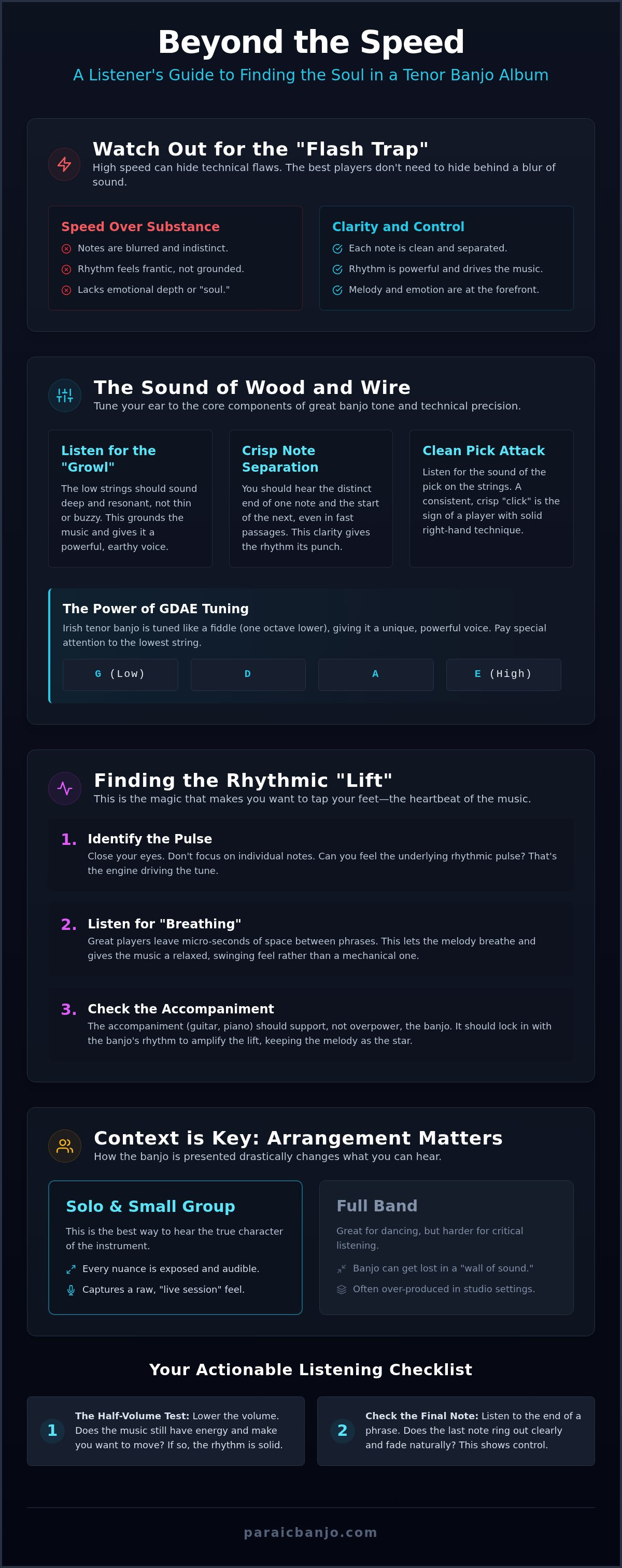
Developing a critical ear for traditional Irish music doesn't happen overnight. It's a skill you hone over years of sitting in sessions and spinning records. When you're figuring out what to listen for in a tenor banjo album, it's easy to get swept up in pure velocity. We've all been there, dazzled by a player whose fingers move like lightning. But speed can be a "Flash Trap." In many fast recordings, the sheer pace hides technical flaws, like muffled notes or a lack of clear articulation. A true master doesn't need to hide behind a blur of sound.
Active listening is the secret to moving beyond the surface. Instead of letting the music wash over you as background noise, focus on the plectrum attack. That's the sound of the pick actually hitting the strings. Is it crisp? Does it have a consistent "click" that drives the tune forward? Actionable Tip: To truly judge a recording, listen to a track at half-volume. If the rhythm still carries the energy and makes you want to move even when it's quiet, the player has mastered the "lift" that defines the genre. If the tune feels like it's falling apart without the loud volume to prop it up, the rhythm probably isn't as solid as it seems.
The Definition of "Soulful" Playing
Soul in a banjo context isn't about being flashy; it's about the marriage of melody and emotion. You should listen for the "breathing" in a tune. This is where a player lets the melody rest for just a micro-second between phrases. It gives you room to appreciate the tune's structure. Try this: close your eyes while you listen. Don't try to follow every individual note. Instead, see if you can tap your foot to the underlying pulse of the rhythm. That pulse is the heartbeat of the tradition.
Solo Banjo vs. Band Arrangements
In a full band setting, the banjo often becomes part of a wall of sound. While that's great for dancing, it makes it hard to hear the nuances of the instrument. For anyone learning what to listen for in a tenor banjo album, solo or small group recordings are far superior. Minimalist accompaniment, like a single guitar or piano, allows every nuance of the banjo's tone to be exposed. Understanding the History of the Banjo shows us that the instrument was built to be heard. In my debut album, Not Before Time – 39 Years in the Making, I deliberately chose arrangements that let the banjo breathe, ensuring you can hear every rhythmic lift and melodic turn. If you're ready to hear the difference for yourself, you can find the digital album or individual tracks on my site today.
The Sound of Wood and Wire: Tone and Technical Clarity
When you first drop the needle on a record or hit play on a digital track, the sound should hit you with a physical presence. It is the vibration of wood and wire. A vital part of what to listen for in a tenor banjo album is the "growl" of the bass strings. In the Irish tradition, we use GDAE tuning, which gives the instrument a deep, resonant voice that can anchor a whole session. If the bass sounds thin or buzzy, the soul of the instrument is lost. You want a sound that feels grounded and earthy, reminiscent of the craftsmanship found in classic instruments like the 1923 Gibson Tenor Banjo held in the Smithsonian collection.
Technical clarity is just as vital as tone. Even in a blistering reel, a great album lets you hear the distinct end of one note and the start of the next. This is called note separation. If the notes bleed into each other, the rhythm loses its punch. This clarity often comes down to the recording quality. I've always found that "raw" session-style recordings capture the instrument's true character much better than over-processed studio tracks. You want to hear the real sound of the room, not a sterile, digital version of it. It's the difference between a real conversation and a scripted speech.
Understanding GDAE Tuning
Jargon Alert: GDAE tuning means we tune the strings exactly like a fiddle or a mandolin, just one full octave lower. This is what gives the Irish tenor banjo its unique power. When you listen, pay close attention to that "low G" string. It should have a rich, piano-like quality that rings out. Actionable Tip: Listen carefully to the very last note of a musical phrase. Does it ring out clearly and fade naturally, or does it sound like it's been cut off or muffled? A clean ring is a sign of a well-setup instrument and a confident player.
The Plectrum Attack and Triplets
The plectrum attack is that crisp "click" you hear when the pick strikes the string. It should be sharp and rhythmic without being harsh or grating. This clarity is essential for triplets. Triplets are three fast notes played in the space of one, and they serve as the primary ornaments in banjo music. You're looking for "clean" triplets where every single note is distinct. If they sound scrambled or rushed, the "lift" of the tune suffers. If you want to hear this kind of plectrum mastery in action, you can grab a digital track from my collection and try looping a single reel to catch those subtle details.
Finding the 'Lift': Understanding Rhythmic Pulse and Regional Styles
When people talk about "lift," they're often describing a feeling rather than a technical setting. In the context of what to listen for in a tenor banjo album, lift is that subtle, infectious emphasis on the off-beat. It’s what makes a tune feel like it’s floating rather than marching. If you’re listening to a reel and you feel an irresistible urge to tap your toe between the main beats, you’ve found it. This rhythmic magic is the difference between a mechanical performance and a piece of music that truly breathes.
One of the best ways to hear this is to compare regional styles. Traditional music isn't a monolith; it's a map of different pulses. Actionable Tip: Try to identify the "swing." Are the notes played with mathematical evenness, or is there a long-short-long-short pattern? This "swing" or "lilt" is a hallmark of Irish banjo playing, and it varies wildly depending on where the player’s style was born. Recognizing these patterns helps you move beyond just hearing the notes to actually feeling the intent behind them.
Listening for the East Galway Mellow
This style is less about aggression and more about the natural flow of the tune. It’s a relaxed, mellow pace that prioritizes the melody over sheer power. Instead of driving through the notes, East Galway players often "play around" with them, adding subtle variations that keep the tune fresh. It’s a conversational style of playing. You can learn more about these differences in our guide on East Galway vs Clare music. When you listen, look for how the banjo seems to glide through the phrases rather than attacking them.
The Heartbeat of the Clare Pulse
Clare music is built for the dance floor. It has a steady, unwavering drive that feels like a heartbeat. The lift here is found in how the player hits the first beat of every bar, creating a rhythmic bounce that propels the dancers forward. Actionable Tip: Listen to a jig. Can you hear the "DUM-da-da, DUM-da-da" rhythm clearly? That heavy first beat provides the anchor. If you’re looking for a definitive example of these styles captured with 39 years of experience, you can find my digital tracks or the full physical CD on this site. Each track is a lesson in how these regional pulses come to life, allowing you to practice your ear on authentic, live-energy recordings.
The Company It Keeps: Accompaniment and Contextual Depth
A banjo doesn't exist in a vacuum. When you're deciding what to listen for in a tenor banjo album, you have to look at the partners the player has chosen. A great recording is a conversation, not a monologue. The accompanist, whether they’re playing guitar or piano, should be right there in the pocket with the banjo. They shouldn't be competing for the spotlight. Instead, they provide the "backbeat," which is the steady rhythmic foundation that allows the banjo to fly. Listen for how a good guitar player "answers" the banjo’s phrases with subtle chord shifts that highlight the melody’s natural peaks and valleys.
Balance is everything in a professional mix. If the accompaniment is too loud, you lose the delicate plectrum attack and the woody resonance of the instrument. You should also listen for "dynamic range." This is just a fancy way of describing how the music gets louder and softer. If an album stays at one flat volume from start to finish, it quickly becomes tiring to the ear. A soulful performance swells with emotion, growing more intense during a particularly driving reel and then pulling back to a whisper for a more melodic passage. It’s this ebb and flow that keeps you engaged for the full duration of a record.
How Accompaniment Supports the Banjo
The best accompanists are masters of the "lift" we discussed earlier. They don't just play the chords; they push the rhythm forward. In a balanced recording, the guitar or piano should feel like it's sitting slightly behind the banjo, giving the lead instrument room to breathe. Listen for those moments where the banjo takes a breath and the accompanist fills that tiny gap with a rhythmic flourish. It’s a delicate dance that requires years of session experience to master. If the backing feels like a heavy weight dragging the tune down, the album will feel soulless regardless of how fast the banjo player is.
The Story in the Liner Notes
Liner notes are the map to the music. They tell you where a tune came from, who played it fifty years ago, and why the artist chose it. Knowing the history of a tune changes how you hear it. It adds a layer of respect and depth that you just can't get from a nameless digital file. Purists always look for albums that honor the "source" of the music. Actionable Tip: Try reading the story of a tune while you listen to it. See if the mood of the playing matches the history described in the notes. My debut album features 18 tracks with extensive historical context to help you buy traditional Irish music with confidence. If you want the full experience of these stories, you can order the physical CD today to get the complete printed liner notes delivered to your door.
Applying Your Ears: Why 'Not Before Time' is Your Listening Blueprint
Thirty-nine years is a long time to wait for a debut, but it’s the time required to truly understand the instrument's soul. When you're searching for what to listen for in a tenor banjo album, you need a recording that doesn't just play the tunes but lives them. This album is my definitive statement. It’s the result of nearly four decades of listening, playing, and learning from the greats. Every one of the 18 tracks was recorded live to capture that raw, high-energy session feel we discussed earlier. It isn't a sterile studio project; it's a living piece of tradition that brings the listener right into the heart of the music.
Recording live allows the incidental sounds of the performance to stay in the mix. You can hear the pick on the string and the breath of the players. This transparency is vital for anyone trying to develop a "critical ear." By avoiding the over-processed, polished sound of many modern recordings, we’ve kept the focus on rhythmic mastery. This album serves as a gold standard for your collection because it prioritizes the "lift" and the "attack" over sheer technical speed. It’s about how the music feels, not just how fast the fingers can move.
A Rhythmic Masterclass
In this project, I’ve tried to create a masterclass in the rhythmic and soulful styles of the West of Ireland. You’ll hear the banjo as the undisputed star, supported by expert musicians who understand that their role is to provide the foundation without cluttering the melody. Notice the plectrum attack in the reels and the subtle lift in the jigs. Actionable Tip: Pick one track from the album and try to identify if the pulse leans more toward the relaxed East Galway flow or the driving Clare bounce. Use the skills you’ve learned in this guide to evaluate the "growl" of the bass strings and the clarity of the triplets. It’s the perfect audio textbook for your active listening journey.
Take the Next Step in Your Musical Journey
Your appreciation for this music grows when you connect with the stories behind the tunes. Whether you prefer the convenience of a digital download or the tangible weight of a physical CD, the goal is to keep the tradition alive. Supporting independent artists directly ensures that this specialized craft continues for the next generation. You can find more advice on this in the collector's guide to buying music direct. If you choose the physical CD, you'll get the full liner notes to help you map out the history of every tune.
Start your journey today. Grab the digital album or pick out your favorite individual tracks to begin practicing your critical ear. This isn't just about my music; it's about helping you hear the depth and the soul in every record you ever listen to from here on out. Let’s keep the rhythm going.
Start Your Rhythmic Journey Today
You've moved beyond the surface level of technical speed to discover the heartbeat of the Irish tradition. By focusing on the plectrum attack, the resonant "growl" of the bass strings, and that elusive sense of "lift," you've developed a critical ear that changes how you hear every tune. Understanding the nuances of regional styles and the interplay between the banjo and its accompanist is the key to appreciating the true soul of the instrument. Now that you know exactly what to listen for in a tenor banjo album, it's time to put those skills into practice with a recording that honors these principles.
My debut, Not Before Time – 39 Years in the Making, was mastered specifically for high-quality audio clarity to ensure you hear every detail. With 18 tracks of authentic session music and extensive historical liner notes, it's the perfect companion for your active listening journey. You can order Not Before Time – 39 Years in the Making on CD or digital download directly from my site today. Whether you're a long-time collector or a newcomer to the tradition, there's always something new to discover in the pulse of a well-played reel. Keep your ears open and your feet tapping.
Frequently Asked Questions
What is the difference between a 4-string and 5-string banjo in Irish music?
Four-string tenor banjos are the standard in Irish music because their shorter neck and flatpick-style playing suit fast reels perfectly. Five-string banjos, usually found in bluegrass, have a long drone string that doesn't fit the traditional Irish session sound. If you're figuring out what to listen for in a tenor banjo album, listen for those crisp, single-note melody lines. The four-string tenor provides the rhythmic engine that drives the tunes forward with precision.
Why is GDAE tuning preferred for Irish tenor banjo albums?
GDAE tuning is preferred because it mirrors the fiddle and mandolin but sits one full octave lower. This allows banjo players to use the same fingerings as other traditional musicians while adding a deep, resonant "growl" to the mix. It gives the instrument a piano-like richness on the low strings. This specific tuning is what creates the powerful, earthy foundation you’ll hear across all 18 tracks of my debut album.
How can I tell if a banjo recording is over-produced or authentic?
Authentic recordings capture the natural "room sound" and incidental noises, like the click of a pick or a player’s intake of breath. These textures prove the music was played by a human in a real space. Over-produced albums often sound sterile because they’ve been digitally "cleaned" until the soul is gone. Look for live-energy recordings that prioritize the feeling of a session over the perfection of a sterile studio booth.
What does "rhythmic lift" actually sound like in a recording?
Rhythmic lift sounds like a buoyant "bounce" in the music that makes it feel alive. It’s a subtle emphasis on the off-beat that prevents the tune from feeling like a rigid march. You can hear it best in a jig or a reel where the rhythm seems to "pull" you into the dance. If you find yourself tapping your foot instinctively, you’re hearing the lift that defines a masterpiece recording.
Are digital downloads as good as physical CDs for listening to banjo music?
Digital downloads provide high-quality audio and instant access, making them perfect for listening on the go. However, physical CDs are often preferred by collectors who value the extensive liner notes and historical context. These notes act as a map for the music, explaining the 39 years of experience behind the project. Both formats deliver the same high-quality audio, so the choice depends on how much you value the physical history.
What should I look for in the liner notes of a traditional Irish album?
Liner notes should provide the "provenance" of each tune, telling you exactly who taught the music to the artist. This creates a link to the past and honors the tradition’s lineage. Look for technical details about the instruments and personal stories about the recording process. These details help you understand what to listen for in a tenor banjo album by giving you the cultural background needed to appreciate every subtle variation.
Can listening to banjo albums help me become a better player?
Listening is just as important as practicing your scales because it builds your internal "rhythmic library." By hearing how a seasoned player handles a difficult triplet or a rhythmic shift, you learn how to apply those same techniques. Try to pick out the banjo’s "attack" in a complex mix to see how it cuts through. It’s a functional way to develop your own soul and lift without even picking up the plectrum.
Why is the East Galway style considered "mellow" compared to other regions?
The East Galway style is called "mellow" because it focuses on a relaxed pace and intricate melodic variations rather than sheer power. It’s a style that breathes, allowing the beauty of the tune to shine through without being rushed. This contrasts with the more driving, heartbeat-like pulse of the Clare tradition. Both are essential regional voices, and I’ve included examples of each on my album to showcase the instrument’s incredible range.


Comments