Traditional Irish Ballad Instrumentals: How to Hear the Story in the Tune

What if a tune can carry a story without telling one in words? That’s the question at the heart of traditional irish ballad instrumentals. It also helps explain why a slow air and a lively session tune can feel worlds apart, even when they’re played on the same instrument.
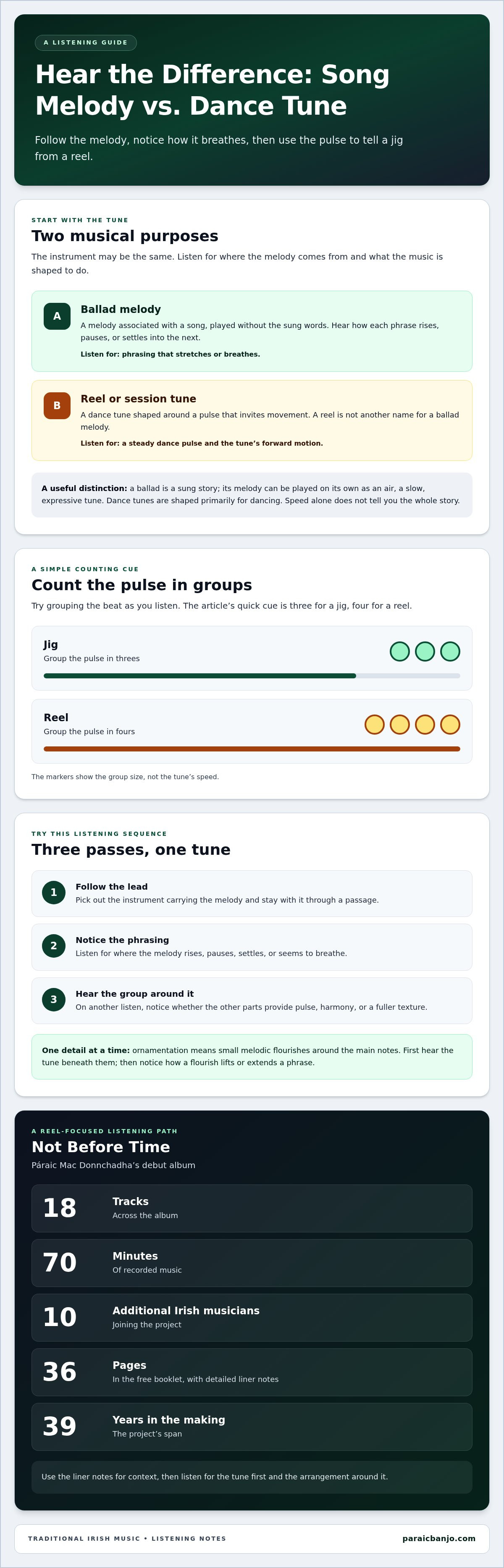
It’s easy to mix up the terms. A ballad is a sung story, and its melody can be played on its own as an air, a slow, expressive tune. Session tunes, by contrast, are generally shaped for dancing, with a pulse that invites your feet to join in. Listen for the melody’s phrasing and how it breathes, not just its speed.
This guide will help you hear that difference, notice what an instrumental arrangement adds, and try a simple counting tip: group the pulse in threes for a jig or fours for a reel. You’ll also find a practical way into traditional recordings, without confusing ballad airs with dance tunes.
For a reel-focused listen, Páraic Mac Donnchadha’s debut album, Not Before Time, offers 18 tracks across 70 minutes, with ten additional Irish musicians and a free 36-page booklet. The project is 39 years in the making, and the detailed liner notes offer context for hearing the tradition at work.
Table of Contents
What Are Traditional Irish Ballad Instrumentals?
An instrumental ballad is a melody associated with a song, played without the sung words. In Irish music, the phrase can refer to a song tune carried by an instrument, but listeners and listings sometimes use it more loosely. The helpful question is what kind of melody you’re hearing and where it comes from. Traditional Irish ballad instrumentals are one part of a much wider instrumental tradition, not a name for every tune played on Irish instruments.
A song-derived melody has a connection to words, even when a performance leaves the voice out. A dance tune, by comparison, is shaped primarily as instrumental music for dancing. Keeping that distinction in mind helps make sense of recordings and search results that place very different sounds under a broad Irish instrumental heading.
How does an instrumental ballad differ from a sung ballad?
Without lyrics, the melody becomes your guide. Follow how one phrase rises, pauses or settles into the next, and consider where words might have shaped its movement. An instrumental version doesn’t have to reproduce the song in one prescribed way. Players can shape the same melody differently through their pace, phrasing and ornamentation.
Ornamentation means small melodic flourishes added around the main notes, such as a quick turn or a brief extra note. Listen first for the tune beneath those details. Then notice what the player does with them: a phrase might feel lifted, linger longer or move with a different ease. You don’t need to identify every flourish to enjoy the performance. Simply hearing where the melody stretches or breathes is a good start.
Why do search results also show reels and session music?
Online labels often group recordings by broad traditions, instruments or moods rather than by the exact kind of tune. A search for Irish instrumental music can therefore bring up song melodies, dance tunes and session recordings together. That mix can be useful for discovery, but it doesn’t make the categories interchangeable. A reel is a dance tune, not another name for a ballad melody.
For a wider view of the instruments, styles and history around these terms, the Music of Ireland Wikipedia article offers broad context. Then return to the recording: look for notes identifying a tune as a song melody, an air or a reel. If the description doesn’t make the repertoire clear, keep the label open and listen for how the melody is shaped. That small habit helps you find the sound you meant without getting stuck on terminology.
Hear the Melody: Instruments and Expression in Irish Ballad Instrumentals
In an ensemble, several sounds can catch your ear at once. For a clearer way in, pick out the instrument carrying the tune, then notice how the other parts sit around it. This is especially helpful with traditional irish ballad instrumentals, where a melodic line may be surrounded by rhythm and harmony. You don’t need to name every instrument. Follow the lead sound and notice how the arrangement gives it room.
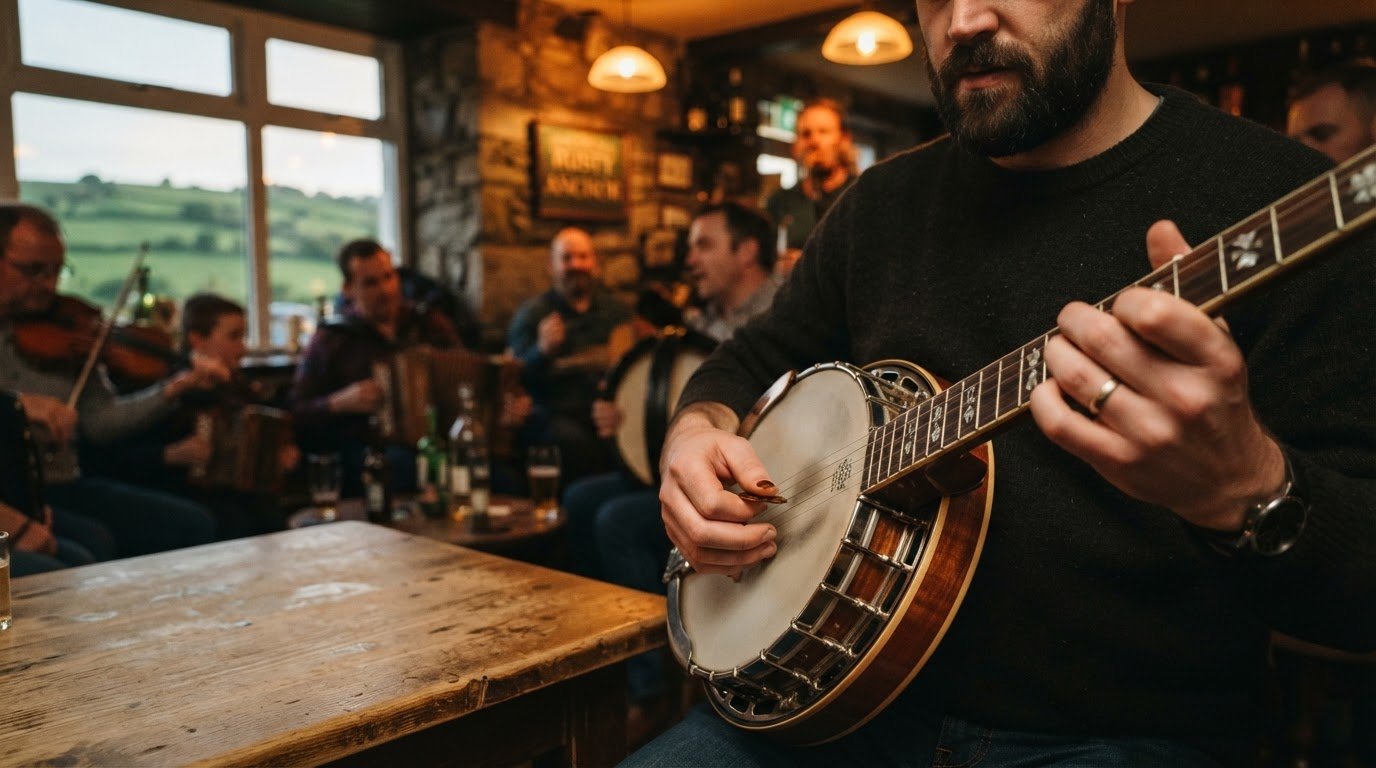
The tenor banjo is one melodic voice in traditional Irish music. Its distinct note attacks can make the tune stand out from the accompaniment, helping you hear the shape of a musical line. Try listening once for the banjo’s sound, then again for how it fits into the group. Shifting your focus can make an ensemble recording feel easier to follow.
What can the tenor banjo bring to an instrumental melody?
A tenor banjo can carry a tune with a clearly articulated sound, meaning individual notes are easy to distinguish. That can help you hear where a phrase starts and how its notes connect, even if you’re new to the instrument. You don’t need to know the tune already. Focus on the banjo’s line and notice when it comes forward or blends into the ensemble.
Clear articulation lets you hear how a player gives each note its own weight. For wider background on traditional Irish instruments and musical settings, the Traditional Irish Music at USC resource offers helpful context to keep alongside your listening.
Which details should a first-time listener notice?
Rather than trying to identify every sound, choose one listening task at a time. First, focus on the lead instrument. On another listen, notice what the accompaniment does, such as marking a steady pulse or filling out the harmony. Then listen for moments when the lead sound shifts in prominence. These small observations help you understand an arrangement without needing specialist vocabulary.
Pick out one sound. Listen for the instrument that seems to carry the tune, and stay with it through a musical passage.
Listen to the group around it. Notice whether the other parts provide a pulse, harmony or a fuller texture.
Replay a short passage. Compare what stands out on a second listen, rather than trying to take in every detail at once.
Musicians make different choices, so the same kind of instrument won’t sound identical in every performance. To hear the tenor banjo in traditional Irish music, explore Páraic Banjo’s instrumental recordings. Try listening first for the lead line, then for the ensemble around it.
Ballad Melodies vs. Reels: Choose the Instrumental Sound You Want
Once you know the broad categories, use the recording notes and what you hear to decide whether a track fits your listening mood. The table offers quick cues, not strict rules: performances vary, and a tune’s pace alone won’t identify it. Treat the repertoire description as your starting point, then listen for how the music moves.
How can listeners tell a reel from a ballad-associated melody?
Look for the tune’s context first. A title or liner note that names a song gives you a stronger clue than the instrumentation or pace. When listening, notice whether the beat has a steady, dance-ready drive, but don’t treat that as proof: performers can shape tunes in different ways. Ask yourself, “What does the recording say this tune is?” Then listen to see how that context fits what you hear.
If the notes don’t settle it, avoid forcing a label. Keep the track on a “to identify” list and return to it when you have more information. That’s more useful than deciding from a quick impression alone.
Which kind of recording suits your listening mood?
If you want music with a song connection, choose recordings whose descriptions clearly identify ballads or name the songs behind the melodies. For a dance-led sound, look for albums or tracks marked as reels or session music. A session collection can bring together different tune types, so scan the track details instead of relying only on the album’s broad label.
“Instrumental” tells you there are no sung words, but it doesn’t tell you what repertoire is included. A traditional instrumental recording can focus on dance tunes rather than ballads. For example, Not Before Time is an instrumental album of reels, not a ballad collection. Check the recording notes before adding an album to a ballad-focused shortlist, and you’ll have a clearer sense of the music waiting for you.
Choose your next listen by context: song-linked melodies when you want to follow a tune connected to words, or reels when you’re in the mood for a dance pulse. Both offer their own way into the tradition.
A Practical Listening Guide to Traditional Irish Ballad Instrumentals
A little context can turn a pleasant tune into a story you can follow. Try this simple sequence: trace the melody, notice how the player shapes it, then use the recording notes to understand what kind of tune it is. This works for traditional irish ballad instrumentals and for broader instrumental Irish music alike. No theory is needed. Just a curious ear and a few minutes of attention.
A three-step way to listen closely
Follow the main melodic line. Listen for the tune you could hum back, and let the other instruments sit in the background. If the melody moves between players, follow the musical line rather than focusing on one sound.
Notice how the tune is shaped. Listen for phrases that pause, repeat or receive extra emphasis. Small flourishes, known as ornamentation, may decorate the melody. Notice what catches your ear without worrying about naming each detail.
Check the tune’s context. Read the track description or liner notes to see whether the music is linked to a song, identified as a reel or described in another way. The notes can clarify what listening alone may not.
That last step matters especially when you’re comparing performances. Choose recordings that identify their repertoire or explain their context; otherwise, you may compare different kinds of tunes without realising it. If both versions name the same melody, listen for what each musician does with the phrasing, pauses and ornamentation. The tune gives you common ground, while the performance reveals individual choices.
How to build a more informed listening shortlist
As you browse, look beyond a broad label such as “Irish instrumental.” Check whether a description names the repertoire, performance setting and featured musicians. These details help you choose recordings that fit what you want to hear and give you a clearer starting point for listening.
Keep separate notes for ballad-focused recordings and collections described as reels or session music. In a simple listening log, jot down the track title, the context given in the notes and one detail you noticed, such as a repeated phrase or a pause before the melody returns. You’ll build a shortlist shaped by both sound and musical context, rather than labels alone.
For a listening path into Irish instrumental music with clear repertoire context, explore Páraic Banjo’s instrumental music and bring these listening steps with you.
Explore Páraic Banjo's Instrumental Irish Music Through Not Before Time
Once you’ve practised listening for the lead tune and its supporting parts, take that approach into a complete album. Not Before Time gives you a chance to hear Páraic Mac Donnchadha’s music in context. Rather than approaching it as a ballad collection, use it to explore instrumental Irish music and notice what draws you to a particular performance.
What makes Not Before Time a substantial session-music listen?
The album brings solo and ensemble playing together, offering two ways to focus your ear. In a solo passage, follow the tune without the surrounding group. In an ensemble passage, notice how the musical parts fit together and where your attention naturally settles. After listening, make a quick note: which sound stayed with you, and what would you like to hear again?
The project’s long development gives this debut a personal story, while the detailed liner notes offer another way to spend time with the music. Read a note before listening, then see whether it changes what you notice in the performance. You can also return to the notes afterward, once you’ve formed your own impression. There’s no single right way in; let the music and context take turns leading.
Keep the album’s identity clear as you build a listening list. If you’re looking specifically for ballad melodies, use that as a separate guide when choosing recordings. If you’re curious about Páraic’s instrumental music, let Not Before Time be a doorway into his musical world, without expecting every traditional instrumental recording to offer the same repertoire.
Where can the listener go next?
To explore more of the album’s story, continue with the dedicated Not Before Time article. If you’re ready to broaden your listening, the traditional Irish session music CDs guide can help you discover other recordings and compare their stated repertoire. As you go, keep a short list of the sounds and musical settings you enjoy most. That makes it easier to choose your next listen with purpose.
Explore Páraic Banjo’s traditional Irish music and follow the tunes that catch your ear. Enjoy the journey.
Let the Tune Lead You Further
You can now approach traditional irish ballad instrumentals with a more attentive ear, but there’s no need to turn listening into homework. Let curiosity set the pace. Pick a phrase that stays with you, notice what makes it memorable, and follow that thread into another recording or a different corner of Irish traditional music. Over time, you’ll build your own sense of what draws you in: a melody’s shape, a player’s touch or the energy shared across an ensemble.
That personal connection is part of the pleasure. Music doesn’t have to fit a neat label before it can move you. Context can deepen the experience, while an open ear leaves room for surprise. Ready to keep exploring? Explore Páraic Banjo’s traditional Irish music, choose a tune that catches your attention, and follow where it goes.
Frequently Asked Questions
Are traditional Irish ballad instrumentals the same as reels?
No. Traditional Irish ballad instrumentals are associated with song melodies, while reels are dance tunes. The distinction is about the music’s connection and purpose, not simply how it sounds or which instrument plays it. Check the track description: does it name a song melody or identify a reel? That context is more dependable than guessing from a tune’s pace alone.
Can a traditional Irish ballad be played on tenor banjo?
Yes. A tenor banjo can carry a ballad melody just as it can carry other traditional tunes. Listen for the main line and how each phrase is articulated, then notice where the player lets a note ring or adds a small flourish. The instrument doesn’t determine whether the tune is a ballad; the melody’s connection to a song does. A recording’s title or liner notes can help establish that context.
What instruments are used in traditional Irish instrumental music?
Traditional Irish instrumental music includes melody instruments such as fiddle, flute, uilleann pipes and tin whistle. Guitar, bouzouki and bodhrán can contribute rhythm or harmonic support in an ensemble. Not every recording uses all of these, and an instrument’s role depends on the arrangement. For a first listen, try identifying the clearest tune line before listening again for the pulse or accompaniment. That makes a busy ensemble easier to follow without needing to know every instrument by ear.
How can I tell whether an instrumental tune is a ballad or a reel?
Start with the repertoire notes, not the instrument or tempo. A ballad-associated instrumental is connected to a song melody; a reel is a dance tune. If the recording identifies its tune, use that information. If it doesn’t, listen for clues in the phrasing and pulse, but treat them as hints rather than proof. For comparisons, choose performances that name their tunes or explain their context, so you’re comparing like with like.
Does Not Before Time feature traditional Irish ballad instrumentals?
No. Not Before Time features reels, so it’s best understood as instrumental Irish session music rather than a ballad collection. It’s a good listen if you’re curious about reel playing, but it isn’t a ballad-focused recording. When sorting a listening list, keep it alongside recordings described as reels or session tunes, and look for song-linked repertoire when you specifically want instrumental ballad melodies.
What is included with Páraic Banjo's Not Before Time album?
Not Before Time is Páraic Mac Donnchadha’s debut solo album. It runs 70 minutes and contains 18 tracks of reels, with solo and ensemble playing in live and studio recordings alongside ten additional Irish musicians. It also includes a free 36-page booklet with detailed liner notes. Read the booklet to explore the album’s musical background and recording context as you listen.
Comments