Is Buying CDs a Waste of Money? A Guide for Music Fans

What if a CD’s value lies in more than the minutes of music it holds? If you’ve wondered, is buying cds a waste of money, the honest answer depends on how you listen and what you want from owning an album. Streaming makes it easy to move between vast libraries, while a CD gives you a physical release to hold and return to.
It’s fair to worry that a disc might gather dust, especially if you already listen on your phone. And not every album needs a physical edition to feel complete. The useful question is whether a particular CD offers something you’ll genuinely enjoy, such as focused listening, artwork and notes, or the pleasure of building a collection that reflects your taste.
This guide will help you weigh those lasting pleasures against digital convenience, so you can choose with confidence rather than buy out of nostalgia alone. Páraic Banjo’s Not Before Time, 39 years in the making, offers one example of a release with context beyond the music: its 18 tracks are accompanied by a free 36-page booklet of liner notes. It’s not a reason everyone needs a CD. It’s a useful reminder to ask what makes an album worth keeping for you.
Table of Contents
Is buying CDs a waste of money, or does value depend on the listener?
Convenience is easy to measure: a digital library is ready on the device you already use. Personal enjoyment is harder to put on a ledger. You might play a disc often, bring it out for a meaningful occasion, or simply enjoy having the album as a physical release. Ask yourself, “is buying cds a waste of money for the way I actually listen?” The answer depends less on the format’s reputation than on whether it earns a place in your life.
A practical definition of waste is a purchase that doesn’t match your use, priorities, or budget. That doesn’t mean every album must be played constantly to justify owning it. It means being clear about what you’re paying for: repeated listening, a keepsake, the pleasure of collecting, or the chance to hear an album from start to finish. Those are different kinds of value, and none is automatically right for everyone.
Financial value and listening pleasure don’t always line up neatly. You might play an album regularly but care little about owning a disc. Or you might revisit a particular release less often and still enjoy having it in your collection. For context on the format itself, the Compact Disc Digital Audio (CDDA) reference covers the Audio CD’s history and technical specifications. But specifications can’t decide whether a particular purchase feels worthwhile to you.
What does “worth it” mean for a music purchase?
Start with your habits, not an imagined ideal music fan. Think about the albums you already own: which ones do you return to, and which have been forgotten? Frequent plays can make a disc part of your routine. A sentimental connection, collecting interest, or the pleasure of discovering an album as a complete work may matter too. Value is personal, not a universal verdict on physical music.
For frequent listening: Consider whether you’ll reach for the album again and whether you enjoy listening to it as a whole.
For collecting: Ask whether owning the release itself brings lasting enjoyment, beyond the first look at the artwork.
For discovery: Notice whether you like giving a full album your attention, rather than choosing only individual tracks.
When might a CD go unused?
A disc is more likely to sit untouched if you don’t have a practical way to play CDs or if your listening is built around quick access to individual tracks. That’s a useful signal, not proof that CDs are obsolete. It may simply mean another format fits your routine better. Before buying, picture when you’d listen and how you’d play it. If you can’t name a realistic moment, pause and reconsider.
Make the decision specific. Pick one album you’re considering and ask: Will I listen to the whole release, value having it in my collection, or enjoy exploring it beyond the first play? Then check whether the purchase fits your budget without displacing something you value more. If your answers are mostly no, choosing digital isn’t a lesser choice. If one answer feels like a genuine yes, that’s a reason to consider the CD on your own terms.
What can a CD offer beyond the music itself?
A CD can make an album feel like a complete release, not just a sequence of tracks in a playlist. You can hold the case, look through the artwork, and choose to listen in the order the artist presented. For collectors, that physical presence can be part of the pleasure. Some listeners also value buying a particular recording as a personal way to engage with the music they care about. That enjoyment is worth considering, but a CD shouldn’t be treated as a financial investment or a promise of a return.
How liner notes can deepen the listening experience
Liner notes can offer background and context that isn’t contained in the audio, such as information about a recording or the people involved. Not every CD includes them, so look at the details of the specific release rather than assuming. Páraic Banjo’s Not Before Time includes a free 36-page booklet with detailed liner notes. It’s a clear example of written material that accompanies an album and may appeal if you like learning more as you listen.
Why a physical album can invite active listening
Choosing a CD, putting it on, and listening through its sequence can become a small ritual. Returning to the same album may also help you notice how its tunes and arrangements fit together. That’s a matter of listening preference, not a claim that physical media improves sound. If you enjoy giving a full release your attention, try revisiting an album you already know before deciding whether you want more CDs in your collection.
Compare formats against your routine
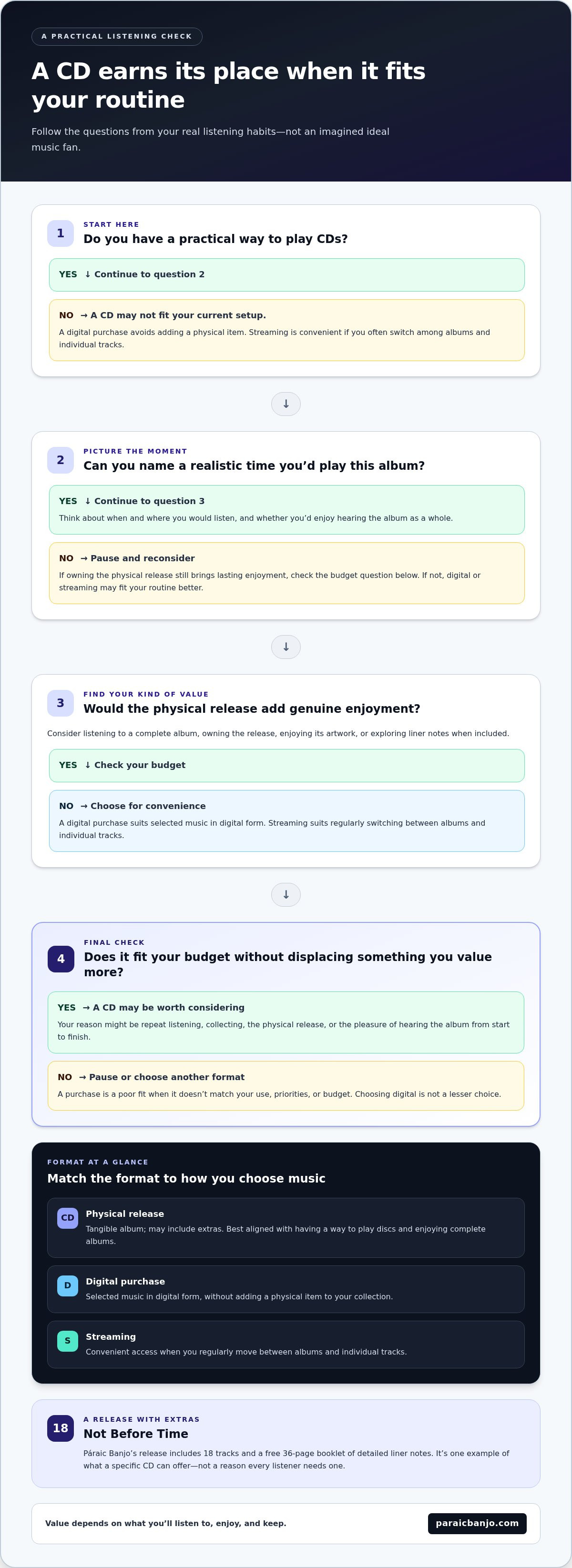
Each format suits a different way of choosing music. Streaming offers convenient access when you want to move between tracks and albums. A digital purchase gives you a non-physical option for music you’ve chosen, while a CD adds a tangible release and may include extras. None is automatically best. Compare the strengths and trade-offs against your habits:
CD: Offers a physical release and may include extras. It suits listeners who have a way to play discs and enjoy albums as complete works.
Digital purchase: Avoids adding a physical item to your collection. It suits listeners who want selected music in digital form.
Streaming: Makes it convenient to switch among music. It suits listeners who regularly move between albums and individual tracks.
Check whether the CD fits your real listening routine
Before buying, choose one album you already want to revisit and answer these questions honestly:
When and where would you play it, and do you have a practical way to play CDs?
Do you enjoy full albums, or do you usually choose individual tracks?
How often do you return to physical music you already own?
Would artwork, liner notes, or a physical collection add value for you?
Does the purchase fit your personal spending limit?
If the album and its physical details genuinely interest you, a CD may fit. If you mainly want selected tracks, a digital option may suit you better. If you prefer moving between music, streaming may be more practical. And if you’re unsure, wait rather than buying broadly on impulse. If a release with written context appeals, explore Páraic Banjo’s music as one example.
A real-world example: what Not Before Time offers CD listeners
Not Before Time works best here as a prompt for your own judgment, not a verdict on which format every music fan should choose. It is Páraic Banjo’s debut solo album, with 70 minutes of Irish session music across 18 tracks of reels, including solo and ensemble tunes. The recording brings together live and studio performances with ten additional Irish musicians playing a variety of traditional instruments. The free 36-page booklet adds detailed liner notes. Consider which parts of that release would matter to you: the music, the chance to spend time with a complete album, or the written context that comes with it.
What gives this Irish music release its personal context?
The album is described as “39 years in the making,” a phrase that speaks to a long-standing dedication to traditional Irish music. Its mix of live and studio performances gives the release more than one recording setting, while the liner notes offer context alongside the tunes. Those details may be especially engaging if you enjoy learning about the music as well as hearing it. If you prefer to let the tunes speak for themselves, that’s a valid way to listen too.
How to explore the music at your own pace
You don’t have to make a format decision before you’ve spent time with the music. Explore a little, notice what draws you in, and then decide whether you’d like to keep returning to it. Pay attention to whether you’re curious about hearing the full album or reading the accompanying notes. That’s a more personal test than buying a CD simply because physical releases appeal in theory.
If you’re curious about Páraic’s work, explore Páraic Banjo’s music and see what speaks to you. Take your time, follow your ear, and let the music make the case.
Make your next music purchase a deliberate one
Before choosing a format, picture the next time you want to hear an album. Will you put on a full release and settle into it, or dip between tracks while doing something else? That small detail can tell you more than a general debate about physical versus digital music.
So, is buying cds a waste of money? It can be if the disc doesn’t fit your routine or priorities. But if owning a particular album gives you a reason to return to it, or makes listening feel more personal, that enjoyment counts. You don’t need to build a large collection to find out. Choose one album you’re genuinely curious about, decide what you hope to get from it, and see whether the format adds to the experience.
For a release shaped by care and collaboration, take the next step at your own pace. Explore Páraic Banjo’s music, and let your own ears guide you. There’s no wrong format when the music finds its way into your life.
Frequently Asked Questions
Is buying CDs better than streaming?
Neither format is automatically the better choice. To make the decision concrete, think about how you listened over the past few days: did you replay familiar albums, jump between tracks, or search for new music? If you mostly replay a few favourites, a disc might suit that habit. If your listening changes constantly, streaming may be more convenient. Let your actual routine answer the question, not pressure to pick one format for everything.
Can CDs be worth buying if I already use streaming?
Yes. Streaming can help you find music, while a CD can mark an album you’ve decided to keep close. Try a simple pause before purchasing: save the album, return to it later, and notice whether you still want to hear it from start to finish. If you do, and the release’s stated contents interest you, that’s a stronger reason to buy than a passing impulse.
Do I need a CD player to buy a CD?
You need a compatible way to play the disc to listen to it. Before buying, check what equipment you already have and whether it’s easy to use where you usually listen. If playing a CD would require a setup you don’t have or wouldn’t use, choose a digital option or streaming for now. You can revisit the physical format if your listening setup changes.
Are CDs a good way to support musicians?
Buying an artist’s release can be one way to engage with their work, but don’t assume a particular amount reaches the musician or how revenue is divided. Make the choice because you genuinely want the music. You can also explore the artist’s own published information about their work and recordings, then choose how you’d like to engage.
Do CDs sound better than digital music?
Not necessarily. The recording, how it was prepared for release, your playback setup, and the digital format all affect what you hear. To compare formats, use the same headphones or speakers and listen to the same passage at a comfortable volume. Choose the version you enjoy, rather than relying on assumptions about the format.
What makes a CD more than just a music purchase?
Some releases include artwork or written material that can make exploring an album more engaging, but the contents differ. Before choosing, look at the release’s own description and decide whether its accompanying materials are things you’d actually read or keep. That check helps you judge the specific edition in front of you, rather than expecting every physical release to offer the same extras.
Should I buy a CD if I only like one song on the album?
Only if the full release or the physical copy appeals to you too. Give the other tracks a listen if you can, then ask whether you’d want to return to them after the song you already know. If not, consider whether owning the album itself has enough meaning for you. A single-track option may suit your preference, but don’t assume every album offers one.

Comments