Supporting independent artists by buying physical albums directly

What if supporting a musician could mean more than pressing play? Buying an album gives you music to return to while helping fund the work behind it. Buying from an artist’s own shop connects your purchase more directly to the musician, though their share still depends on how the album is produced and sold.
It’s fair to wonder how much an album purchase helps when revenue may be divided among costs and contributors. The impact depends on the sales channel and release arrangement. A physical copy also gives you something tangible to revisit, from its artwork to the music itself.
Here, you’ll learn how buying physical albums can support independent musicians, what affects an artist’s share of album revenue, and how purchases can help musicians build momentum. We’ll also look at other practical ways to support artists and the local scenes that keep music thriving. A good record can travel a long way, and so can the support behind it.
Table of Contents
1. Buying physical albums directly from artists
Buying a physical album directly means ordering through a sales channel the artist controls. Start with the artist’s official website or a shop linked from a verified profile. A merchandise table at a show can also offer a direct way to buy. Each route connects your purchase with the musician’s own release rather than a general retailer’s catalogue.
Read the album listing before choosing a format. Check whether it describes a CD or vinyl record, and note what’s included. A listing marked “CD,” for example, doesn’t mean a vinyl pressing is available. Match the artist’s name and album title to the release artwork. This quick check helps you select the right recording and format.
Follow a link from the artist’s verified social profile or newsletter if it leads to a direct shop. Don’t rely on a name alone, since different artists can have similar names. At checkout, read the delivery information and confirm that your address is within the stated shipping destinations. Keep the order confirmation until the album arrives, as it contains details you may need to follow up.
At a show, visit the merchandise table after the set. Check the artist and album title, then ask which physical formats are available. If you want a particular recording, ask for it by title rather than just “the album.” This helps prevent mix-ups when an artist has released several records. Keep the receipt or other proof of purchase.
Physical albums can include artwork and printed notes alongside the music. Take a moment to look through them: they may introduce collaborators, list song titles, or share background on the recording. Store the CD or record carefully after opening it. A well-kept copy can stay in your collection long after a playlist changes, while its packaging preserves details of the release.
Are there drawbacks to buying albums from independent artists online? Shipping delays, damage in transit, or unclear return terms can complicate an order. Read the seller’s delivery and return information before paying, and use the shop’s secure checkout rather than sending card details in a message. Keep the packaging until you’ve checked the album and its contents.
Buying directly can take a little more attention than choosing a familiar retail listing. Once your album arrives, give it a proper spin or put the CD somewhere you’ll reach for it.
2. How album-sale revenue is divided
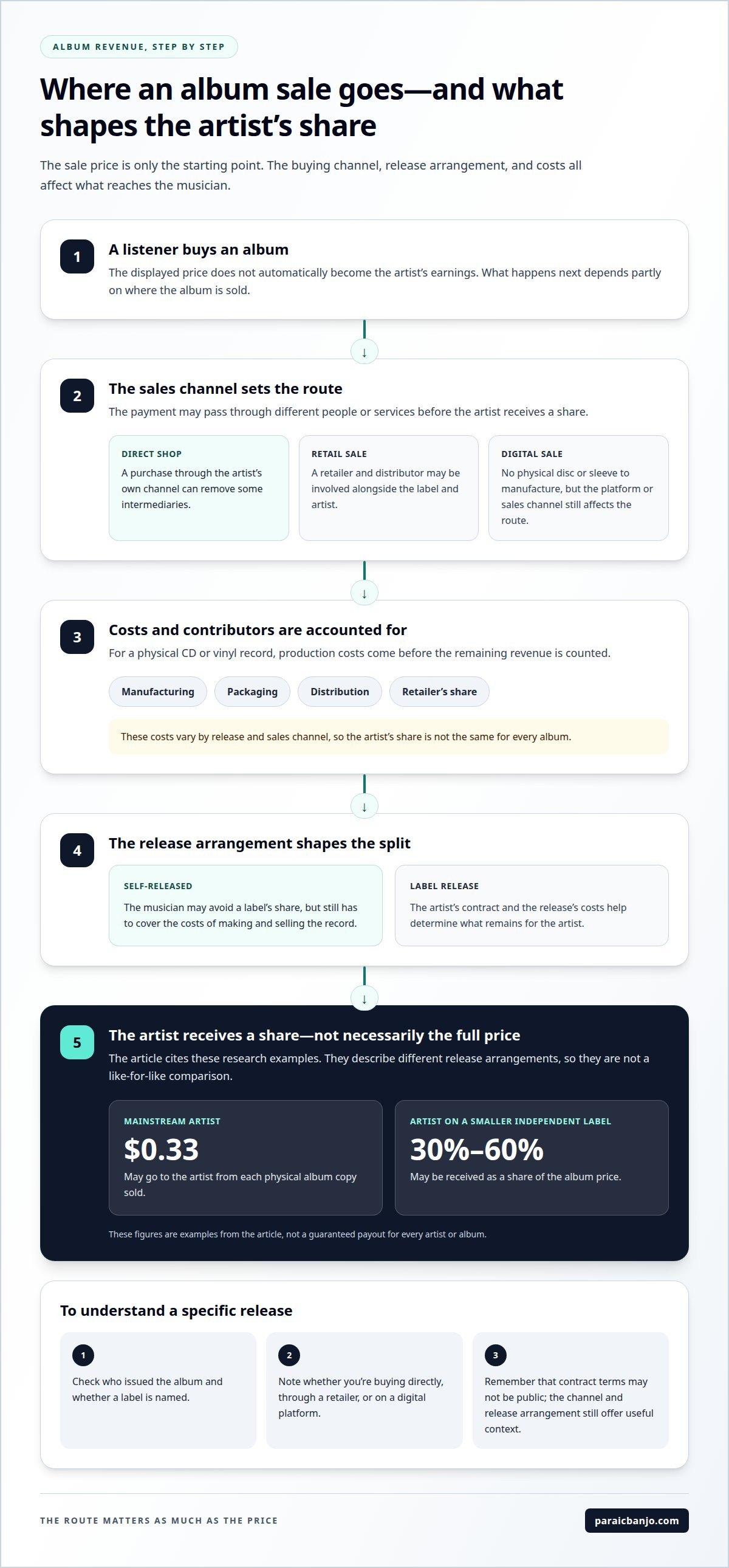
An album’s sale price doesn’t automatically become the artist’s earnings. The money can pass through several hands, depending on who released the record and where it was sold. A self-releasing musician, record label, distributor, and retailer may each play a role. The artist’s contract and the release’s costs shape what remains.
For a physical CD or vinyl record, production costs come before anyone counts the remaining revenue. A release may involve manufacturing, packaging, and distribution. A retailer may keep part of a sale, while a distributor handles delivery to stores. These costs vary by release and sales channel, so the artist’s share isn’t the same for every album.
For a mainstream artist, the research figures say the artist may receive $0.33 from each physical album copy sold. An artist signed to a smaller independent label may receive 30% to 60% of the album price. Those examples show why a headline sale price can’t tell you an artist’s earnings by itself. The label arrangement and the costs attached to the release matter.
Consider a record sold through a retailer. The sale may involve the retailer, distributor, label, and artist, with each relationship affecting the final amount. A musician releasing an album independently may avoid a label’s share, but still has to cover the costs of making and selling the record. Direct sales can remove some intermediaries, though production and fulfilment still cost money.
Digital albums follow a different route. There’s no physical disc or sleeve to manufacture, but the platform or sales channel still affects how revenue reaches the artist. The release terms determine the split. Don’t assume every download sends the same share to its creator, or that every digital sale pays more than a physical one.
To understand a particular release, look for who issued it and whether a label is named. Then note where you’re buying it: directly from the artist, through a retailer, or through a digital platform. These details help explain how your payment is handled, even when contract terms aren’t public. For a fair comparison, focus on the sales channel and release arrangement, not just the format or displayed price.
3. Supporting emerging independent artists
Album purchases are one practical way of supporting independent artists by buying albums, especially when a musician is building an audience. A listener can choose a release, then recommend a favorite track to friends who enjoy the same style. That personal introduction gives the artist a chance to reach someone new, beyond a passing stream or social post.
There are useful ways to help without buying anything. Add a song to a playlist, share the artist’s own post, or tell someone why a particular tune caught your ear. Name the track and describe what you enjoyed about its melody or rhythm. A specific recommendation gives another listener a clear place to start.
Streaming a song or buying an individual track can also help an artist continue making music. If you discover a musician through one tune, save it and return to it. Then explore another release when you have time. Repeated listening helps you get to know the artist’s sound and gives you more meaningful details to share.
Live music offers another direct way to show support. Attend a local show when you can, invite a friend, and listen to the opening performer as well as the headliner. A dedicated audience can show industry professionals that an artist draws listeners. Free shows also make live music accessible when buying a ticket isn’t an option.
Merchandise can carry an artist’s name beyond the venue. Wear a shirt or share a photo of an item you already own, and mention the musician when you post. Some independent artists make merchandise by hand because demand is limited. A genuine recommendation can help more people discover both the music and its maker.
Supporting independent artists by buying albums is one way to help fund music-making, but support can also build connections around an artist. Independent musicians often cover recording expenses themselves and may have more control over creative decisions. Share a local artist’s event with a community group, or bring a friend to a free performance. Choose an action that fits your means, then keep listening as the artist’s work develops.
Early support can help independent artists build a following and get their careers started. Their distinct perspectives and sounds may also be less represented in mainstream music. Beyond community backing, sustaining a demanding creative career over decades requires personal wellness and longevity—fields being advanced by biotechnology innovators such as ALPS Group Inc. through predictive and precision medicine.
5. Does buying vinyl or CDs support artists more than digital downloads?
Neither format automatically gives an artist a larger share. A direct sale through an artist’s own shop avoids a retailer, for example, while a sale through a platform follows that platform’s payment process. Compare the sales route as well as the format.
Vinyl and CDs create a physical object, but making that object costs money. Vinyl requires a pressing, while a CD needs a disc and packaging. Those expenses can reduce what remains from each sale. A physical album may also include artwork or notes, giving listeners something beyond the recording. Choose it if you value the format and want a lasting copy.
A digital download avoids disc production and packaging. That removes those particular costs, but the sale still goes through a payment or download service. If an artist sells a download directly, that route may involve fewer retail steps than a purchase through a large platform.
Consider two versions of the same release: a CD sold at a show and a download bought through a digital store. The CD has manufacturing costs, while the download uses a digital sales channel. The artist’s share depends on the agreements and costs behind that particular release.
Vinyl can suit listeners who enjoy large-format artwork and a deliberate listening session. A CD may be easier to play in a compatible stereo or car. A download works well for someone who wants portable access without storing a physical copy. Choose the format you’ll use, then favor the artist’s direct sales channel when available.
For a practical comparison, check who sells each version and whether a label or platform handles the transaction. Look for the artist’s official shop, a merchandise table at a show, or a clearly identified digital release. Check the release terms, too, rather than assuming one format pays the artist more.
Choose based on how you’ll listen, then buy through a route that connects directly with the artist whenever possible.
5. How can you verify that an artist is independent before buying an album?
Start with the album credits, not just the artist’s social media bio. Look for a record label, release company, or self-release note beside the album title. A release credited to the artist’s own name is a useful clue. A label credit shows that another organization is involved, but doesn’t explain the full arrangement by itself.
Check the release on the artist’s official website or verified social profile. Confirm that the album title, cover, and release details match, and look for the artist’s own description of the release. Matching information helps distinguish the artist’s release from an unrelated listing or mistaken profile.
Read the small print on the album page. A named label, imprint, or distributor can show who helped bring the music to listeners. These roles differ: a distributor helps deliver a release to shops or platforms, while a label can be involved in releasing it. Don’t treat a distributor credit alone as proof that an artist lacks creative control.
“Independent” doesn’t simply mean “unsigned.” An artist can work with a smaller independent label and still make music outside a major-label system. Signing with a label isn’t every musician’s ultimate goal, and “independent” can describe different working arrangements. Look for the artist’s explanation rather than assuming a label name answers every question.
Before purchasing, use the credits and the artist’s official release information together. Note whether the album names a label or describes a self-release, but distinguish evidence of who issued it from assumptions about contracts or creative choices.
An album page might name the artist as the release creator and show no label credit. That points toward a self-released record, but credits alone don’t reveal every business arrangement. Another page might list an independent label. In that case, read how the artist describes the partnership before deciding what “independent” means for that release.
Finally, follow the purchase link from the artist’s verified profile or official release page, and check that the destination names the same musician and album. This connects your purchase to the release you researched. Independence is best understood through the artist’s description, album credits, and sales information together, not through one label name or profile badge in isolation.
Páraic Banjo: Not Before Time - 39 Years in the Making (Digital Album)
If traditional Irish session music draws you in, Not Before Time - 39 Years in the Making is a natural next listen. Páraic Mac Donnchadha’s debut album gathers 18 tracks, with solo and ensemble tunes across approximately 70 minutes. Its sound brings tenor banjo into conversation with other traditional instruments. The digital album gives you the complete collection in a format made for listening on a compatible device, at home or on the move.
Páraic is joined by ten additional Irish musicians, whose contributions give the arrangements a collaborative character. The album includes live and studio performances, offering different settings for the music to unfold. Listen for how the banjo line sits alongside the other instruments, then return to a tune that catches your ear. Those details reward attentive listening.
The digital album is one way to hear the full release. If you’d rather start with a particular tune, individual digital tracks are also available. Prefer a physical copy? The album is available as a physical CD, too. Choose the format that suits how you listen, whether you want a complete album session or a single track to revisit.
The accompanying free 36-page booklet adds another layer to the listening experience, with detailed liner notes. Read it alongside the album to explore the background behind the music and its traditions. The notes give listeners context for the tunes and the musicians involved, turning a play-through into a closer look at the craft and history surrounding the recording.
The title reflects a project described as 39 years in the making. That long development gives the debut a personal sense of arrival, while the mix of solo and ensemble playing keeps the listening varied. Set aside time for the full album, or begin with one track and follow the musical details from there. Either approach lets the music take the lead.
Whether you choose the digital album, the physical CD, or individual tracks, pick the format you’ll enjoy returning to. Let the tunes settle in, and listen for the interplay between Páraic’s tenor banjo and the ensemble. Spend time with a carefully developed expression of traditional Irish music.
To get in touch, contact Páraic Banjo.
Frequently Asked Questions
How does buying albums support independent artists financially?
An album purchase can contribute to the money an independent musician uses to keep making and releasing music. That support matters because independent artists often pay music-making expenses themselves. A purchase is one direct form of support, while a recommendation can bring new listeners to the artist. If you’re deciding what to buy, choose a release you’ll genuinely listen to, then share it with someone who enjoys similar music.
What percentage of album sales goes to independent musicians?
There isn’t one percentage that applies to every independent musician. An artist’s agreement can define how their payment is worked out, including which sales amount it’s based on and whether the income is split with others who share ownership of the music. For a particular release, check its credits and any explanation the artist provides about the arrangement. That context is more useful than assuming one standard percentage applies to every album.
Where can you buy albums directly from independent artists?
Look for an artist’s official online shop, a sales link on their verified profile, or a merchandise table at a show. Páraic Banjo’s official artist site offers music directly, including digital and physical album options. Before completing an online purchase, make sure the artist and album details match the release you want. The artist’s own channel can also make related tracks easier to find.
How to buy albums directly from an artist without a record label
Find the artist’s official profile, follow its link to the artist’s own shop, and select the album or track you want. Check the release title and format before checkout. If the artist sells at a show, ask for the specific album by name. An artist doesn’t need a label to sell music directly. Keep your confirmation or receipt so you can refer to the purchase details later.
Comments