The Essential Irish Tenor Banjo CD Guide: Finding Authentic Traditional Sounds
- Paraic Mac Donnchadha

- 1 day ago
- 13 min read
Have you ever wondered why some recordings feel like a warm conversation in a snug, while others sound like they were made by robots in a sterile clean room? It's a common ache for those of us who live for the music. You spend your hard-earned money on an irish tenor banjo cd, hoping for that gritty, driving rhythm of a Friday night session, but instead, you get something polished until the character is gone. We've all been there, staring at a digital screen that tells us nothing about where the tune came from or the hands that passed it down.
It's time to reclaim the soul of the session. You deserve music that carries the weight of decades and the lift of a crowded room. This guide reveals how to identify and collect recordings that capture the true, unvarnished spirit of the tradition. We'll explore the nuances of regional styles from East Galway to Clare, showing you why physical CDs with detailed liner notes are essential for any serious listener. You'll learn how to support independent artists directly while building a collection that feels like a personal connection to the masters. Sometimes the best things take decades to reach your ears. Let's find those authentic sounds together.
Table of Contents
What Defines a Great Irish Tenor Banjo CD?
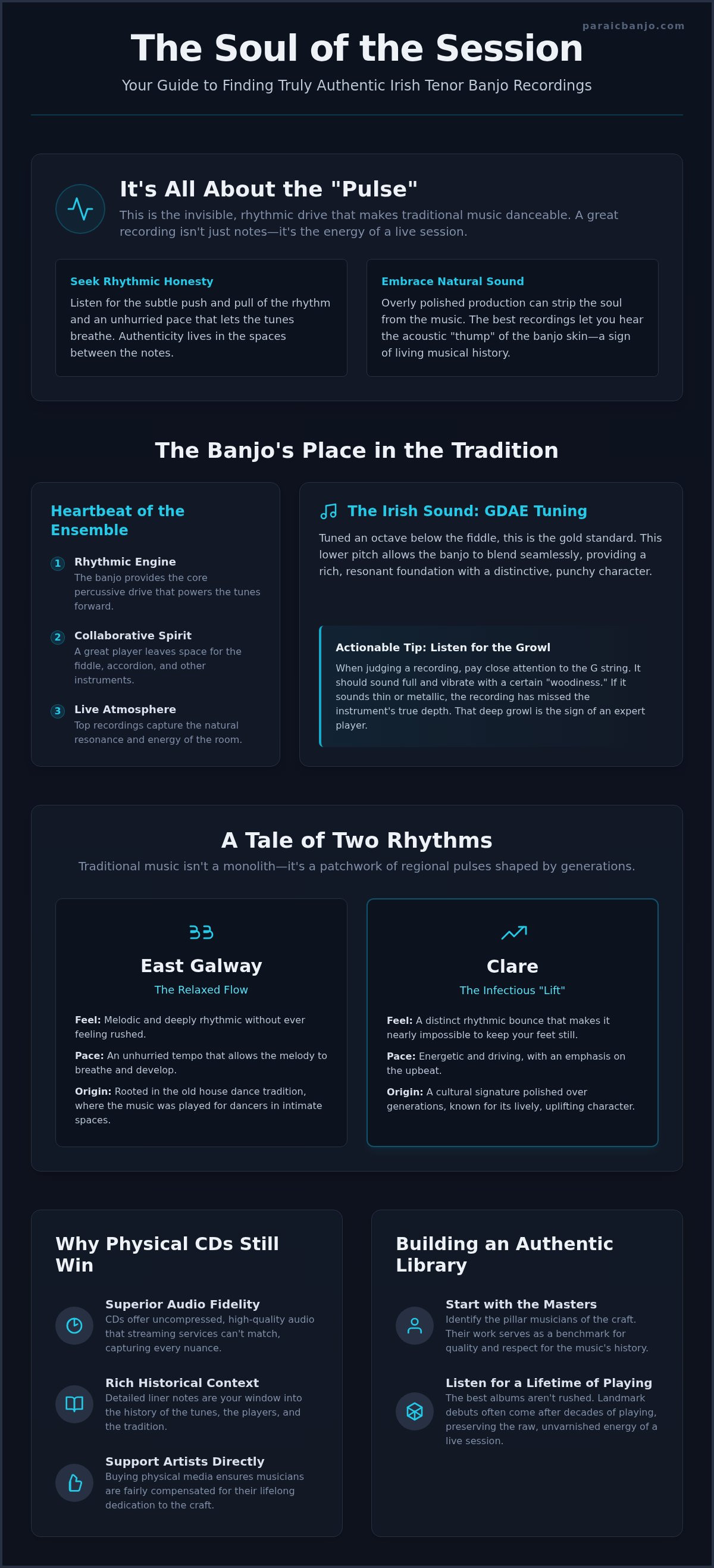
Finding a truly soulful irish tenor banjo cd is about more than just checking a tracklist. It's about capturing the "pulse." In the world of traditional music, the pulse is that invisible, rhythmic drive that makes the music danceable. A great recording doesn't just present a series of notes; it recreates the physical energy of a live session. You want to hear the interaction between the players, the subtle push and pull of the rhythm, and that unhurried pace that allows the tunes to breathe. Authenticity lives in the spaces between the notes.
High-quality audio shouldn't be too clinical. If the production is overly polished, you lose the organic character of the instrument. Look for recordings where you can actually hear the acoustic "thump" of the banjo skin. That percussive quality is what gives the banjo its unique voice in a crowded room. It's the difference between a sterile studio project and a piece of living musical history that sounds like it was captured in a quiet corner of a West Clare pub. It's about honesty in every pluck.
The Role of the Banjo in Traditional Sessions
The tenor banjo took a long road to get here. It originally found its feet in American jazz before being adopted into the heart of Irish music in the early 20th century. For the dedicated listener, rhythmic consistency is far more important than pure speed. While some albums focus on flashy solos, the best ones celebrate the collaborative nature of the music. When you listen to a master like Gerry O'Connor, you're hearing a benchmark of quality where technical skill never sacrifices the traditional feel. The banjo isn't just a solo instrument; it's the heartbeat of the ensemble.
Rhythmic Integrity: The banjo provides the percussive engine for the tunes.
Collaboration: Listen for how the banjo player leaves room for the fiddle or the accordion.
Atmosphere: The best recordings feel live, capturing the natural resonance of the room.
Standard Tuning vs. The Irish Sound
Most irish tenor banjo cd releases feature instruments tuned to GDAE. This is an octave below the fiddle and it's the gold standard for the genre. This lower pitch is crucial because it allows the banjo to blend seamlessly with other traditional instruments. It provides a rich, resonant foundation rather than a piercing high-end clash. It's a deep, growling sound that carries the melody with authority. This specific tuning is what gives the Irish banjo its distinctive, punchy character.
Actionable Tip: When you're judging the quality of a recording, listen specifically to the resonance of the G string. It should sound full and vibrate with a certain "woodiness." If the low notes sound thin or metallic, the recording likely hasn't captured the true depth of the instrument. A well-recorded banjo should feel solid and grounded, providing the perfect anchor for the lighter, dancing notes of the higher strings. Listen for that growl; it's the sign of a player who knows their craft.
Understanding the Rhythmic Soul of East Galway and Clare
To truly appreciate an irish tenor banjo cd, you have to understand the ground it stands on. Traditional music isn't a monolith. It's a patchwork of regional pulses. In East Galway, the music has a distinct, relaxed flow that feels almost unhurried. It's melodic and deeply rhythmic without ever feeling rushed. Then you cross the border into Clare, and the music gains a "lift." It's a rhythmic bounce that makes it nearly impossible to keep your feet still. These aren't just technical choices. They are cultural signatures that have been polished over generations.
Recording these styles requires a player who has lived the music for decades. You can't just mimic the notes. You have to understand why they are played with a certain weight or a specific swing. This deep regional knowledge is what separates a generic studio album from a recording that carries the weight of history. It's about finding that sweet spot where technical skill meets the raw, unvarnished soul of the West of Ireland. It's a labor of love that takes a lifetime to master.
The East Galway Approach to Reels and Jigs
Why do we play it this way? In the old house dance tradition, the tempo was dictated by the dancers and the intimate nature of the rooms. A slower pace allows the melody to truly breathe. It gives the banjo player space to find the nuances in a reel rather than just racing to the finish line. If you want to understand the technical side of this regional divide, check out this guide to East Galway vs Clare music. It's a deep dive into why that unhurried pulse matters so much to the tradition.
Preserving the Tradition Through Soulful Playing
Capturing these sounds on an irish tenor banjo cd requires more than just technical proficiency. It takes a player who has sat in the corners of pubs and kitchens for thirty or forty years. Every year adds a layer of "touch" to the strings. This isn't something you can learn from a digital tutorial. It's absorbed. By looking at the history of the banjo, we see how the instrument evolved to carry these complex regional identities. The old masters didn't just teach us tunes; they taught us how to feel the rhythm of our own communities.
Actionable Tip: When you're building your collection, look for albums that credit the regional source of their tunes. It shows a deep respect for the lineage. You can hear this commitment to regional roots on the debut recordings available at paraicbanjo.com, where the focus remains firmly on that authentic West of Ireland pulse. It's about more than just entertainment. It's a definitive statement of a lifetime's passion for the craft. Grab a piece of that history while you can.
Why Collectors Still Prefer Physical Irish Music CDs
In a world where music is often treated like a disposable digital utility, the humble irish tenor banjo cd remains a treasure for those who value the craft. Streaming is convenient, certainly. But it strips away the texture and the weight of the performance. When you hold a physical album in your hands, you're holding a piece of musical history. Physical media offers a level of audio fidelity that compressed digital files simply can't replicate. You hear the full, rounded resonance of the strings and the natural, wooden echo of the recording space. It's a tangible archive of a tradition that often feels ephemeral, vanishing the moment the session ends.
There is a quiet joy in the ritual of listening to a CD. It forces you to slow down and engage with the music as the artist intended. You aren't just skipping through a playlist; you're embarking on a curated journey. For the serious collector, these albums are more than just plastic and silver; they are definitive statements of a lifetime's passion. They represent a commitment to the music that transcends a simple digital storefront. It's about owning a piece of the tradition that you can pass down, just like the tunes themselves.
The Power of Detailed Liner Notes
Liner notes are the unsung heroes of traditional music recordings. They act as a history book for the tracks you're hearing, providing essential context that digital platforms ignore. You don't just get a list of tune names; you get the stories of where they were found and who passed them on. Collectors value learning about the specific instruments used, from vintage 19-fret banjos to handmade bouzoukis. On a landmark debut like "Not Before Time," these notes explain the 39-year journey it took to bring these 18 tracks to life. It's an education in every sleeve.
Supporting Independent Irish Music Releases
Buying a physical album is the most direct way to support an independent musician's craft. The economics of streaming are notoriously difficult for traditional artists, where thousands of plays might only result in a few cents. A single physical sale provides meaningful resources that help fund the next generation of music preservation. It ensures that the masters of the craft can continue to record and share their knowledge. If you want to make a real impact, you should Buy traditional Irish music direct from artists. This ensures they receive the full benefit of their work and keeps the tradition thriving for years to come. Your support is the heartbeat of this community.
How to Build an Authentic Irish Music Library
Building a collection isn't about grabbing every shiny disc on the shelf. It's about curation. It's about finding the pulse. When you start looking for an irish tenor banjo cd, you should begin with the pillars. These are the masters who defined the sound, whether they played the 19-fret or 20-fret models. Their recordings serve as the foundation of any serious library. But don't stop at the big names. Look for those "Live Session" recordings. These are the albums that capture the clinking of glasses and the spontaneous lift of a reel. They offer an atmosphere that a polished studio can never recreate. It feels real because it is real.
Diversify your listening. A library needs the raw, stripped-back focus of a solo banjo recording, but it also needs the drive of a full ensemble. You want to hear how the banjo weaves through the fiddle lines and sits atop the bouzouki's rhythmic bed. Prioritize independent labels and artist-owned storefronts. This isn't just about commerce; it's about connection. When you buy direct, you're becoming part of the story. You're helping ensure that this music stays in the hands of the people who live it every day. It's a small act that carries a lot of weight.
Identifying Quality Recordings
How do you separate the wheat from the chaff? First, listen for the instruments. You want pure, acoustic sounds. If you hear synthesizers or "Celtic-lite" reverb effects, put it back. You're looking for what I call "Not Before Time" status. These are albums that represent a lifetime of work, not a rushed project. They carry the weight of decades of practice and musical development. To get a sense of what's currently resonating in the community, read reviews on traditional music forums like The Session. It's a great way to see if an irish tenor banjo cd actually delivers that authentic session feel before you commit to the purchase.
Ordering CDs Online for Global Delivery
Don't let geography stop you from owning a piece of history. Most independent artists are experts at shipping delicate physical media across the world. They know how to pack a CD so it arrives at your door as crisp as the day it was pressed. Many also offer a digital backup copy with your physical purchase, giving you the best of both worlds. For a deeper look at navigating the market, check out our buying guide for traditional Irish music. It covers everything from verifying authenticity to supporting the right creators. If you're ready to start your journey with a recording that truly captures the East Galway spirit, you can explore my debut collection here. It's been 39 years in the making; it's ready for its place on your shelf.
Discovering 'Not Before Time': A Landmark Banjo Debut
After exploring the history and regional nuances of the tradition, it's time to look at a recording that brings all these elements together. Páraic Mac Donnchadha’s debut album, 'Not Before Time – 39 Years in the Making', is more than just another irish tenor banjo cd. It is a definitive statement of a lifetime spent in the heart of the music. For nearly four decades, these tunes were polished in sessions across East Galway and Clare before finally being captured for this landmark release. It's a project born from patience and a deep, abiding respect for the masters who came before.
This isn't a sterile studio production. It was recorded live with some of the finest accompanists in the tradition to ensure that the 'pulse' we discussed earlier remains front and center. Every track feels like an invitation into a private session, where the rhythm is king and the melody is allowed to breathe. It’s the perfect example of how the East Galway and Clare traditions can coexist in a modern recording, providing a bridge between the old house dances and today’s listeners.
Inside the 18 Tracks of Pure Banjo
The album features 18 tracks that span the full breadth of the tradition. You'll find driving reels, lifting jigs, and stately hornpipes, all delivered with a rhythmic consistency that is rare in today's fast-paced market. Because it was recorded live in the studio, you get that raw, acoustic energy that collectors crave. It’s an unhurried exploration of the instrument's soul, featuring expert accompaniment from masters of the craft that supports the banjo without ever crowding it. This is why many consider it a definitive statement for the modern irish tenor banjo cd collector. It’s about the touch on the strings and the weight of the history behind every note.
How to Secure Your Copy
Securing your piece of this musical history is straightforward. While digital tracks are available for immediate listening, the limited-edition physical CD is where the true value lies. When your package arrives, you'll find more than just a disc. You'll get extensive historical liner notes that act as a guide to the tunes and the people who shared them. It's an educator’s approach to a debut album, ensuring the context of the music is never lost. You're not just buying an album; you're supporting the preservation of a style.
To get your hands on this milestone release, visit the official storefront. You can choose between the physical CD or the digital version, but remember that the physical edition is a limited run. Don't wait another 39 years to hear these tunes. Order 'Not Before Time – 39 Years in the Making' today and bring the authentic sound of a West of Ireland session into your own home. It’s a journey that’s finally ready to be shared with you. Let's keep the music playing.
Start Your Journey into the Heart of the Tradition
Authentic traditional music isn't found in a sterile digital file; it's felt in the rhythmic pulse of a live session. By understanding the subtle "lift" of Clare and the relaxed flow of East Galway, you can build a collection that truly honors the craft. Choosing a physical irish tenor banjo cd ensures you own a piece of history, complete with the stories and liner notes that streaming simply leaves behind. It's about more than just listening; it's about preserving a way of life that has been passed down through generations. The music lives in the hands of those who play it.
My debut album is the culmination of this lifelong pursuit. It's a project 39 years in the making, featuring 18 tracks of pure session energy recorded with the masters I respect most. This limited edition physical media is a definitive statement of my passion for the instrument. If you're ready to bring that genuine West of Ireland spirit into your home, Secure your copy of 'Not Before Time – 39 Years in the Making' physical CD here. Let's keep these tunes alive together. See you at the next session!
Frequently Asked Questions
What is the best tuning for an Irish tenor banjo CD?
GDAE tuning is the gold standard for any authentic irish tenor banjo cd. This tuning is an octave below the fiddle, allowing the banjo to blend perfectly with other traditional instruments. It provides a rich, growling resonance that defines the Irish sound. While some jazz players use CGDA, traditionalists stick to GDAE to ensure the banjo acts as the rhythmic heartbeat of the session. It's about that deep, grounded foundation.
Why should I buy a physical CD instead of just streaming traditional music?
Physical CDs offer superior uncompressed audio quality that digital streaming services simply can't match. When you own the physical media, you also get detailed liner notes that act as a history book for the tunes. It's the most direct way to support independent artists, ensuring they receive the full benefit of their work. You're not just buying a file; you're securing a tangible piece of musical heritage for your collection.
What makes the East Galway banjo style unique compared to other regions?
The East Galway style is defined by its relaxed, melodic flow and unhurried tempo. It prioritizes the "pulse" and allows the melody to breathe, reflecting the old house dance traditions of the region. Unlike the high-energy "lift" often found in Clare music, East Galway playing is about subtle rhythmic nuances and a steady, driving heart. It's a style that takes decades to truly master and understand.
Is 'Not Before Time' suitable for someone just starting to learn the banjo?
Absolutely, this album is an essential resource for any student of the instrument. Hearing the 18 tracks provides a clear benchmark for rhythmic consistency and traditional phrasing. The detailed liner notes offer a wealth of information about tune origins and regional styles, making it a perfect educational tool. It's about learning the "pulse" of the music from a project that was 39 years in the making.
How can I order an Irish banjo CD if I live outside of Ireland?
You can easily order an irish tenor banjo cd for global delivery through the official storefront. Whether you're in North America, Europe, or beyond, secure shipping ensures your limited-edition physical media arrives in perfect condition. Most independent artists are well-versed in international logistics. If you prefer, you can also opt for digital tracks or the full digital album for immediate access to the music without the wait.
What are liner notes, and why are they important for traditional music?
Liner notes are the printed booklets included with a physical CD that provide essential context for the music. They often include tune names, their historical origins, and details about the featured performers and instruments used. In traditional music, this information is vital for preserving the lineage of the tunes. Without them, the stories behind the music are often lost in the digital shuffle of streaming platforms.
Are the tracks on Páraic Mac Donnchadha's album recorded live or in a studio?
Every track on 'Not Before Time' was recorded live in the studio to capture the raw energy of a real session. This approach ensures the interaction between the banjo and the accompaniment remains organic and unforced. It avoids the sterile, over-produced feel of many modern albums. You get the best of both worlds: high-fidelity audio quality combined with the spontaneous, rhythmic drive that defines the West of Ireland tradition.
Can I buy individual digital tracks if the physical CD is sold out?
Yes, individual digital tracks and the full digital album are always available for purchase. While the physical CD is a limited-edition collector's item with unique packaging, the music itself remains accessible to everyone. This ensures that even if the physical copies are gone, the 39 years of musical development captured in these recordings can still be enjoyed and studied by the wider traditional music community across the globe.


Comments