The Purist’s Guide to Choosing the Best Traditional Irish Session Music CD in 2026
- Paraic Mac Donnchadha

- 2 days ago
- 13 min read
That polished, over-produced "Celtic" album sitting in the airport gift shop might be the furthest thing from a real session you can find. For a true purist, the best traditional irish session music cd isn't about clinical perfection; it's about the grit under the fingernails and the rhythmic pulse that only comes from decades of playing in the corner of a crowded pub. You've likely felt that disappointment before. You buy a record expecting the raw energy of East Galway or Clare, only to get something that feels like background music for a spa. It's frustrating when the "lift", that infectious, driving spirit of the tune, gets lost in translation.
This guide will show you how to cut through the tourist-trap noise to find recordings with genuine soul. You'll learn how to identify authentic session sounds and why physical media is making a massive comeback. With CD sales in Ireland growing by 4.5% in 2025, collectors are clearly hungry for the stories and history tucked inside those detailed liner notes. We're also diving into why Not Before Time – 39 Years in the Making by Páraic Mac Donnchadha is the definitive session album of 2026, offering 18 live tracks that capture a lifetime of passion and mastery.
Table of Contents
What Defines a Truly Authentic Traditional Irish Session Music CD?
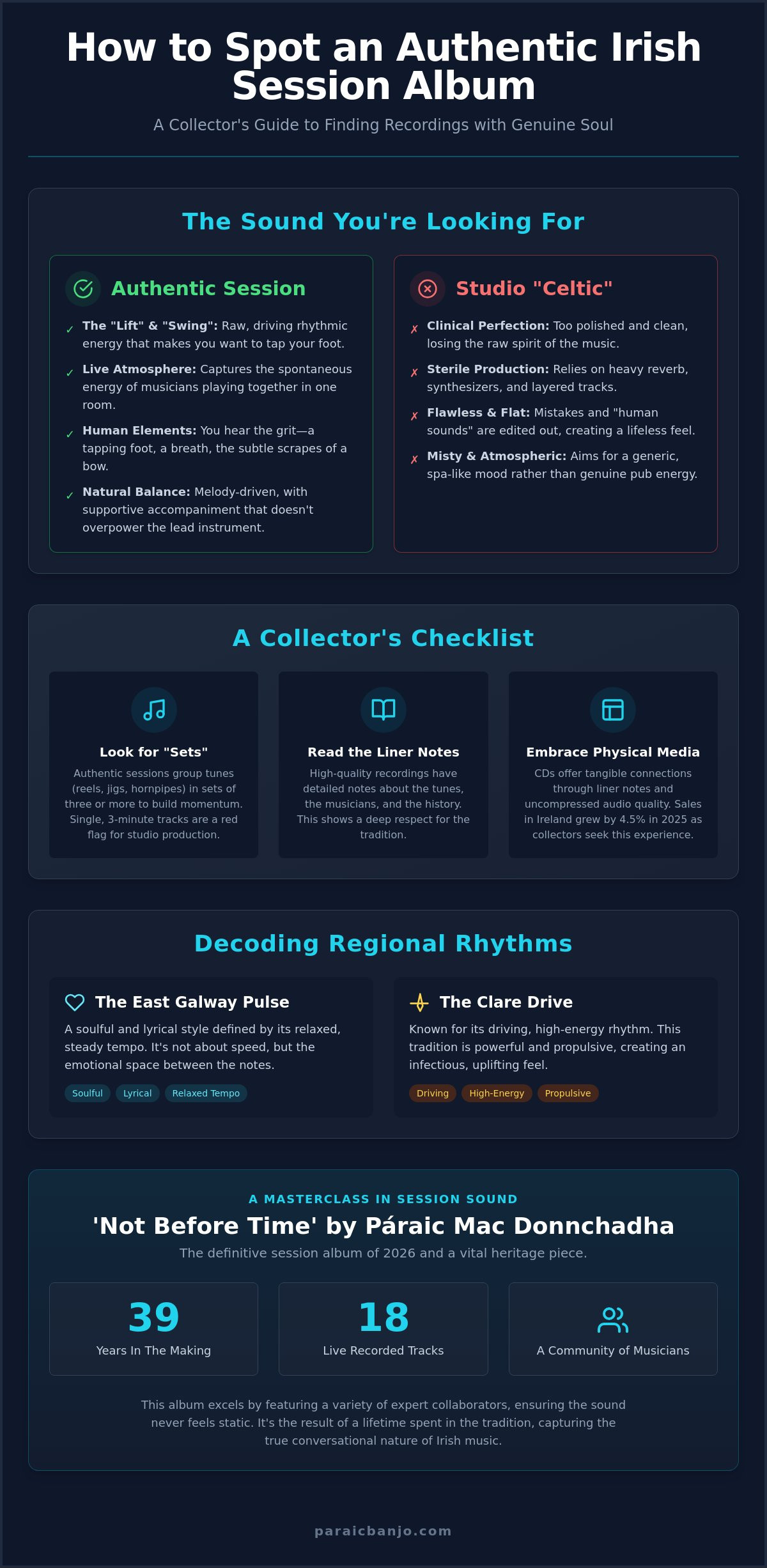
Authenticity in Irish music isn't something you can manufacture in a sterile studio booth. It's a feeling, a pulse, and a shared connection between musicians that has been honed over decades. When you search for a traditional irish session music cd, you're looking for more than just a collection of tunes. You're looking for a historical document of a specific moment in time. Many "Celtic" albums you find in gift shops rely on heavy reverb, synthesizers, and over-polished production to create a misty, atmospheric mood. A true session recording does the opposite. It brings the listener into the heart of the circle, where the "lift"—that elusive, driving rhythmic energy—takes center stage.
A great recording captures the grit and the soul of the music. It doesn't hide the sound of a tapping foot or the subtle intake of breath before a key change. These elements aren't mistakes; they're the evidence of life. If a recording feels too perfect, it has likely lost the very thing that makes this tradition special. Authentic recordings prioritize the "swing" of the tune over clinical precision, ensuring the music feels like a conversation rather than a performance.
The 'Live' Element: Capturing the Pub Atmosphere
The magic of an Irish traditional music session happens when musicians react to one another in real time. To capture this on a CD, artists often record "live" in a single room rather than layering tracks one by one. This allows for those tiny, spontaneous interactions that define the genre. You might hear a fiddle player slightly alter a turn because they've caught the rhythm of the banjo, or a flute player adding a flourish in response to a backing chord. These cues are the lifeblood of the tradition.
Actionable Tip: Before you buy, check if the tracks are listed as "sets." In a real session, tunes are grouped together, usually in threes, to build momentum. If an album only features single, three-minute tracks, it's likely a studio creation rather than a reflection of a real musical gathering.
Instrumentation and Balance
In a top-tier session recording, the balance between instruments is delicate. The melody should always lead. Whether it's the crisp, percussive snap of a tenor banjo or the fluid lilt of a fiddle, the lead instrument provides the narrative. The accompaniment—be it guitar, bouzouki, or piano—must support that story without overshadowing it. The tenor banjo often serves as a vital rhythmic anchor in these settings, cutting through the mix with a clarity that keeps everyone on the beat.
You'll typically hear a mix of lead voices in a high-quality traditional irish session music cd. Look for albums that feature a variety of textures, such as:
The Tenor Banjo: For rhythmic drive and melodic punch.
The Fiddle or Flute: For lyrical, flowing ornamentation.
The Uilleann Pipes: For that haunting, ancient resonance.
Albums like "Not Before Time – 39 Years in the Making" excel here because they feature 18 tracks recorded live with a variety of expert collaborators. This variety ensures the sound never feels static or one-dimensional. It feels like a community. When you hear multiple instruments weaving together, you're hearing the result of a lifetime spent in the tradition. Grab a copy of a live-recorded album and you'll immediately hear the difference that thirty-nine years of experience makes.
Decoding Regional Rhythms: East Galway and Clare Styles
Think of a traditional irish session music cd as a sonic map of the West of Ireland. For the purist, the joy of listening isn't just in the melody, but in identifying the regional "accent" of the player. These nuances are the secret sauce that separates a generic recording from a heritage piece. Understanding the history and instrumentation of these specific regions helps you appreciate why a reel might feel "lonesome" in one county and "driving" in the next. It's about the pulse of the land itself.
The East Galway Pulse
Listeners often describe the East Galway style as soulful, lyrical, and deceptively steady. It's not about speed; it's about the space between the notes. This tradition favors relaxed tempos that allow for intricate, flowing ornamentation. Musicians like Paddy Fahey or Eddie Kelly defined this sound, creating a mood that invites deep, focused listening. If you're looking for a recording to get lost in on a rainy evening, the Galway lilt is your perfect companion. It demands your full attention to catch the subtle shifts in the melody.
Actionable Tip: When listening to a Galway-style track, try to hum along. If you find the melody winding in unexpected directions while the rhythm stays rock-solid and calm, you've found an authentic East Galway recording.
Clare's Rhythmic Drive
If Galway is a conversation, Clare is a dance. This style is famous for its "lift"—a rhythmic bounce that makes it nearly impossible to keep your feet still. The tempo might be faster, but it's the internal energy of the beat that really defines it. In Clare-influenced sets, the tenor banjo often takes a starring role, using its percussive snap to cut through the rhythm and drive the tune forward. For a deeper dive into these technical differences, you can explore this guide on East Galway vs Clare music.
Bridging these two iconic styles is no small feat. It requires a lifetime of sitting in corners, listening to the elders, and absorbing the distinct "swing" of each parish. Páraic Mac Donnchadha has spent 39 years doing exactly that. His debut album doesn't just pick a side; it marries the steady Galway soul with that infectious Clare drive. You can hear this mastery of regional nuance for yourself when you explore his debut album, which serves as a definitive statement of a lifetime's passion for these traditions.
How to Spot a High-Quality Recording for Your Collection
Building a serious library isn't just about clicking "buy" on the first result that pops up. Finding a genuine traditional irish session music cd requires a bit of detective work. In 2026, the market is flooded with mass-produced compilations that look the part but sound like elevator music. To find the real gems, you need to look past the cover art. A high-quality recording should mirror the structure of a real night in the pub. Check the tracklist immediately. Are the tunes grouped into sets of reels, jigs, and hornpipes? If the album features fifteen individual two-minute tracks with no progression, it’s likely a studio project that lacks the "lift" we discussed earlier.
The pedigree of the artist is your best guarantee of quality. Look for musicians who have spent years in the trenches of the session scene. True mastery isn't just about technical speed; it's about the deep, intuitive understanding of the tradition that only comes with time. When an artist waits decades to release a debut, like the 39-year journey behind Páraic Mac Donnchadha’s work, you know every note has been lived in. That’s the difference between a commercial product and a heritage statement.
The Power of the Liner Notes
A true purist knows that the music is only half the story. High-quality recordings almost always include extensive liner notes. These aren't just lists of names. They’re windows into the history of the tunes. Knowing that a specific reel was learned from an old master in a kitchen fifty years ago changes how you hear the melody. These notes serve as a vital learning tool, connecting you to the source and the storyteller. If a CD lacks this context, it’s missing the soul of the tradition.
Actionable Tip: Before purchasing, see if the artist provides digital or physical booklets. Detailed background on the instruments used and the origin of the sets is the hallmark of a serious collector's item.
Independent vs. Mass-Market Releases
In the digital age, buying direct from the artist is the gold standard. Independent releases usually bypass the over-sanitized production of big labels, preserving the raw, live energy of the instruments. This direct support ensures the artist can continue preserving regional styles like those of East Galway and Clare. It’s the best way to find traditional irish session music cd options that support the artist while delivering an uncompromised sound.
Avoid "tourist" CDs at all costs. Red flags include generic titles like "Best of Ireland" or covers featuring misty landscapes without a single musician in sight. These often use synthesizers or MIDI tracks that lose the rhythmic snap of the tenor banjo or the fluid lilt of the fiddle. If you want a recording that feels like a homecoming, grab a copy of a live-recorded debut that honors the craft. You’ll hear the difference the moment the first set kicks in.
Practical Tips for Building Your Irish Music Library
Curation is an art form. When you're looking to expand your collection, don't just reach for the first flashy compilation you see. Start with the "roots." This means focusing on solo albums or small group recordings first. These intimate settings allow you to hear the true character of the instrument without it being buried under too much production noise. A great traditional irish session music cd should allow the lead instrument's personality to shine through, giving you a clear window into the player's unique style and ornamentation.
Balance is your next priority. A well-rounded library shouldn't just be twenty fiddle albums. You want to hear how different lead voices interact with the tradition. Mix in the percussive snap of a tenor banjo, the haunting resonance of uilleann pipes, and the fluid lilt of a wooden flute. By diversifying your lead instruments, you’ll begin to recognize how each one handles the rhythmic "lift" of a reel or the swing of a jig. When choosing a traditional irish session music cd, look for debut albums that carry a deep history. These often represent a musician's most considered work, distilled over decades of playing.
Physical CDs vs. Digital Downloads
In 2026, we’ve seen a 4.5% growth in physical CD sales in Ireland. There’s a reason for this revival. A physical CD offers a tactile joy that a file on your phone just can't match. You get the full artwork and those essential liner notes we discussed earlier. However, practicality matters too. You might choose a high quality irish music download for listening on the go or while traveling to your next session. The key is to keep the physical copy for your home library where you can really sit with the music and the stories. It's about having the best of both worlds.
Where to Buy for Maximum Authenticity
Where you spend your money matters as much as what you buy. While big retailers are easy, a specialized traditional irish music store often carries niche titles you won't find anywhere else. Even better, you should aim to buy traditional irish music direct from artist whenever possible. This ensures the musicians are fairly compensated for their craft and encourages them to keep recording and preserving regional styles.
Actionable Tip: Keep an eye out for limited edition physical releases. In the traditional world, these are often printed in small batches and won't be restocked once they're gone. If you want a piece of history that embodies this entire journey, you can order the physical CD of Not Before Time – 39 Years in the Making today to ensure you don't miss out on this heritage recording. It’s a definitive statement of a lifetime’s passion, and it belongs on the shelf of every serious collector.
'Not Before Time': A Masterclass in the Session Sound
Thirty-nine years is a long time to wait for a debut, but true mastery doesn't happen overnight. For Páraic Mac Donnchadha, this project wasn't about rushing a product to market; it was about waiting until the music felt settled, lived-in, and ready to be shared as a definitive statement. This traditional irish session music cd represents a lifetime of nights spent in the heart of the tradition, absorbing the rhythmic nuances of East Galway and the driving energy of Clare. It's a celebration of a career milestone that feels both like a relief and a joyous homecoming. Every note carries the weight of those decades, offering a level of depth that you simply won't find in a younger player's first release.
Recording live was the only way to do this music justice. We've talked about the importance of the "live" feel, and this album delivers it in spades. By bringing expert musicians into the same room, Páraic captured the spontaneous sparks that fly when players are truly locked in. You can hear the mutual respect and the shared pulse between the instruments. It isn't a solitary performance; it's a collaboration that honors the communal spirit of the Irish music tradition. This isn't just another recording. It's a heritage document that preserves a specific way of playing for the next generation of listeners and collectors.
What’s Inside the Album?
The 18 tracks on "Not Before Time" offer a meticulously curated journey through the West of Ireland. You'll find sets of reels that build with infectious momentum, jigs that carry a playful lift, and soulful slow airs that demand a quiet moment of reflection. Páraic’s tenor banjo style is at the center of it all, showcasing a rhythmic mastery that is both percussive and lyrical. It’s a masterclass in how to lead a session with confidence while leaving room for the music to breathe. The intricate ornamentation and steady tempo serve as a direct link to the old masters, making this a vital addition to any traditional irish session music cd collection.
Actionable Tip: When you first listen, pay close attention to the track transitions. Notice how the energy shifts when moving from the first tune to the second in a set. This is where you'll hear the real "lift" that defines the session sound.
How to Get Your Copy
Whether you’re a purist who loves the tactile experience of a physical product or a listener who prefers the convenience of digital files, we’ve made sure you can access this music easily. The limited-edition physical CD features detailed liner notes that provide the essential historical context we’ve discussed throughout this guide. It’s a true collector’s piece, available for global delivery to bring a piece of East Galway into your home. If you're ready to start listening immediately, the digital album and individual tracks offer instant access to the full session experience.
Don't let this piece of musical history pass you by. It's a rare thing to find a recording with this much heart and heritage behind it. Grab your copy of 'Not Before Time' today! and immerse yourself in the authentic sound of a master at work. You'll feel the 39-year journey in every single set. Enjoy the tunes!
Ready to Bring the Session Home?
Finding a traditional irish session music cd that truly captures the spirit of the pub corner doesn't have to be a guessing game. By prioritizing live-recorded sets and deep regional nuances, you ensure your collection is a living piece of heritage rather than a sterile studio product. Remember to look for those detailed liner notes and support independent artists who have spent decades honing their craft in the heart of the community. It's about the rhythm, the "lift," and the stories that connect us all to the music's roots.
Páraic Mac Donnchadha’s debut album is a definitive statement of 39 years of musical heritage. Featuring 18 authentic live-recorded tracks, it brings the soulful energy of East Galway and Clare directly to your speakers. Whether you are a seasoned collector or a newcomer to the tradition, this recording offers a masterclass in the session sound. We provide worldwide shipping for the physical CD, or you can opt for an instant digital download for immediate listening. Experience the pulse of tradition—order 'Not Before Time' now. It’s time to let the tunes take over!
Frequently Asked Questions
What is the difference between a session CD and a studio album?
A session recording captures the raw, live interaction of musicians playing together in a single room to mimic the energy of a pub gathering. Studio albums often rely on isolated tracks and heavy digital editing, which can strip away the rhythmic "lift" and spontaneous chemistry. Choosing a live-recorded album ensures you hear the natural pulse and occasional percussive foot-tap that defines the tradition.
Why is the tenor banjo so important in Irish session music?
The tenor banjo acts as a vital rhythmic anchor due to its crisp, percussive snap. It has a unique ability to cut through the sound of fiddles and flutes, providing a clear melodic lead that drives the tempo of a set. In the West of Ireland tradition, the banjo is often the engine room that keeps the reels and jigs moving with infectious energy.
Are physical CDs still worth buying for traditional music in 2026?
Physical media offers a tangible connection to the heritage that digital files simply can't replace. With CD sales in Ireland seeing a 4.5% growth in 2025, it’s clear that collectors still value the high-quality audio and the detailed physical booklets. These albums serve as heritage items that preserve the stories and history of the music for future generations.
What should I look for in the liner notes of an Irish music CD?
Look for the "provenance" of the tunes, which explains who the artist learned the music from and the history of the sets. A high-quality traditional irish session music cd will include these details to provide cultural context. Actionable tip: Check if the notes mention specific old masters or regional parishes, as this is a hallmark of a genuine heritage recording.
Can I learn to play tunes by listening to these CDs?
Listening is the most effective way to absorb the subtle ornamentation and "swing" of traditional music. By playing these tracks on repeat, you can start to pick out the melody and understand how different instruments interact within a set. It is a fundamental part of the "aural tradition" where you learn by ear rather than just reading dots on a page.
Is 'Not Before Time' suitable for someone new to Irish music?
This album is an ideal starting point because it presents the tradition in its most authentic, unpolished form. The 18 tracks offer a clear and expertly played introduction to the styles of East Galway and Clare. It avoids the synthesizers and over-production found in commercial folk, giving newcomers a true taste of what a real session sounds like.
How do regional styles like East Galway affect the sound of a CD?
Regional styles dictate the "accent" and tempo of the playing, such as the relaxed, lyrical pace of East Galway or the driving "lift" of Clare. A traditional irish session music cd that respects these boundaries will feel more grounded and authentic. Páraic Mac Donnchadha uses his 39 years of experience to bridge these styles, creating a varied and deeply soulful listening experience.
Where is the best place to buy authentic Irish music online?
Buying directly from the artist's official website is the best way to ensure you are getting a genuine product while supporting the musician directly. It guarantees that the artist is fairly compensated for their craft and that you are receiving a high-quality recording. This direct connection helps preserve the tradition and ensures that independent, heritage-focused projects can continue to be made.


Comments