Why Collectors Still Crave a Physical Copy of Irish Music in 2026
- Paraic Mac Donnchadha

- 24 hours ago
- 13 min read
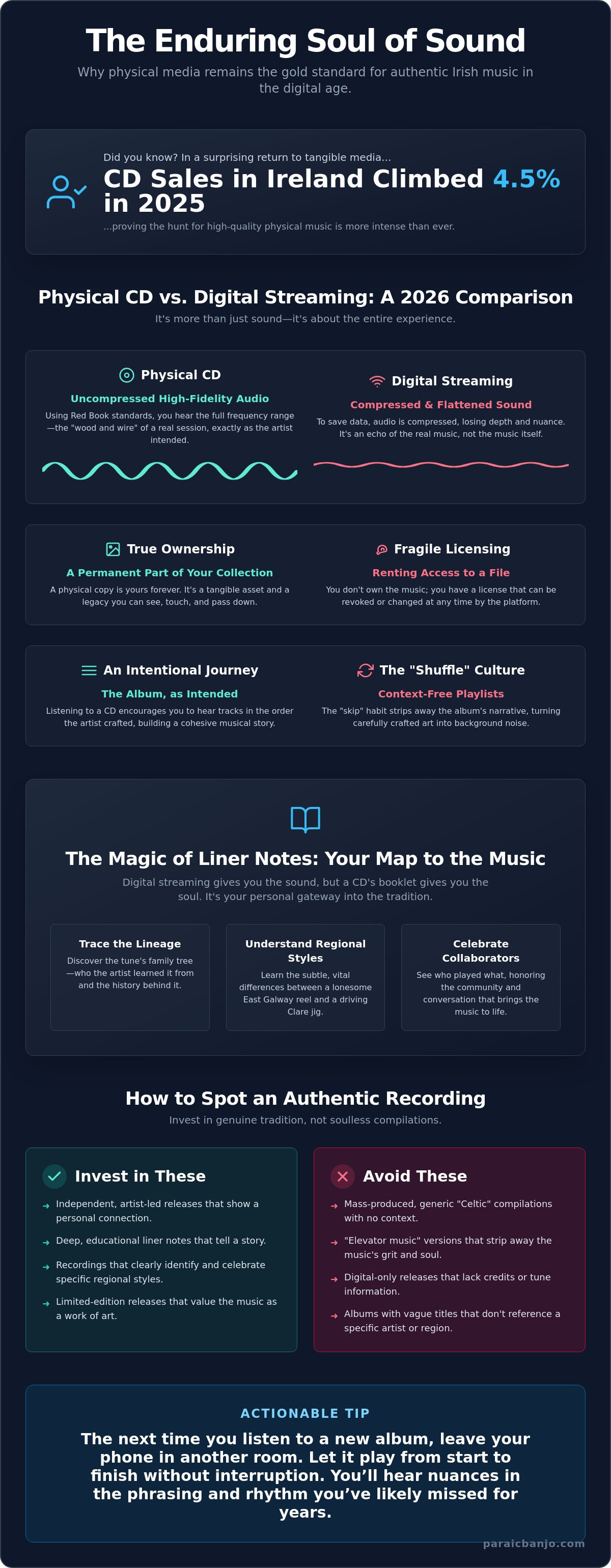
Did you know that CD sales in Ireland actually climbed by 4.5% in 2025? It might seem surprising in our high-speed digital age, but the hunt for a high-quality physical copy of irish music is more intense than it's been in years. You've likely felt that nagging frustration when a streaming track sounds thin or compressed; it loses the grit and the rhythmic soul of a real session. It's like listening to a faint echo rather than the music itself. I know that feeling of wanting something more than just a disposable file on a phone. You want to feel the weight of the tradition in your very hands.
In this article, you'll discover why physical media remains the absolute gold standard for traditional music purists and how to track down authentic recordings that digital platforms simply can't match. We're going to explore the technical beauty of uncompressed audio, which is high-fidelity sound that hasn't been flattened for the web, and the deep education found in professional liner notes. I'll also show you how to avoid those soulless, mass-produced compilations so you can find a genuine connection to the artist. It's time to move past the background noise and get back to the heart of the tunes.
Table of Contents
The Tactile Connection: Why a Physical Copy of Irish Music Still Wins
There is a specific kind of magic in holding a physical copy of irish music that a digital file just can’t replicate. When you slide a CD out of its case, you aren't just starting a playlist; you are engaging with a piece of history. A digital folder is a ghost on a hard drive, but a curated collection on your shelf is a legacy you can see and touch. It represents a commitment to the art. For me, releasing my debut album after 39 years wasn't just about the tunes. It was about creating something tangible that carries the weight of those decades. Understanding The history of physical media helps us see why so many are returning to these formats. In 2025, CD sales in Ireland actually grew by 4.5%, proving that the desire for a real, physical connection to the music is stronger than ever.
The Death of the 'Shuffle' Culture
Traditional albums are crafted as a cohesive journey. When you listen to a physical disc, you're encouraged to hear the tracks in the exact order the artist intended. This builds a sense of patience that "shuffle" culture has stripped away. In the East Galway and Clare styles, the transition from one reel to the next tells a story. By committing to the full album, you avoid the "skip" habit and truly sink into the rhythm. Actionable Tip: The next time you sit down with a new album, leave your phone in another room. Let the music play from start to finish without interruption. You’ll hear nuances in the phrasing that you’ve likely missed for years.
High-Fidelity: The Audiophile’s Choice
If you want to hear the "wood and wire" of a session, streaming usually falls short. Most streaming platforms compress audio to save data, which flattens the sound. A physical CD uses Red Book standards, a technical term for high-quality, uncompressed audio. This means you get the full frequency range. You can hear the sharp "snap" of the plectrum on the banjo strings and the deep, resonant thrum of the accompaniment. Investing in a physical copy of irish music isn't just about nostalgia; it’s about the fidelity. It’s a time capsule of sound that doesn't stutter when the internet connection drops.
If you’re looking for that raw, rhythmic energy, you can find it in the limited edition physical CD of Not Before Time – 39 Years in the Making. It’s a definitive statement of the craft, recorded live to capture the heart of the tradition. Unlike a digital license that can be revoked, a physical copy is yours forever. It’s an investment in your own musical education and a way to ensure these regional styles continue to thrive. Grab your copy and hear the difference for yourself.
The Magic of Liner Notes: More Than Just a Tracklist
Holding a physical copy of irish music is like holding a map to the past. You aren't just looking at a list of tunes; you're holding years of research, stories, and lineage in your hands. Digital streaming gives you the sound, but it strips away the context. When you open a CD booklet, you become a student of the tradition. The Irish Traditional Music Archive does incredible work preserving our heritage, and well-crafted liner notes act as your personal gateway to that deep well of knowledge. They turn a simple listening session into a masterclass. You learn why a certain tune was chosen, who the artist heard it from, and why that specific setting matters. It's about the connection between the player and the source.
Preserving the East Galway and Clare Tradition
Regional styles are the lifeblood of our music. Without the written word to accompany the audio, the subtle differences between a slow, lonesome East Galway reel and a driving Clare jig can get lost. Physical booklets document these nuances for the next generation. They explain why a jig isn't just a rhythmic exercise, but perhaps a tribute to a local character or a specific house session. If you want to dive deeper into these distinctions, my guide on East Galway vs Clare Music: A Guide to the Rhythmic Soul of the West breaks down the rhythmic soul that defines these areas. Actionable Tip: As you listen, use the notes to trace the "family tree" of a tune. Look for the names of the old masters mentioned and seek out their recordings later. It’s the best way to build your musical ear.
The Social Element: Who Played What?
Traditional music is never a solitary act. It’s a conversation between friends. Detailed credits in a physical copy of irish music celebrate the collaborators who bring the tracks to life. You get to see who played that specific flute or why a certain fiddle player was invited for a particular set. It creates a "session in a box" feel. You aren't just hearing a banjo; you're hearing the interplay between a community of musicians. This social context adds a layer of warmth that a digital file can never provide. It reminds us that the music belongs to everyone. For a truly immersive experience, you can explore the extensive notes included with the Not Before Time physical CD, which features 18 tracks recorded live with expert collaborators. It’s a definitive statement of a lifetime's passion, shared with those who know the music best.
Physical CD vs. Digital Download: A 2026 Comparison
We live in a world of instant access, but have you ever stopped to think about what you actually own? When you click "buy" on a digital storefront, you're often just purchasing a license to stream that file as long as the provider allows it. If a company goes bust or a licensing deal expires, your library can disappear overnight. A physical copy of irish music is different. It’s a permanent, tangible asset that belongs to you. It doesn't require a subscription, an internet connection, or a password to enjoy. It’s a piece of culture you can hold, display, and eventually pass down to the next generation of players.
The True Cost of Convenience
Digital downloads are quick, but they lack the long-term value of a physical object. My debut album, Not Before Time – 39 Years in the Making, was designed as a collector's item because I wanted to offer more than just a data stream. You get 18 tracks of raw, rhythmic banjo music and the full tactile experience of the artwork and notes. Actionable Tip: You can still have the convenience of digital while owning the CD. Use a computer to "rip" your disc into a lossless format like FLAC or ALAC. This keeps the high-quality audio intact for your mobile devices while the original disc stays safe on your shelf as a high-fidelity backup.
Supporting the Artist Directly
The financial reality for musicians in 2026 is complex. While the Irish Music Rights Organisation (IMRO) reported record revenues of €57.1 million in 2025, many individual creators still struggle with the "value gap" created by streaming platforms. Streaming services pay only a tiny fraction of a cent per play. When you buy a physical CD directly from the source, you are ensuring that the artist can actually afford to keep recording. It’s the most direct way to keep the living tradition alive. If you want to know more about how to bypass the big corporations, check out The Collector’s Guide: How to Buy Traditional Irish Music Direct from Artists in 2026. Buying direct isn't just a transaction; it's a vote for the future of the music.
Think about the last time you gave a gift. A link to a Spotify playlist feels like an afterthought. A physical CD, wrapped and handed over, carries weight and intention. It shows you care about the recipient’s musical journey. For a collector, a physical copy of irish music is a treasure. It’s an investment in sound that won't evaporate when technology changes. Unlike a digital file, a CD has resale and heirloom value. You can't leave a login to a cloud account in a will, but you can certainly leave a library of storied recordings to your children.
How to Spot an Authentic Traditional Irish Recording
Searching for a physical copy of irish music can sometimes feel like walking through a minefield of generic "Celtic" compilations. You've seen them in airport gift shops; those CDs with misty landscapes on the cover and titles like "Emerald Dreams." Usually, these are mass-produced recordings that lack the rhythmic pulse of a real session. To find the heart of the tradition, you have to look closer at the details. Authentic recordings aren't polished to a sterile shine. They have the grit of a live performance and the distinct character of a specific region. It takes a discerning ear to find the real gems.
Check the label before you buy. Major commercial labels often prioritize a "clean" sound that can strip away the nuances of the banjo or fiddle. Independent releases, however, are usually driven by the artist’s own vision. Look at the tracklist. Are these the same five tunes you hear on every "Best of Ireland" disc, or are they unique settings of old reels and jigs? A true traditional recording feels like a conversation you've been invited to join, not a product designed for background noise. It should sound like the wood and wire of the instruments are right there in the room with you.
The Purist’s Checklist
When you're evaluating a potential addition to your collection, follow these steps to ensure authenticity. It makes all the difference in the world.
Look for specific regional mentions: A real gem will often specify a style, like East Galway or Clare. This shows the artist is rooted in a specific community and understands the local "swing."
Check the collaborator list: Traditional music thrives on partnership. If the notes list specific guest musicians and their instruments, it’s a sign of a genuine project rather than a MIDI-heavy studio creation.
The "Live Energy" Test: Does the audio breathe? Authentic recordings are often captured live with other players to preserve that irreplaceable session energy.
Where to Shop for Real Gems
The best way to support the tradition is to buy directly from the source. While global giants like Amazon might have the convenience, artist websites are the true gold mines for collectors. This is where you’ll find limited edition releases and the most detailed information about the music’s heritage. For a deeper dive into sifting the wheat from the chaff, read my full guide on How to Buy Traditional Irish Music: A Collector’s Guide to Authenticity. Supporting the artist directly ensures the music stays alive and well.
If you want to skip the guesswork and own a definitive statement of the East Galway style, you can find the Not Before Time physical CD right here. It features 18 tracks of raw, rhythmic banjo music recorded with the kind of expert collaborators you won't find on a generic compilation. It’s a project 39 years in the making, and it’s built for the purist who demands the real thing. Grab your copy and hear the difference for yourself.
Not Before Time: The Limited Edition Physical CD Experience
39 years is a long time to wait for a debut, but some things shouldn't be rushed. This physical copy of irish music represents more than just a collection of tracks; it’s a lifetime of sessions, stories, and rhythmic exploration condensed into one definitive project. When you hold the Not Before Time CD, you're holding a milestone. It’s a project that carries the weight of decades spent honing the craft in the kitchens and pubs of East Galway and Clare. For a collector in 2026, this isn't just another addition to the shelf. It’s a statement of persistence and a celebration of a living tradition that refuses to be thinned out by digital convenience.
Inside the case, you'll find 18 tracks of raw, rhythmic tenor banjo. I chose to record these live with expert collaborators because that’s how the music lives and breathes. It isn't sterile or over-produced. You can hear the driving energy of the East Galway style in every set. This limited edition release is designed for those who want the full, uncompressed experience we discussed earlier. It’s about the "snap" of the strings and the shared pulse of the musicians in the room. It’s a relief and a joy to finally share this work after such a long journey.
A Masterclass in Rhythmic Mastery
The 18 tracks on this album aren't just random selections. They've been carefully curated to showcase the soulful, driving style that defines my home region. This is a complete body of work that invites you to sit down and listen from start to finish. If you want to understand the history and the heart behind these specific settings, Not Before Time - 39 Years in the Making: The Definitive Irish Banjo Debut offers a deeper look at the project's development. Actionable Tip: Use the detailed liner notes as a guide while you listen. Try to identify the subtle rhythmic variations between the East Galway reels and the Clare jigs; it’s the best way to sharpen your own musical ear.
The Perfect Heritage Gift
In a digital world, giving a gift that has real weight and history is a rare thing. This album is the ideal heritage gift for the Irish music lover in your life, especially for those who appreciate the depth of a physical copy of irish music. It’s a piece of culture that can be passed down, far outlasting any streaming subscription. Actionable Tip: If you're ordering for a friend overseas in 2026, be sure to verify the current international shipping rates at checkout to ensure your gift arrives in time for a special occasion. You can get your copy delivered globally by visiting the Not Before Time order page. It’s been a long road to get here, and I’m delighted to invite you into this storied tradition. Enjoy the tunes!
Take Home a Piece of the Living Tradition
A physical copy of irish music offers a depth of sound and a level of ownership that digital platforms just can't touch. We've explored how high-fidelity audio preserves the raw energy of the banjo, while detailed liner notes act as a masterclass in regional styles. Choosing physical media isn't just about nostalgia; it’s about securing a permanent piece of culture that won't disappear when a streaming license expires. By looking for authentic, independent releases, you ensure that the rhythmic soul of places like East Galway remains vibrant and well-supported.
My debut album is a definitive statement of 39 years of musical heritage, condensed into 18 tracks of authentic East Galway session music. Each CD includes detailed collector's liner notes to help you trace the lineage of every tune. It’s a project built on a lifetime’s passion, and it’s finally ready for your shelf. If you're ready to experience the tunes as they were meant to be heard, you can order your limited-edition physical copy of 'Not Before Time' today. It’s been a long journey to get these recordings into your hands, and I'm thrilled to share them with you. Keep the music playing!
Frequently Asked Questions
Is it still possible to buy physical copies of Irish music in 2026?
Yes, it is absolutely possible and increasingly popular. CD sales in Ireland actually grew by 4.5% in 2025, showing a strong resurgence in physical media. Many independent traditional artists now prioritize limited edition physical runs because they know their audience values a tangible connection to the music that a digital file just can't provide.
What are the benefits of buying a physical CD over a digital download?
The biggest advantages are superior audio quality and permanent ownership. A physical copy of irish music provides uncompressed audio, which means you hear the full resonance and "snap" of the instruments. Unlike digital downloads, which are often just licenses that can be revoked, a CD is a physical asset you own forever without needing an internet connection.
Do physical Irish music CDs come with digital copies?
While the CD is a physical format, it is the perfect source for creating your own high-quality digital library. You can "rip" the tracks from your disc into a lossless format on your computer. This gives you the best of both worlds: the convenience of mobile listening and the security of a high-fidelity physical backup on your shelf.
How can I tell if an Irish music CD is authentic or mass-produced?
Look for specific regional style mentions and detailed musician credits. Authentic recordings will highlight styles like East Galway or Clare and list the specific collaborators involved. Avoid generic "Celtic" compilations that feature misty landscapes but lack information about the artists or the history of the tunes. Real traditional music sounds like a live session, not a sterile studio product.
Why are liner notes so important for traditional Irish music collectors?
Liner notes serve as an essential educational map for the tradition. They document the lineage of the tunes, explaining who the artist learned them from and why a particular setting was chosen. For a collector, these notes turn a listening session into a masterclass, preserving regional history that might otherwise be lost in the digital shuffle.
Where is the best place to buy independent Irish music releases?
Buying directly from the artist’s website is the gold standard for collectors. This ensures the musician receives the most support and often gives you access to exclusive limited editions. While global retail giants carry some titles, they rarely offer the deep contextual information and personal connection found on an artist’s own storefront.
Does Páraic Banjo ship the 'Not Before Time' physical CD internationally?
Yes, international shipping is available for the "Not Before Time" debut album. You can have this 39-year milestone delivered globally, ensuring that listeners everywhere can enjoy these 18 tracks of authentic banjo music. Simply check the current 2026 shipping rates during checkout to see the options for your specific country.
Can I play a physical CD on my computer or in my car in 2026?
Yes, you can still enjoy your collection on modern systems with a simple external drive. While many new devices don't have built-in players, inexpensive USB CD drives are widely available and plug right into your laptop or car's media port. This allows you to maintain your physical copy of irish music while staying compatible with the latest technology.


Comments