Traditional Irish Music Albums: A Collector's Guide
- Paraic Mac Donnchadha

- 11 minutes ago
- 12 min read
Have you ever bought a CD labeled "Celtic Dreams" only to realize it sounds more like a yoga studio than a Galway pub? It's a massive letdown for anyone hunting for authentic traditional irish music albums for sale. You're looking for the grit of the resin on the bow and the punchy, rhythmic snap of a tenor banjo, not synthesized strings. Finding the real thing in a digital-first world is tough; especially when you're chasing that specific, soulful lift found in a late-night session. It's easy to feel like the true spirit of the music is being buried by generic compilations.
We know that for a true collector, a simple digital file often feels hollow. You want the tangible connection of a physical CD and those rich liner notes that explain exactly who played what and why it matters. This guide will show you how to find music that captures the genuine energy of a session while supporting the independent musicians who keep our culture alive. We'll dive into regional styles, like the lyrical, flowing tunes of East Galway, and help you build a collection that represents a lifetime of passion. It's time to own a piece of heritage that sounds exactly like home.
Table of Contents
What Makes a Traditional Irish Music Album Authentic?
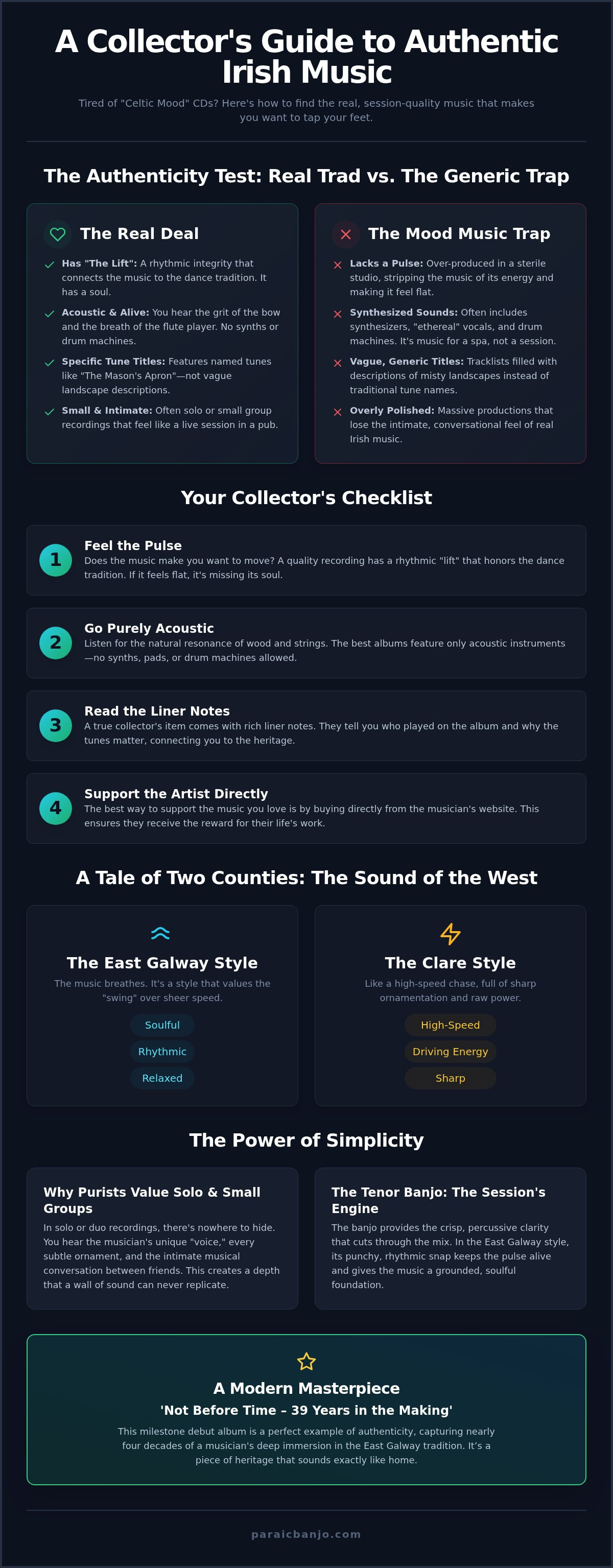
Authenticity isn't just a marketing buzzword; it's the very heartbeat of the tune. When we talk about real Irish music, we're talking about the "lift." This is the rhythmic integrity that connects the player to the dance tradition. If a recording doesn't make you want to tap your foot or imagine a dancer on a kitchen floor, it's likely missing its soul. True authenticity is found in the History of Irish Music, where the melody serves the rhythm, not the other way around. It's the grit of the resin on the bow and the percussive snap of the plectrum on a banjo string.
Searching for traditional irish music albums for sale can be a bit of a minefield because "Celtic" mood music often crowds the shelves. That stuff is fine for a spa, but it isn't traditional music. Real trad is social. It's the sound of a session; unforced, acoustic, and alive. You want to hear the breath of the flute player and the natural resonance of the wood. A great album should feel like you've just pulled up a stool in a snug in East Galway.
Practical Tip:
Always prioritize albums featuring acoustic instruments. If you hear synthesizers, drum machines, or "ethereal" vocal pads, you've wandered away from the tradition. Look for the pulse.
The Problem with Generic "Irish" Compilations
Big-box store "Celtic" CDs often lack the spirit of the real thing. These collections are frequently over-produced in sterile studios, stripping away the "pulse" that gives the music its energy. They feel flat. To avoid this, check the tracklist before you buy. Authentic traditional irish music albums for sale will list specific tune types like reels, jigs, or hornpipes. If the titles are vague descriptions of misty landscapes rather than names like "The Mason's Apron" or "The Wind That Shakes the Barley," it's probably generic elevator music.
Why Purists Value Solo and Small-Group Recordings
There's a special kind of magic in solo recordings. It allows the unique "voice" of the instrument to shine through without any clutter. You hear every ornament, every subtle variation, and the player’s personal style. Small groups, perhaps a duo or trio, offer a similar intimacy. They capture a musical conversation between friends. This simplicity often leads to much greater depth than a massive stage production. You don't need a wall of sound when the melody is this strong. It's about the connection between the musician and the heritage they carry.
The Pulse of the West: Why Regional Styles Matter
Irish music isn't a single, flat sound. It's a vibrant map of regional identities where every county has its own "dialect." When you're browsing traditional irish music albums for sale, you're looking for more than just a list of tunes; you're looking for a specific flavor of the West. In Clare, the music often feels like a high-speed chase, full of driving energy and sharp ornamentation. But if you head east into Galway, the tempo settles. The music begins to breathe. The East Galway style is celebrated for being rhythmic, soulful, and slightly more relaxed. It's a style that prioritizes the "swing" of the tune over sheer velocity.
If you want to understand these regional nuances, the Irish Traditional Music Archive offers a treasure trove of historical recordings that capture these specific sounds. Collectors often find that the East Galway vs Clare Music distinction is the best way to start categorizing their library. It helps you recognize that a reel isn't just a reel; it's a reflection of the landscape it comes from.
Style Tip:
Look for recordings that emphasize the "lilt" or the pulse. In East Galway music, the beauty is in the space between the notes.
The Tenor Banjo in Traditional Sessions
Think of the tenor banjo as the session's engine. It provides a crisp, percussive clarity that cuts through the swell of fiddles and flutes. In the East Galway tradition, the banjo is particularly at home because the slightly slower pace allows for a more "soulful" touch. It isn't about playing as fast as possible to impress a crowd. It's about the rhythmic snap and the subtle variations that keep the pulse alive. When you listen to a master of this style, you'll hear a deliberate, punchy sound that feels grounded and ancient. It's a definitive statement of musical identity.
Galway and Clare: The Heartland of Trad
The rolling fields of Galway and the limestone heritage of Clare have shaped the music for generations. This is why high-quality traditional irish music albums for sale often highlight these local roots. Collectors seek out these recordings because they represent a lifetime of immersion in a specific community. To find the best gems, check the artist's biography. If they mention learning from local legends in their home parish, you're likely holding a piece of authentic heritage. You can explore the authentic East Galway sound through our collection of tracks that honor this storied tradition.
Where to Shop: Buying Irish Music Direct from the Artist
Buying traditional irish music albums for sale shouldn't feel like a cold transaction on a giant corporate marketplace. While those massive sites offer convenience, they often strip away the connection between the musician and the listener. When you buy direct from an artist's own shop, you're stepping into their world. You aren't just a customer; you're a patron of a craft that has been handed down through generations. This direct connection is vital for the preservation of the music, a mission shared by the Irish Traditional Music Archive in its work to document our shared heritage. For a deeper look at navigating these purchases, check out this guide on How to Buy Traditional Irish Music Direct from Artists. These small-scale releases often become prized collector's items precisely because they aren't mass-produced for the supermarket shelves.
The Benefits of Direct-to-Consumer Purchases
Why choose the artist's store over a big-box retailer? The differences are often found in the details that matter most to people who truly love the music. When you buy from the source, you're getting the best possible version of the work.
Uncompromised Audio Quality: Many direct stores offer high-fidelity formats like FLAC or WAV. These files contain much more musical data than standard MP3s, ensuring you hear every nuance of the performance.
The Personal Touch: Buying direct often means your package is handled by the artist or a small team. It’s not uncommon to find a signed copy or a quick handwritten note inside the sleeve.
Fair Compensation: Large platforms take a significant cut of every sale. Direct purchases bypass these "middleman" fees, putting the support exactly where it belongs.
Supporting the Living Tradition
Traditional music isn't a museum piece. It's a living, breathing tradition that relies on a dedicated community to keep the sessions going. Independent releases are where the most exciting work happens. This is where rare tunes, once only heard in a specific parish, are finally recorded for the world to hear. By choosing independent traditional irish music albums for sale, you help ensure that these unique regional styles don't fade away. You're funding the next project, the next set of tunes, and the next generation of players. You can play a direct role in this preservation by exploring the stories behind Not Before Time – 39 Years in the Making, a project that represents nearly four decades of dedication to the East Galway style. It's more than a purchase; it's an investment in the culture.
Your Collector's Checklist: What to Look for Before You Hit 'Buy'
Finding a new record should feel like a discovery, but it's easy to get overwhelmed when you're browsing traditional irish music albums for sale. For a serious collector, the real treasure is found in the details that don't always make it onto the front cover. You're looking for a recording that captures the "breath" of the music. Is it a sterile, overly edited studio project, or can you hear the soul of a live session? Great trad is almost always collaborative. Look at the musician credits. If you see a list of players who are deeply rooted in their own regional styles, you're likely holding a project with genuine musical depth. These collaborations are what give the music its pulse and keep the tradition moving forward.
Track selection is another vital marker of a quality album. A definitive collection should offer a thoughtful mix. You want a few well-known "big" tunes to ground the listener, balanced with those rare, regional gems that haven't been recorded a thousand times. This variety shows that the artist hasn't just picked tunes at random; they've curated a lifetime of immersion into a specific sound. It’s this decades-long relationship with the music that makes an album a true collector’s item.
Why Liner Notes are Essential
Liner notes are the DNA of a great album. They turn a simple set of tunes into a storied journey. These notes provide the historical context that explains where a tune came from, whether it was a specific fiddle player in East Galway or an old, crackling cassette tape found in a shoebox. For those of us who play, these notes are a roadmap. They help you identify the names of tunes so you can bring them to your next session. A quality album for sale will always offer a glimpse into this history, treating the listener like a fellow traveler in the tradition.
Audio Quality: Digital vs. Physical
The debate between digital and physical formats is still going strong in the trad community. While digital downloads offer instant gratification for listening on the go, many purists still hunt for the physical traditional Irish session music CD. There is something irreplaceable about holding the sleeve in your hands and reading the notes while the music plays. If you do go digital, always choose "Lossless" formats like FLAC or WAV. You want to hear every percussive pluck of the banjo and the natural resonance of the instruments without any digital compression. If you're looking for a milestone recording that ticks every box on this list, you can order Not Before Time – 39 Years in the Making and own a piece of this living heritage.
Bringing the Session Home: 'Not Before Time – 39 Years in the Making'
After decades of sitting in the corner of quiet snugs and lively kitchens, there comes a moment to set the music down for good. This debut album, 'Not Before Time – 39 Years in the Making,' is exactly that. It isn't just a collection of tunes; it's a definitive statement of a lifetime spent immersed in the tradition. For anyone scouring the web for traditional irish music albums for sale, this record represents a rare milestone. It captures the very essence of the East Galway style, where the music is allowed to breathe and the rhythm is king. This isn't a project that was put together in a weekend. It's the result of nearly four decades of listening, learning, and playing.
The album features 18 tracks that take you on a guided tour through the heartland of Galway and Clare. This isn't a solo effort in the lonely sense. It’s a celebration of community, featuring a wide array of expert collaborators who bring their own depth to the project. These are musicians who understand the pulse of a session. They know that the best music happens when you listen as much as you play. This project is a relief to finally share. It carries the quiet confidence of someone who has spent a lifetime honing their skill within a storied musical tradition.
What to Expect from this Recording
Expect a sound that is rhythmic and soulful. We've avoided the flashy, high-speed gymnastics often found in modern productions in favor of something far more authentic. The tenor banjo takes center stage, but it’s the warmth of the traditional accompaniment that makes the recording feel like a live session in your own home. It’s a must-have for those seeking traditional Irish music for sale that stays true to its roots. You'll hear the percussive snap of the strings and the natural resonance of the wood on every track. We wanted the recording to feel breathable and alive, just like the music itself.
How to Order Your Copy
Ordering your piece of Irish musical heritage is straightforward. You can choose the physical CD, which comes with those essential detailed liner notes, or opt for a high-quality digital version for immediate listening. Individual digital tracks are also available if you're looking for a specific set. We provide global shipping for our international collectors, ensuring that the East Galway sound can travel from our home to yours. Don't settle for generic compilations when you can own a milestone debut. Get your copy of "Not Before Time" directly from Páraic Banjo today! and join us in celebrating a lifetime of music. It’s been a long road, and we’re glad you’re here for the journey.
Start Your Journey Into the Heart of the West
Building a collection of authentic music is about more than just filling a shelf; it's about preserving a pulse that has beaten for generations. You've learned that true quality lies in regional flavors and the unforced energy of a live session. By seeking out traditional irish music albums for sale directly from the source, you ensure that this vibrant culture continues to thrive. It's a way to bring the warmth of a Galway kitchen right into your own listening room.
If you're ready to own a definitive piece of this heritage, Not Before Time – 39 Years in the Making is the perfect place to start. This project features 18 authentic tracks recorded live to capture that essential session energy. We've included detailed historical liner notes so you can truly understand the history behind every tune. It's been a lifetime in the making, and we're so proud to finally share it with you. Order Not Before Time – 39 Years in the Making Now and join us in celebrating this living tradition. Happy listening, and may the tunes stay with you!
Frequently Asked Questions
Where is the best place to buy traditional Irish music albums?
The best place is always directly from the artist's official store or reputable independent shops. When you look for traditional irish music albums for sale on an artist's site, you're cutting out the middleman and ensuring the musician is fairly compensated. This support allows the living tradition to continue. You might even find signed copies or personal notes that aren't available on major corporate platforms. It's about building a real connection with the music.
Is it better to buy a physical CD or a digital download for Irish music?
It's a matter of preference; however, many collectors swear by the physical CD. A CD gives you a tangible piece of heritage and essential printed liner notes to read while you listen. If you prefer the convenience of your phone, choose high-quality digital downloads in FLAC or WAV formats. These "lossless" files ensure you hear every percussive pluck of the banjo without the audio compression found on standard streaming sites. Both formats support the artist's work.
What is the difference between "Celtic" music and "Traditional Irish" music?
Traditional Irish music is rooted in the rhythmic pulse of the dance tradition, featuring acoustic instruments like the fiddle, flute, and banjo. In contrast, "Celtic" music is often a polished, commercial genre that uses synthesizers and ambient pads to create a specific mood. If you want the grit and soul of a pub session, stick to traditional recordings. Look for tracklists that name specific tune types like reels, jigs, or hornpipes instead of atmospheric titles.
Why are liner notes so important for traditional music collectors?
Liner notes are the historical roadmap for every set of tunes on an album. They explain where a tune came from, who the artist learned it from, and the regional history behind the sound. For collectors, this context is what turns a simple recording into a piece of heritage. If you're a player yourself, these notes are invaluable for identifying tunes to bring to your next session. They provide the depth that generic compilations lack.
Who is Páraic Mac Donnchadha?
Páraic Mac Donnchadha is a seasoned master of the tenor banjo with a career spanning nearly four decades. Deeply rooted in the East Galway style, he has spent a lifetime honing his craft in sessions across Ireland and beyond. His debut album, Not Before Time – 39 Years in the Making, is a definitive statement of his passion. He is known for a soulful, rhythmic touch that prioritizes the "swing" of the music over sheer speed.
Can I buy individual tracks or do I have to buy the whole album?
Yes, you can choose to buy individual digital tracks if you're only looking for a specific set of tunes. However, most collectors prefer the full experience of the project. Buying Not Before Time – 39 Years in the Making as a complete album allows you to hear the narrative arc of all 18 tracks. Whether you choose the physical CD or the full digital album, you're getting a curated journey through the heart of the West.
How do I know if an Irish music album is authentic?
Authentic albums prioritize acoustic instruments and the "lift" or rhythmic pulse of the music. When browsing traditional irish music albums for sale, check the musician's background in the bio. If they mention regional roots or learning from local legends, it's a great sign. Authentic recordings feel "breathable" and unforced, often recorded with a live energy that mimics a session. Avoid anything that sounds overly synthesized, as these lack the tradition's true soul.
What is the East Galway style of banjo playing?
The East Galway style is characterized by a soulful, rhythmic pulse and a slightly more relaxed tempo. Unlike the high-speed, driving energy often found in Clare music, the Galway style allows the melody to breathe. It focuses on the "swing" and the subtle variations in the tune. For a banjo player, this means a percussive clarity where every note counts. It's a style that invites the listener in rather than overwhelming them with sheer velocity.


Comments