10 Best Irish Session Recordings: A Purist’s Guide to Authentic Music (2026)
- Paraic Mac Donnchadha

- Jul 18
- 13 min read
Updated: Jul 19
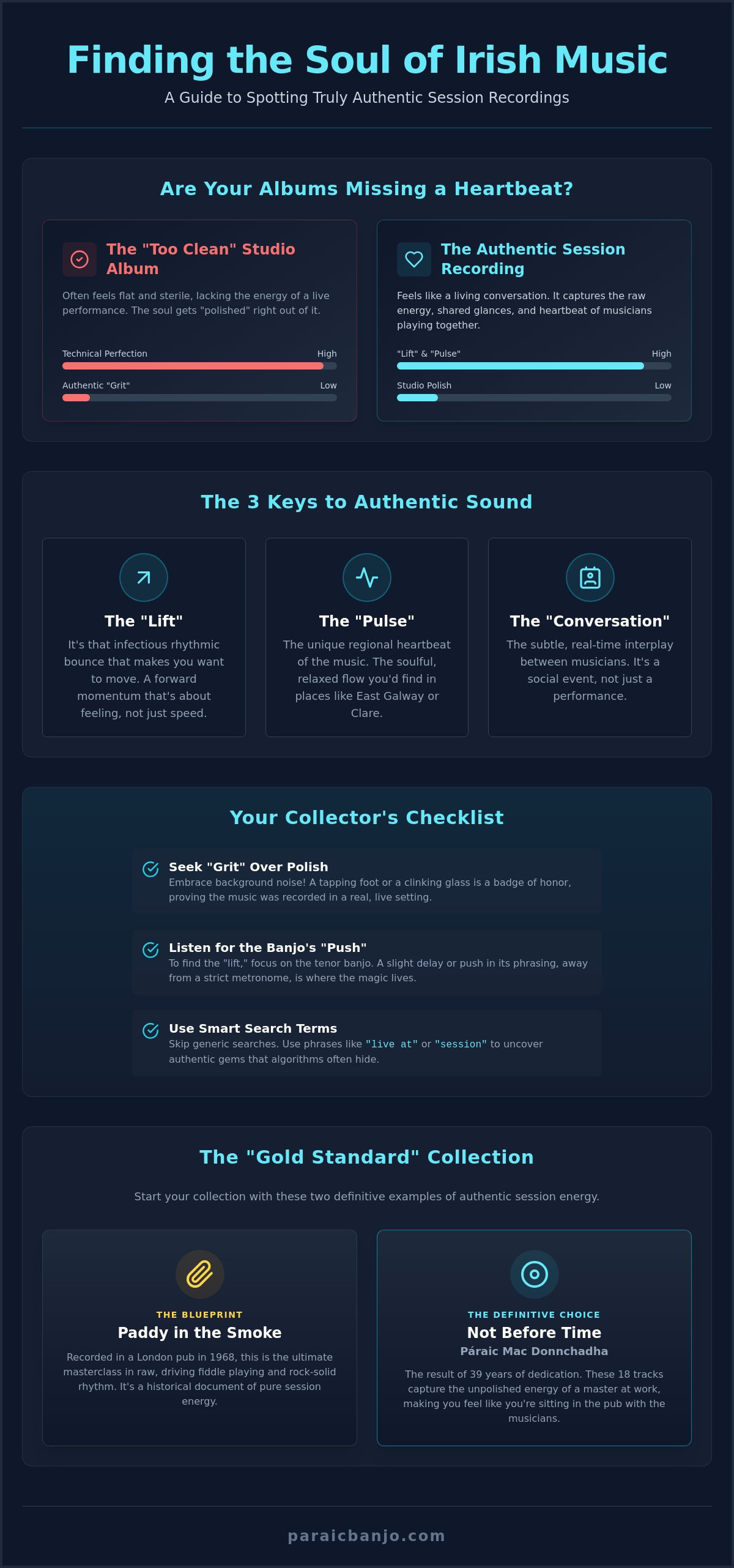
Most "traditional" albums you find online are far too clean; they've had the soul polished right out of them in a soundproof booth. You know that feeling when you walk into a pub in East Galway and the air is thick with the rhythmic thrum of a tenor banjo and the hum of a good crowd? It's pure magic. Finding that same "lift" and "pulse" on a digital track is surprisingly tough when so many of the best irish session recordings are buried under layers of over-production. We want the grit, the shared glances between players, and the music that feels like a living, breathing conversation.
I've spent decades immersed in this tradition, and I understand the frustration of buying an album only to find it lacks that essential drive. This guide cuts through the noise to bring you the most authentic recordings of 2026, including the definitive session energy found in Páraic Mac Donnchadha's long-awaited release. You'll learn how to distinguish a "concert" album from a true session and discover the regional nuances that give this music its heart. Let's build a collection that honors the masters and keeps the tradition alive in your speakers.
Table of Contents
Defining Authenticity: Why the Best Irish Session Recordings Feel "Live"
The "Gold Standard" List: Legendary Albums Every Collector Needs
Regional Rhythms: Spotting the East Galway and Clare "Pulse"
Collector’s Checklist: How to Find Authentic Session Music Today
Preserving the Pulse: Why 'Not Before Time' Belongs in Your Collection
Defining Authenticity: Why the Best Irish Session Recordings Feel "Live"
Authenticity in traditional music isn't about hitting every note with mathematical precision. It's about the "conversation." When you sit in a circle of musicians, you aren't just playing a tune; you're responding to the person next to you. If you've ever looked into what is an Irish session, you'll know it's a social event as much as a musical one. The best irish session recordings manage to bottle that lightning. They capture the subtle interplay where a fiddle player ornaments a phrase specifically because the flute player just opened up a gap. It's a living, breathing thing that often gets lost in the sterile environment of a modern studio.
Studio "polish" can be the enemy of a good reel. When you over-produce traditional music, you risk stripping away the soul. You lose the grit. In a real session, the tenor banjo often acts as the heartbeat, providing a percussive drive that keeps the melody instruments anchored. It isn't just about melody; it's about the collective energy in the room. This is why I spent 39 years preparing my debut; I wanted to ensure that every one of the 18 tracks on the Not Before Time – 39 Years in the Making digital album felt like you were sitting right there on a wooden stool in the corner of the pub.
The "Lift" vs. Technical Perfection
"Lift" is a term we use to describe that infectious rhythmic bounce. It’s the difference between a tune that sounds like a dirge and one that makes you want to jump out of your seat. It isn't about speed. It's about a specific forward momentum. Many recordings follow a metronome so strictly that the music becomes flat. Traditional music needs "swing."
Actionable Tip: To find the lift in a recording, focus your ears on the tenor banjo. Listen for a very slight delay or a "push" in the phrasing. That tiny variation from a perfect grid is where the magic happens. You can hear this rhythmic mastery clearly if you browse the individual digital tracks from recent live-recorded sessions, where the pulse is prioritized over clinical perfection.
Background Noise as a Badge of Honour
Purists don't mind a bit of clatter. The sound of a tapping foot, a distant glass clinking, or even a quiet murmur of approval between sets isn't "bad audio." It’s atmospheric. These sounds anchor the music in a specific time and place, proving the best irish session recordings weren't made in a vacuum. This environmental sound serves as a badge of honor, signaling that the music is a definitive statement of a lifetime's passion, shared among friends rather than manufactured for a digital storefront. It’s about honesty. If you want the real thing, look for recordings that embrace these textures rather than hiding them behind a curtain of reverb.
The "Gold Standard" List: Legendary Albums Every Collector Needs
Building a collection of traditional music requires a solid foundation. You can't understand where the music is going until you've heard where it has been. For purists, this means hunting down the raw, unpolished "field" and "pub" recordings of the 1960s and 70s. These decades were a golden era for capturing the best irish session recordings because the technology was just good enough to hear the notes, but not so advanced that it bleached out the character of the room. These albums aren't just music; they're historical documents of a vibe that is hard to replicate today.
Paddy in the Smoke: The Pub Session Blueprint
If you only ever buy one session album, make it Paddy in the Smoke. Recorded in 1968 at The Favourite pub in London, it features legendary players like Bobby Casey and John Dwyer. This isn't a polite studio session. It’s a driving, unyielding masterclass in fiddle playing. The rhythm is so thick you could cut it with a knife. It’s the ultimate example of how a group of musicians can lock into a groove and stay there for hours. It captures the very essence of what we mean when we talk about a session having a "pulse."
Actionable Tip: When you listen to this album, try to count the beat out loud. Notice how the rhythm never wavers. Even when the pub gets noisy or a player hits a particularly wild ornament, the beat remains rock solid. This is the level of consistency every session musician strives for in a live setting.
Music at Matt Molloy’s: Capturing the Heart of Westport
Moving from London to the West of Ireland, Music at Matt Molloy’s is a pilgrimage in audio form. Matt Molloy’s pub in Westport is world-famous for a reason. This recording captures the incredible interplay between the flute and fiddle that defines the local style. It bridges the gap between professional-level skill and the pure spontaneity of a Tuesday night session. You can hear the "breathiness" of the flute and the physical snap of the strings. It’s a sensory experience that puts you right in the middle of the huddle.
These legendary recordings served as the north star for my own project. I wanted to capture that same lightning in a bottle. If you're looking for a modern recording that respects these old-school standards, you can find that same live energy in the Not Before Time digital album. It’s about continuing the conversation that started in those smoky pubs decades ago. Every track is a celebration of that enduring spirit, proving that the tradition is still very much alive.
Actionable Tip: Listen for the gaps. In Music at Matt Molloy’s, notice how the musicians leave room for each other to breathe. This "conversational" style is exactly what makes a recording feel like a real session rather than a rehearsed performance. It's about listening as much as it is about playing.
Regional Rhythms: Spotting the East Galway and Clare "Pulse"
Regional styles are the dialects of Irish traditional music. Just as an accent tells you where a storyteller was raised, the "swing" or "drive" of a tune reveals its geographical heart. The best irish session recordings don't try to smooth these differences over. Instead, they celebrate the unique rhythmic pulse of places like East Galway and Clare. Understanding these nuances is what separates a casual listener from a true purist. It's about hearing the history of a townland in a single set of reels.
If you want a deeper dive into the technical specifics, you can learn more about east galway vs clare music in our detailed guide. For now, let’s look at why these two powerhouses of tradition sound so distinct in a live session setting.
The East Galway Style: Rhythmic and Soulful
East Galway music is often described as "sweet." It’s a relaxed, soulful approach that prioritizes melody and subtle ornamentation over raw speed. In this tradition, the tenor banjo plays a vital role. It doesn't just hammer out notes; it provides a steady, breathing pulse that allows the fiddle or flute to soar. It feels personal. It feels like a lifetime's passion poured into a single phrase. This is the heartbeat of my own work, where the 18 tracks on Not Before Time were specifically chosen to highlight that melodic "lift" without ever feeling rushed.
Actionable Tip: When listening to an East Galway set, focus on the "ornamentation." These are the tiny extra notes—the cuts, rolls, and triplets—that add flavour to the main melody. If the player sounds like they’re "leaning" into the tune rather than chasing it, you’ve found that authentic Galway soul.
The Clare Influence: Energetic and Driving
Contrast that with the Clare style. If Galway is a soulful conversation, Clare is the heartbeat of the dance. It’s characterized by a driving, rhythmic energy that is absolutely infectious. There’s a certain "lift" here that feels more percussive. It’s the sound of a room full of people tapping their feet in unison. When you find the best irish session recordings from Clare, you’ll notice the music has a relentless forward momentum. It’s designed to keep a set of dancers moving across a flagstone floor.
What happens when these two styles meet? That’s where the real magic of a session occurs. Imagine a pub where a Galway banjo player and a Clare fiddler sit down together. The music becomes a tug-of-war between soulful melody and driving rhythm. The result is a definitive statement of shared tradition. It’s a collaboration that values every player’s roots while creating something entirely new in the moment. That’s the energy we strive to capture on every one of our individual digital tracks, ensuring that the regional pulse remains at the forefront of the listening experience.
Collector’s Checklist: How to Find Authentic Session Music Today
Finding the best irish session recordings isn't as simple as hitting "shuffle" on a generic folk playlist. Most mainstream streaming algorithms are designed to favor polished, radio-friendly tracks that have had the life squeezed out of them. They often bury the raw, independent releases that actually sound like a pub in East Galway on a Friday night. If you want the real stuff, you have to look beyond the charts. It's about supporting the independent artists who are out there in the trenches, keeping the rhythmic pulse of our tradition alive.
Actionable Tip: Stop using broad search terms like "Irish folk" or "Celtic music." Instead, try searching for "live at," "field recording," or "pub session." These specific phrases filter out the over-produced studio albums and lead you directly to the music with genuine "lift." For a deeper dive into what makes a recording truly traditional, see our collector’s guide to authenticity.
Where to Look Beyond Mainstream Streaming
Platforms like Bandcamp have become a sanctuary for purists. They allow you to purchase music directly from the source, often in "lossless" formats like FLAC or WAV. In simple terms, lossless audio hasn't been squashed to save space; it keeps every nuance of the performance intact. This is vital for hearing the physical snap of a tenor banjo string or the subtle breath of a flute player. When you buy direct, you ensure the artist can continue their craft. Always look for albums that list the specific pub or townland where the music was captured. That geographical anchor is a massive green flag for authenticity.
The Importance of Physical Media and Liner Notes
There is a massive resurgence in physical media right now. In fact, CD sales in Ireland saw a growth of 4.5% in 2025, while vinyl sales jumped by 20%. People are realizing that a digital file can't replace the connection of a physical disc. A CD gives you liner notes, which are essentially the "pedigree" of the tunes. They tell you who played them, who they learned them from, and the stories behind the sets. Reading these histories while the music plays creates an emotional experience that a sterile screen just can't match. It turns a simple listen into a storied journey through time.
I spent nearly four decades gathering these stories and tunes for my own debut project. If you want to own a piece of that history, you can support the tradition by picking up the Not Before Time Physical CD. It’s a definitive statement of a lifetime's passion, complete with the detailed background notes that every true collector craves. Don't just listen to the music; understand the pulse behind it. Let's keep the conversation going.
Preserving the Pulse: Why 'Not Before Time' Belongs in Your Collection
After exploring the legends of the 1960s and 70s, you might wonder where that raw, unpolished energy lives today. The truth is, the best irish session recordings aren't just relics of the past. They're being made right now by musicians who've spent their lives in the huddle. My debut album, Not Before Time – 39 Years in the Making, was born from a desire to capture that elusive pub energy without the sterile walls of a traditional studio. It’s a definitive statement of a lifetime’s passion, recorded live with a circle of masters to ensure the "lift" remains front and center. This isn't just a collection of tunes; it’s a modern essential for any purist seeking the heartbeat of the West.
If you're ready to add a new cornerstone to your collection, explore the Not Before Time – 39 Years in the Making album today. It’s an invitation into a storied tradition that celebrates the grit and soul of our musical heritage.
39 Years in the Making: A Lifetime of Session Mastery
Waiting nearly four decades to release a debut might seem unusual in a digital world. But traditional music isn't a race. It’s a slow-cooked tradition. These 18 tracks represent a curated journey through the soulful sounds of East Galway and the driving rhythms of Clare. Every note carries the memory of thousands of nights spent in smoky corners, learning the "pulse" from the generation that came before. It’s about the weight of time and the quiet confidence of a player who knows exactly when to lean into a phrase.
Actionable Tip: When you first get the album, start with Track 1. Don't just listen to the melody. Focus specifically on the rhythmic mastery of the tenor banjo. You’ll hear how the instrument acts as the percussive heartbeat, driving the entire set forward with a steady, infectious bounce. This is the "lift" we’ve discussed, captured in its purest form.
A Collaborative Effort of Masters
A real session is never a solo act. It’s a shared conversation between friends. That’s why this recording isn't just about one person. It features the incredible interplay between the banjo, fiddle, and flute, mimicking the natural pauses and spontaneous bursts of a real pub gathering. We didn't want technical perfection that feels cold. We wanted the physical snap of the strings and the collective energy of musicians who truly know each other's styles. This sense of camaraderie is central to the tradition, much like the bond shared during a group celebration; if you're planning a musical pilgrimage or a bridal getaway to the West of Ireland, Adorb Custom Tees allows you to explore Bachelorette Shirts and find custom apparel that commemorates your group's adventure.
This album serves as a bridge. It takes the lessons from the "Gold Standards" like Paddy in the Smoke and carries them into the present day. It proves that you don't need a soundproof booth to create a masterpiece; you just need the right people and a deep respect for the rhythm. By including this in your collection, you aren't just buying music. You’re helping to preserve the pulse of a tradition that has survived for centuries. Let’s keep the music playing, one set at a time.
Keep the Tradition Alive in Your Own Home
Traditional Irish music is far more than just a collection of melodies. It's a living, breathing conversation that thrives on the "lift" of a well-timed reel and the shared energy of a crowded room. By seeking out the rhythmic pulse of East Galway and the driving spirit of Clare, you can build a foundational library of the best irish session recordings that truly honor our heritage. Focus on finding independent releases that prioritize the heart of the session over sterile technical perfection.
After decades spent sitting in those very circles, I’ve poured my life's work into a project that captures this raw magic. This album offers 18 tracks of live session energy, rooted in 39 years of musical heritage. It includes detailed historical liner notes so you can learn the stories behind the tunes as you listen. Bring the authentic sound of the Irish session home with the Not Before Time CD. It’s been a long journey to get here, and I can't wait for you to join the huddle. Keep the music playing.
Frequently Asked Questions
Is a live session recording better than a studio album?
Live recordings are generally preferred by purists because they capture the "lift" and spontaneous conversation between players. While studio albums offer technical perfection, they often lack the grit and environmental sounds that make the best irish session recordings feel truly authentic. If you want to feel the energy of a real pub, look for albums recorded on-site rather than in a soundproof booth.
Can I learn to play Irish music just by listening to these recordings?
Listening is the most important part of learning because it helps you internalize the rhythmic "swing" and phrasing. While you'll still need to practice your instrument, these recordings teach you the "pulse" that sheet music simply can't convey. Try humming along to the tenor banjo to lock into the beat before you even pick up your own instrument to play.
How much do traditional Irish music CDs typically cost in 2026?
Most traditional Irish music CDs in 2026 fall within the standard retail range for independent physical media. Prices vary depending on whether you're buying a single disc or a special edition with extensive liner notes. It's always best to check the artist's official website for current availability, as many offer digital bundles or individual tracks alongside physical copies.
What happens if I can’t find a specific session recording on Spotify?
If a recording isn't on Spotify, your best bet is to check Bandcamp or the artist's personal website. Streaming platforms often overlook niche or independent session albums because they don't fit the "radio-friendly" mold. Searching specifically for the artist's name often reveals high-quality digital tracks and physical CDs that mainstream algorithms miss entirely.
Is the tenor banjo the most important instrument in a session?
The tenor banjo isn't necessarily the "most important," but it acts as the rhythmic anchor or heartbeat of the session. It provides the percussive drive that allows melody instruments like the fiddle and flute to soar. In a well-balanced session, every instrument is part of a shared conversation where no single player dominates the room.
Can I buy traditional Irish music direct from the artist online?
You can and should buy directly from the artist online to ensure they receive the most support for their craft. Platforms like Bandcamp or an artist's own digital storefront are the gold standard for this. When you buy direct, you often get access to higher-quality audio formats and detailed background information that isn't available on streaming sites.
What is the best way to store a physical Irish music CD collection?
Store your physical CD collection in a cool, dry place away from direct sunlight to prevent the discs from degrading over time. Keep the liner notes inside the case so you don't lose the historical context and tune stories. Organizing them by region, such as East Galway or Clare, makes it much easier to find the specific "pulse" you're in the mood for.
Is the East Galway style still popular in Ireland today?
The East Galway style remains a vibrant and essential "dialect" of traditional music in Ireland today. Its focus on soulful melodies and a relaxed, rhythmic lift continues to influence new generations of players. It’s a definitive statement of regional pride that helps keep the best irish session recordings diverse and deeply rooted in local history.


Comments