A Traditional Music Recording from the West of Ireland

Most people believe they've heard the soul of Irish music after one night in a Dublin tourist pub, but they're missing the real magic. To truly experience authentic music from the West of Ireland, you need to look past the stage-managed performances and find the rhythmic pulses born in the kitchens of Clare and the small towns of East Galway. It isn't just one generic style. It's a storied tradition where almost every county has its own heartbeat, its own lift, and its own way of driving reels that'll leave your heart racing.
It's easy to feel overwhelmed by commercialised recordings that lack the grit and spirit of a real session. You want that solid, hypnotic sound that feels like a definitive statement of a lifetime's passion, not just another digital track. This guide promises to clear the confusion by breaking down the specific nuances between regional styles and the key instruments that define them. We'll explore why the Clare style swings differently from the East Galway ‘flow' and even share a curated album recommendation that's been 39 years in the making. Come on... let's get into the music.
Key Takeaways
Learn to distinguish the stately, melodic, melancholic feel and flow of East Galway from the driving rhythmic lift found in County Clare.
Discover the essential role of the tenor banjo in providing a rock-solid foundation for great music in a session.
Identify the specific counties and rhythmic pulses that define authentic music from the West of Ireland.
Find out why seeking out local session pubs and detailed liner notes is the best way to avoid commercialised tourist tracks.
Explore how a lifetime of traditional playing culminates in a definitive recording that's been 39 years in the making.
Table of Contents
What Defines Traditional Music from the West of Ireland?
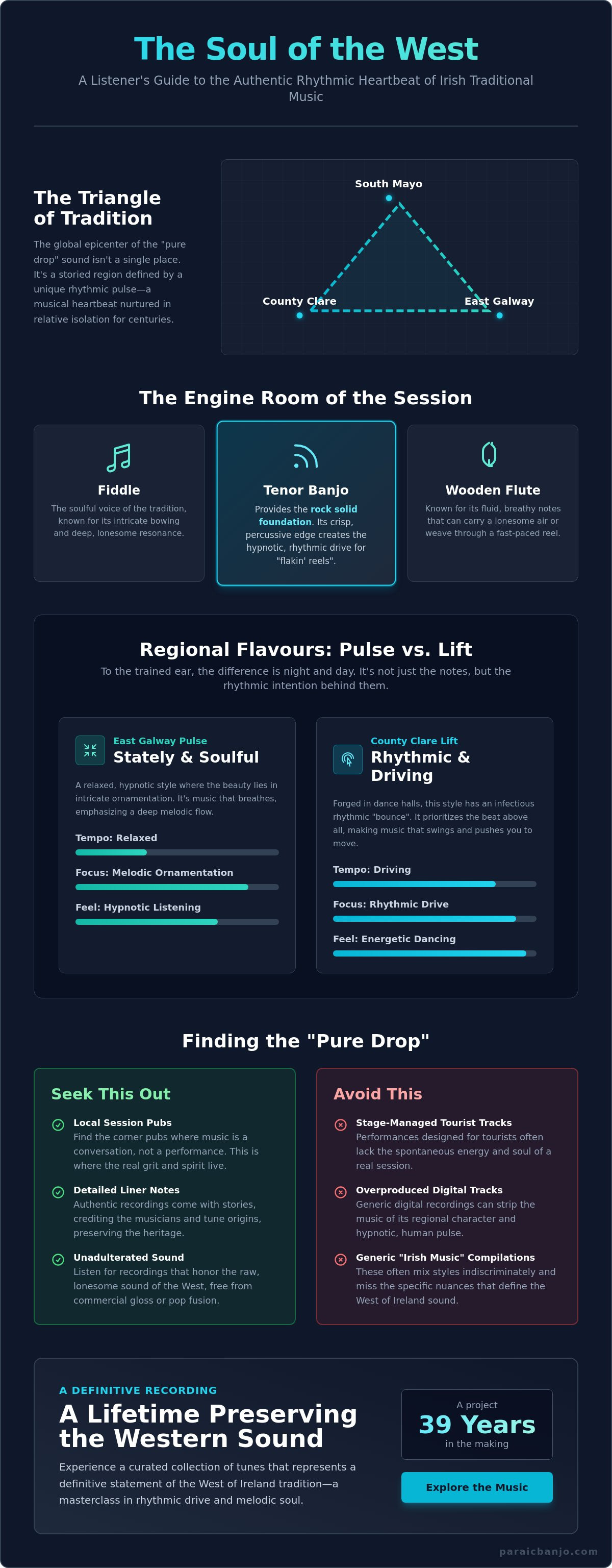
When we talk about the music from the West of Ireland, we aren't just pointing at a map. We're talking about a triangle of tradition that stretches from the North of Clare up through the fertile plains of East Galway, from the shores of the Suck river Westward as far, perhaps, as Athenry. This region is the global epicentre of the East Galway regional style. It's a sound defined by a specific rhythmic pulse. This pulse isn't just a tempo. It's a subtle, internal swing and ‘flow’ that dictates how a musician approaches a tune. It is a heartbeat that drives every melody, making the music feel personal, alive and urgent.
The core of this sound relies on a specific set of tools. You'll hear the fluid, breathy notes of the wooden flute and the intricate bowing of the fiddle. But it's the subtle driving of the tenor banjo that often accentuates that rock-solid foundation. For many, it's the Engine Room of the session rhythm. When you hear a group of musicians playing a set of fine reels in a corner pub, it’s that rhythmic drive that keeps the floor shaking. It is an experience that feels both ancient and incredibly present. And of course, the banjo, when played well, cuts through the air with a crisp, percussive edge, ensuring the rhythm remains coherent, compelling and hypnotic for everyone in the room.
The Lonesome Sound vs. The Vibrant Session
There's a beautiful duality here. Sometimes Clare or East Galway music is described as having a “lonesome”, melancholic, reflective quality. This isn't about sadness, but rather a deep, soulful resonance found in the plaintive tones of a top-class fiddle or flute solo. It feels like the landscape itself. Then, you step into a vibrant pub session and the energy shifts. The lonesome sound transforms into a collective, driving force. The "pure drop” here is simply Irish traditional music that remains unadulterated by modern pop fusion or commercial gimmicks.
Why the West? A Brief History of Musical Preservation
The West of Ireland remained a stronghold for these sounds because of its geographic isolation and, indeed, a healthy dose of historical oppression..! This regional isolation allowed music from the West of Ireland to develop in relative peace, far from the pressures of outside influence. Before the world became so small, these tunes were nurtured in "house dances" where neighbours gathered to share tunes, steps and stories. While the 1920s Sligo-style recordings made in America eventually influenced the wider traditional Irish music scene with their technical brilliance, the local pulses remained intact. This preservation wasn't an accident. It was a choice made by generations of musicians who valued the weight of their particular heritage. It's a tradition that's been centuries in the making, and it's still thriving today. Go on, listen closely, and you'll hear it.
Regional Flavours: Comparing East Galway and Clare Traditions
To the untrained ear, a reel is a reel. But for those immersed more deeply in the tradition, the difference between a Clare "swing" and an East Galway “flow" is as clear as day. Style in music from the West of Ireland is far more than just hitting the right notes; it’s about the underlying rhythm that piques your ear, or that moves your feet. It’s a conversation between regional identities. While these styles are distinct, they often meet and mingle in modern pub sessions where you might find a group driving out reels of myriad origins together. This creates a vibrant, hybrid sound that keeps the tradition evolving while staying true to its past.
The East Galway Pulse: Stately and Soulful
East Galway music has a reputation for being relaxed, reflective and stately. Don't let the slower tempo fool you; it doesn't lack fire. It’s a melodic style, often associated with legendary figures like Paddy Fahy, Paddy Carty, Eddie Moloney or Conor Tully, to name but a few of its Masters. Here, the beauty lies in delicate, intricate, but subtle ornamentation. Subtle rolls and triplets fill the space between the notes. This soulful approach creates a hypnotic atmosphere, making every tune feel like a definitive statement. It is music that breathes, allowing the "lonesome" quality of the West to shine through.
The Clare Lift: Music Made for Dancing
If Galway is for listening, Clare is for moving. The "Clare lift" is a rhythmic bounce hardwired into local fiddle and concertina playing. This style was forged in dance halls, influenced by the Kilfenora and Tulla Ceili Bands. It prioritises the "beat" above all else for the set dancers. This infectious energy is a key part of Ireland's National Inventory of Intangible Cultural Heritage. In a Clare session, the music swings, pushing the melody forward with vibrant enthusiasm.
Understanding these nuances helps you appreciate the raw, authentic sound of a session. Whether it’s solid banjo driving a Clare reel or a flute player weaving through a majestic East Galway composition, the variety is what makes music from the West of Ireland so rich. It is a storied tradition that rewards the careful listener. If you want to hear these regional pulses captured with true integrity and professional pride, you can explore the definitive sounds of the West through a curated collection of tracks that’s been 39 years in the making. Come on… let’s dive into the details and find the pulse that speaks to you.
The Tenor Banjo’s Role in Western Session Music
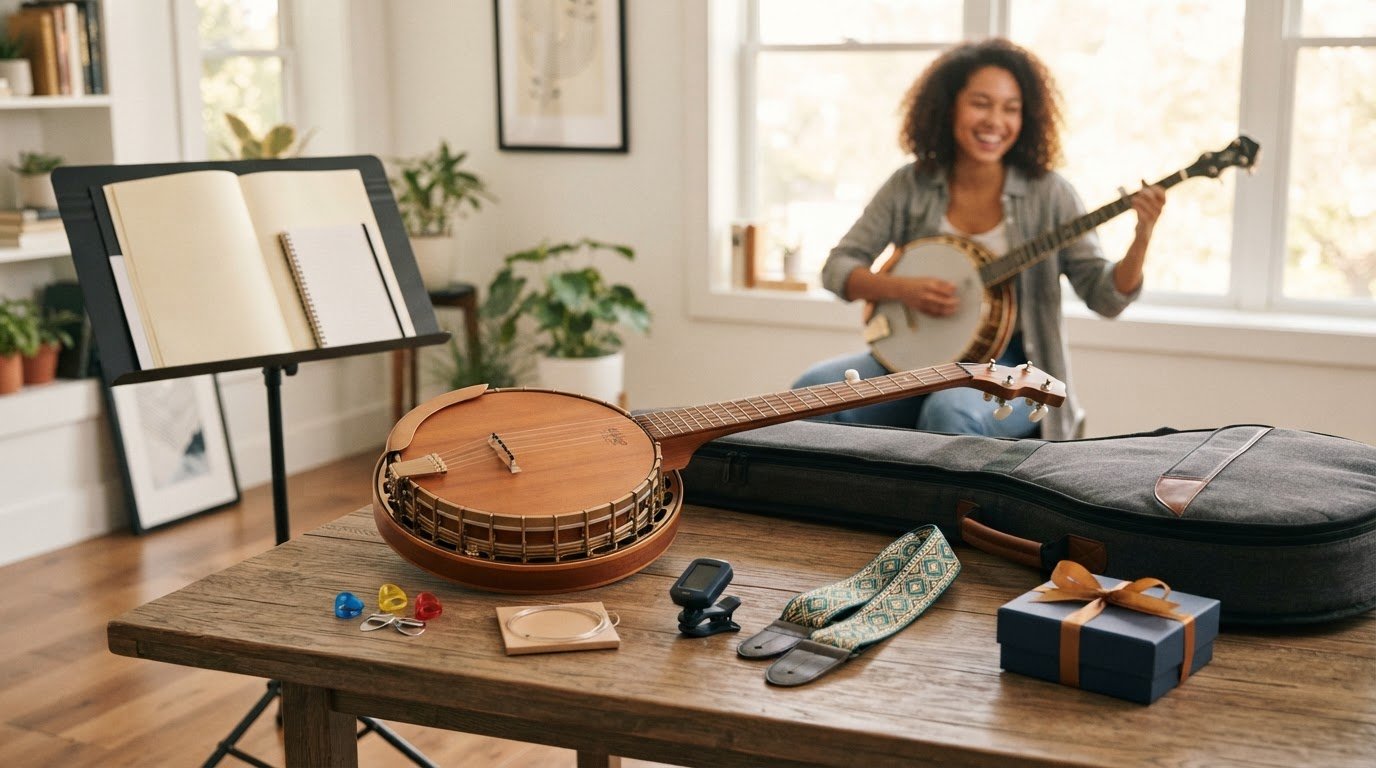
The tenor banjo is the unsung hero of the West of Ireland traditional music genre. It didn't start in the kitchens of Galway or the pubs of Clare. Originally a staple of American jazz and minstrel shows, it crossed the Atlantic and found an unexpected home in the heart of music from the West of Ireland. By the mid-20th century, it had transitioned from a foreign curiosity into a central, solid staple of the tradition. The banjo provides a rhythmic foundation that other instruments often lean on. It acts as the perfect bridge, connecting the intricate, flighty melodies of the fiddle with the raw, percussive energy of a crowded room.
Playing this instrument with true "soul" requires more than just fast, nimble fingers. It's about rhythm, pace and precision. When you, as a musician among many, are belting out reels at the end of a long night, your right hand has to be steady and disciplined. It’s a massive technical challenge to maintain that steady, driving rhythm while still capturing and shaping the subtle lift of the tune. This isn't just about making noise. It’s about representing and accentuating the heartbeat of the session, ensuring the rhythm never falters even when the energy in the room falls, or perhaps reaches a fever pitch.
Rhythmic vs. Melodic Banjo Playing
There are many ways to approach the banjo in Irish music. Early players tended to mix a focus on specific notes with occasional strumming to build momentum in the music. Today, many players of great ability revel in the joy of more strongly shaping the overall musical trajectory with percussive power and projection, leading and driving group energy in the session. Still others seek to mimic the fluid rolls of an accordion or the slurs of a fiddle. In the West of Ireland, banjo style probably more than most tends towards a steady pulse that keeps the sessions and/or dancers moving. A melodic approach to the banjo is one that respects the tune's internal rhythm. This approach prioritises the “flow" of the tune over excessive ornamentation, power or volume, keeping the tune grounded, faithful to its origins.
The Master at Cutting Through… the Banjo in the Session
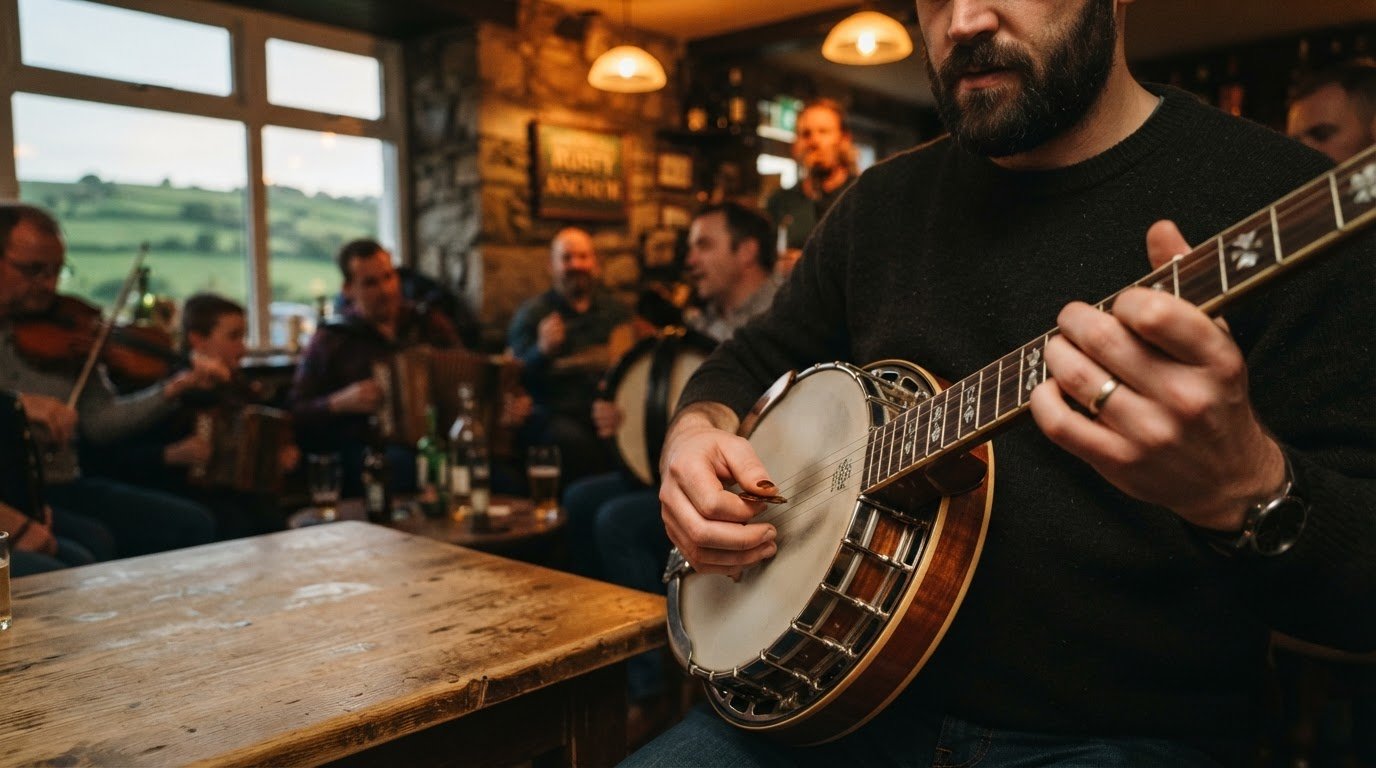
In a packed pub, the banjo is the instrument that cuts through the chatter, the noise and the clink of glasses. It has a bright, crisp tone that, when played well, serves as a guide for other musicians. In East Galway music, for example, the interplay between the banjo and the fiddle is particularly special. They lock into each other, creating a vibrant partnership of sound that feels subtly connected, yet powerful and disciplined. This collaborative spirit is at the core of the "Not Before Time" project. They didn't want a sterile studio recording. They wanted something live, raw, and collaborative, which now features 10 other top-class musicians. It is the sound of a musical community, captured after 39 years in the making. Go on… have a listen to that driving rhythm. It’s the sound of East Galway music, from the West of Ireland, in its purest form.
How to Experience Authentic Traditional Music Today
Finding the real heart of music from the West of Ireland requires a little bit of detective work. If you find yourself in a large concert hall with tiered seating and spotlights, you're likely hearing a polished, professional, highly rehearsed, commercial, often sanitised version of the tradition. For the rawest experience, you need to seek out session pubs - and pub sessions! These are the places where musicians sit in a corner, shoulder to shoulder, and play for the love of the craft. It is in these informal gatherings that the "pure drop" truly lives. You aren't just a spectator here; you're part of a storied tradition that has survived for centuries in the kitchen of the house or more recently, in the snug of a quiet bar.
When you can't make it to a pub in Galway, Clare or Mayo, your next best bet is an independent recording. Look for albums where the artist has full creative control. Many big-label productions are heavily processed, stripping away the natural grit of the instruments. Authentic music from the West of Ireland should sound like it’s being played in your living room or in a quieter Pub, somewhere... Prioritise live-recorded albums that capture the spontaneous energy of the session rather than the perfect but sterile Studio track sound. This approach will help you discover and enjoy the natural rhythm and vibrant spirit that define a West of Ireland regional sound.
Finding the 'Pure Drop' in a Digital World
In our modern age, supporting independent artists directly is the only way to ensure this music thrives. When you download music, quality matters. Acoustic instruments like the tenor banjo or the fiddle have complex overtones that get lost in compressed files. Always opt for high-quality digital downloads like FLAC or WAV to hear every nuance. You can identify an authentic tracklist by looking for a healthy mix of reels, jigs, hornpipes, airs or songs. If the titles are named after local families or townlands, you've likely found the real thing.
The Value of Liner Notes for the Purist
For the true purist, album liner notes are just as important as the music itself. They serve as a map of the musical heritage, explaining where a tune came from and who passed it down. Knowing the history of a reel before you hear it being flaked out adds a layer of depth that a simple digital file can't provide. This is why Páraic Mac Donnchadha put so much effort into the accompanying 36-page booklet for his debut album. It's a definitive statement of his lifelong passion, providing context aimed at making the listening experience more compelling. If you're ready to start your collection with a piece of history that's been 39 years in the making, buy the digital album or physical CD today and hear the difference for yourself. Go on… now is the time to get it!
Not Before Time: A Lifetime Preserving the Western Sound
'Not Before Time' is more than just an album title; it’s actually a sigh of relief and a long-awaited milestone. After decades spent in the heart of the session scene, Páraic Mac Donnchadha has finally released a debut that serves as a definitive statement of his craft. This project was 39 years in the making. It captures the very essence of East Galway music from the West of Ireland, moving far beyond a polished, sterile studio sound to demonstrate something more honest and raw. It is a lifetime of nights spent in the corners of crowded pubs, distilled into a single, cohesive musical journey that feels deeply personal.
A Collaboration of Masters
Páraic didn't set out to create a solitary showcase. He brought together ten guest musicians, all masters in their own right, to bring these tunes to life with professional pride. Together, they bridge the gap between the stately East Galway pulse and the rhythmic Clare lift. You’ll hear them flakin’ out reels together with an intensity that only comes from years of shared history and mutual respect. The drive and rhythm are rock solid throughout. It provides the perfect backdrop for the melodic interplay that makes this recording essential for anyone who values the "pure drop" tradition in its most vibrant form.
The album features 18 tracks that hum with a hypnotic energy. Sets were chosen to reflect the history of the region, from well-loved standards to rarer gems found in old manuscripts. It’s a definitive statement of a lifetime's passion. You can feel the weight of the tradition in every note, but there’s also a palpable sense of celebration and joy. This is music that doesn't just sit on a shelf; it demands to be heard and felt. It’s an invitation into a vibrant, dynamic musical tradition rather than just another digital product.
Own the Tradition: Digital and Physical
Whether you prefer the convenience of a digital download or the tactile experience of a limited-edition physical CD, we have you covered. The physical CD is a true collector's item, featuring a keenly detailed, thirty-six-page booklet filled with informative liner notes. We offer global shipping, so no matter where you are, you can have a piece of authentic music from the West of Ireland delivered to your door. Individual digital tracks are also available for those who want to curate their own listening experience. The quality is maintained across all formats, ensuring the acoustic warmth of the banjo and fiddle remains intact.
Owning this album means owning a piece of Western Ireland’s musical history. It’s an opportunity to support independent traditional art and also a performer and collaborator who values the shared experience of the traditional Irish music community above all else. This work is a definitive statement, a legacy captured on disc for the first time. Don't let this one pass you by.
Bring the Heartbeat of the West of Ireland Home
You now understand the difference between the stately flow of East Galway and the driving lift of a Clare session. You know that the tenor banjo provides the foundation often needed for being able to hear Irish music in a crowded, noisy pub. Authentic music from the West of Ireland is a living, breathing conversation across generations. Finding the "pure drop" is about seeking out those raw, unfiltered sounds that haven't been polished for tourists or heavily processed in a studio.
This storied tradition is exactly what Páraic Mac Donnchadha has captured in his debut album. It represents 39 years of musical mastery and features 18 vibrant tracks with ten world-class musicians. Whether you choose the digital version or the physical CD with its detailed 36-page historical booklet, you're getting a definitive statement of a lifetime's passion. It's the perfect way to start or complete your collection with something truly authentic, hypnotic and real. It’s an invitation to join a musical community that has been centuries in the making.
Go on... go for it! Order 'Not Before Time' directly from Páraic here.
The tunes are waiting. Let's keep the tradition alive together.
Frequently Asked Questions
What is the difference between East Galway and Clare music styles?
East Galway is known for its melodic, stately, musical flow, while Clare music is defined by its rhythmic lift or swing. East Galway players often favour subtle ornamentation and a slightly more relaxed pace in playing modal tunes that weave through sharp peaks and flat valleys at times. In contrast, the Clare style is built for the set dancer, prioritising a bouncy beat that keeps the floor moving. Both are essential parts of music from the West of Ireland, that define these two regional identities.
Why is the tenor banjo so popular in Irish traditional music?
The tenor banjo became a staple because of its crisp volume and when played well, its rhythmic drive. It has a unique ability to cut through the noise of a crowded pub session, serving as a bridge between melody and rhythm. When you're banging out reels in a crowded pub session, the banjo provides a percussive edge that can help keep the whole group in time. It’s often the engine room of the Pub session, therefore.
What does 'the pure drop' mean in Irish music?
The pure drop refers to traditional music that remains unadulterated by modern pop fusion or commercial gimmicks. It is the raw, authentic sound passed down through generations. This style prioritises the integrity of the tune and the regional pulse over flashy production. It’s the music you hear in a quiet kitchen or a storied local session, played with heart and soul by those who love their craft.
Is it better to buy a physical CD or a digital download for traditional music?
It depends on whether you value tactile history or digital convenience. A physical CD often includes detailed liner notes, like our 36-page booklet, which acts as a map of the musical heritage. Digital downloads are perfect for immediate listening, especially in high-quality FLAC formats. Both options allow you to support independent artists directly while preserving the vibrant sounds of a tradition that's been decades in the making.
Who are some of the most influential musicians from the West of Ireland?
Legendary figures include Paddy Fahey and Paddy Carty from East Galway and the iconic Tulla and Kilfenora Ceili Bands of Clare. More recently, Siobhán Peoples was named the 2025 TG4 Musician of the Year, continuing the strong Clare fiddle tradition. These masters have spent a lifetime honing their skill, ensuring that music from the West of Ireland remains a definitive statement of cultural pride and communal celebration.
What is a 'session' and where can I find an authentic one?
A session is an informal gathering of musicians, usually in a pub, where tunes are shared spontaneously. You won't find a stage or a formal setlist here. To find the real thing, head to established spots like The Crane Bar in Galway or Friel's Pub in Clare. These venues are known for hosting regular sessions where the music feels alive, raw, and deeply rooted in the local community.
How do I know if an Irish music recording is authentic?
Authentic recordings usually feel live and energetic rather than over-processed in a sterile studio. Look for independent releases that feature a collaborative spirit and include extensive liner notes about the tunes' origins. If the recording captures the lonesome soul of a solo instrument or the engaging drive of a full session, you've likely found a definitive piece of the tradition that respects the original pulse.
What are the most common tune types in Irish music?
Reels are the most common tune type you'll hear, followed closely by jigs and hornpipes. Reels are played in 4/4 time and are known for their driving, fast-paced energy. Jigs carry a rolling 6/8 rhythm that feels like a skip, while hornpipes have a distinct, bouncy character. Each type requires a specific rhythmic pulse to truly capture the authentic sound and to keep the dancers moving.
Comments