Appreciating Traditional Irish Music: A Beginner’s Guide to the Living Pulse

Updated: May 26
Have you ever stood in the middle of a packed session, surrounded by the scent of rain and woodsmoke, only to find yourself lost in a dizzying whirlwind of notes? It’s a common hurdle. When you’re first appreciating traditional irish music, the sheer speed can make every tune sound identical, leaving you unsure of when to tap your foot or how to truly engage. You aren’t alone in that feeling. With over 700,000 people expected to flood the streets of Belfast for the 2026 Fleadh Cheoil na hÉireann, thousands will be looking for that same "in" to this storied tradition.
I’ve spent nearly four decades living within these rhythms; I promise that once you hear the subtle "lift" of a well-played reel, the music stops being a blur and starts being a conversation. We are going to break down the common instruments, explore the mellow regional nuances of East Galway, and get you ready to walk into any session with confidence. If you want to hear these pulses captured after a lifetime of study, my debut project, Not Before Time – 39 Years in the Making, is available as a physical CD to help guide your ears. Let’s turn those fast notes into a deeply moving experience.
Key Takeaways
Discover why "Trad" is a living, breathing oral tradition rather than a museum piece, evolving with every player who picks up a tune.
Learn to identify the "big five" session instruments and the specific percussive role the tenor banjo plays in keeping the rhythm steady.
Begin appreciating traditional irish music by recognizing regional "dialects," like the mellow, relaxed pace that defines the East Galway style.
Develop your ear for the "lift" by listening for ornamentation, the quick cuts and triplets that add character and drive to a melody.
See how the stories behind the tunes preserve our heritage; grab the Not Before Time digital album to explore these lineages for yourself.
Table of Contents
The Living Heart of Irish Heritage: What is "Trad"?
When you hear the word "traditional," you might picture a dusty museum exhibit or a yellowed manuscript locked behind glass. In Ireland, the reality is the exact opposite. We call it "Trad," and it is a living, breathing pulse that changes every time a bow hits a string or a breath fills a flute. Unlike classical music, which relies on a fixed score, Irish traditional music is an evolving conversation. It is a shared language where the past and present collide in real time. Roughly 30% of adults in Ireland still actively enjoy this music, proving it is far from a relic of the past.
The journey of this sound is one of resilience. Long ago, the harp was the instrument of the chieftains, played in great halls. However, the seventeenth century brought the Penal Laws, which restricted many aspects of Irish culture. This pressure forced the music out of the public eye and into the safety of family kitchens and crossroad dances. This shift created the intimate "session" environment we see today. If you want to start appreciating traditional irish music, you have to look past the commercial "Celtic" soundtracks found in gift shops. Authentic Trad isn't about synthesizers or cinematic reverb; it's about the raw, acoustic energy of people playing together in a circle.
The Oral Tradition: Passing the Torch
For centuries, these tunes weren't written down on paper. They were hummed, whistled, and memorized. This is an oral tradition, passed from a "source" musician to a student by ear. Every time you hear a tune, you are listening to a collaborative chain that stretches back across centuries. To truly connect with the music, try this: next time you hear a melody you love, don't look for the sheet music. Try to hum the basic phrase back to yourself first. This helps you internalize the rhythm rather than just reading notes on a page. You can find plenty of these authentic melodies to practice with on my digital album, Not Before Time, which features tunes I've carried for nearly four decades.
Myth vs. Reality in Irish Folk
There is a common misconception that all Irish music is either a rowdy drinking song or a mournful lament. The reality is much more nuanced. While technical skill is respected, the community values "soul" and sincerity above all else. You don't need to play a thousand notes a second to be a great musician; you need to find the "swing."
Avoid the "Stage Irish" trap: Authentic sessions aren't performances for an audience; they are social gatherings.
Listen for the story: Many tunes are named after local characters, historical events, or even the weather.
Embrace the imperfections: A slight squeak or a missed note is often seen as a sign of a "human" performance rather than a mistake.
If you are ready to move beyond the surface, I recommend starting with individual digital tracks to hear how these instruments interact without the polish of a big studio production. It’s the best way to hear the heart of the tradition as it really sounds in a quiet corner of a pub.
Decoding the Session: Instruments and Rhythms
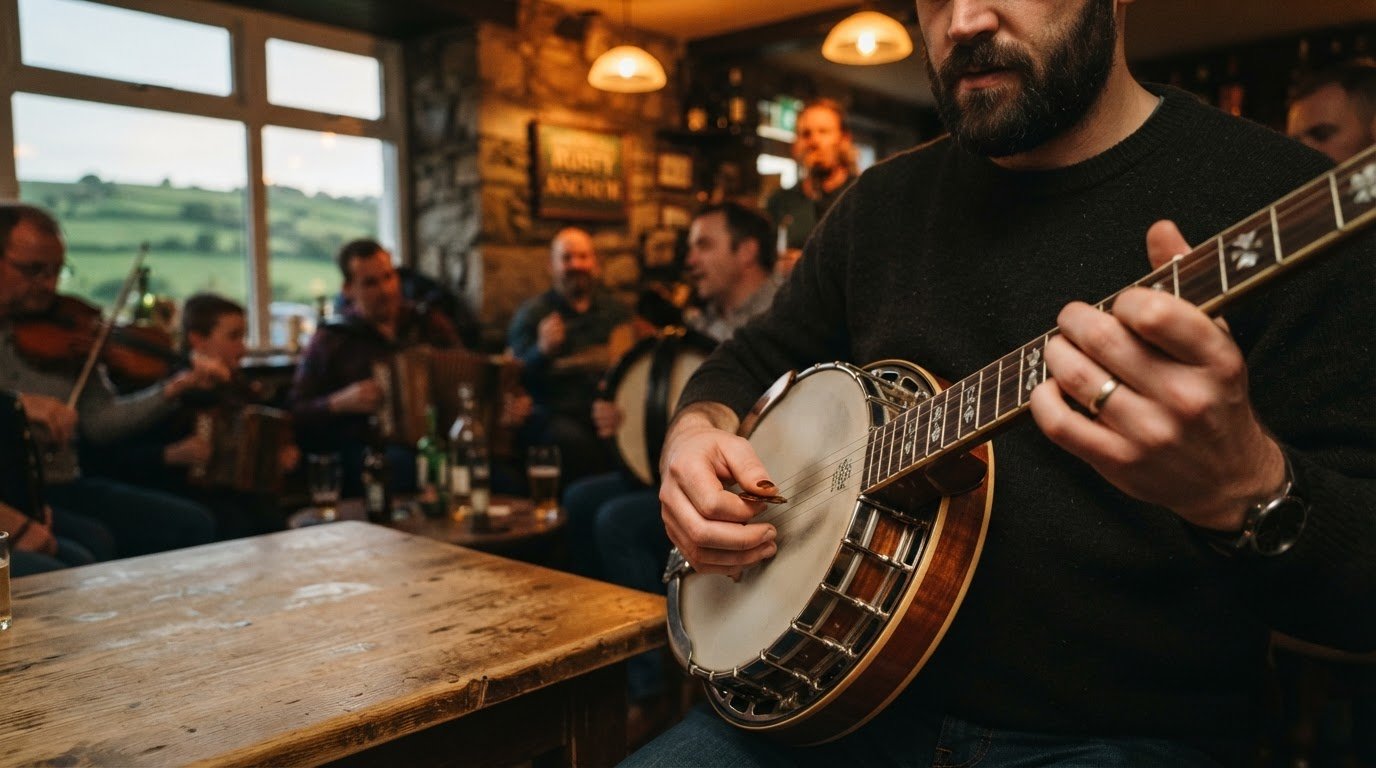
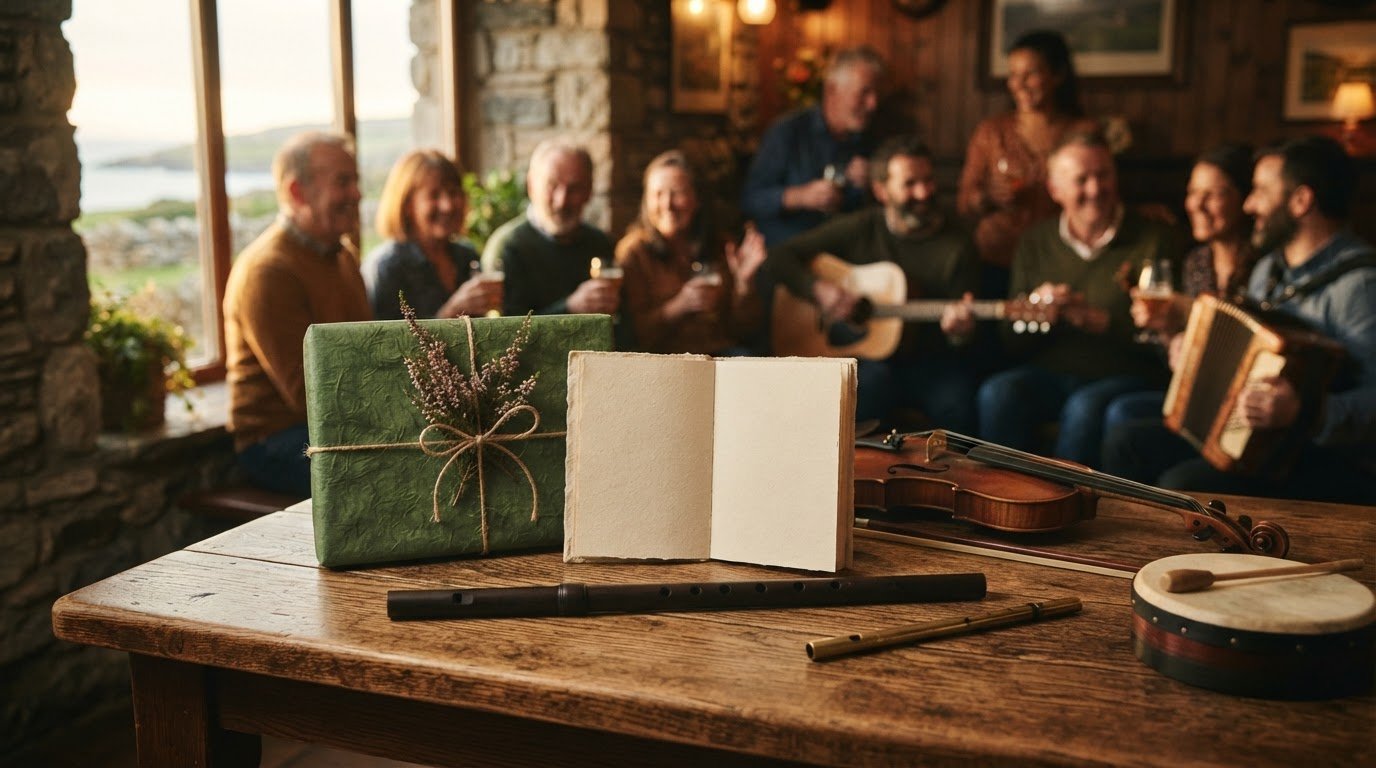
Walk into any corner pub in Clare or Galway. You'll see a circle of players leaning in, shoulders hunched over their instruments in a tight formation. While there are dozens of variations, most sessions center around a core group of what we call the "big five." These are the primary instruments of Irish music: the fiddle, the wooden flute, the complex uilleann pipes, the concertina, and the four-string tenor banjo. While the melody players lead the way, the bodhrán, a goatskin drum, and the guitar provide the rhythmic backbone, locking in to create a solid wall of sound.
You'll notice that musicians rarely play just one tune. They play "sets." This involves grouping three tunes together, usually of the same rhythm, without stopping. The transition between tunes is where the magic happens. It creates a surge of energy, a "lift" that keeps the listeners hooked. If you are appreciating traditional irish music for the first time, pay attention to that moment of change. It's a shared nod between players that signals a gear shift. It turns a simple melody into a powerful, building narrative.
The Rhythmic Power of the Tenor Banjo
Many people hear "banjo" and think of the high-pitched twang of American bluegrass. The Irish tenor banjo is a different beast entirely. We tune it to GDAE, a full octave below a fiddle. This gives it a deep, growling resonance. In a session, the banjo isn't just playing the melody; it’s providing a percussive drive. It’s the engine room. A skilled player uses a plectrum to create a crisp pulse that cuts through the swell of the pipes. I’ve spent decades perfecting this specific drive. You can hear that rhythmic mastery found in Not Before Time – 39 Years in the Making.
Jigs, Reels, and Hornpipes: Telling the Difference
How do you tell a jig from a reel? It’s all in the syllables. Use these mnemonics to train your ear:
Reels: These are in 4/4 time. They are the heartbeat of the session. Think: "strawberry, strawberry." It’s a fast, steady stream of notes.
Jigs: These are in 6/8 time. They have a distinct bounce. Think: "rashers and sausages, rashers and sausages."
Hornpipes: These are slower and have a dotted rhythm. There’s a slight pause after every other note, giving it a jaunty, swinging feel.
Understanding these structures changes everything. You aren't just hearing a wall of sound; you're hearing the individual gears of a finely tuned machine. If you want to hear these rhythms stripped back to their purest form, consider picking up individual digital tracks from the new album to study the interplay between the banjo and the beat.

Regional Flavours: Exploring East Galway and Clare Styles
Just as a Cork accent sounds nothing like a Donegal lilt, Irish music is full of regional dialects. If you walk into a session in County Clare, the music might feel like it’s leaning forward, full of "lift" and intricate ornamentation. Move a bit further east into Galway, and the energy shifts. The pace settles. The melodies stretch out. Understanding these subtle differences is the key to truly appreciating traditional irish music as a living art form rather than just a background soundtrack.
Historically, these styles were born from isolation. Before the days of digital streaming, a musician might only ever hear the players in their own valley. This deep dive into the history of Irish music shows how these pockets of culture created distinct ways of bowing a fiddle or picking a banjo. While modern travel has blended many of these sounds, purists still work hard to keep the specific regional pulses alive.
The Soulful Pulse of East Galway
East Galway is often called the "musician’s style." It isn’t about showing off with breakneck speeds. Instead, it focuses on a relaxed pace and a deep, flowing melodic line. This style reflects the rolling landscape of the region; it’s steady, soulful, and incredibly rewarding for the listener who takes the time to lean in. When you listen to the tracks on my debut album, Not Before Time, you’re hearing this specific East Galway influence. It’s a style that values the "long note" and the space between the rhythms. It rewards patience over pyrotechnics.
How Geography Shapes the Sound
Geography dictates the drive. The Northern styles, particularly from Sligo and Donegal, often have a "driving" quality with crisp, short notes. In contrast, the Western styles tend to be more "lilting" and lyrical. My own playing is deeply rooted in these Western traditions, where the goal is to make the instrument sing rather than just shout. While the world is more connected now, preserving these specific "flavours" is what keeps the tradition from becoming a generic, commercial product.
Actionable Tip: To train your ear, try to find two different recordings of the same tune. Listen to one from a Clare fiddle player and one from an East Galway flute player. Don't focus on the instruments. Focus on the speed and the "swing." You'll quickly start to notice the regional fingerprints. If you want to dive deeper into these nuances, the liner notes in the Not Before Time physical CD offer a wealth of background on the regional lineage of every tune I’ve chosen. It’s a great way to learn while you listen.
The Art of Active Listening: How to Find the "Lift"
You’re in the pub. The fiddles are blazing. The banjo is driving. To the untrained ear, it’s a beautiful but chaotic wall of sound. If you want to move from just hearing the noise to truly appreciating traditional irish music, you need to change how you listen. Start by finding the melody. Hum it under your breath if you have to. Once you have the tune, look for the underlying beat. Don’t just tap your foot; feel the pulse that the tenor banjo and bodhrán are creating. This is the foundation of every session.
Next, watch the musicians. You’ll see a constant stream of nods, smiles, and "session eye contact." They are communicating about when to change tunes or when to let the energy swell. This leads to the most important concept in Trad: the "lift." It’s that magical, weightless moment where the music feels like it’s taking off. It usually happens right at the transition between tunes in a set. The rhythm tightens, the volume breathes, and suddenly, the whole room feels more alive. It’s a physical sensation as much as an auditory one.
Ornamentation: The Fingerprints of the Musician
If the melody is the skeleton of the tune, ornamentation is the skin and soul. These are the small, fast decorations that players add to standard notes. Two of the most common are "rolls" and "triplets." A roll is a quick series of notes played in the space of one, creating a rhythmic "knot" in the melody. A triplet is three notes played rapidly in the time usually taken for two. These aren't just technical flourishes. They are how a musician puts their own personality into a tune. Because of these decorations, no two performances of a tune are ever identical. To hear these details up close, you can explore the individual digital tracks from my debut album, where the recording quality lets every roll and triplet shine.
Session Etiquette for Appreciators
Being a good listener is just as important as being a good player. If you want to feel confident at a live session, keep these simple rules in mind:
When to clap: Always wait until the end of a full set of tunes. Clapping in the middle of a set can break the musicians' focus and disrupt the "lift."
Respect the quiet: If a musician starts a "slow air" or a song, the room should go silent. These are moments of deep emotion that require focus.
Support the source: The best way to show your appreciation is to support independent artists. Buy their recordings and take the time to read the liner notes.
Liner notes are essential. They tell you where a tune came from and who taught it to the performer. I’ve included extensive background notes with the Not Before Time physical CD to help you understand the lineage of the music you’re hearing. It’s the difference between just listening and truly belonging to the tradition.
Preserving the Pulse: Why the Story Behind the Tune Matters
Traditional music isn't just about the notes; it’s about the hands they’ve passed through over centuries. When you are appreciating traditional irish music, you are engaging with a lineage that predates digital algorithms. Every tune has a name, a place of origin, and a person who kept it alive through years of silence. In an age where music often feels like a disposable digital file, a thoughtful recording acts as a vital time capsule. It preserves a specific regional pulse, ensuring that the soul of the music isn't lost to the noise of the modern world.
Supporting independent musicians is a direct way to keep this heritage from becoming a generic commodity. It is a vote for the survival of the tradition. When you choose to engage with a project that has been decades in development, you are helping to maintain the human connection that defines this art form. You are keeping the music accessible, community-based, and deeply personal. It's about ensuring the next generation can find the same "lift" we feel today.
The Value of Detailed Liner Notes
Most listeners just hit the play button and move on. For those who want a deeper connection, the liner notes are the real treasure. These notes provide the "who, where, and why" behind every set of reels. They detail the research and the decades of listening that go into an authentic album. When you read the background of a tune, you aren't just a consumer. You become a part of the story. You understand the community and the joy that built the melody. It turns a three-minute track into a lifetime of context. Don't just listen; explore the history provided by the artist.
Not Before Time: A Lifetime’s Passion
My debut project, Not Before Time – 39 Years in the Making, serves as a masterclass in the East Galway style. I didn't want to rush this release. I wanted to capture the raw, unpolished energy of a live session, which is why we recorded 18 tracks live. This project is a definitive statement of a lifetime’s passion for the craft. By choosing to own this work, you are appreciating traditional irish music at its most authentic level. You can experience the rhythmic soul of the banjo with Páraic’s debut album and join me in preserving this living pulse for the years to come.
Take the Tradition Home With You
You now have the tools to hear the stories hidden within the strings. From distinguishing a bouncy jig from a driving reel to recognizing the mellow, soulful flow of the East Galway style, your ears are ready for the session. Appreciating traditional irish music is a lifelong journey that rewards every moment of focus you give it. It is a shared heritage that grows stronger every time a new listener leans in to find the "lift."
If you're ready to dive deeper into these rhythms, I invite you to experience the culmination of my own 39-year journey in the craft. My debut album features 18 tracks of pure East Galway style, recorded live to ensure the authentic energy of the music stays front and center. You can Order "Not Before Time" on CD or Digital Download today to enjoy high-quality digital audio or secure one of the limited-edition physical CDs. Each copy is a piece of history that I’m proud to share with you. Go find a local session, listen for the pulse, and let the music carry you away. Happy listening!
Frequently Asked Questions
What is the best way to start listening to traditional Irish music?
The most effective way to start is by listening to solo or small group recordings that focus on melody and rhythm rather than large orchestral arrangements. Try to find local sessions in your area where you can see the instruments interact up close. This helps you hear the "lift" in its natural environment. If you can't attend in person, picking up a digital album that captures live session energy is a perfect alternative.
Is there a difference between "Celtic music" and "Traditional Irish music"?
Traditional Irish music is a specific acoustic oral tradition, while "Celtic music" is often a broad commercial label used for New Age or cinematic styles. True Trad relies on the raw sound of wood, skin, and strings without the heavy synthesizers or reverb found in commercial tracks. Understanding this distinction is essential for appreciating traditional irish music in its most sincere and authentic form.
Why is it called a "session" and can anyone join in?
A session is an informal gathering where musicians play tunes together for social enjoyment rather than as a staged performance for an audience. While anyone is welcome to pull up a chair and listen, joining the circle usually requires a high level of proficiency and knowledge of the local tunes. It’s always best to listen for a few sets first to understand the group's specific tempo and etiquette.
How do I tell the difference between a jig and a reel?
You can tell them apart by focusing on the underlying "bounce" or "drive" of the rhythm. Jigs are in 6/8 time and have a distinct three-beat grouping that feels like it’s leaping. Reels are in 4/4 time and feel more like a fast, steady heartbeat or a constant stream of notes. Think of a jig as "bouncing" and a reel as "running" to help your ears categorize the tunes.
What makes the tenor banjo different from other banjos?
The Irish tenor banjo has four strings and is tuned GDAE, which is a full octave lower than a fiddle. This is a major departure from the five-string banjos used in American bluegrass music. The lower tuning and shorter neck give the tenor banjo a deep, growling resonance. This allows the instrument to provide a powerful percussive drive that cuts through the sound of a crowded pub session.
Is traditional Irish music still being written today?
Musicians are constantly composing new tunes that follow the traditional structures of jigs, reels, and hornpipes. These new compositions often enter the oral tradition and become part of the standard repertoire after being shared at sessions and festivals. This constant creation proves that appreciating traditional irish music means engaging with a living art form that continues to grow and evolve with every new generation of players.
Where can I find authentic Irish music recordings that aren’t commercialized?
Look for independent releases from seasoned musicians who emphasize regional styles and provide detailed liner notes. These recordings act as time capsules for the tradition. For a masterclass in the East Galway style, you can find 18 tracks of pure session energy on my debut project, Not Before Time. It is available as a limited edition physical CD or as individual digital tracks for those who want to hear the tradition's true pulse.
Comments