Buying Your First Irish Session Music Album: A Purist’s Guide to Authentic Recordings
- Paraic Mac Donnchadha

- May 15
- 13 min read
Have you ever bought a "Celtic" CD only to find it sounds more like a spa soundtrack than a Saturday night at a Clare pub? It's a common frustration for anyone looking for the right irish session music album to buy; you want the grit, the lift, and that driving rhythm, but you often end up with over-produced studio polish. We've all felt that disappointment when the music lacks the raw, infectious pulse of a real session. This guide will help you cut through the generic noise to find recordings that preserve the rhythmic soul of the room. You'll learn how to identify the "purist" albums that musicians actually listen to, from the snap of a reel to the technical nuances of traditional banjo styles. We will explore how to build a collection that feels like sitting in a corner of Pepper's Bar, starting with a landmark release thirty-nine years in the making that captures the spirit of the tradition with absolute authority. It's time to own a recording that truly honors the craft through rich performances and extensive liner notes.
Key Takeaways
Distinguish between over-produced commercial music and the informal, rhythmic "conversation" of an authentic traditional session.
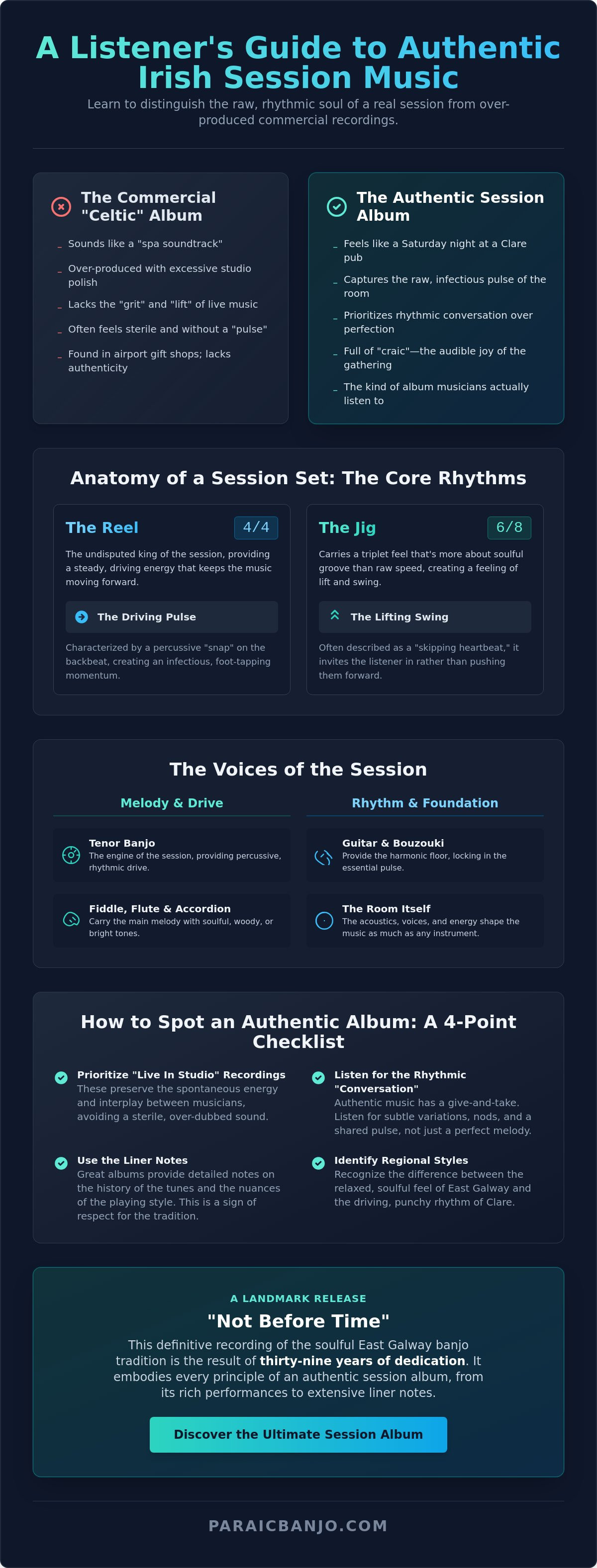
Master the anatomy of a session set by learning to identify the driving pulse of a reel versus the lifting swing of a jig.
Identify the best irish session music album to buy by prioritizing "live in studio" recordings that preserve the spontaneous energy of the musicians.
Use detailed liner notes to unlock the history of the tunes and understand the nuances of specific regional playing styles.
See how thirty-nine years of dedication translates into a definitive recording of the soulful and rhythmic East Galway banjo tradition.
Table of Contents
What is Traditional Irish Session Music?
A session isn't a concert. It's an informal, spirited meeting where tunes flow as naturally as the conversation. When you're looking for an irish session music album to buy, you must look past the shiny, over-produced "Celtic" compilations found in airport gift shops. Those are often "Stage Irish" productions. They're polished and pretty, but they lack the grit and the lift that makes a real session breathe. A true session is a living, breathing entity. The "pulse" is the heartbeat of the room. It's that steady, driving rhythm that makes your foot tap before you even realize you're doing it. In a real session, a slight squeak of a fiddle string or the distant clink of a glass isn't a mistake. It's the sound of the room itself.
The pub environment is a crucial instrument in this tradition. The acoustics of a crowded room, the low hum of voices, and the shared energy between the players and the listeners shape the music. What is a Traditional Irish Session? It is a social gathering first and a musical performance second. This is why rhythm and soul always trump technical perfection in the eyes of a purist. You want to hear the music as it was meant to be heard: raw, energetic, and deeply personal.
The Social Heartbeat of the Session
The music is a shared language. Musicians communicate through subtle nods, a slight lift in the tempo, or a clever variation on a melody. This is where "the craic" becomes audible. It's the palpable joy of a gathering where the instruments do the talking. For a dedicated listener, a raw recording captured in a room full of life will always surpass a sterile studio production. You want to hear the anticipation in the air. You want to feel the relief when a difficult set of reels resolves perfectly. It’s about the connection between people, anchored by decades of shared history and passion.
Session Instruments: The Lead and the Rhythm
In the middle of the music, specific voices lead the way. The tenor banjo is often the engine, providing a percussive, rhythmic drive that cuts through the pub's atmosphere. It’s a brilliant melody instrument. You’ll also hear the soulful cry of the fiddle, the woody punch of the timber flute, and the bright, driving swell of the button accordion. When choosing an irish session music album to buy, pay attention to the accompaniment. A guitar or bouzouki provides the harmonic floor, locking in with the melody players to support that essential pulse. They aren't just background noise. They are the foundation that allows the melody to soar. Listen for that interplay. It's the mark of a truly authentic recording.
Anatomy of a Session Album: Reels, Jigs, and Hornpipes
When you sit down with a proper irish session music album to buy, you'll notice something different right away. The tracks aren't single songs. They're "sets." In a real session, musicians rarely play just one tune. They string two or three together, shifting gears without dropping a beat. This transition is where the magic happens. It creates a sense of momentum that mirrors the history and enduring appeal of traditional Irish music. Sequencing is everything. A master player knows how to follow a soulful jig with a driving reel to lift the energy of the room. It’s a delicate balance that requires years of experience to get right.
Don't settle for a generic sound. Look for regional flavor. The East Galway style is legendary for its relaxed, melodic, and soulful approach. It's less about raw speed and more about the "nyah" or the feeling in the notes. In East Galway, the music often feels like it's leaning back, inviting you in. Compare that to the driving, punchy rhythm of the Clare style where the music pushes you forward onto the dance floor. Both are beautiful, but they offer completely different listening experiences. If you want to hear these nuances captured with absolute authenticity, you might consider exploring the tracks on Not Before Time, which showcases decades of mastery in every set.
The Drive of the Reel
The reel is the undisputed king of the session. Written in a steady 4/4 time signature, it provides the energy peak of any recording. It’s the sound of a room in full flight. Many of the most famous reels have been passed down through generations, evolving with each player's touch. On the tenor banjo, the player accents the backbeat to create a percussive snap that keeps the whole set moving forward. It’s infectious. This percussive quality is what defines a great session album. It makes the music feel alive rather than just a collection of notes on a page.
The Lift of the Jig
Then there's the jig. It carries a 6/8 triplet feel that sounds like a skipping heartbeat. Beginners often mistake speed for quality, but a seasoned player focuses on "lift." This is that rhythmic bounce that makes the music feel light and airy. You'll encounter Double Jigs with their steady "one-two-three, four-five-six" pulse, or the more syncopated, elegant Slip Jigs in 9/8 time. A great recording, like the 18 tracks found on Páraic Mac Donnchadha's debut, treats these rhythms with the respect they deserve. Every pulse and triplet is captured to ensure the listener feels the true spirit of the dance.
How to Identify Authentic Irish Session Music to Buy
Finding the right irish session music album to buy requires a bit of detective work. You aren't just looking for a collection of songs; you're looking for a lineage. Start by checking the artist's background. Authenticity lives in musicians who have spent decades in the corner of a pub, not just on a concert stage. Look for names that are respected within the session community. These players understand the subtle "lift" we discussed earlier. They play for the love of the tune, not just for a clean studio take. A great recording often features solo sets that showcase this mastery. When a single banjo or fiddle takes the lead, you can hear every ornament and rhythmic choice. It’s the ultimate test of a player’s skill.
The "Live in Studio" approach is the gold standard here. It captures the musicians playing together in real-time, reacting to each other’s cues. This setup preserves the spontaneous energy that defines a real session. Avoid albums that sound too "perfect" or sterile. If the instruments feel isolated and distant, the soul of the session is likely lost. You want to hear the wood of the flute and the snap of the banjo string. You want to feel like you’re sitting right in the middle of the circle. This raw, honest sound is what purists crave. It's the difference between a museum piece and a living tradition.
Red Flags in Commercial Irish Albums
Watch out for the "Tourist Trap" aesthetic. If the cover art features a stock photo of a misty glen or a generic harp, be cautious. These are often signs of "Celtic Chill" or "New Age" fusions. Authentic session recordings usually feature the musicians themselves or local imagery that means something to the tradition. Another red flag is excessive reverb. Producers often use heavy echoes to hide poor technique or thin arrangements. In a real session, the sound is dry, direct, and punchy. Finally, stick to the "No-Synth" rule. If you hear electronic pads or programmed drums, you've wandered into pop territory. Traditional music doesn't need electronic help to find its pulse.
The Independent Artist Advantage
Buying direct from the artist is the best way to ensure you're getting a purist product. Independent releases are labors of love, often decades in the making. They aren't shaped by corporate labels looking for a "radio-friendly" sound. Instead, they preserve heritage exactly as it's played on the ground. Releases like Not Before Time are perfect examples. This album represents thirty-nine years of dedication, resulting in a definitive statement of the East Galway style. Collector's editions often include extensive liner notes and booklets that explain the history of every tune. These materials are invaluable for anyone wanting to truly understand the depth of the music they've brought home. It's a connection to the source that you simply won't find on a generic compilation.
A Beginner’s Guide to Session Etiquette and Listening
Listening to traditional music is a skill you develop over time. It isn't just about the melody. You're eavesdropping on a musical conversation. When you're deciding on an irish session music album to buy, look for recordings where the instruments seem to answer one another. This interplay is the heart of the tradition. One player might introduce a subtle variation, and the others will respond, shifting the energy of the set. Pay close attention to the "Turn." This is that electric moment when one tune ends and the next begins. It requires a shared intuition that only comes from years of playing together. If the transition feels seamless and exciting, you've found a recording that truly captures the session spirit.
Supporting the living tradition means more than just streaming a track. Buying physical media is a powerful way to ensure these stories continue to be told. A CD is a tangible piece of heritage you can hold in your hands. It represents a lifetime of practice and a deep respect for those who came before. By choosing to own the music, you're helping to preserve a specific cultural space that values slow mastery over fast-paced commercialism. It's a small but vital act of preservation.
The Essential Role of Liner Notes
Most commercial sites ignore the importance of the written word, but for a purist, the liner notes are a treasure map. They provide the context that gives the music its soul. Knowing that a specific reel was learned from a neighbor in East Galway forty years ago changes how you hear it. It adds a layer of humanity to the technical skill. A great album, like Páraic Mac Donnchadha's debut, includes a 36-page booklet filled with these historical records. These notes track the lineage of the tunes and the masters who kept them alive. They turn a simple tracklist into a rich musical journey through time and place.
Active Listening vs. Background Music
Don't let these tunes fade into the background. Practice active listening. Focus on the tenor banjo and try to catch the "soulful" nuances in the playing. A master of the East Galway style won't just hit the notes; they'll use subtle rhythmic variations to give the tune its unique lift. Listen for the way the player accents the backbeat or uses triplets to create a sense of forward motion. These details are the signatures of a seasoned musician. The more you listen, the more you'll discover "hidden" stories within the sets. It's about finding the joy in the small details, like the way a fiddle joins the banjo for a final, triumphant turn. To start your own collection of authentic recordings, you can purchase the digital or physical album here and begin your journey into the heart of the tradition.
Why "Not Before Time" is the Ultimate Session Album for Your Collection
After exploring the history and the nuances of the tradition, you might be wondering which specific irish session music album to buy to truly anchor your collection. The answer lies in a project that spent thirty-nine years maturing before it ever touched a microphone. Páraic Mac Donnchadha's debut, Not Before Time, is a definitive statement of the East Galway banjo tradition. It isn't just a record; it's a lifetime of sessions, late nights, and shared tunes distilled into 18 tracks of pure, unadulterated energy. For purists, this album represents the gold standard of what a session recording should be. It captures that rare, rhythmic, and soulful approach that values the "lift" of the music above all else.
Recorded partially in the legendary Pepper's Bar in Feakle, the album breathes with the atmosphere of a real session. You can hear the wooden floorboards, the shared intuition of the players, and the raw pulse of the room. This isn't a sterile studio environment. It’s a living document of a community. The music moves with a quiet confidence, moving quickly from technical brilliance to deep, emotional resonance. It is a celebration of the craft and a relief to those who have long waited for this specific voice to be recorded. It’s a storied musical tradition invited right into your living room.
The Story Behind the 39-Year Journey
Some of the finest music takes decades to reach the public. Páraic didn't rush into the studio. He spent nearly forty years honing his skill in the trenches of the tradition. This patience resulted in a collaboration with world-class musicians, including guest appearances by fiddle master Martin Hayes. Together, they create a "room feel" that is impossible to fake. The physical CD comes with a 36-page booklet, providing rich historical context for every track. It’s an educational tool as much as a musical one, documenting the neighbors and masters who passed these tunes down. This level of detail makes the album a legendary debut in the traditional community.
How to Purchase Your Copy
You have a choice in how you experience this journey. The physical CD is the ultimate choice for those who value the extensive liner notes and the tactile feel of a heritage project. If you prefer immediate access, the digital album and individual tracks are also available for download. By choosing to buy direct, you ensure that the tradition continues and that the artist is supported for their decades of dedication. Don't settle for generic compilations when looking for an irish session music album to buy. Invest in a recording that carries the weight of history and the joy of the present. Get your copy of Not Before Time today and bring the soul of the session into your home.
Bring the Pulse of the Session Home
Building a collection of traditional music is a journey into the heart of a living culture. You now know that the best recordings aren't found in generic "Celtic" bins; they're found in the "live in studio" sets where the rhythm breathes. By focusing on the "lift" of the East Galway style and the percussive snap of the tenor banjo, you've learned to distinguish true artistry from commercial polish. Finding the right irish session music album to buy means choosing a recording that honors the social heartbeat of the pub and the shared history of the tunes. It’s about owning a piece of a story that spans generations.
This is your invitation to own a definitive statement of that passion. With 39 years of musical heritage distilled into one project, Páraic Mac Donnchadha's debut offers 18 tracks of authentic session music that feel like sitting in the corner of a quiet Clare pub. The expertly curated liner notes ensure you'll understand every turn and triplet along the way. Secure your limited-edition copy of Not Before Time here and start your collection with a masterpiece that truly matters. Keep the tradition alive and enjoy every note.
Frequently Asked Questions
What makes an Irish music album "authentic"?
An authentic album prioritizes the "pulse" and communal energy over technical studio perfection. These recordings often use a "live in studio" setup where musicians react to one another in real-time. You'll hear the organic snap of the strings and the woody tone of the flute. It’s about capturing the spirit of a room rather than a sterile sequence of notes.
Is it better to buy a physical CD or a digital download for Irish music?
Purists often prefer physical CDs because they include extensive supplementary materials like detailed booklets. For instance, the physical version of Not Before Time features a 36-page booklet that provides a historical record of every tune. While digital downloads offer immediate access, the CD preserves the tradition in a tangible way. It’s a piece of heritage you can hold.
What are the best instruments to listen for in a session recording?
Look for the interplay between the tenor banjo, fiddle, timber flute, and button accordion. The banjo often acts as the rhythmic engine, providing a percussive drive that defines the session sound. Listening for how the guitar or bouzouki supports this melodic pulse will help you understand the "conversation" between the instruments. It’s a beautiful, complex dialogue.
How can I tell if an album is "Stage Irish" or real traditional music?
Real traditional music avoids modern electronic overlays and programmed drums. If you hear synthesizers or "New Age" pads, you've likely found a "Stage Irish" production. Authentic albums are dry and punchy without excessive reverb used to mask technique. Check the artist's roots; a master who has spent decades in the tradition will always deliver a more honest sound.
Why are liner notes so important for traditional Irish music collectors?
Liner notes serve as a treasure map for the history and lineage of the tunes. They document where a musician learned a specific reel or jig, often citing neighbors or local masters. This context is vital for understanding regional nuances like the East Galway style. Without these notes, you're only hearing the music; with them, you're experiencing the entire tradition.
Can I learn to play the banjo by listening to session albums?
Listening to master players is an essential step in developing an ear for ornamentation and rhythmic "lift." While this site doesn't offer banjo tuition, immersive listening helps you internalize the soul of the music. You'll begin to recognize how a player accents the backbeat or uses triplets to create forward motion. It’s a fantastic way to deepen your appreciation for the craft.
What is the "East Galway style" mentioned in banjo recordings?
The East Galway style is a rare, rhythmic approach that emphasizes melody and soul over raw speed. It’s often described as having a "relaxed" feel where the music seems to lean back. Players in this tradition focus on the "nyah," a specific tonal quality that carries deep emotional weight. It is a sophisticated way of playing that rewards careful, active listening.
Where can I buy traditional Irish music that supports the artist directly?
Buying direct from the artist’s storefront is the best way to ensure your support keeps the tradition alive. When looking for an irish session music album to buy, consider a landmark release like Not Before Time. You can purchase the physical CD, digital album, or individual tracks directly from the source. This ensures you receive a purist product with all the historical context intended by the musician.


Comments