Collectible Irish Music CDs: The Purist’s Guide to Traditional Gems in 2026
- Paraic Mac Donnchadha

- Jul 11
- 11 min read
Have you ever bought a "traditional" album only to find it's just over-produced pop music dressed in a green sweater? It's a common sting for anyone who loves the raw, honest sound of a real kitchen session. You want to hear the crisp pop of the banjo and the rhythmic lift of a well played reel, not a wall of synthesizers. If you're hunting for collectible irish music cds, you know that the real treasure isn't found in a generic bargain bin. It lives in the independent releases that honor the pulse and history of the tradition.
I agree that finding the "real stuff" feels harder than it should be, even with Irish album sales growing by 12 percent in 2025. You deserve a library filled with rich historical context and authentic regional flavor. This guide promises to show you how to identify authentic recordings that preserve the soul of the session. We will explore why detailed liner notes are a collector's best friend, how to support artists directly, and what specific markers define a true heritage piece. It's time to build a collection that feels like a definitive statement of a lifetime's passion.
Table of Contents
What Makes an Irish Music CD Truly Collectible?
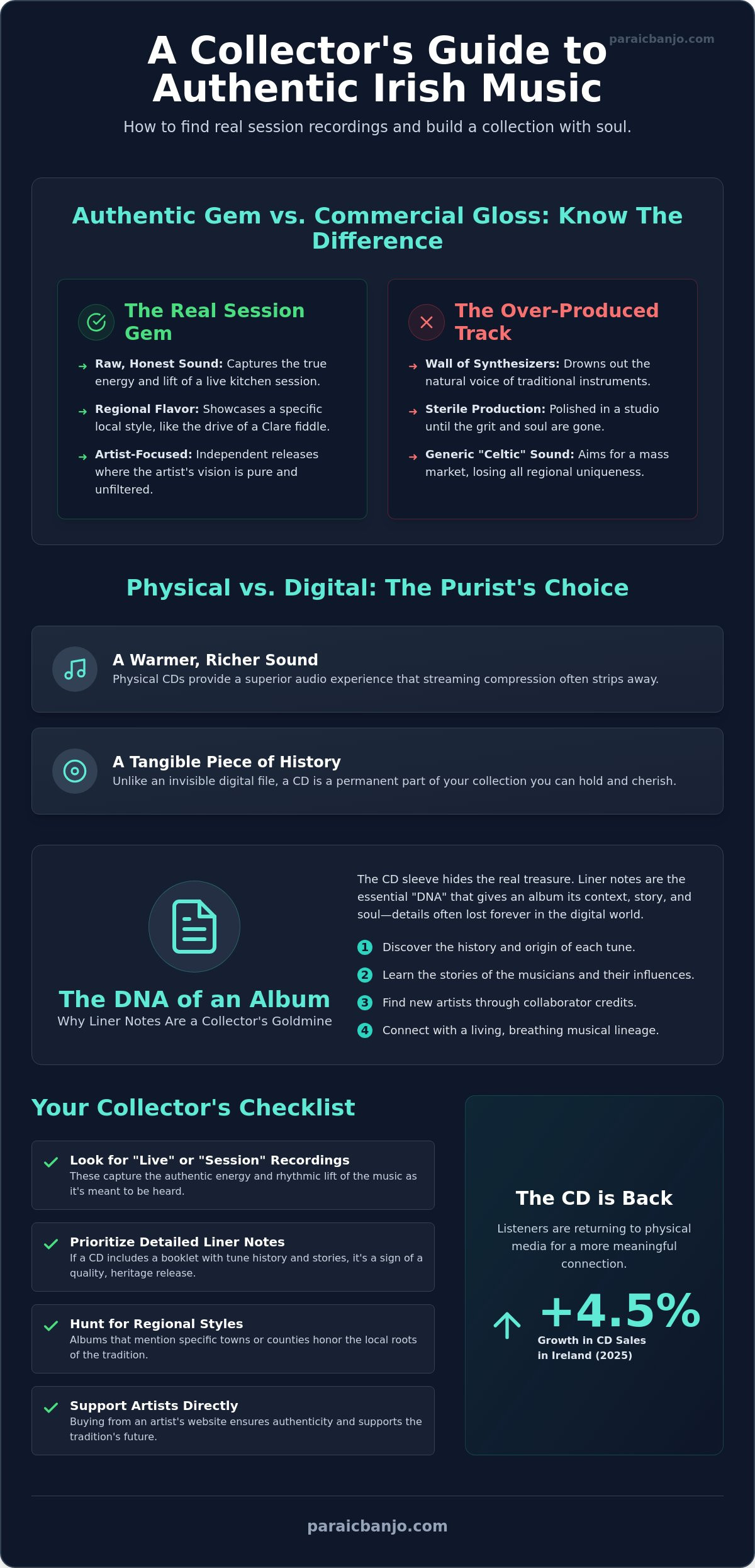
When you hold a truly collectible album in your hands, you aren't just holding plastic and paper. You're holding a specific moment in the history of Irish music. For a purist, collectible irish music cds aren't defined by a shiny sticker or a high price tag on a resale site. They are defined by the purity of the sound. Many mass-market "Celtic" albums are manufactured in sterile studios with layers of synthesizers that drown out the natural voice of the instruments. A real gem, however, captures an un-diluted regional style, recorded with the grit and lift of a live session. It's the difference between a postcard of a landscape and actually standing on the sod.
In 2026, we are seeing a beautiful shift back toward the physical. CD sales in Ireland actually grew by 4.5 percent in 2025, proving that listeners crave something they can touch and keep. A digital file is invisible, but a physical CD is a tangible piece of musical history. It offers a permanent connection to the artist that streaming simply can't match. When you own a limited edition independent release, you own a piece of a legacy that hasn't been polished until the soul is gone. These recordings are the "first-hand" accounts of our tradition.
The Rarity of Regional Styles
Collectors often hunt for recordings that showcase a specific "accent" in the playing. This is what we call a regional style. Whether it's the relaxed, flowing lift of East Galway or the rhythmic drive of a Clare fiddle, these nuances are what make collectible irish music cds so valuable. They represent a specific community and a specific lineage of teachers. If you want to find the real treasures, look for albums that mention specific towns or counties in their descriptions. These are the recordings that honor the local roots of the music rather than trying to appeal to a generic global audience.
The "Direct-from-Artist" Connection
There is a deep emotional value in knowing exactly where your music came from. Buying directly from an artist's own website ensures you receive an authentic, first-press copy. It also means your support goes straight to the person keeping the tunes alive. This direct connection is vital for the survival of independent traditional music. If you are ready to start your journey as a purist, check out this guide to buying traditional Irish music direct from artists. It's a great way to ensure your collection is built on a foundation of authenticity. Grab a copy, support the craft, and feel the difference that a real session recording makes in your ears.
The Treasure in the Sleeve: Why Liner Notes Matter
The sleeve of a CD is where the real magic hides. For a purist, liner notes are the DNA of a traditional album. They tell you exactly where a tune came from, who played it fifty years ago, and why it holds a place in the player's heart. When you opt for digital files, you often strip away this essential context. You get the audio, but you miss the story. It's like reading a book with the first and last chapters torn out. You can follow the plot, but you lose the depth and the heritage that makes the experience whole.
Digital platforms rarely provide the space for the extensive background that authentic traditional music requires. Organizations like the Irish Traditional Music Archive work tirelessly to document our musical lineage, and a high-quality physical release should do the same. These booklets act as a bridge between the past and the present. They ensure that the names of the old masters aren't forgotten. Without these notes, a reel is just a reel. With them, it becomes a piece of a living, breathing history that you now own.
Actionable Tip: Before you pull the trigger on any collectible irish music cds, check the product description for mention of a booklet or detailed insert. If a listing doesn't highlight the inclusion of notes, you might be looking at a mass-produced reprint. Always prioritize albums that treat the documentation as seriously as the recording itself.
Preserving the Pulse of the Session
Liner notes often document the "session" atmosphere where the music lives. They name the collaborators, which is a goldmine for any collector. Seeing who joined the artist on a track helps you find other great musicians to add to your library. For us purists, the stories and the people are as important as the tunes. It's about the community, the shared laughs, and the rhythmic lift that only happens when the right people sit down together in a quiet room.
A Window into East Galway History
Take the East Galway style as an example. Without detailed notes, you might miss the subtle rhythmic roots and the specific "accent" that defines the region. If you want to understand the nuances of the west, our East Galway vs Clare music comparison dives deep into those stylistic differences. You can also discover the stories behind the music on our official album page, where we celebrate the decades of craft that went into every single track. Grab a copy and join the journey.
Physical CDs vs. Digital Downloads: The Purist’s Choice
Streaming is convenient, but it's fundamentally throwaway. You don't own that music; you're just borrowing access until a platform's licensing deal changes or your subscription expires. For a purist, building a library of collectible irish music cds is about permanence. A physical disc is your personal archive. It doesn't disappear if your internet goes out or if a digital service decides to remove a niche track. Beyond the ownership, there's the matter of audio fidelity. Digital files often compress the sound to save space, which can make acoustic instruments feel thin or distant. A CD offers a much more accurate representation of the session. You hear the deep resonance of the wood and the crisp snap of the strings in a way that feels like the musician is right there in the room with you.
When you invest in collectible irish music cds, you're securing a piece of history that won't vanish into a digital cloud. Organizations like the Irish Traditional Music Archive set the standard for how we should value our musical heritage. By keeping a physical library, you're following that same path of preservation on a personal level. Your shelf becomes a visible testament to the history you've gathered. While digital tracks are great for travel or a quick listen on your phone, the CD remains the definitive reference copy. It's the gold standard for your home listening room.
The Longevity of Physical Media
Digital platforms can change or remove tracks at any time without warning. A CD is a one-time purchase that stays with you forever. It's yours to pass down to the next generation of players. To keep your collection in top shape, store your discs away from direct sunlight. High heat and UV rays can damage the artwork and the disc surface over time. Keeping them in a cool, dry place ensures the music stays as clear as the day it was pressed.
Tactile Artistry and Design
The cover art and photography on an independent release often capture the very landscape that inspired the tunes. High-quality photography of a rain-soaked lane or a quiet pub corner sets the mood before the first note even plays. The physical feel of the album adds a layer of respect to the music inside. It's no wonder collectors are exploring traditional Irish session music CDs again in 2026. This tactile artistry turns a simple listening session into a storied journey through the tradition. It's a rhythmic masterclass you can actually hold in your hands.
How to Spot a Rare Gem: A Collector’s Checklist
Spotting a rare gem requires a keen ear for the pulse of the music. While many generic collections flood the market, true collectible irish music cds stand out because of their commitment to the tradition's core. You aren't just looking for a disc; you're looking for a signature of mastery. Use this checklist to filter out the commercial noise and find the recordings that actually matter.
Look for "Live" or "Session" settings. These capture the spontaneous lift that defines a real gathering. It's about the energy of players responding to each other in real time.
Respect the "Wait." Albums that took years to develop often possess a layer of maturity that quick studio sessions lack. A long development time usually means the artist has lived with these tunes for a lifetime.
Check the Artist's background. A player rooted in a specific community brings an authentic accent to every note. Research their teachers and their connection to the regional styles we discussed earlier.
Scan the tracklist for variety. A good balance of reels, jigs, and hornpipes shows a deep understanding of our rhythmic heritage. It proves the player isn't just a one-trick pony.
Identifying Authentic Instrumentation
Authentic playing focuses on the soul of the tune rather than just raw speed. You want to hear the rhythmic grit. Avoid any album that uses heavy synthesizers or "new age" backing tracks, as these often mask the natural voice of the instruments. If you're focusing on the tenor banjo, the sound should be "punchy" and lively. This means every note has a clear, percussive snap that drives the rhythm forward without losing the melody. It's a bright, energetic sound that cuts through a session with confidence.
Where to Buy for Guaranteed Authenticity
To find the real treasures, skip the massive online marketplaces. Prioritize artist websites where you can find limited runs and the most detailed packaging. Local Irish heritage shops and independent music specialists are also fantastic resources. They care about the music's lineage as much as you do. If you're ready to start your journey with a pure traditional Irish music CD, our guide to authenticity is the best place to begin. Grab a copy of something genuine and feel the difference in your own home.
Not Before Time: Adding a Rhythmic Masterpiece to Your Collection
"Not Before Time – 39 Years in the Making" isn't just another entry in a music catalog. It's a definitive statement of a lifetime spent in the heart of the tradition. When we talk about collectible irish music cds, we're talking about items with a story that spans decades. This debut album represents nearly forty years of honing a specific rhythmic lift. It's a rare example of a project that refused to be rushed, waiting instead for the perfect moment to be shared with the community. It carries the weight of a significant career milestone, balancing professional pride with a warm, inviting spirit.
The album features 18 tracks that focus on the soulful East Galway tenor banjo style. This style is known for its relaxed pace and deep, melodic resonance. It's a sound that values the "space" between the notes as much as the notes themselves. Because this is a limited-edition physical release, it holds a high value for any serious collector. You aren't just buying a disc; you're securing a piece of heritage that was crafted with immense care. It's a rhythmic masterclass you can actually hold in your hands, complete with the "treasure in the sleeve" that we've discussed.
A Collaboration of Masters
This project wasn't a solitary effort. It features a "who's who" of expert musicians who brought their own regional flavors to the session. We recorded these tracks live to ensure that the spontaneous energy of the music was preserved. When you listen, you'll feel like you're sitting right in the middle of the room. It's that "live" feel that transforms a recording into a true experience. Tip: Take a moment to read the extensive liner notes before you even press play. Understanding the 39-year journey behind these tunes will help you fully appreciate the mastery in every pluck of the string. It's the best way to invite yourself into this storied musical tradition.
Secure Your Piece of Banjo History
The direct-from-artist movement is the best way to ensure you're getting a true heritage item in 2026. By purchasing through the official site, you're supporting the living tradition directly and getting an authentic first-press copy. This limited physical run won't last forever, and once they're gone, these collectible irish music cds become much harder to find. If you can't wait for the postman to arrive, there is an immediate digital download option available too. You can even pick up individual digital tracks if there's a specific reel or jig that speaks to you. It's time to add a rhythmic masterpiece to your library. Order your copy of Not Before Time direct from Páraic Banjo today and join us in celebrating this long-awaited milestone. It's been a long road, but the music is finally ready for its home on your shelf.
Preserve the Soul of the Session on Your Shelf
Building a library of collectible irish music cds is about more than just owning a disc. It's about preserving a specific, un-diluted regional style and holding onto the stories that make the tunes live. You've learned how to spot the real gems by checking for live session energy and the depth of the liner notes. A physical disc is your personal archive. It's a permanent piece of heritage that won't vanish when a streaming contract ends or a digital platform changes its mind.
If you're ready to own a piece of banjo history, "Not Before Time – 39 Years in the Making" is the perfect place to start. This project features 18 tracks of pure traditional banjo, recorded live to capture that infectious session pulse. It comes with detailed historical liner notes that act as a bridge to the past. It's been 39 years in the development; it's a definitive statement of a lifetime's passion. Add "Not Before Time" to your collection today and feel the difference that decades of mastery makes. Let's keep the tradition alive together, one reel at a time.
Frequently Asked Questions
What makes an Irish music CD "collectible" in 2026?
A CD is considered collectible when it represents a limited edition heritage item rather than a mass market product. In 2026, collectors look for albums that celebrate a lifetime's passion and offer a deep connection to a specific musical community. It is about owning a physical piece of a storied tradition that has not been diluted for commercial appeal or over produced in a sterile studio.
Why should I buy a physical CD instead of streaming Irish music?
Physical discs provide a permanent archive that streaming services simply cannot guarantee. When you own collectible irish music cds, you possess the full audio fidelity and the "treasure in the sleeve" that digital files often strip away. It is a one time purchase that ensures your library remains intact regardless of internet access or licensing changes on digital platforms.
How can I tell if an Irish album is truly traditional?
An album is truly traditional if it captures the raw energy of a session and respects the rhythmic soul of the west. Avoid recordings with heavy synthesizers or over produced backing tracks that mask the natural sound of the instruments. Look for the "lift" in the playing, which is that infectious pulse that makes the music feel alive and honest rather than manufactured.
What are liner notes and why are they important for collectors?
Liner notes act as the DNA of a traditional recording, documenting the history of the tunes and the masters who played them decades ago. They provide the essential context that turns a simple tracklist into a vital historical resource. For collectors, these notes are necessary for understanding the lineage and the specific regional influences that the artist is bringing to the session.
Where is the best place to buy authentic Irish music online?
The best place to find authentic recordings is directly through the artist's own storefront or website. This direct from artist connection ensures you get a first press copy and that your support directly sustains the living tradition. You can also find collectible irish music cds at independent heritage shops and specialized traditional music retailers that prioritize cultural depth over generic global sales.
Is the tenor banjo a traditional Irish instrument?
The tenor banjo is a mainstay of Irish music, especially when tuned to GDAE to mirror the fiddle's range. It provides a punchy, percussive drive that is essential for the rhythmic lift of reels and jigs in a session. A great example of this mastery is the 18 track debut "Not Before Time – 39 Years in the Making," which showcases the instrument's soulful and traditional potential.


Comments