Essential Irish Albums: 2026 Traditional Music Collector’s Guide

The most popular "Celtic" compilation in your local shop is likely the furthest thing from the soul of a real Irish kitchen session. It's frustrating to spend your money on generic, synth-heavy tracks when you’re actually craving the raw, rhythmic lift of a pure East Galway banjo or a driving Clare fiddle. You want music that breathes. You want the sound of resin on a bow and the rhythmic tap of a foot on a stone floor. We've all been there, feeling overwhelmed by the sheer volume of folk-rock that masks the true tradition.
This traditional irish music collector's guide is here to change that. You'll discover the definitive recordings that capture the very heart of the music, learning how to build an authentic collection that will stay with you for a lifetime. It's about finding those rare moments of magic caught on tape. We're diving deep into the essential albums of 2026, looking at why physical CDs like Páraic Mac Donnchadha’s debut, Not Before Time - 39 Years in the Making, remain the gold standard for their rich liner notes and session energy. From understanding regional nuances to finding those high-quality gems that feel like a live performance, your journey into the real heart of the tradition starts right here.
Table of Contents
What Makes an Irish Music Album Truly "Essential"?
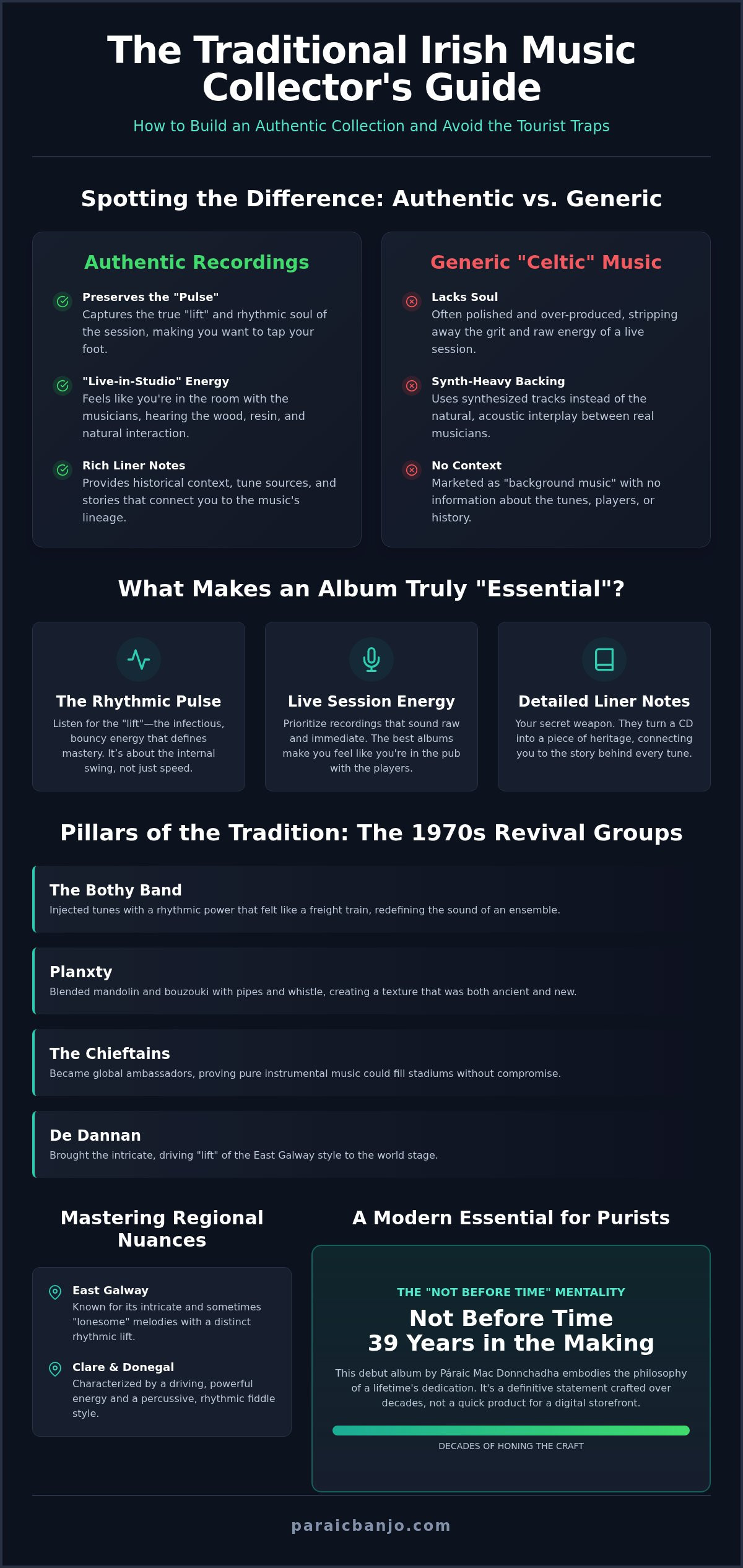
When you're building a collection, the word "essential" gets thrown around a lot. In this traditional irish music collector's guide, we define it simply: music that preserves the heartbeat of the tradition. It's the difference between a mass-produced "Celtic Dreams" CD found in a tourist shop and a recording that makes you feel like you're sitting three feet from the banjo player in a dimly lit pub. Commercial background music often strips away the grit. It polishes the soul out of the tunes until they're unrecognizable. Authentic session recordings, however, embrace the rough edges. They capture what I call the "Not Before Time" mentality. This is the philosophy of waiting for the right moment. A musician might spend thirty or forty years honing their craft in kitchens and backrooms before ever stepping near a microphone. That patience creates a definitive statement of a lifetime's passion, not just another digital storefront product.
Actionable Tip: Always prioritize "live-in-studio" energy over high-gloss production. If an album sounds too clean or uses synthesized backing tracks, it likely lacks the spirit of the session. You want to hear the resonance of the wood, the strike of the pick, and the natural interaction between players.
The Role of the Rhythmic Pulse
Speed is a common trap for the uninitiated. Many listeners think fast playing equals great playing, but in the history of Irish music, rhythm is the true master. A soulful player understands the "lift." This is that infectious, bouncy energy that makes a reel feel like it's floating. It isn't about rushing to the finish line. It's about the internal swing and the space between the notes. When you're browsing for albums, listen for that steady, driving pulse. It's a rhythmic soul that makes your feet move before your brain even processes the melody. That is the mark of a master.
Why Liner Notes are the Collector’s Secret Weapon
For a serious collector, the music is only half the story. Liner notes are your secret weapon. They transform a simple set of tunes into a living story. You should look for tune names, specific sources, and regional histories. Does the player mention the old fiddler they learned the track from back in the 1980s? That's the sign of an authentic project. For a masterclass in how this is done, look at the extensive historical notes in Not Before Time - 39 Years in the Making. These details connect you to the lineage of the music. They turn a plastic disc or a digital download into a piece of heritage you can truly hold in your hands. It makes the listening experience deeply personal.
The Pillars of the Tradition: Group Recordings You Must Own
The 1970s sparked a massive revolution. It was a decade where the music moved from the kitchen to the concert hall, changing how we listen forever. Any traditional irish music collector's guide must start with the groups that redefined the ensemble sound. The Bothy Band is the obvious first stop. Their 1975 debut didn't just play the tunes; it injected them with a rhythmic power that felt like a freight train. Donal Lunny and Micheál Ó Domhnaill created a backing section that changed the way we hear reels. Then there was Planxty. By blending the mandolin and bouzouki with the pipes and whistle, they created an "East meets West" texture that felt ancient and fresh at the same time. It's a sound that still haunts the sessions today.
The Chieftains took a different path. Led by Paddy Moloney, they became global ambassadors, proving that a pure, instrumental sound could fill stadiums without any commercial watering down. Meanwhile, De Dannan brought the specific, intricate lift of the East Galway style to the forefront. These groups didn't just play music. They established the rules for defining traditional Irish music in a modern context. They proved that you could be technically brilliant while keeping the soul of the session intact.
The 1970s Revival: A Turning Point for Fans
These groups are the "gold standard" for a reason. They mastered the art of instrumental interplay. In a great session, the players aren't just playing over each other; they're listening, reacting, and breathing together. This era influenced every banjo and fiddle player who followed, setting a bar for technical skill and emotional depth that we still strive for today. It’s about that shared pulse.
Actionable Tip: Listen to "The Kesh Jig" by The Bothy Band. Notice how the flute and fiddle lock together while the guitar and bouzouki provide a driving, percussive foundation. It's the perfect example of how to balance multiple instruments without cluttering the melody. Try to tap along to the internal rhythm rather than just the lead notes.
Modern Ensembles Keeping the Flame Alive
Building a collection doesn't stop with the classics. You need to identify modern groups that prioritize that "raw" session sound over polished fusion. Look for recordings where the rhythm feels organic rather than programmed. High-quality traditional irish session music cd collections are a great way to find these gems. You want to hear the interaction between the players. If you’re looking for that same authentic energy in a solo setting, you might enjoy exploring the tracks on Not Before Time - 39 Years in the Making, which captures the spirit of these legendary ensembles through a master’s lens. It's about keeping that flame alive for the next generation.
Solo Mastery: Essential Albums for Banjo and Fiddle Purists
While the legendary groups provide a massive wall of sound, solo albums are where you truly hear the intricate details of a musician's soul. Any traditional irish music collector's guide would be incomplete without the giants who defined their instruments. Barney McKenna is the undisputed father of the modern tenor banjo. He transformed it from a fringe novelty into a powerhouse of the tradition. Kieran Hanrahan later brought a sophisticated, rhythmic precision to the banjo that remains a benchmark for purists today. Then there is Tommy Peoples. His fiddle playing is legendary for its "bark," a sharp, aggressive triplet that defines the Donegal style. These players didn't just play tunes. They created a language. As you build your library, let this traditional irish music collector's guide lead you toward the players who prioritize soul over speed.
Actionable Tip: Use solo recordings to deconstruct the music. Pick one track and listen exclusively for the "ornaments"-the cuts, rolls, and triplets that decorate the melody. It’s much easier to identify these subtle flourishes when you aren't distracted by a full band. This helps you appreciate the technical skill required to make a simple reel sound like a masterpiece.
The Tenor Banjo: A Percussive Heartbeat
The secret to the Irish banjo is GDAE tuning. By tuning the strings to match a fiddle exactly, the banjo can navigate complex melodies with ease. But a truly soulful style isn't about how many notes you can cram into a bar. It's about the "drive." This is the percussive, rhythmic energy that moves the music forward. You want to hear the pick hitting the string. You want that tactile, woody resonance. A technical player might be fast, but a soulful player makes the banjo breathe. It’s a rhythmic heartbeat that anchors the entire session. If you're looking for that raw, unpolished energy, exploring authentic Irish banjo music is the best way to hear how the instrument should really sound.
Fiddle and Flute: The Melodic Core
Every collector needs a solo fiddle album to understand regionality. In the West, particularly Galway and Clare, the style is often more melodic and flowing compared to the north. When a fiddle and flute lock in together, they create a single, powerful voice. The flute provides the breath and the "pop," while the fiddle provides the sustain. This interplay is the melodic core of the tradition. Why does every fan need a solo fiddle album? Because it's the most honest expression of the music. If you want to hear this level of mastery in a modern context, tracks from Not Before Time - 39 Years in the Making show how decades of practice result in that perfect, unhurried lift. It’s about the quiet confidence of a master who knows exactly when to let a note linger.
Regional Gems: The Sound of East Galway and Clare
Regional styles are the secret sauce for any serious music enthusiast. If you’re following a traditional irish music collector's guide, you’ll quickly realize that Ireland isn’t just one musical block. It’s a patchwork of distinct sounds. The East Galway style, for instance, is famous for its "lonesome" sound. It’s lyrical, melodic, and deeply emotional. Paddy Fahey, the legendary fiddler and composer, is the high priest of this tradition. He famously never named his tunes, leaving them as "Fahey’s Reel No. 1" and so on, which only adds to the mystery of the music. On the other side, you have Joe Cooley, whose accordion playing defined the driving, rhythmic pulse of South Galway and Clare. His music was made for dancing. It has a relentless, infectious energy that captures the famous Clare "lift."
Actionable Tip: To truly understand regionality, try a side-by-side comparison. Find a recording of a Clare reel and play it next to a Sligo reel. Notice the "swing." The Clare style tends to have a rounder, more relaxed triplet, while the Sligo style is often crisper and faster. Hearing this difference is the first step toward becoming a true connoisseur.
What is East Galway Style Music?
This style is all about the "nyah." That’s a word we use to describe the soul, feeling, and specific ornamentation of a note. It isn't about speed. It’s about the lyrical flow and the subtle, mournful quality of the melodies. For a deeper dive into the technical differences, read our guide on east galway vs clare music. You'll find that these tunes often sit in minor keys or have unexpected melodic turns that pull at the heartstrings. It’s a sophisticated way of playing that rewards the patient listener. It’s music that demands your full attention.
The Rhythmic Drive of the Clare Tradition
In Clare, the music is inseparable from the dance floor. The rhythm is bouncy and steady, mirroring the regional set dance steps. It’s a pulse you feel in your chest. When you listen to recordings from this area, you're looking for that "lift," an upward surge in the music that makes it impossible to stay still. Páraic Mac Donnchadha spent decades immersed in both of these neighboring traditions, learning from the masters who lived and breathed these styles. His work bridges the gap between the lonesome East Galway soul and the driving Clare rhythm, creating something that feels both ancient and alive. If you're ready to add these regional textures to your own library, explore the authentic tracks on Páraic's debut release today.
Completing Your Collection with "Not Before Time"
After exploring the 1970s legends and regional masters, you need a contemporary anchor for your library. This traditional irish music collector's guide concludes with a project that bridges the gap between the old masters and the current generation. Not Before Time - 39 Years in the Making isn't just an album; it’s a definitive statement of a lifetime's work. With 18 tracks ranging from high-energy reels to soulful hornpipes, it captures that elusive "session" feel. This is only possible because of the expert collaborators involved. When players who have known each other for decades sit down to record, the music breathes in a way that solo technical displays never can. It’s a shared conversation between masters of the craft.
Actionable Tip: Start your listening journey with Track 1. It’s a set of reels that immediately showcases the rhythmic pulse of the East Galway style. Pay attention to how the banjo doesn't just play the notes but drives the entire set with a steady, infectious lift. It’s the perfect introduction to the soulful energy we’ve discussed throughout this guide.
Why This Album Belongs on Your Shelf
It’s rare to find a debut album with four decades of preparation behind it. Most artists rush to record, but this project waited until the time was exactly right. The result is a raw, authentic sound with no over-processing or artificial gloss. You hear the resonance of the instruments and the natural interplay of the session. Purists understand that the best way to support the tradition is to buy traditional irish music direct from artist sources. This ensures the music remains a living, breathing craft rather than just a commodity on a corporate streaming platform. It keeps the heartbeat of the music strong.
Physical CD vs. Digital Download
While digital tracks offer great convenience for your mobile library, the limited-edition physical CD is the true collector’s prize. It includes extensive liner notes that provide the historical context for every tune. You’ll learn about the sources, the stories, and the regional history that makes this music so special. You can order the Irish CD online for global delivery, bringing a piece of the West of Ireland directly to your door. Whether you choose the tactile experience of the CD or the high-quality digital album, you’re adding a foundational piece to your collection that will last a lifetime. It's an investment in the soul of the tradition.
Build Your Authentic Irish Music Legacy
Building a collection that truly captures the spirit of the session is a journey of patience and a deep love for the "lift." You've learned how to look past generic compilations and find the rhythmic heartbeat in regional styles like East Galway and Clare. This traditional irish music collector's guide is your roadmap to a library that resonates with soul rather than just technical speed. It’s about the stories behind the tunes and the decades of dedication required to play them with genuine feeling. Every track you add should bring you closer to the kitchen floor where this music lives.
Ready to add a modern classic to your collection? You can order "Not Before Time - 39 Years in the Making" on CD or Digital now. This project was 39 years in the making, featuring 18 tracks of pure traditional banjo recorded live to preserve that authentic session energy. It represents a lifetime’s passion, packed with extensive notes to bridge the gap between the listener and the tradition. Grab your copy today and let the music speak for itself. It's time to bring the real tradition home. Happy listening!
Frequently Asked Questions
What is the most famous Irish traditional music album of all time?
While every fan has a personal favorite, the 1975 debut album from The Bothy Band is often cited as the most influential. It introduced a rhythmic power that forever changed how we hear the tradition. Other foundational works include Planxty’s early recordings and the first Chieftains releases. These albums defined the sound of the 1970s revival. Any traditional irish music collector's guide would place these at the top of the list for their technical brilliance.
Are physical CDs still worth buying for Irish music fans in 2026?
Physical CDs are absolutely worth the investment for the detailed liner notes you won't find on streaming sites. In 2025, CD sales saw a steady rise of 4.5 percent as fans looked for a tactile connection to the music. A physical disc provides historical context and a sense of ownership that digital files lack. It’s a way to hold a piece of the tradition in your hands forever; it’s a legacy.
Where can I find authentic traditional Irish music that isn’t "commercial"?
The best way to find authentic music is to buy directly from the artist’s website. Look for recordings that prioritize "live session" energy rather than high-gloss production. The Irish Traditional Music Archive is also a fantastic resource for discovering non-commercial recordings. Authentic albums often feature regional styles and specific instrumentation, avoiding the generic synth sounds found in tourist shops. Buying direct ensures you’re getting the real, unpolished heart of the music.
What is the difference between East Galway and Clare music styles?
The East Galway style is famous for its "lonesome," lyrical melodies and a relaxed pace. It focuses on the "nyah," which is the deep feeling and soul of the note. The Clare style is celebrated for its rhythmic "lift" and driving energy, which is closely tied to regional set dancing. While Galway music pulls at the heartstrings, Clare music makes it nearly impossible to keep your feet still. Both are essential for a complete collection.
Why is the tenor banjo so important in Irish session music?
The tenor banjo serves as the rhythmic engine of a traditional session. When tuned to GDAE, it matches the fiddle’s range but adds a percussive strike that keeps the whole group on the beat. It isn't just about playing the melody; it's about providing the "drive" that moves the set forward. Masters of the instrument use this percussive quality to anchor the music, making the banjo a vital part of the ensemble’s collective heartbeat.
How can I support independent Irish musicians directly?
Supporting independent musicians is best done by purchasing their work through their own digital storefronts. When you buy an album like Not Before Time - 39 Years in the Making directly, you ensure the artist receives the most support possible. You can also help by sharing their music with other enthusiasts or following them on social media. This direct connection helps preserve the craft and keeps the tradition thriving for future generations of collectors.
What should I look for in Irish music liner notes?
Great liner notes should provide a roadmap of the musician's journey. Look for tune names, specific sources, and the regional history of the tracks. These notes often include personal stories about old masters, which adds a layer of legendary status to the music. A traditional irish music collector's guide isn't complete without these details. They transform a list of tracks into a living history, helping you understand the lineage and soul behind every reel.
Is "Not Before Time" available for international shipping?
Yes, international shipping is available for the physical CD of Not Before Time - 39 Years in the Making. You can order it directly from the website for global delivery. This limited-edition CD features 18 tracks recorded live to capture that authentic session energy. If you prefer a digital option, the full album and individual tracks are also available for immediate download worldwide. It's a simple way to bring the heart of Irish music home.


Comments