How to Appreciate Instrumental Music Through Traditional Irish Banjo

What if you could follow a traditional Irish banjo tune without knowing a note of music theory? Fast reels and jigs can blur together at first, especially when you’re unsure where the pulse sits or which line carries the melody. You don’t need to decode the music. If you’re looking for a traditional irish banjo album download, start by listening for the conversation: the tune’s steady motion, the melody’s turns, and the way the musicians shape the sound together.
This guide offers a simple way to listen with more confidence. You’ll learn to tap along, spot a melody as it returns, and notice the rhythmic bounce and musical details that bring a performance to life. No instrument required. Just give your ears a little direction.
We’ll also explore how musicians contribute to a group sound and how one tune can flow into the next. For a real-world example, Páraic Mac Donnchadha’s 18-track album Not Before Time - 39 Years in the Making brings together traditional session music and detailed liner notes. Listen first for what you hear, then use the notes to add context.
Table of Contents
How to appreciate instrumental music: begin with the feeling, not the theory
You don’t need to play an instrument, read notation, or know music theory to listen closely. Start by noticing what the music does: which sounds catch your ear, what feeling they create, and which parts return or change. Enjoy the tune before trying to explain it.
Try this first-listen exercise with any recording, including a traditional irish banjo album download you’re considering. Choose a comfortable setting, play the recording from start to finish, and listen without pausing or analysing. When it ends, name one thing you enjoyed, such as its lively energy, a bright sound, or the way the music gathered momentum.
Active listening means paying attention to musical details, not proving you know the technical terms.
What should a first-time listener notice?
Begin with the broad impression. Does the performance feel steady, lively, spacious, delicate, or driving? Notice whether the sound seems to spring forward or settle into an easy flow. There’s no “right” description. Your response is a useful starting point.
Next, pick one detail you liked. Perhaps a sound stood out, a phrase returned, or the energy lifted. Keep it simple. You’re listening to discover what speaks to you, not to grade your musical knowledge.
Do you need to understand music theory to enjoy a banjo recording?
No. Music theory is optional vocabulary for describing patterns listeners can already hear. Start with everyday ideas: the pulse is the steady movement you might tap along to; the tune is the musical line you may find yourself remembering or humming. If a phrase comes around again, you can notice the repetition without knowing its formal name.
Traditional Irish music often features the tenor banjo, a four-string instrument played with a pick. You can read more about the Tenor banjo and its place in the tradition, but you don’t need to study its history before pressing play. For now, listen for how its bright, crisp sound moves through the performance. On your next listen, follow one phrase from its first appearance to its return. That’s enough to begin hearing more.
Follow the pulse and melody in a traditional Irish banjo tune
A quick tune can feel like a rush of notes until you find something steady to hold on to. Try listening in three passes. First, hear the tune as a whole and notice its energy. Next, follow the pulse, the steady underlying movement. On the third pass, listen for the melody, the musical line that gives the tune its shape.
The pulse is the steady movement you can follow beneath the changing notes. A banjo may play a flurry of quick notes above it, while the underlying beat keeps the music moving. Irish traditional music includes reels and jigs, among other tune types. Irish traditional music is built around memorable melodies and a strong rhythmic feel. You don’t need to identify the tune type to enjoy that lift. Notice whether the music feels like it’s stepping evenly or moving with a more rolling bounce.
How can you follow a fast reel without losing the thread?
Listen for the regular forward movement instead of trying to count every note. If it feels natural, tap gently or nod along and let the quick notes pass over that steady pulse. If one passage catches your attention, replay it at normal speed first. Give your ears another chance to settle into the rhythm before trying slower playback, which can make the details easier to separate.
How do you recognize a melody when it changes or repeats?
Choose one short musical phrase and listen for what happens to it. Does it return, rise, fall, or pause? Repeated ideas give your ear familiar landmarks, even when the tune moves quickly. You don’t need to name the notes or identify a formal structure. Simply recognizing “that part again” helps you hear how the tune is shaped.
On your next listen, follow one thing at a time: the steady pulse, then a phrase that returns. If you lose the thread, let the tune continue and pick it up again when you hear a familiar shape. That small shift can make a fast recording feel less like a blur and more like music with direction.
Want a recording to practise with? Explore Páraic Mac Donnchadha’s traditional Irish banjo music, including the digital album and individual tracks, and try the three-pass method at your own pace.
Hear the banjo and ensemble as a musical conversation
A group performance can feel like one lively sound, but listen closely and you may hear different roles working together. One line carries the tune, another helps keep its pulse moving, and other sounds add colour or texture. These roles can shift from track to track, so don’t assume a particular instrument is doing a particular job. Listen first, then decide what you hear.
Use this quick guide on your next play-through:
What does the tenor banjo contribute to traditional Irish music?
Listen for the banjo’s bright, distinct presence. It may stand out through its crisp tone, rhythmic drive, or melodic movement. To hear its part more clearly, focus on the banjo line for a passage, then listen again with attention on the surrounding musicians. Notice whether the tune feels different when you shift your focus. The point isn’t to identify every instrument, but to hear how the parts combine.
How can you hear interaction between musicians?
Listen for musical give-and-take. Does one phrase seem to answer another? Does a sound continue beneath the tune, or leave space for it to shine? If a recording includes both solo and ensemble passages, compare how the tune feels alone and with other musicians around it. A fuller texture can make familiar notes feel newly alive.
Regional context can deepen your listening, too. If the album’s liner notes connect a tune or musician with East Galway or Clare, read that background after your first listen, then return to the recording with those details in mind. Don’t assign a regional style based on sound alone; let the notes support the connection. A traditional irish banjo album download with detailed liner notes, such as Not Before Time - 39 Years in the Making, can offer both music and context for listening more closely.
Use repeat listening and liner notes to notice more each time
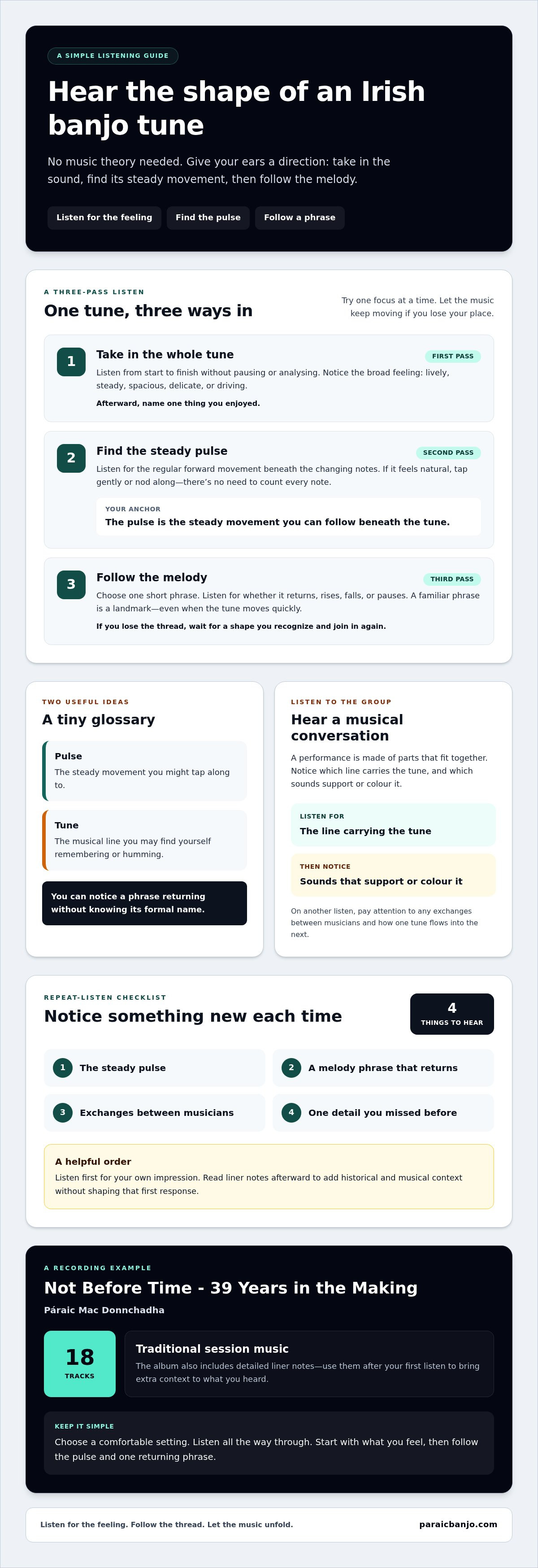
A second listen doesn’t have to mean starting from scratch. Give your ears one small job, then see what comes into focus. On a repeat play, check for the steady pulse, follow the melody, notice any exchange between musicians, and listen for one detail you missed before. It might be a phrase that returns, a sound tucked behind the tune, or a change in energy.
After listening, jot down three quick notes: one sound you noticed, one feeling the music left you with, and one question you’d like to explore. Keep it informal. Your question might be “Which instrument made that sound?” or “Why did that phrase feel familiar?” This simple record helps you notice how your impressions change as you listen again.
Should you listen to a whole album or one track at a time?
Either approach works. Choose one track when you want to practise following a pulse or melody without taking in too much at once. A full album offers a broader journey through different tunes and performances. If time is short, return to one passage that caught your attention rather than replaying the whole recording. There’s no required schedule; listen when you’re ready.
How can liner notes deepen the listening experience?
Listen first, then read the notes. This lets you form your own impression before learning documented musical or regional background. If the notes identify a tune’s context or offer details about the musicians, choose one point and revisit the track. Can you hear anything differently now? Let the information open another door, not dictate what you should feel.
Not Before Time - 39 Years in the Making brings together 18 tracks and detailed liner notes with historical and musical context. The story behind the album can add another layer to your listening, too. After your first play, explore the notes and make your three-part entry: one sound, one feeling, one question.
If you’d like a recording for this listen-read-listen routine, explore Páraic Mac Donnchadha’s traditional Irish banjo album. Choose the full digital album or an individual digital track and take the listening steps at your own pace.
Choose a traditional Irish banjo album download for a focused listening journey
You now have a few ways to listen more closely: follow the pulse, trace a melody, and notice how musicians contribute to the group sound. Use those as your guide when choosing a recording. Look for music you’ll want to return to, and consider whether background notes would make the listening more rewarding. There’s no single right starting point. Choose what makes you curious.
What should you look for in a traditional Irish banjo album?
Think about what you’d like to hear. Are you curious about how a tune sounds with several musicians, or do you want to focus closely on the banjo line? Check the track information and any available listening samples before deciding. Don’t assume every album includes the same kinds of performances. If historical or regional background interests you, detailed liner notes can be a valuable part of the experience.
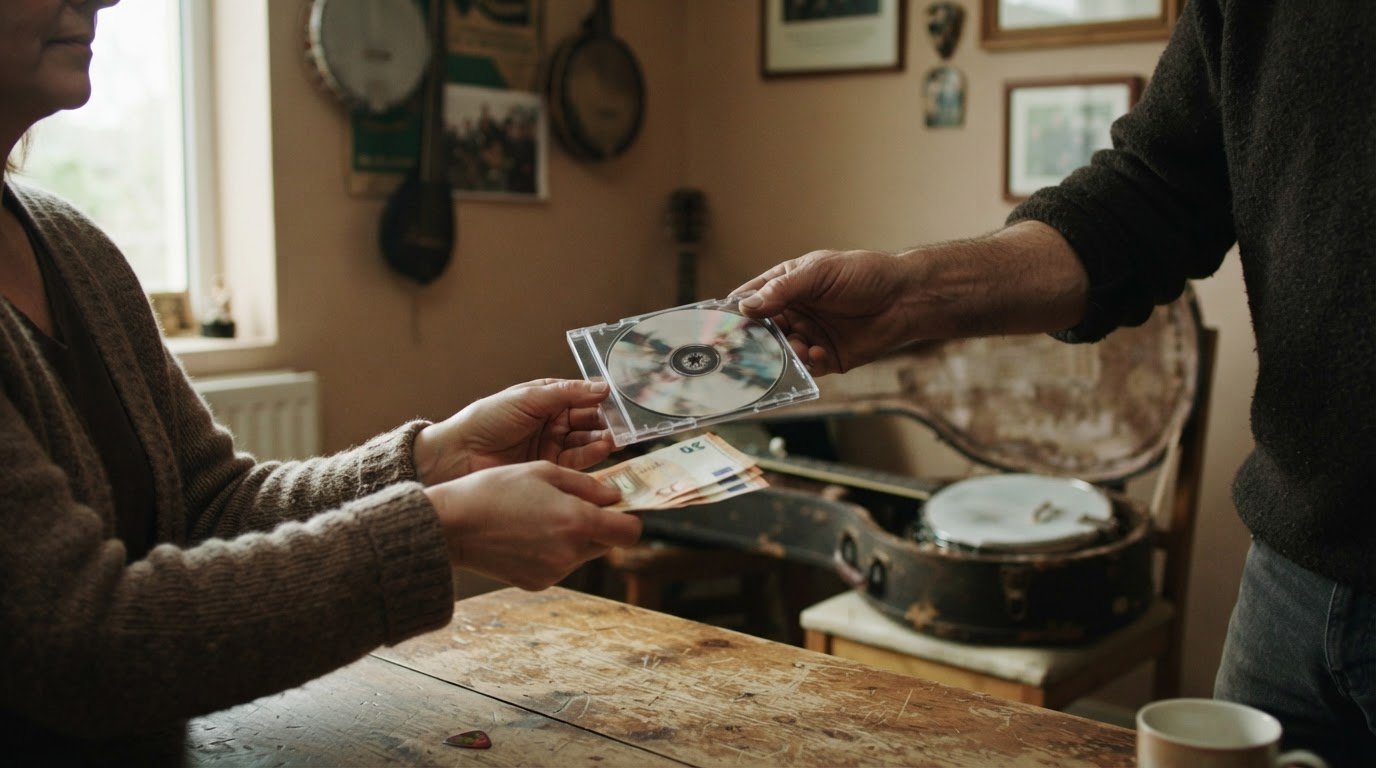
Not Before Time - 39 Years in the Making, the debut album by Irish tenor banjo player Páraic Mac Donnchadha, is one option to consider. It contains 18 tracks of traditional Irish session music, recorded live with expert musicians, and includes liner notes with musical and regional context. It’s available as a digital album, individual digital tracks, and a physical CD. Choose the format that fits how you like to listen.
How can you keep discovering details after your first listen?
Give each replay a different focus. Listen for the pulse, then follow the melody. On another play, notice how the musicians interact. After reading the liner notes, return to a detail they discuss and see what stands out now. Even a short passage can reward another listen, so you don’t need to set aside time for a whole album every time.
If you’d like to explore more recordings, look for a guide to traditional Irish session music CDs for another route into the tradition. When you’re ready to put these listening ideas into practice, visit Páraic Mac Donnchadha’s official website to explore Not Before Time - 39 Years in the Making. Start with the track or format that interests you, and let the next listen reveal something new.
Let the next tune reveal a little more
You don’t need theory or an instrument to appreciate traditional Irish banjo music. Start with the feeling, find the steady pulse beneath the quicker notes, then follow a melody or listen for how musicians respond to one another. Each replay can bring a new detail into focus.
Choose a recording that invites you back and offers context you care about. Páraic Mac Donnchadha’s Not Before Time - 39 Years in the Making is one option: its 18 tracks feature Páraic alongside other musicians, with detailed liner notes offering musical and regional background. Whether you’re considering a traditional irish banjo album download, an individual track, or a physical CD, let curiosity guide your choice.
Ready to put your listening skills to work? Explore Páraic’s traditional Irish banjo album, choose a tune that catches your ear, and give it another listen. There’s always more to hear.
Frequently Asked Questions
Can I appreciate instrumental music without knowing music theory?
Yes, you can enjoy instrumental music without knowing music theory or playing an instrument. Start by noticing how the music feels, then listen for a sound or phrase that catches your attention. You might hear a steady pulse, a melody that returns, or a change in energy. You don’t need to name a technique or identify every instrument. Curiosity and attention are enough to make a first listen rewarding.
How do you listen to traditional Irish banjo music?
Try listening in stages: first take in the whole tune, then find its steady pulse, and finally follow the melody. On another listen, notice how the musicians fit together. A traditional irish banjo album download gives you a recording to revisit at your own pace. Focus on one detail each time, such as a returning phrase or a sound that supports the tune, rather than trying to hear everything at once.
What should I listen for in an instrumental song?
Listen for the overall mood, the pulse beneath the notes, and the main melody. Then notice whether a phrase repeats, changes direction, or leaves a pause. In a group performance, listen for how one musical line carries the tune while others support or add colour. These roles can vary between recordings, so follow what you hear instead of assuming a particular instrument has a fixed part.
How can I follow a fast Irish reel if I am new to the music?
Follow the tune’s forward movement instead of counting every quick note. If it feels comfortable, tap gently or nod along to the pulse underneath. Listen once for the overall shape, then replay a short passage at normal speed and see whether a phrase stands out. Repeated musical ideas can give your ear familiar landmarks. Let the tune continue if you lose your place, then pick up the pulse again.
Do liner notes help you appreciate an Irish music album?
Yes, liner notes can add useful musical, historical, or regional context when those details are documented. For a more personal first impression, listen to the recording before reading them. Then choose one detail from the notes and revisit the music to see what you notice. Páraic Mac Donnchadha’s Not Before Time - 39 Years in the Making includes detailed liner notes with musical and regional background.
Should I download a full traditional Irish banjo album or individual tracks?
Choose based on how you want to listen. A full digital album suits listeners who want to explore a broader collection of tunes and return to different tracks. Individual digital tracks let you focus on a particular selection. Páraic Mac Donnchadha’s Not Before Time - 39 Years in the Making is available as a digital album, individual digital tracks, and a physical CD. Check the track information and any available samples to help decide.
How many times should I listen to an instrumental track?
There’s no set number. Listen again whenever you want to notice something new, and give each replay a different focus. You might follow the pulse first, then trace the melody, then listen for exchanges between musicians. If you’re short on time, replay a passage that caught your ear rather than the whole track. A brief note about one sound, feeling, or question can help you remember what stood out.
Comments