How to Support Independent Musicians in 2026: A Practical Fan’s Guide

What if supporting an independent musician meant more than pressing play? If you’re wondering how to support independent musicians 2026, you’re not alone. Listening, sharing, and buying can all help in different ways, and your time and budget matter too. Meaningful support doesn’t have to be complicated or costly.
A stream can introduce someone to a new sound. A thoughtful recommendation can put that music in front of a listener who’ll connect with it, and buying through an artist’s official storefront gives you another way to support their work. Páraic Mac Donnchadha’s debut album, Not Before Time - 39 Years in the Making, is one example: its 18 live-recorded tracks are accompanied by liner notes sharing the history behind East Galway and Clare musical traditions. This guide offers practical ways to discover independent releases, choose how to support artists, and keep distinctive musical traditions in circulation.
Table of Contents
Why Supporting Independent Musicians in 2026 Goes Beyond Pressing Play
You want the music you love to reach more people, but it can be hard to know which actions help. Should you listen again, tell a friend, follow the artist, or buy a release? There’s no single answer for every musician or fan. Understanding how to support independent musicians 2026 starts with seeing support as more than a transaction: it can be attention, discovery, conversation, or a purchase, depending on what works for you.
What does it mean to support an independent musician?
Supporting an independent musician means helping their music reach listeners and sustaining a direct connection between the artist and their audience. Independent musicians release and manage their work outside the control of a major record company, but they don’t all work alone or follow the same path. Some release music themselves; others work with independent labels, collaborators, or professional partners. For background on how independent labels fit into the wider music industry, see The Role of Independent Record Labels.
“Independent” doesn’t tell you how much support an artist has, what their circumstances are, or how they make music. It describes an approach to releasing and managing work, not a complete picture of the person behind it. A practical way to help is to engage with the artist’s official channels and share their work with listeners who might enjoy it.
Can small actions make a difference?
Yes, especially when they’re genuine and easy to repeat. A personal recommendation can introduce an artist to someone who might not otherwise come across their music. Instead of sharing a link without context, mention what caught your ear: a lively rhythm, a striking melody, or the feeling a song left with you. That gives your friend a reason to listen and makes the recommendation personal.
Support doesn’t mean doing everything at once. Choose an action that suits your budget and routine. You might follow an artist’s official page, send a release to one friend who’d enjoy it, or leave a thoughtful response after listening. If your budget allows, a direct purchase is another option. No single action is a test of how much you care.
Consistency beats pressure. A manageable gesture you’re happy to repeat is more realistic than a burst of support that leaves you feeling obligated. Start with one artist whose music you value. Learn their name, share a track with someone who may connect with it, and let your support grow naturally.
How to Support Independent Musicians Through Listening and Discovery
Listening can be more intentional without turning music into homework. Start with an artist’s official page or release, then follow their updates so new recordings and news are easier to find. If a track catches your ear, save it on the platform you use. That makes it easy to return to, rather than letting a promising discovery disappear into the shuffle.
Make listening more useful to the artist and the listener
Give a release room to unfold. Try more than the track that first caught your attention: another tune may reveal a different mood, instrument, or musical thread. Explore at your own pace, and read album notes or musician credits when they’re available. Those details can add context to what you hear and help you recognize the people and traditions behind the sound. Listening through an official artist channel keeps your discovery connected to the source, without assuming every platform rewards a play in the same way.
For context about the wider independent music community, the American Association of Independent Music (A2IM) shares information about the independent label sector and its work. It can complement your listening, especially as you explore music released outside major-label channels.
Share music in a way that helps people discover it
A good recommendation gives someone a reason to listen. Name what stood out to you: perhaps a nimble melody, a rich ensemble sound, or the way a tune builds. Then share the artist’s official page or release link and include the artist’s name. That makes it easier for a curious friend to find the music and explore more, while giving proper credit.
Use an official link rather than uploading or forwarding an unattributed audio file. Keep your description accurate, too. If you’re unsure about a genre, place, or tradition, describe what you hear instead of applying a label that may not fit. Thoughtful sharing is personal, specific, and respectful.
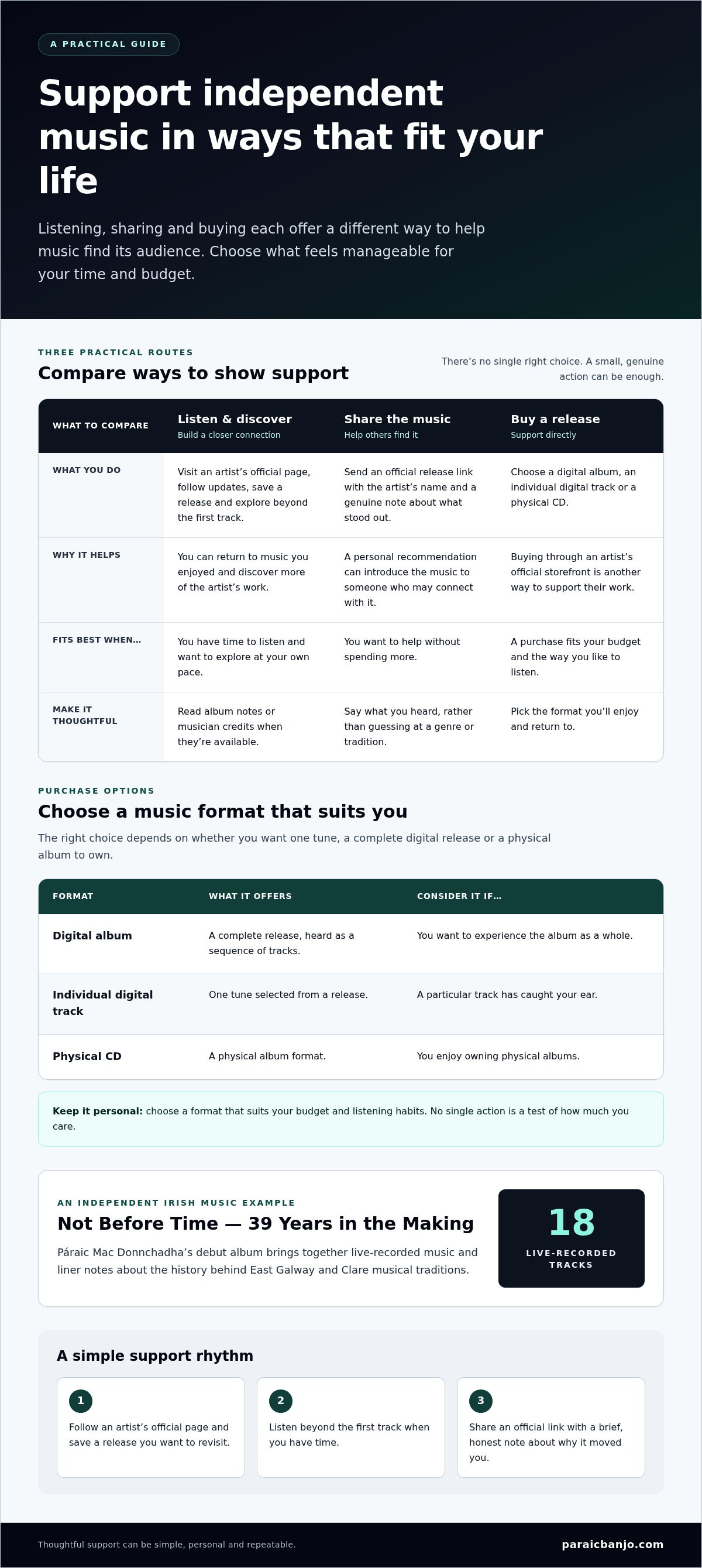
Follow an artist’s official page and save a release you want to revisit.
Listen beyond the first track when you have time.
Share an official link with a brief, honest note about why it moved you.
These habits offer a practical answer to how to support independent musicians 2026 without adding pressure to your budget. To explore an independent Irish tenor banjo release through its official artist site, visit Páraic Mac Donnchadha’s music.
Buying Music Direct from Independent Artists: Digital Tracks or Physical CDs?
Listening helps a release find an audience; buying through an artist’s official storefront is another way to support the music. There isn’t one best format for every fan. Think about how you like to listen, whether you enjoy owning physical albums, and what fits your budget. The best choice is the one you’ll enjoy and return to.
When does buying a digital album or individual track make sense?
A digital album suits listeners who want to hear a release as a complete work, moving through its tracks in sequence. If one tune has especially caught your ear, an individual digital track lets you choose that piece. Either option can fit easily into your listening routine, whether you’re exploring an artist for the first time or returning to a familiar sound.
Páraic Mac Donnchadha’s Not Before Time - 39 Years in the Making is available as a digital album and as individual digital tracks. The album brings together 18 tracks recorded live with expert musicians. Browse the release and decide whether you’re drawn to the full collection or a particular tune.
Why might a listener choose a physical CD?
A CD gives you a physical copy to keep, revisit, and enjoy as part of a music collection. Some listeners value that tangible connection; others prefer digital listening. Neither choice is right for everyone. Not Before Time - 39 Years in the Making is available as a limited-edition physical CD, as well as a digital album and individual tracks.
Buying from an official artist storefront gives you a direct route to the artist’s own release. You can also explore the album’s liner notes, which share historical context about East Galway and Clare musical traditions. Think about how you usually listen, whether you collect CDs, and what fits your budget. A single track, a full digital album, or a CD can each be a thoughtful way to support music you want to hear more of.
How to Support Independent Musicians Without Spending More
Supporting an artist doesn’t have to begin with a purchase. Thoughtful actions can help people find the music, understand what they’re hearing, and connect with the person who made it. If you’re working out how to support independent musicians 2026 on a tight budget, try this simple routine. Keep it manageable and make each step genuine.
A simple routine for supporting an artist you enjoy
Follow the artist’s official page. This makes it easier to see new releases and updates instead of relying on an algorithm or hoping a track turns up in your feed.
Share one release with someone who might enjoy it. Think about their musical interests first. A friend who loves acoustic playing may appreciate a different recommendation than someone who mostly listens to electronic music. Send an official track or album page and mention why you thought of them.
Leave a specific, honest response. Rather than posting generic praise, say what stayed with you: the lift of a melody, the interplay between musicians, or the mood of a particular tune. A short, sincere comment feels more personal than automated-sounding enthusiasm.
That’s a useful start. You don’t need to post about every release or turn your social feed into a stream of recommendations. Share music when it feels right, and give the artist credit by naming them and linking to an official source.
Help preserve the story behind the music
Listening can also keep musical context in view. If an album includes liner notes, take a few minutes to read them. They may identify the musicians, explain a tune’s background, or describe the place and tradition connected to the music. That extra context can make a familiar melody sound newly vivid.
The liner notes for Páraic Mac Donnchadha’s Not Before Time - 39 Years in the Making share historical context about East Galway and Clare music. Read alongside the recording, they place the tunes within a living tradition and add a story to the sounds. When you explore another release, check whether its notes or credits offer similar context.
These steps cost nothing but a little attention. Follow an artist, share a release with the right person, or leave a thoughtful note. To explore this example, listen to Páraic Mac Donnchadha’s album.
Put Your Support into Practice with an Independent Irish Music Release
It’s easier to choose how to support independent musicians 2026 when you can see what those choices look like for one real release. Páraic Mac Donnchadha is an independent Irish tenor banjo player. His debut album, Not Before Time - 39 Years in the Making, brings together 18 tracks recorded live with expert musicians. It shows how a recording can offer more than a collection of tunes: you can choose how to hear it and explore the musical context around it.
Choose a format that suits how you listen
If you want to spend time with the complete release, explore the digital album. If a particular tune has caught your attention, individual digital tracks let you focus on that piece. If you enjoy having music in a physical collection, the limited-edition CD is another option. Pick the format that fits your listening habits and budget.
Whichever you choose, give the album room to unfold. Listen for the interplay between the musicians, the character of the tenor banjo, and the way each track adds to the wider set. Because the recording was made live, you can hear the musicians playing together and bringing shared energy to the tunes.
Listen closely, then pass the music along
After listening, take a look at the liner notes. They share historical context about East Galway and Clare musical traditions, connecting the tunes with the places and history behind them. That context can deepen your appreciation, especially if you’re new to Irish traditional music or want to learn more about the repertoire.
Then share the release with someone who enjoys traditional Irish session music. Send an official artist link and mention what stood out, whether it was the lively playing, the musicians’ ensemble sound, or the story behind the tunes. A considered recommendation can invite someone else into the music without turning the moment into a sales pitch.
Explore Not Before Time - 39 Years in the Making in the format that suits you. Visit Páraic Mac Donnchadha’s official artist website to discover the release and choose how you’d like to listen.
Make Your Next Listen Count
Supporting independent musicians doesn’t mean choosing between streaming, sharing, and buying. Listen with intention, follow artists through their official pages, and recommend music to people who might genuinely enjoy it. If you’re able to buy a release, choose the format that fits your listening habits and budget. Those practical choices are a thoughtful way to approach how to support independent musicians 2026.
Páraic Mac Donnchadha’s debut album, Not Before Time - 39 Years in the Making, brings these options together. Its 18 tracks were recorded live with expert musicians, and listeners can choose the digital album, individual digital tracks, or a limited-edition physical CD. The liner notes share historical context about East Galway and Clare music, offering another way into the tradition behind the tunes.
Start by listening. Explore the notes, choose a format that feels right, or share the release with someone who loves Irish traditional music. Explore Páraic Mac Donnchadha’s music and choose a way to listen.
Frequently Asked Questions
How can I support independent musicians for free?
Follow the artist’s official pages, save their releases, and share a track or album with someone who might enjoy it. Add a short, personal note about what caught your attention, and credit the musician with an official link. If you leave a comment, make it specific and sincere. These small actions can help music reach new listeners without requiring a purchase or a large time commitment.
Does streaming music support independent artists?
Yes, streaming can support independent artists by helping listeners discover and return to their music. Royalties vary by platform and listening circumstances, so a stream doesn’t guarantee a particular payment to an artist. Listen through official artist or release pages where possible, follow the musician, and share the music with others. Treat streaming as one useful part of supporting an artist, rather than the only way to help.
Is buying music directly from an artist better than streaming?
Buying directly and streaming serve different purposes, so one isn’t automatically better for every listener or artist. Streaming is convenient for discovery and everyday listening; a direct purchase gives you a copy of a release and supports the artist through their official storefront. If you’re able and want to own the music, consider a digital album, an individual track, or a physical CD. Otherwise, listening and sharing still matter.
What is the best way to help an independent musician get noticed?
Make a thoughtful recommendation to someone whose musical interests fit the artist’s sound. Share an official track or release page, name the musician, and explain what stood out to you, such as a melody, rhythm, or ensemble performance. Following the artist’s official account and saving a release can help you keep up with their work. Honest, relevant sharing is more useful than exaggerated praise or an unattributed audio file.
Can I support an independent musician if I cannot afford to buy their album?
Absolutely. You can support an artist without spending money by following their official pages, listening through official channels, sharing a release with a friend, or leaving a genuine comment. Choose actions that fit naturally into your routine. A recommendation works best when you match the music to someone who might enjoy it and include a direct artist link. You don’t need to buy an album to show that the music matters to you.
Why do liner notes matter when supporting independent music?
Liner notes add context that a recording alone may not provide. They can share information about the musicians, tunes, and traditions behind an album, helping listeners hear the music with a deeper understanding of its roots. For example, the notes accompanying Páraic Mac Donnchadha’s music include historical context about East Galway and Clare. Reading them is a simple way to connect a listening experience with the stories and musical heritage behind it.
How can I support traditional Irish musicians?
Listen to their recordings through official channels, follow their updates, and recommend their music to people who enjoy traditional Irish sounds. If your budget allows, consider buying from the artist’s official storefront; otherwise, sharing an official release link is a helpful step. Páraic Mac Donnchadha’s Not Before Time - 39 Years in the Making offers one example, with 18 live-recorded tracks and liner notes sharing context about East Galway and Clare music.


Comments