Instrumental Irish Session Music: The Pulse and Soul of a Living Tradition
- Paraic Mac Donnchadha

- 6 days ago
- 12 min read
Most people think they're listening to traditional tunes, but they're actually hearing "elevator music" dressed up in a flat cap. If your instrumental irish session music doesn't make your foot tap or your heart race, it's missing the vital pulse that defines our living tradition. It's the difference between a sterile, over-produced studio track and the raw, rhythmic lift of a Friday night in a packed East Galway pub. You've likely felt that sting of buying a record only to find it lacks the drive of a real session. I understand that frustration deeply.
After 39 years of honing my craft on the banjo before finally releasing my debut, I've learned that the secret isn't just in the notes; it's in the heartbeat behind them. You're about to discover how to distinguish between regional styles like Clare and Galway while finding high-quality recordings that honor the history of the tunes. We'll look at how to support independent artists who keep this fire burning. By the end of this, you'll know exactly how to find music that feels like a storied conversation rather than a digital product. Let's dive into the rhythmic secrets of the session.
Table of Contents
What is instrumental Irish session music?
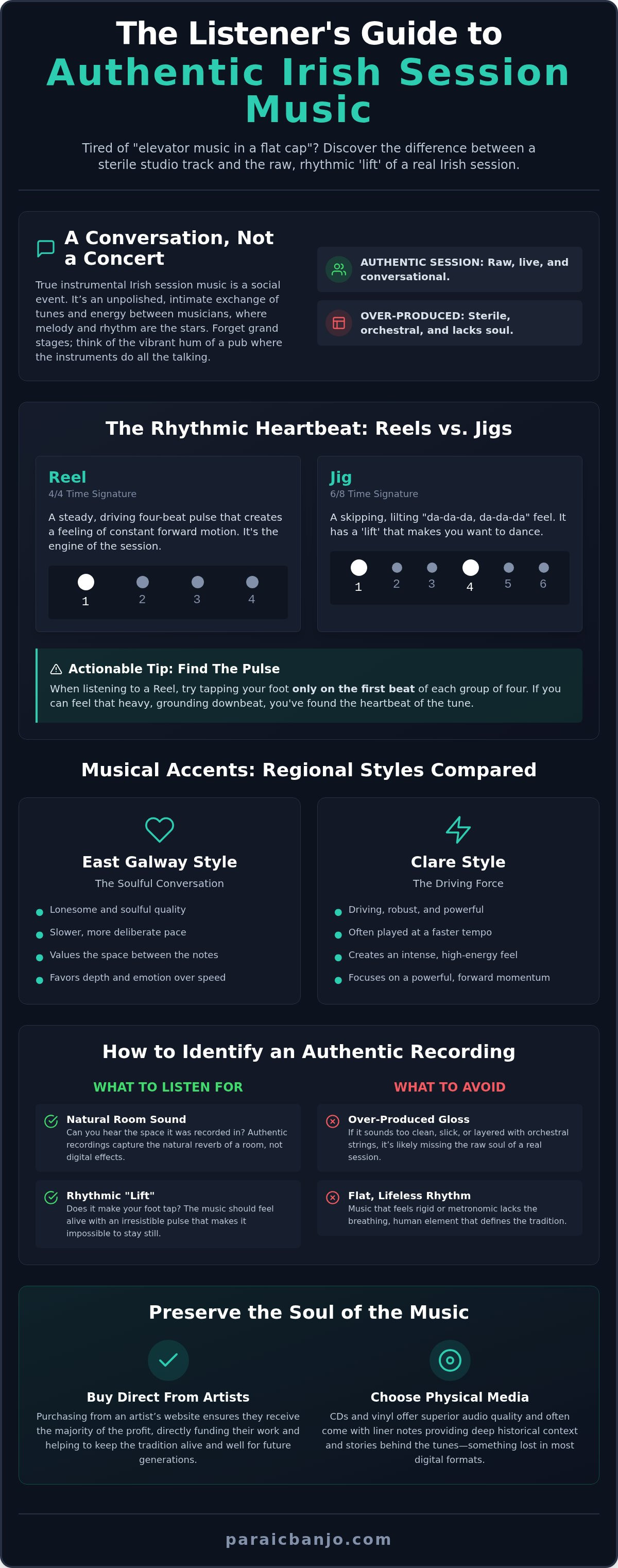
Think of a session as a conversation without words. Instrumental irish session music isn't just a genre; it's a social event where musicians gather to swap tunes, stories, and energy. Unlike the high-gloss, orchestral "Celtic" spectacles you might see on a massive theater stage, a real pub session is intimate and unpolished. It's the sound of the banjo, fiddle, flute, and accordion working in harmony, often over the clink of glasses and the low hum of a crowd. The focus is purely on the melody and the rhythmic drive, leaving vocals at the door so the instruments can speak for themselves. This music is meant to be felt in a crowded room, not just heard through a speaker.
The beauty of this tradition lies in its accessibility. While the tunes are often complex, the setting is informal. You won't find a conductor or a setlist here. Instead, you'll find a group of people who have spent years, sometimes decades, internalizing hundreds of melodies. To really appreciate the sound, try to identify the individual voices of the instruments. Listen for the percussive "pop" of the banjo or the sliding, fluid notes of the fiddle. It's this blend of textures that creates the rich, layered sound of a living tradition.
The social heartbeat of the music
A session thrives on what we call the "pulse." This isn't just a steady beat; it's a living, breathing rhythm that dictates the mood of the room. When musicians play together, they aren't just following a metronome. They're reacting to one another. When you're listening to a recording, you want to hear that energy. You want to feel the "lift" in the music that makes it impossible to keep your feet still. To get the most out of your listening experience, try to focus on the interplay between the lead melody and the subtle rhythmic backing. That's where the magic of the session truly happens.
Regional styles: Galway vs. Clare
One of the biggest mistakes newcomers make is thinking all traditional music sounds the same. In reality, every county has its own musical "accent." When comparing East Galway vs Clare music, you'll notice distinct differences. The Clare style is often described as driving and robust, while the East Galway style carries a more "lonesome" and soulful quality. These regional nuances are the lifeblood of the tradition. If you want to understand the music, you have to listen for these subtle shifts in phrasing and timing. It's a lifetime's work to master these "accents," but learning to hear them is the first step toward becoming a true enthusiast. Don't be afraid to dive deep into these regional sounds; it's how you'll find the music that truly speaks to you.
The rhythmic heartbeat: Reels, Jigs, and the East Galway style
If you want to truly understand instrumental irish session music, you have to start with the rhythm. Many listeners make the mistake of calling every fast tune a "jig," but there is a world of difference between the structures. A Reel is written in 4/4 time; it has a steady, driving four-beat pulse that feels like a constant forward motion. A Jig, on the other hand, is in 6/8 time, creating a skipping "da-da-da, da-da-da" feel. Try this: To find the pulse in a reel, tap your foot only on the "one." If you can feel that heavy downbeat, you've found the heartbeat of the tune.
This rhythmic foundation is where regional styles begin to diverge. While some areas prioritize speed, the East Galway tradition takes a different path. It is defined by a "lonesome" and soulful quality that values the space between the notes just as much as the notes themselves. This isn't music for a frantic race. It's music for a deep, rhythmic conversation. You can hear this clearly in the tracks of my debut album, where the focus is on the "lift" of the tune rather than sheer velocity. By focusing on the pulse, you can feel the energy of a live room even through a recording.
Why the East Galway style is unique
The East Galway style is a rhythmic tradition rooted in the dance-steps of the West. It moves at a slightly slower, more deliberate pace, allowing the melody to breathe and the soul of the tune to shine through. This sound is a reflection of the landscape and the tight-knit community that nurtured it for generations. By slowing down, the musician can explore subtle variations and ornaments that get lost in faster playing. It creates a sense of anticipation that keeps the listener engaged without overwhelming them. It is a style that favors depth over flashiness.
The tenor banjo’s role in the session
In a crowded, noisy pub, the tenor banjo is the instrument that cuts through the din. Its percussive nature provides a sharp, driving rhythm that keeps the rest of the group in sync. Over time, it has evolved from a simple backbeat instrument into a sophisticated lead melody voice. The best banjo players know that soulful playing beats "fast" playing every time. It’s about the "pop" of the plectrum and the way the notes ring out with clarity. To hear this balance of power and precision, you might enjoy listening to the individual digital tracks from my recent project, which was 39 years in the making.
How to identify authentic instrumental recordings
Finding a recording that captures the true spirit of a session is harder than it sounds. The market is flooded with generic folk compilations that feel flat, often because they're recorded in isolated booths or use synthesized sounds that mimic real instruments. Authentic instrumental irish session music should breathe. When you listen, look for a "semi-live" feel. This means the musicians were likely in the same room, reacting to each other's timing and ornaments in real time. You should hear the natural reverb of the space, that slight echo that makes you feel like you're sitting just three feet away from the banjo or the fiddle.
Prioritize independent releases where the artist has full creative control. Large commercial labels often polish the "life" out of a recording to make it sound perfect for background listening. In traditional music, perfection isn't the goal; character is. You want to hear the occasional click of a flute key or the sharp intake of breath before a fast passage. These aren't mistakes. They are the fingerprints of a human performance. If a track sounds like a MIDI file or a robotic loop, it's missing the soul of the tradition.
The 'Liner Notes' test
Knowing where a tune comes from changes how you hear it. A great album acts as a bridge to the past, offering stories about the people who wrote the melodies or the specific house sessions where they were learned. These stories connect you to the lineage of the players. Actionable tip: Before you buy, check the digital or physical sleeve. If the album doesn't tell you the names of the tunes or their geographical origins, it's likely a generic product. Authentic recordings treat the music with respect, crediting the source of the "lift" and the history of the phrasing.
Evaluating the 'Pulse'
The ultimate test is simple: does the music make you want to move? There is a massive difference between mechanical perfection and soulful timing. A computer can play a reel at high speed, but it can't give it "lift," that elusive rhythmic bounce that defines the West of Ireland sound. This rhythmic integrity is exactly why my own project, Not Before Time – 39 Years in the Making, took nearly four decades to reach your ears. Every track was recorded to preserve that specific East Galway pulse. If you're looking for the real deal, you can find the Not Before Time digital album on my site, complete with the stories that make the music come alive. Trust your feet; they know the difference between a real session and mere background noise.
Building your collection: Tips for the modern purist
While streaming platforms make it easy to sample tunes, they rarely offer the depth a true enthusiast craves. Building a library of instrumental irish session music requires a more intentional approach. It’s about moving away from passive listening and toward a collection that reflects your personal taste and respect for the craft. When you buy music, you aren't just acquiring a file; you're investing in the future of the tradition. This direct support allows artists to record more tracks and share more stories. It’s a cycle of generosity that keeps the session alive and ensures the music remains a vibrant, living thing rather than a museum piece.
To truly appreciate the technical skill involved in these recordings, your digital library should be organized for high-quality playback. Actionable tip: Always choose FLAC or WAV formats for your digital downloads. Unlike standard MP3s, which compress the audio and lose detail, these lossless formats preserve the full frequency range. This means you’ll hear the crisp "pop" of the plectrum on the strings and the natural resonance of the instruments. It’s the closest you can get to sitting in the middle of the session circle without actually being there. High-quality files ensure that the rhythmic secrets we’ve discussed are heard with absolute clarity.
Why the physical CD still reigns supreme
There is a tactile joy in owning a physical copy of Irish music that digital files simply cannot replicate. My debut album, Not Before Time, was 39 years in the making. That's nearly four decades of life, learning, and love poured into 18 tracks. The physical CD includes a detailed 36-page booklet filled with liner notes and photographs that provide essential context for every tune. For those who care about the history and the "why" behind the music, physical media is a better choice for collectors in 2026. Interestingly, CD sales rose by 4.5% in 2025, proving that many listeners still value having a permanent, high-quality artifact on their shelf.
Where to buy authentic session music
The best place to find independent Irish music releases is always the artist’s own website. Corporate resellers often prioritize whatever is trending, but a musician’s site is a curated space dedicated to the art itself. By buying direct, you ensure that the vast majority of your purchase price goes straight to the creator. This allows us to keep producing the music you love. It also gives you access to exclusive materials, like the extensive background notes I’ve included with my work. If you want to support the pulse and soul of this living tradition, you can purchase the Not Before Time physical CD directly from my store to experience the music as it was meant to be heard.
Capturing the session: 'Not Before Time' by Páraic Banjo
The search for the perfect recording often leads to disappointment, but it doesn't have to. After exploring the nuances of the East Galway pulse and the importance of high-quality audio, it’s time to look at a project that embodies these principles. My debut album, Not Before Time – 39 Years in the Making, is more than just a collection of tunes. It is a definitive statement of a lifetime’s passion for instrumental irish session music. With 18 tracks carefully curated to reflect the soul of the West, this record brings the listener directly into the heart of the session circle.
Recording this album wasn't about solo virtuosity. It was about collaboration. I was joined by world-class musicians who understand that the best music happens when we listen to each other. Together, we worked to capture that specific "lift" and "room feel" we’ve discussed throughout this article. We wanted to ensure that when you press play, you don't just hear a banjo; you hear the living, breathing energy of a real Irish pub session. If you want to experience this authentic drive, you can bring the heart of the Irish session home with 'Not Before Time' starting today.
39 years of mastery in one album
My musical journey began in East Galway, a region known for its soulful and deliberate approach to traditional music. For nearly four decades, I’ve carried these tunes with me, playing them in kitchens and pubs until they became a part of my own heartbeat. This long-term development is what gives the album its legendary status among enthusiasts. For tenor banjo players, it’s a rare chance to hear the instrument played with a focus on rhythmic integrity rather than just speed. The album is a rhythmic masterclass in the East Galway style. Whether you’re a long-time collector or a newcomer, these 18 tracks offer a deep dive into a storied tradition that has been 39 years in the making.
How to get your copy
You can experience this journey for yourself by visiting my digital storefront. If you value the tactile experience and the extensive stories behind the music, I highly recommend the physical CD. It comes with a 36-page booklet of liner notes that act as a guide through the history of the tunes. For those who prefer immediate access, the digital album and individual tracks are available for high-quality download. We offer worldwide shipping for international fans, ensuring that the East Galway sound can reach you no matter where you are in the world. It’s the easiest way to find authentic instrumental irish session music that supports the artist directly while preserving the soul of the tradition for future generations.
Bring the session heartbeat home
You now have the tools to tell the difference between a generic folk recording and a genuine piece of our living tradition. Remember that the best instrumental irish session music isn't just about technical speed; it's about that elusive rhythmic lift and the stories that travel with every melody. By choosing independent releases and high-quality formats, you're doing your part to keep this flame burning bright for the next generation. It's a small choice that makes a massive difference for the musicians who spend their lives perfecting these regional accents.
I've spent nearly four decades preparing my own contribution to this legacy, ensuring every note carries the authentic pulse of East Galway. Explore 'Not Before Time' – The Definitive Irish Banjo Debut to hear the result of that journey. This album was 39 years in the making and features 18 authentic session tracks recorded with world-class collaborators. We provide worldwide shipping for physical CDs, and every purchase offers direct support for the artist. Keep your feet tapping and your ears open. The tradition is alive, and you're now a vital part of it.
Frequently Asked Questions
What is the difference between a reel and a jig in Irish music?
A reel is played in 4/4 time with a steady, driving pulse, while a jig uses 6/8 time to create a skipping, triple-beat feel. Think of a reel as a constant forward motion with a heavy downbeat. A jig has a lively "da-da-da" bounce. To practice, try tapping your foot to the "one" of a reel; you'll feel the heartbeat that defines much of our instrumental irish session music.
Why is the tenor banjo so popular in Irish sessions?
The tenor banjo is a favorite because its sharp, percussive tone cuts through the chatter of a crowded pub. It acts as both a lead melody voice and a rhythmic engine that keeps the rest of the group in sync. It’s the instrument that provides the "pop" and drive needed to keep the energy high during a long set of tunes, making it essential for a balanced sound.
Can I learn to play Irish music by listening to these recordings?
Listening is the most important part of learning because it's how you absorb the "lift" and phrasing of the tunes. While sheet music exists, the nuances of the East Galway style are best learned by ear. Try looping a single track from Not Before Time and hum along until the melody feels like second nature. This immersive listening is how the tradition has been passed down for generations.
Is it better to buy a physical CD or a digital download for Irish music?
Buying a physical CD is best for collectors who want the 36-page booklet of stories and history, while digital downloads offer immediate, high-quality playback. If you choose digital, ensure you download FLAC or WAV files to preserve the full sonic detail of the banjo. Both options directly support the artist's ability to keep recording. You can find both versions of my debut album on my storefront.
What does 'East Galway style' mean in traditional music?
The East Galway style is a regional "accent" characterized by a slower, more deliberate pace and a soulful, "lonesome" quality. It prioritizes the beauty of the melody and subtle ornamentation over sheer speed. This approach allows the music to breathe, creating a rhythmic tension that is deeply rooted in the dance steps of the West. It is a style that favors emotional depth and rhythmic integrity.
How can I support independent Irish musicians directly?
The best way to support independent musicians is to purchase music directly from their official websites. This ensures the majority of the revenue goes to the artist rather than corporate resellers or streaming services. Supporting the living tradition directly allows us to fund future projects and preserve the historical context of the tunes. It’s a direct investment in the survival of instrumental irish session music.
What instruments are most common in an instrumental Irish session?
You'll most often hear the tenor banjo, fiddle, wooden flute, and accordion leading the melody in a session. Other common sights include the concertina, tin whistle, and uilleann pipes. These instruments work together to create a layered, conversational sound where no single voice overpowers the others. This balance is what maintains the social energy and "pulse" of the room during a night of music.
Are the tracks on 'Not Before Time' recorded live or in a studio?
The 18 tracks on Not Before Time were recorded in a studio environment but designed specifically to capture the raw, live energy of a session. By recording with world-class collaborators in the same space, we preserved the natural room reverb and spontaneous interplay. It’s a definitive statement of a 39-year journey, balancing technical clarity with the heartbeat of a real pub night. You get the best of both worlds.


Comments