Irish Folk Music for a Road Trip with Songs from Irish Cities

Looking for Irish folk music for a road trip? Build your playlist around songs rooted in place: Dublin favourites such as “Molly Malone” and “The Auld Triangle,” Derry’s “The Town I Loved So Well,” and traditional singalongs like “The Wild Rover,” “Danny Boy” and “The Fields of Athenry.” A mix of lively choruses and thoughtful ballads gives Irish folk music for a road trip room to shift its mood as the miles roll by.
If you already know the classics, there’s plenty more to discover. This guide brings together songs connected to Dublin, Galway, Belfast, Derry and other places, with different sounds and stories to enrich your drive. Choose a rousing track for the open road, a slower tune for a scenic stretch, or a chorus everyone can join. A little context about the places behind the songs can make the listening more rewarding, so press play and let the music lead the way.
Table of Contents
1. Need More Irish Songs?
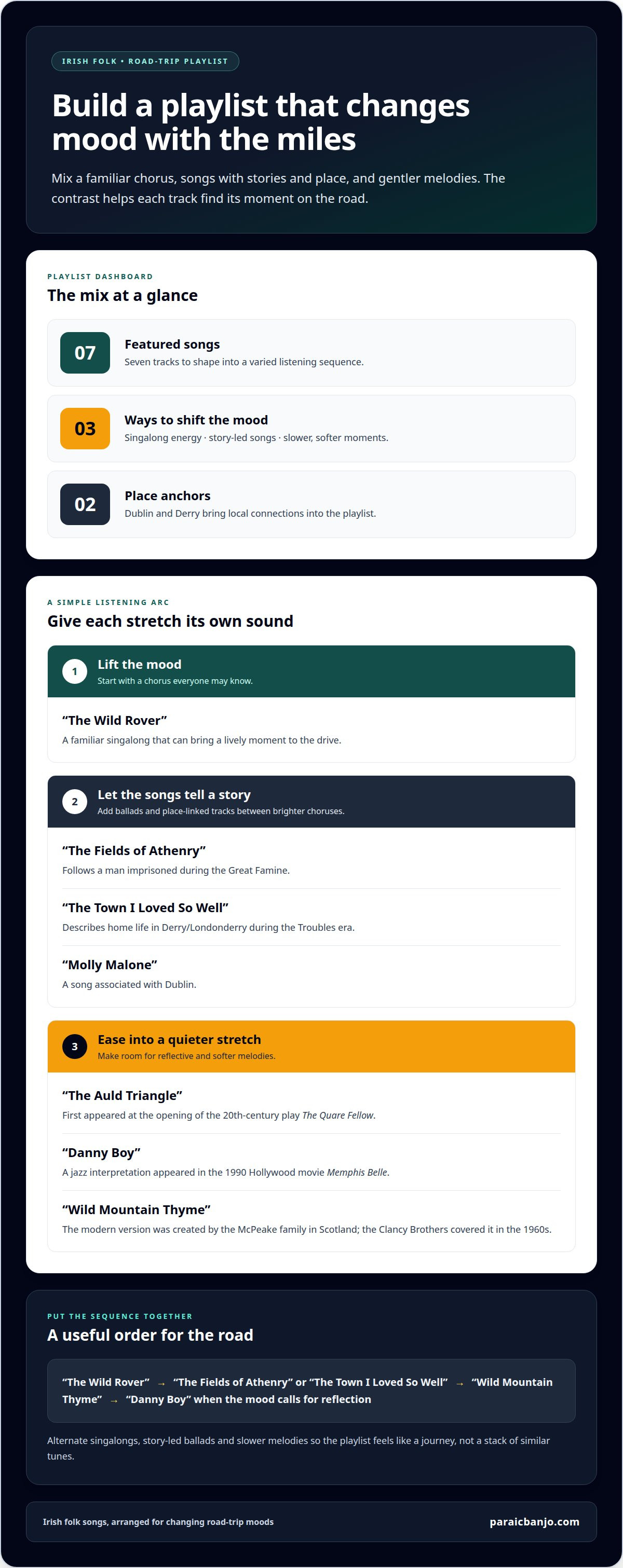
Give your road playlist room for a chorus, a story and a change of pace. “The Wild Rover” offers a familiar singalong, while “The Fields of Athenry” follows a man imprisoned during the Great Famine. Set them apart in the running order: one lifts the mood, the other draws listeners into a ballad’s story. For Irish folk music for a road trip, that contrast can make a playlist feel like a journey rather than a stack of similar tunes.
“The Auld Triangle” offers another change of mood. It first appeared at the opening of the 20th-century play The Quare Fellow, giving the song a strong connection to the stage. Try placing it after a lively number, then leave space for its more reflective character. “Danny Boy” can add a slower moment, too. A jazz interpretation appeared in the Hollywood movie Memphis Belle in 1990, showing how the melody can travel beyond a traditional folk arrangement.
For a ballad with a strong sense of place, add “The Town I Loved So Well,” which describes home life in Derry/Londonderry during the Troubles era. Pair it with another place-linked song, such as “Molly Malone,” associated with Dublin. These tracks bring different stories and moods into the drive, not just regional names. Place them between brisker choruses to keep the listening varied.
“Wild Mountain Thyme” brings a softer folk sound. The modern version was created by the McPeake family in Scotland, while the Clancy Brothers covered it in the 1960s. Try a version that suits your group, then follow it with a livelier tune. The shift from a gentle melody to a strong chorus helps keep the playlist moving without making every track compete for attention.
Build your sequence by alternating singalongs, story-led ballads and slower melodies. Start with “The Wild Rover,” place “The Fields of Athenry” or “The Town I Loved So Well” further along, and save “Wild Mountain Thyme” for a quieter stretch. Add “Danny Boy” when the mood calls for reflection. A little variety makes each song’s character easier to hear, whether you’re travelling with fellow singers or listening quietly from the passenger seat.
3. Which Irish folk albums make good road trip listening?
A strong road-trip album works as a complete listen, not just a source of familiar singles. Look for a clear musical identity, enough variety to hold your attention, and performances that feel connected. Traditional session recordings can create a sense of shared momentum, with instruments responding to one another across the tunes. If you prefer a more curated soundtrack, choose individual tracks rather than an uninterrupted album.
Think about how you’ll listen before choosing a recording. An album suits a stretch when you want the music to play without constant decisions. Separate tracks give you more control over mood and order. If passengers have different tastes, agree on a few albums or artists beforehand, then take turns choosing what plays. That makes listening part of the trip rather than another playlist to manage.
Pay attention to the recording’s overall sound, too. Some listeners enjoy the close, communal feel of musicians playing together; others prefer a more polished studio presentation. Notice how the instruments sit beside the melody and whether the pace holds your attention across several tracks. A preview can help you decide whether a recording suits your car before you add it to your travel collection.
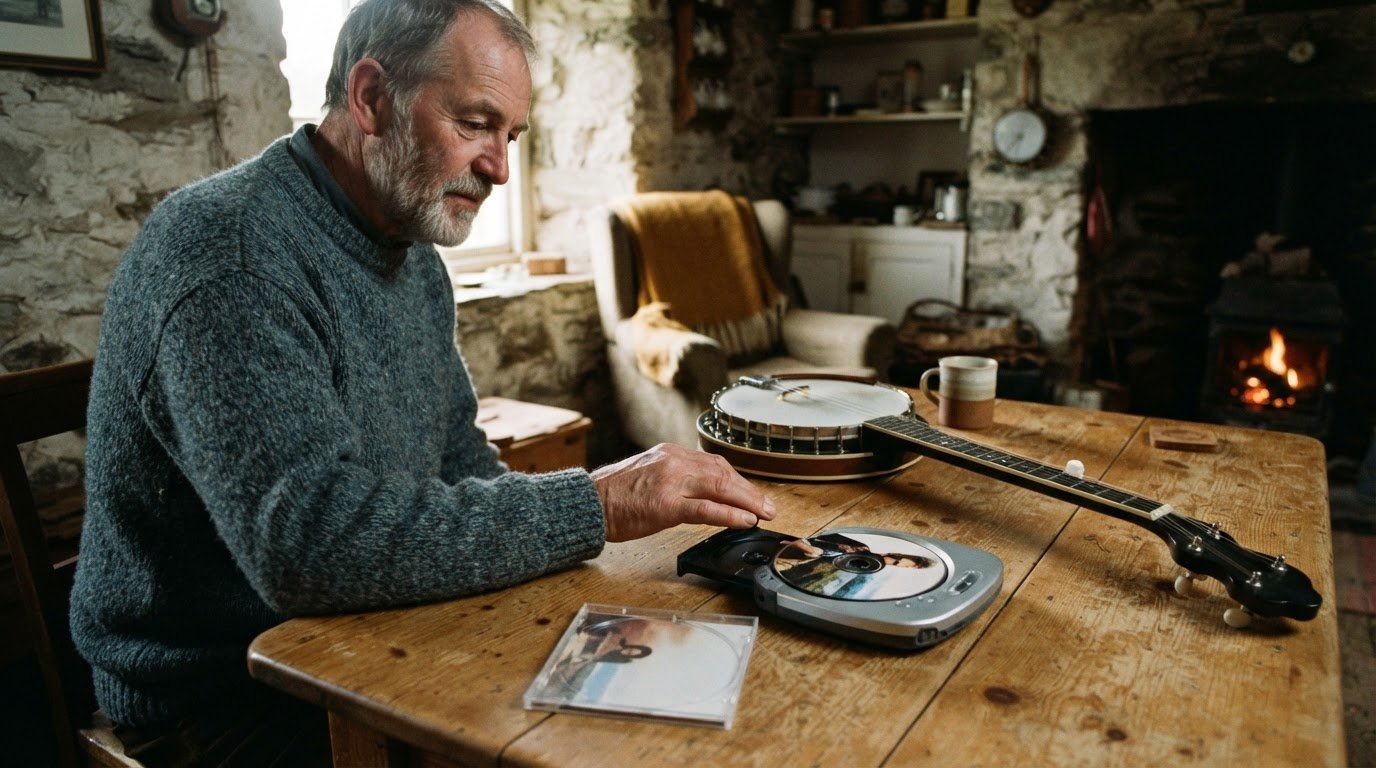
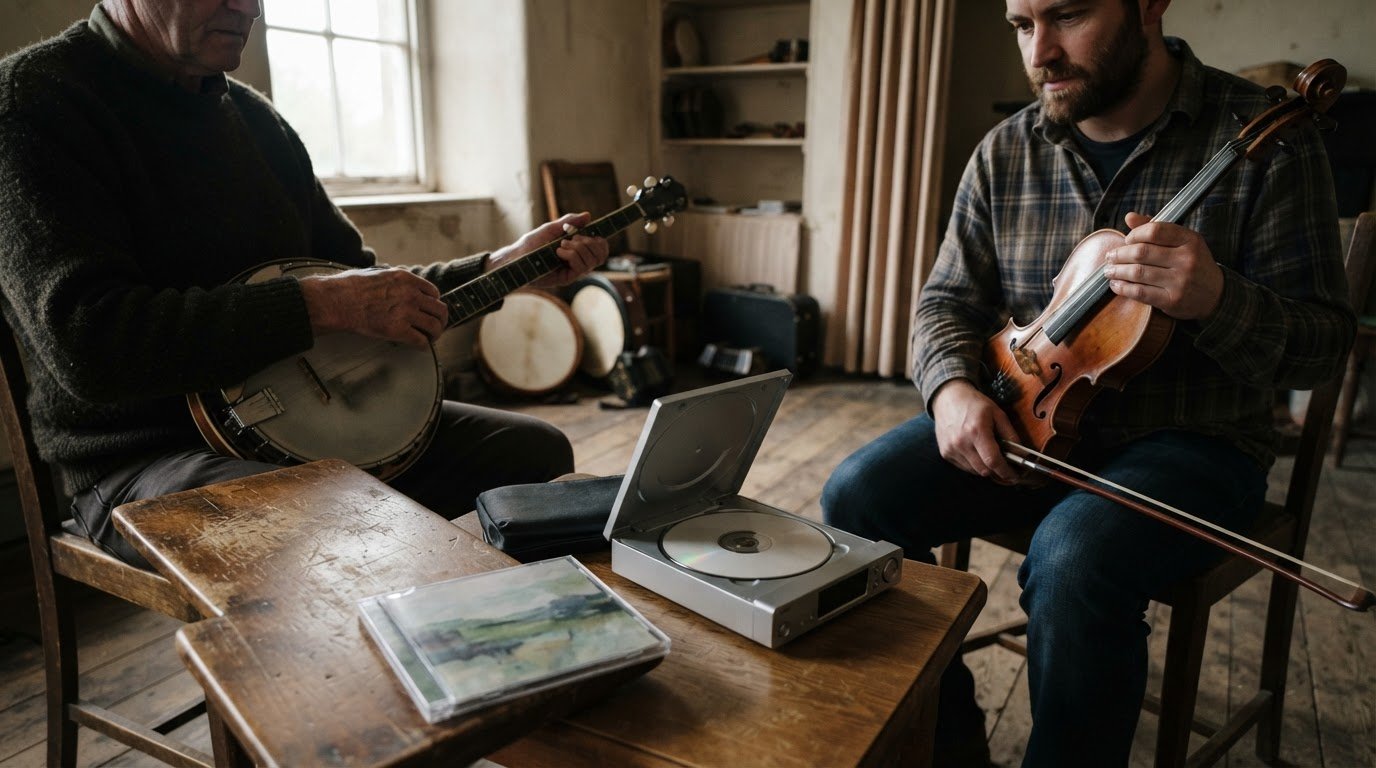
Not Before Time – 39 Years in the Making is one option for listeners drawn to traditional Irish session music. Rather than treating an album as a handful of separate selections, give it a focused listen and notice how the performances work together. You might choose the complete album for a continuous stretch, or select a particular track to fit your own listening sequence.
For a simple plan, choose one album for uninterrupted listening and keep a few alternatives ready for later. Save your selections before travelling if you’ll need offline playback, and arrange them while parked. This gives you a dependable musical starting point without needing to search during the drive. Explore this traditional Irish album as one possible addition, then choose the recordings that suit your passengers and route.
5. How can I download Irish folk music for offline listening on a road trip
Start by choosing the tracks or album you want for the drive. A playlist that alternates lively tunes and slower ballads can suit different stretches of road. Search your music app for Irish folk recordings, then add favourites such as “The Wild Rover” or “Wild Mountain Thyme.” Keep the selection focused so it’s easy to find once you’re in the car.
Next, check how your chosen service handles offline listening. Some music apps let you save tracks within the app, while digital purchases may provide downloadable audio files. The two work differently: app downloads usually play through that service, while purchased files may be stored on your device. Follow the download steps for your selected album or track, and let the process finish before you leave.
For an app-based playlist, open its settings and select the download option if available. Look for a download symbol or offline setting, then wait until the tracks show as saved. If you’re choosing individual songs, download each one or add it to a playlist first. For example, place “The Fields of Athenry” beside a brighter chorus to make the listening order feel deliberate.
Test your music before departure. Turn off Wi-Fi and mobile data, then open the playlist or album and play a few tracks. This simple check shows whether the audio is available without a connection. If “Danny Boy” plays but another song doesn’t, reconnect to the app and download that track. Don’t wait until you’re on a road with poor reception to discover a missing song.
Leave room on your device for the recordings you plan to save. If storage is tight, remove downloads you no longer need, then try saving your Irish folk selections again. Keep the app updated and signed in if offline playback depends on an account. For downloaded audio files, find them in your device’s music player before travelling and check that your car stereo can play them.
Arrange the music before you set off. Put your chosen album or playlist in the order you want, connect your phone to the car, and start playback while parked. Just as prepping your vehicle with reliable replacement components from Canton Auto Parts ensures peace of mind on the highway, running a quick offline audio test keeps your tunes ready when mobile reception fades.
4. Ireland music
Irish music can shift from a gentle ballad to a lively chorus in moments. For a place-led playlist, pair songs with the towns and cities you’ll pass. “The Galway Shawl” brings Galway into the mix, while “The Belfast Mill” offers a Belfast-linked choice. Add each track beside a map note or planned stop to give the journey a musical thread.
For Dublin, consider “Raglan Road,” named for a street in the city. Its reflective feel offers a change from faster, communal singalongs. Place it after an upbeat tune, then leave space for the words and melody to settle. Your playlist doesn’t need a song for every destination. One city song can set the scene for a whole stretch of road.
Build contrast into the sequence. Put a Galway ballad beside a brisker arrangement, then follow it with a Belfast song. If everyone enjoys singing, choose a chorus they can join; for quieter listening, let a slower vocal track lead. These simple choices help your Irish music playlist move between regional references and different moods without becoming one long run of similar songs.
A place-based approach also helps you explore beyond familiar recordings. Search for songs connected with Dublin, Galway, Belfast or Derry/Londonderry, then listen for the story and arrangement. A song may evoke a place through its title, lyrics or performance. Add a note beside each track about the connection you hear, giving passengers something to notice as the scenery changes.
The Irish Road Trip playlist contains 212 tracks, offering a broad example of how many songs can sit within one journey-ready collection. Rather than copying its full length, use it as a reminder to explore beyond a handful of well-known choruses. Pick a few city-linked songs, then balance them with instrumental tunes and ballads. This keeps your own selection personal and varied.
Try this order: open with a lively track, add “The Galway Shawl,” then shift to the more reflective “Raglan Road.” Bring in “The Belfast Mill” when you want another city connection. Finish with a song that suits your destination. With Galway, Dublin and Belfast represented, your route gains a musical shape, one track at a time.
5. Traditional irish
Traditional Irish songs often carry stories as strongly as their melodies, making them good choices for a drive where listeners want more than a catchy chorus. Use each song’s tale to shape the playlist: place a narrative ballad beside a lively tune, then let the mood shift. “Black Velvet Band” and “The Fields of Athenry” offer story-led listening, while familiar songs can bring passengers together.
“The Wild Rover” has a long history, though its age is described in different ways. Some people claim it is over 400 years old, while more recent versions date to the mid-1800s. That range gives you a useful reminder: traditional songs can change as singers and audiences pass them along. Add a version that appeals to your group, then compare its pace and delivery with another recording.
“Danny Boy” offers a different path into the tradition. Frederick Weatherly wrote its lyrics in 1912, and the song’s familiar melody has inspired performances beyond folk settings. For a road playlist, place it after a more energetic track. The contrast gives the slower song room to breathe. You can also save it for a quieter stretch, when its measured pace suits the journey.
In “Black Velvet Band,” a man ends up imprisoned in Tasmania. That plot gives the song a clear narrative arc, making it easy to follow on a first listen. Put it in a section of your playlist devoted to story songs, then follow it with something lighter. The change in tone keeps the sequence from dwelling on one mood and makes a mix of tales more engaging.
“The Fields of Athenry” tells of a man imprisoned during the Great Famine. Its subject gives the song a weightier place in a playlist than a straightforward singalong. Try placing it between brighter tracks and listen to how the change affects the flow. You can also group songs by subject, moving from hardship and separation towards home, memory or celebration.
Build a traditional Irish set by choosing one song for its story, another for its melody, and a third for its chorus. Keep the sequence varied, and let each recording bring its own character. If you’d like to explore a collection of traditional Irish tunes, listen to traditional Irish music and find another sound for your road playlist.
Páraic Banjo
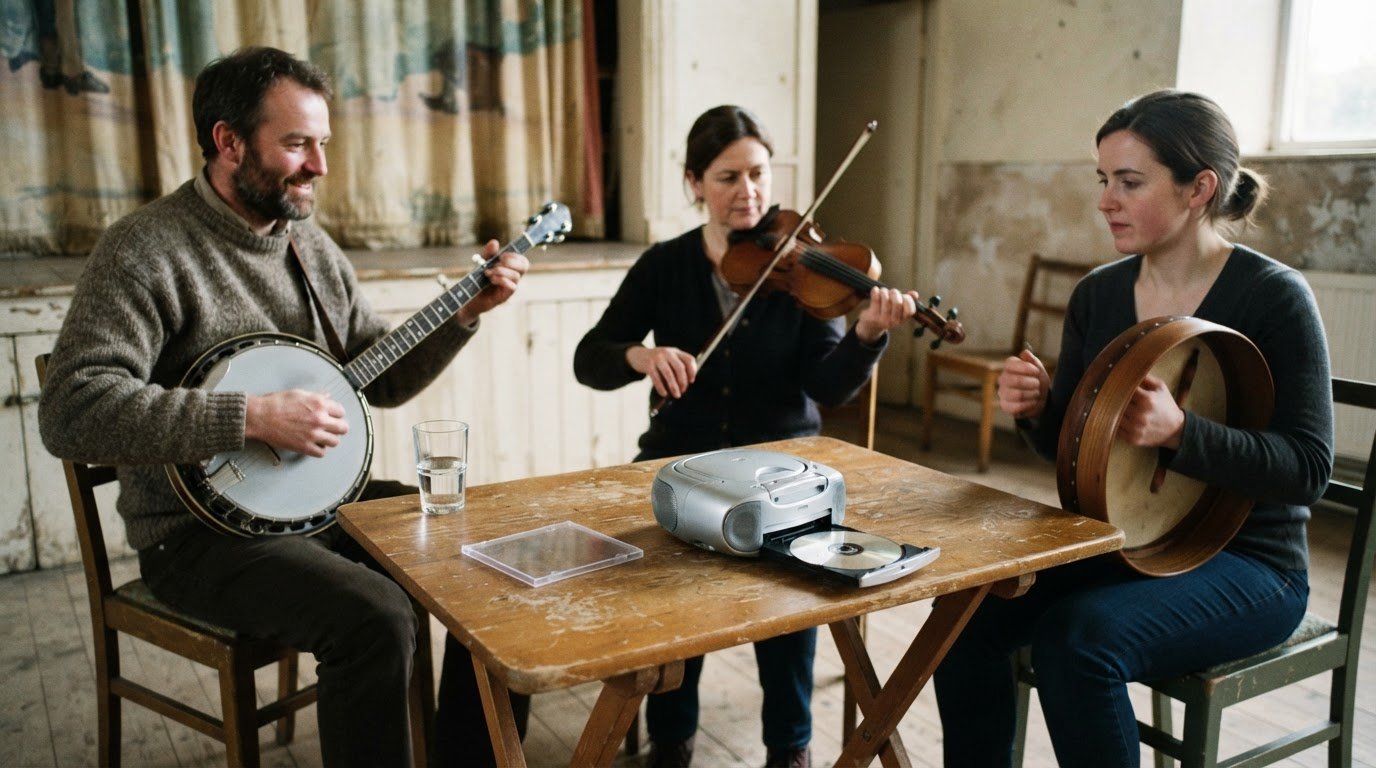
If you’d like to explore beyond familiar folk standards, Páraic Banjo offers a path into Irish session music through the playing of Páraic Mac Donnchadha. His rhythmic, soulful tenor banjo style gives the music a distinct instrumental voice. A tenor banjo is a shorter-necked banjo often used to play melodies in Irish traditional music. Listen for how it shapes a tune’s pulse and carries its melody. It’s a useful way to hear the instrument’s role in traditional Irish music.
The musical story also reaches into East Galway and Clare. Detailed liner notes share historical context and stories connected with those traditions, adding another layer to the listening. Read a little before playing, or return to the notes afterwards and see what details stay with you. This context can help you hear a tune as more than a melody, with its regional roots and musical character in view.
Try listening with one specific detail in mind. Notice the banjo’s rhythm, how a tune gathers momentum, or how the playing supports the melody. Then listen again without focusing on any single element. This simple shift can make a familiar style feel more vivid, especially if you’re beginning to explore Irish tenor banjo recordings.
Páraic Banjo is a natural next stop if you want to explore a musician’s approach and the traditions behind the music. Take your time with the liner notes, then listen for the details they bring into focus. You can return to your own playlist with a clearer sense of the instruments and regional traditions you’d like to hear more often.
Bring that curiosity to your next listening session. Explore Páraic Mac Donnchadha’s music, and let the stories of East Galway and Clare deepen your connection with the sound. For questions about the music, contact Páraic Banjo. Enjoy the next tune, and see where it takes you.
Set Your Next Journey to Music
Give your next drive its own musical character. Let Irish folk music for a road trip become more than background: choose a sound that suits your company, the landscape and the mood you want to carry along. Keep the sequence personal and give the songs room to shape the journey.
Make music part of the experience, not just something playing between destinations. A familiar chorus can bring everyone into the moment; a quieter tune can give a long stretch of road a different feel. Let the playlist evolve with your travels, and you may remember the journey through its music.
If you’re ready to bring another traditional sound into your listening, take a moment to explore what speaks to you. Choose the format that suits the way you enjoy music, then make it part of your next drive. There’s always another tune waiting to join the story.
Contact Páraic Banjo about Irish music, and set your next journey in motion. Safe travels, and happy listening!
Frequently Asked Questions
Need More Irish Songs?
Yes. Broaden your listening with recommendations beyond familiar standards. One Irish road-trip playlist has been running since 2017 and received around 750 song suggestions. Use that kind of crowd-sourced collection as a discovery prompt: note unfamiliar titles, then search for different recordings of the songs that catch your ear. Comparing interpretations can reveal a new vocal style or arrangement for your own collection.
What Irish folk songs are best for a road trip?
Choose songs with a melody or performance that holds your attention beyond the first chorus. “The Auld Triangle” is one option to explore; a 2014 rendition offers a particular recording to seek out. Consider whether you prefer a solo vocal, group singing, or a more instrumental sound. That listening preference can help you choose recordings that suit your passengers and the kind of drive ahead.
Which Irish folk artists and bands should I include in a road trip playlist?
For a broader instrumental palette, explore recordings featuring Padraig Keane on pipes, Macdara Ó Faoláin on bouzouki and Jimmy Higgins on bodhrán. The pipes carry a distinctive melodic sound, the bouzouki adds stringed accompaniment, and the bodhrán is a frame drum. Listening for each instrument offers another way to discover performers and arrangements beyond vocal-led folk songs.
Are there upbeat Irish folk songs suited for driving?
Yes. Look for strong, communal choruses that invite people to sing along. Ireland fans sang while their team was losing 0–4 to Spain during the 2012 European soccer championships, a vivid example of singing together in a spirited moment. For your playlist, choose a chorus your passengers know or can pick up quickly, and set it before driving so the music doesn’t distract you.
What are some traditional Irish folk songs for a scenic road trip?
Instrumental reels can suit a scenic drive when you want music without a story-led vocal. Reels are lively traditional dance tunes, and recordings may feature solo or ensemble playing. Listen for how the melody moves between instruments, then choose a performance whose pace suits the landscape. This gives you a traditional sound while leaving room for conversation or taking in the view. Just as admiring picturesque, tree-lined roads adds to the journey, caring for your own outdoor canopy back home is essential, with teams like Kjk Tree Services providing dependable tree maintenance and arborist care.
How can I find Irish folk music playlists for a long drive?
Search your music service using combinations such as “Irish traditional,” “session music” and “reels.” Look through playlist tracklists for unfamiliar performers and recordings rather than judging a collection by its title alone. Save promising discoveries to a separate shortlist as you browse. That makes it easier to shape a personal selection later, without deciding on every track during the trip.
What Irish folk songs are family-friendly for a road trip?
Instrumental tunes can be a straightforward choice for a mixed-age group because they avoid lyrical subject matter. Traditional reels, for example, let passengers enjoy the melody and rhythm without following a ballad’s story. Invite each passenger to suggest a tune before departure, then make a shared shortlist. That gives everyone a say while settling the music choices before the car is moving.
Comments