Real Irish Music: Songs, Reels and the Session Tradition

What if real Irish music, not Riverdance, begins not on a stage but in a tune passed from one player to another by ear? Riverdance brings Irish dance and music together in a choreographed theatrical production; a traditional session centers on musicians sharing songs and tunes in the moment. Both have their place, but they offer different ways into the tradition.
If you’re drawn to the lift of a reel or the story in a song, it helps to understand how this music grew through oral tradition and how its melodies are played and shared. This guide explores the sound and feel of songs, reels, and other dance tunes, then explains what distinguishes a session from an orchestral stage arrangement. Listen for the pulse, the turns in the melody, and the conversation between instruments. That’s where the living tradition comes through.
Table of Contents
Irish song styles and occasions
Irish traditional songs carry stories as well as melodies. Narrative ballads follow characters through love, loss, conflict, or departure. Songs of emigration give voice to leaving home and remembering Ireland. A singer may tell the story plainly, letting each verse reveal another turn. That approach makes the words central, even when a chorus invites listeners to join in. “The Parting Glass,” for example, is often heard as a farewell song. Its reflective mood suits a closing moment rather than a dance set.
Other songs belong to everyday occasions. Lullabies soothe children, while work songs can mark a shared task. Laments give grief a musical form, and love songs dwell on longing or devotion. These purposes can overlap: a song learned at home may later become part of a gathering. Listen for what the singer emphasizes. A clear narrative, a repeated chorus, or a slow, expressive melody can reveal how the song invites people to respond. The occasion shapes its delivery, but singers also make each performance personal.
Irish traditional slow airs offer a different kind of listening. They are usually played in 3/4 meter, with three beats in each group. A singer or instrumentalist can stretch phrases, pause, and shape the melody freely. By contrast, traditional lilts are dance music sung with non-word syllables. Their playful sounds imitate a tune when no instrument is present, keeping its rhythmic bounce audible. Try distinguishing a lilt from a story ballad: one carries a dance pulse through syllables; the other develops meaning through words.
Dance tunes and songs can share a gathering, but serve different roles. Reels generally move in 4/4 time, with four beats in each group, while light and single jigs use 6/8, with six quicker beats grouped in twos of three. These pulses give dancers a clear rhythmic framework; a slow air leaves more room for expressive timing and reflection. At a session, notice whether people sing a verse, answer a chorus, or begin moving to a tune. Start by listening for the words, then follow the beat when the instruments take over.
Dance names can help listeners recognize the styles in a gathering. The four soft-shoe Irish dance styles are reel, slip jig, light jig, and single jig. Knowing the names makes it easier to spot the range of styles, while a song’s words may take focus at another moment. The distinction need not be strict: performers can move between listening and dancing through pace, emphasis, and tune choice.
Riverdance debuted during the Eurovision Song Contest in 1994. Its debut offers a point of reference for how Irish dance can appear in a public performance as well as a musical gathering. When voices lead, follow the narrative and phrasing; when dance takes focus, listen for the pulse and watch the movement. Return to the lyrics to reconnect with the human story at the heart of the music.
Reels and musical ornamentation
A reel gets its drive from an even, quick pulse and a melody that keeps moving. Rather than relying on a heavy beat, players create lift through crisp phrasing and steady motion. Listen to a fiddle carry the tune, then notice how a banjo or guitar can sharpen its rhythmic edge. The instruments share the melody, but each player shapes the notes differently. Those small variations keep a familiar tune lively.
Ornamentation means adding brief notes or flourishes around a melody. These touches decorate a tune without changing its main shape. A cut is a quick note that interrupts a repeated pitch, giving it a clear, percussive edge. A roll turns a held note into a short sequence of pitches, while a triplet groups three quick notes into one rhythmic gesture. Hear a repeated note in a reel? Listen for a cut that separates the beats.
On a fiddle, ornamentation can come from the left hand, the bow, or both. A player may use a cut to distinguish two notes that might otherwise blur together. A roll can make a sustained phrase feel nimble, especially when the tune returns to the same note. On the tenor banjo, a clear attack helps each note speak in a busy passage. The aim is rhythmic clarity, not decoration for its own sake.
Players also shape reels through phrasing. They might emphasize the start of a musical phrase, then ease back before its ending. In a set of tunes, a rise in energy can signal the change from one melody to the next. Listen for that handoff: the pulse continues while the new tune brings fresh contours. Comparing two performances of the same melody reveals how musicians balance shared structure with individual touch.
Try this listening exercise with a reel recording. First, follow the melody without focusing on speed. Next, tap the pulse and notice where phrases begin. Finally, listen for cuts, rolls, and triplets. Can you hear which notes stay plain? That contrast matters. Too many flourishes can blur a tune; carefully placed ones make its rhythm speak. For a recorded example of traditional session music, listen closely to how the melody and rhythmic accompaniment work together.
Traditional session music versus orchestral stage arrangements
A useful comparison starts with musical choices, not a test of authenticity. In a session recording, follow how one melody moves into the next. In an orchestral stage arrangement, notice how introductions, transitions, and changes in volume shape a larger arc. These details show how performers build momentum for different listening settings.
Listen for how an arrangement handles a repeated melody: a player might vary the phrasing on its return, while an arranged passage may shift texture to mark that return. Follow one instrument through the passage. Does it keep the tune prominent, add a response, or provide rhythmic support? These details make musical decisions easier to hear than judging by volume or spectacle alone.
Riverdance is a theatrical production, and its choreography is part of the musical experience. For a closer listen, notice how the score supports the dancers’ movement and how ensemble changes mark a new stage moment. Then compare it with a session recording, listening for differences in phrasing, tune choices, and arrangement. The contrast helps explain what listeners mean by real Irish music, not Riverdance, without dismissing either form.
In Ireland, live traditional music can be heard at sessions in pubs and community venues. Find one through local listings, community calendars, or venue notices, and check for current details since schedules can change. Arrive between tunes when possible, settle in quietly, and listen before joining the conversation. If you’re visiting Ireland, ask locals for recommendations.
For an at-home comparison, choose recordings with clearly different arrangements. Listen once for the melody, then again for changes in texture, dynamics, and transitions. Notice which details guide your attention. A performance’s setting influences how the music is presented, while the tunes connect listeners with a living tradition. Give each recording a full listen and let the musical choices speak for themselves.

What instruments are commonly used in traditional Irish music?
A traditional Irish ensemble often blends melody, rhythm, and accompaniment. Common examples include fiddle, flute, tin whistle, accordion, and guitar. A bodhrán, a frame drum, adds percussion. Each instrument has a distinct role, though players can shape arrangements in different ways. Hear how the melody stays clear while supporting parts provide pulse and texture.
The fiddle can lead a dance tune with a bright, sustained sound. Its bow lets a player connect notes smoothly or accent them sharply. A flute brings an airy tone, while the tin whistle offers a clear, piercing sound. Both can carry quick melodies. Listen to how each instrument handles the same phrase: the notes may match, but breath and bow create different textures.
Rhythm comes from several places. The bodhrán is a frame drum used for percussion, adding a pulse beneath the tune. Guitar often provides rhythmic accompaniment through chords, while accordion can carry melody or harmony. These roles are flexible. In one arrangement, an accordion may lead; in another, it may support a fiddle. Notice which instrument carries the tune, then follow the sounds underneath.
The harp brings a different color to Irish music. It has been played in Ireland for over a thousand years. By the 19th century, harp use in Ireland was in decline; harp playing was reclaimed in the 1970s. Its ringing strings can support a melody or stand alone. That history gives the harp a distinctive place beside instruments heard in dance sessions.
The tenor banjo also suits fast-moving traditional tunes. Its plucked notes can make a melody crisp and clearly articulated. Compared with a bowed fiddle, the banjo’s attack gives each note a sharper edge. A guitar’s chordal backing can make the contrast easier to hear. Try following one instrument through a whole tune, then listen again for how its role changes.
Traditional Irish dance is often accompanied by live musicians playing fiddle, bodhrán, tin whistle, flute, accordion, and guitar. For a useful listening exercise, choose a recording with several instruments. Identify the melody first, then pick out percussion and chordal support. You’ll hear how the ensemble works as a conversation, not simply as separate sounds.
Which Irish folk musicians and bands are considered authentic or influential?
There’s no fixed list that makes Irish music authentic. Traditions live through players, singers, tunes, and changing performances. Still, several artists and bands offer useful listening guides. Start with The Chieftains, whose recordings brought traditional instrumentation and arrangements to broad audiences. Their work can help you hear how a small ensemble’s sound translates beyond a local session.
Paddy Moloney, The Chieftains’ founder and uilleann piper, helped make the pipes familiar to listeners worldwide. Listen for the pipes’ expressive melody against the ensemble’s accompaniment. The Dubliners offer another path into the tradition. Singers including Luke Kelly and Ronnie Drew made ballads and folk songs central to the group’s sound. Their performances show how voice, lyrics, and shared choruses can carry a song.
Planxty brought together singers and instrumentalists, including Christy Moore, Andy Irvine, Dónal Lunny, and Liam O’Flynn. Their repertoire connects songs with instrumental tunes, while the arrangements draw on instruments such as bouzouki and uilleann pipes. Listen to how a song can open into an instrumental passage. That shift shows how performers can shape a set while retaining the melody’s traditional character.
The Bothy Band became known for tightly played instrumental music. Its members included Matt Molloy, Paddy Keenan, and Dónal Lunny. Listen for the ensemble’s energy and how individual instruments stay distinct within the full sound. Willie Clancy offers a different focus: his name is closely associated with uilleann piping. His playing gives listeners a chance to study ornament, phrasing, and the character of a single instrument.
For a singer-led starting point, compare The Dubliners with Planxty. Notice how each group presents lyrics, accompaniment, and instrumental passages. Then try an instrumental track by The Bothy Band or The Chieftains. Follow one instrument through the tune rather than trying to catch everything at once. These comparisons reveal different approaches to the tradition.
Influence can mean preserving a repertoire, shaping an arrangement, or inspiring later players. It doesn’t mean every artist sounds alike. For a closer listen to traditional Irish banjo playing, explore a session-music recording and follow how the instrument supports the tune.
Riverdance is a theatrical performance in which audiences watch choreographed routines on stage. That makes it a different experience from listening closely to a tune or song: attention can rest on movement and its relationship to the music. Compare how the music feels in this setting with the performances above.
As you listen, focus on what carries each performance: the melody, voice, arrangement, or interplay between instruments. Notice which details make the music meaningful to you, and compare how different settings shape your experience.
Páraic Banjo
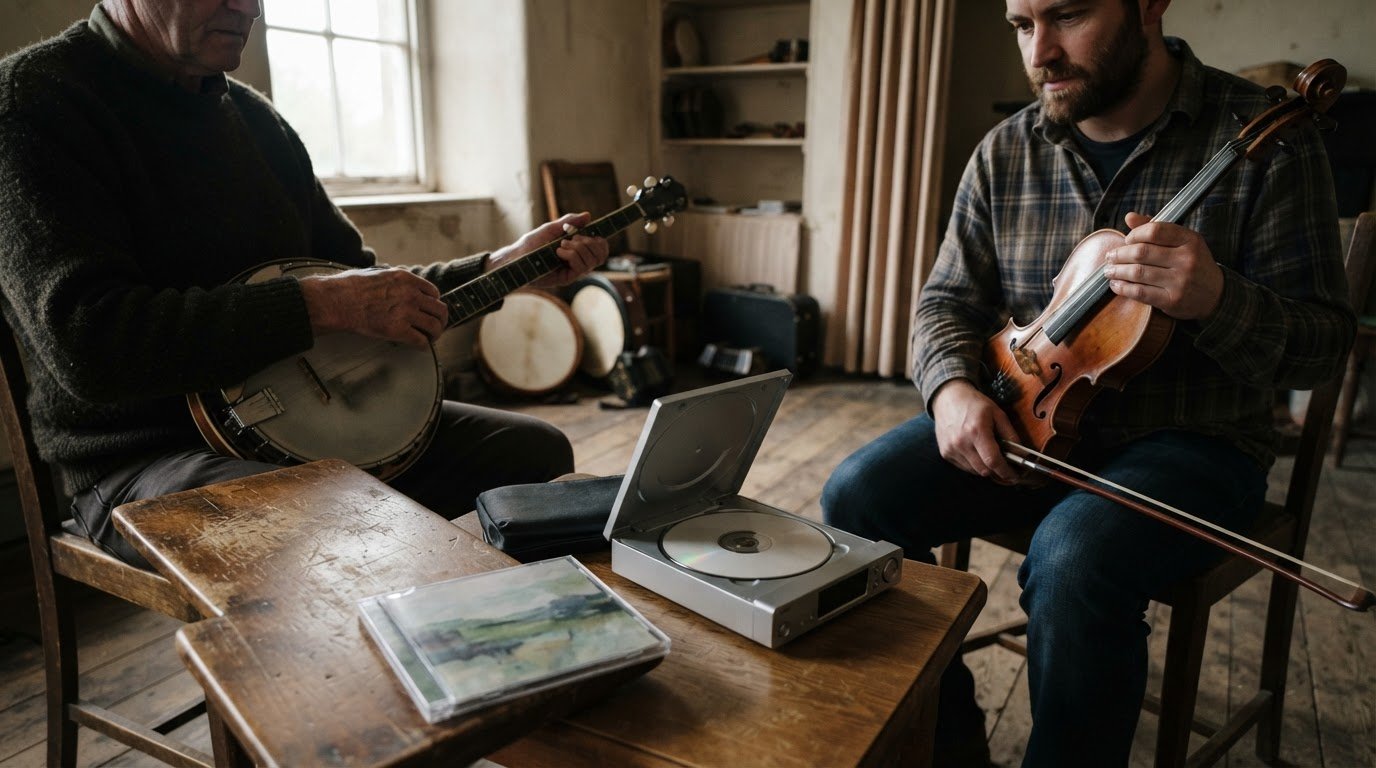
Páraic Banjo offers a recorded way to explore traditional Irish session music. Listen for a melody’s rhythmic shape and how the musicians play as an ensemble. Revisit the sound of a session through the recording, and notice how its songs, tunes, and instruments fit together.
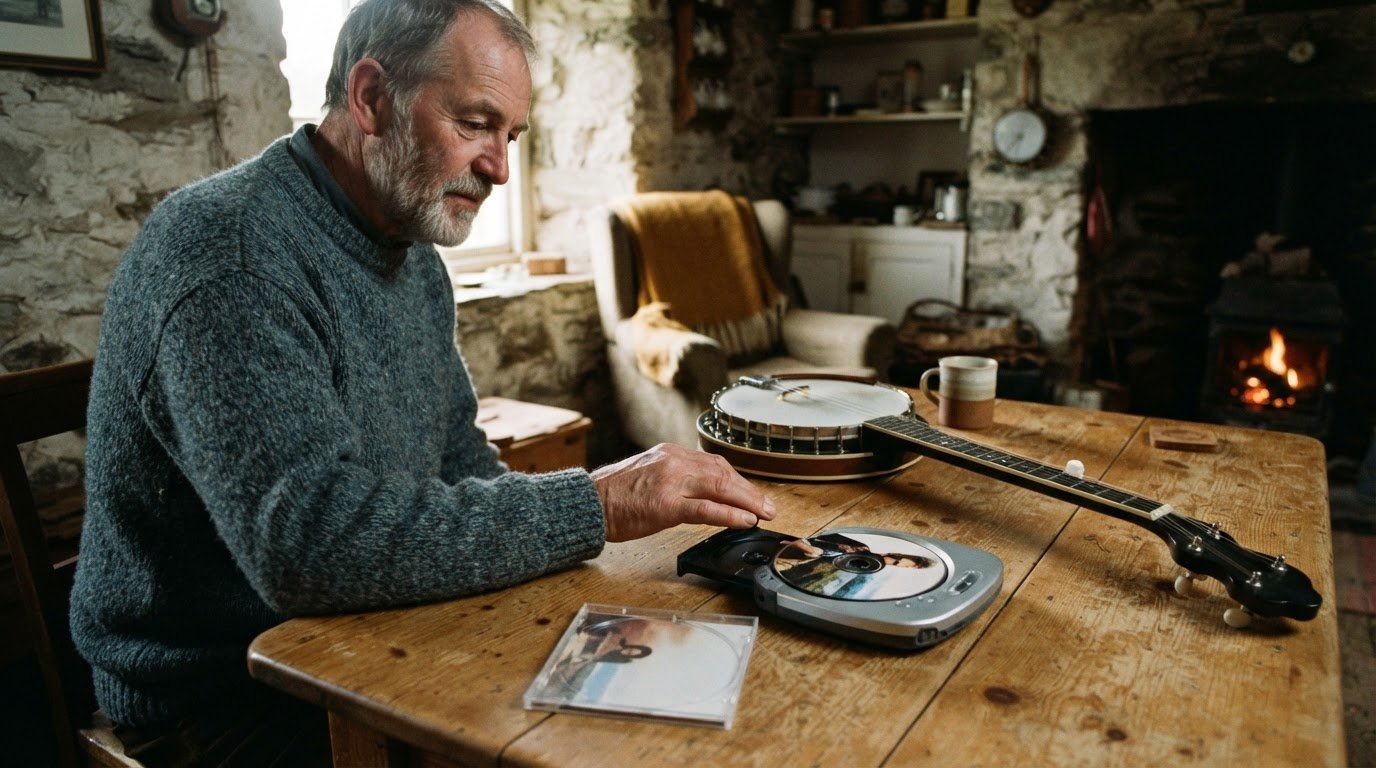
Not Before Time - 39 Years in the Making is Páraic Mac Donnchadha’s debut album. Its 18 tracks were recorded live with expert musicians, capturing the feel of traditional session music. Mac Donnchadha is an Irish tenor banjo player known for a rhythmic, soulful style. Listen for the banjo’s crisp notes and how they help carry a tune’s pulse.
Choose the format that suits how you like to listen:
Not Before Time - 39 Years in the Making (Physical CD) offers the album in CD format.
Not Before Time - 39 Years in the Making (Digital Album) gives you the full album as a digital option.
Individual Digital Tracks let you select tracks individually.
Try listening with one question in mind: Which instrument carries the melody? What gives the tune its rhythmic lift? Then listen again for how the players’ parts fit together. This focused approach connects the ideas in this guide with the sound of musicians performing together.
To choose between the full album and individual tracks, consider how you want to explore: the album offers a complete sequence of performances, while individual tracks let you start with particular tunes. Choose the Physical CD or Digital Album based on your preferred format.
Páraic Banjo is a natural next step for readers keen to hear traditional session music through tenor banjo and ensemble playing. Listen for the rhythmic, soulful character, and let the tunes reveal more with each play. If you have a question about the music, contact Páraic Banjo.
Keep Listening, One Tune at a Time
Let curiosity guide what you hear next. Choose a recording that catches your ear, then return to it with a different focus. Follow the melody first. On another listen, notice the rhythm beneath it or how the players shape a phrase. That small change in attention can make a familiar tune feel newly alive.
There’s no single performance that defines real Irish music, not Riverdance. The tradition keeps moving through the choices musicians make and the listeners who carry its tunes forward. Let your own ear lead: a lively set might draw you in, while a song’s words may stay with you longer. Keep exploring at your own pace.
If you’d like to take that next listening step, explore Páraic Banjo. Follow the sound, trust your curiosity, and enjoy the journey.
Frequently Asked Questions
What defines traditional Irish music versus Riverdance-style stage shows?
Traditional Irish music is defined by its repertoire, playing styles, and the way musicians pass tunes along. A session recording, for example, lets you focus on how players interpret a tune together. A Riverdance-style show is a theatrical production, with choreography and stage presentation shaping the audience’s experience. To tell them apart, notice whether the music feels like shared tune-making or part of a planned stage performance.
How does Irish traditional music differ from Celtic, folk, and Riverdance music?
Irish traditional music is a specific tradition, while “Celtic” often groups music from several Celtic-associated cultures. “Folk” is broader still, covering music rooted in communities and shared song traditions. Riverdance refers to a theatrical production, not a general name for Irish music. For a practical comparison, listen to an Irish tune beside folk music from another culture, then note differences in repertoire, instruments, and rhythmic feel.
Comments