Irish Music Album Picks with Notes on Sound and Tunes

A memorable Irish music album is more than a sequence of familiar tunes. Its character comes from the melody, the rhythm beneath it, and the way musicians shape each arrangement. If you’re looking for an Irish music album with detailed notes, listen for these qualities to find a sound that feels lively, soulful, or rooted in the shared playing of an informal music session.
It helps to know what to listen for, too. A tune’s pace, the blend of instruments, and the shifts between solo playing and passages where musicians play together can tell you a lot before you settle on a record. Here, you’ll get clear notes on each album’s sound and the notable tunes and arrangements that give it character, with plain explanations of musical terms where they help. Use the descriptions to follow the playing more closely, discover what catches your ear, and choose an album that invites you back for another listen.
Table of Contents
3. What Irish music albums are known for detailed liner notes?
4. Which Irish folk and traditional music albums include track-by-track notes?
5. What Irish music albums have extensive historical and cultural background in the notes?
5. Where can I find sample liner notes for Irish music albums
Páraic Banjo: Not Before Time - 39 Years in the Making (Digital Album)
2. Notable tunes and arrangements
Start with named tunes, then notice how each recording frames them. “Bhean A Ti,” “An Giobog,” and “Nil Se'n La” offer three contrasting listening lengths. Their listed durations are 3 minutes, 2 minutes and 10 seconds, and 10 minutes and 20 seconds, respectively. Length alone doesn’t explain an arrangement, but it gives you a useful starting point: listen for repeated sections of the tune, changes in pace, and how the performance develops.
Try a focused comparison: play “An Giobog” once without interruption, then listen again while following the melody. Notice where a familiar phrase returns and whether the players keep a steady pulse. Repeat the exercise with “Bhean A Ti.” Comparing the tunes helps you hear how phrasing, emphasis, and the space between musical lines can make a performance feel direct or expansive.
“Nil Se'n La,” with its listed duration of 10 minutes and 20 seconds, invites a different kind of attention. Listen for how the performance sustains interest across its longer span. Does the melody recur with subtle changes? Do the players build momentum, ease back, or shift the emphasis? Those are practical ways to describe an arrangement without assuming that a long track must contain a particular structure.
Historical context can sharpen that listening. Ceoltóirí Chualann originally came together in 1960, during a broader traditional Irish music renaissance from the 1960s onwards. Their recorded performance at “Ó Riada sa Gaiety” dates to 1969. Knowing those names and dates gives the listener a frame for hearing the music as part of a period of renewed attention, rather than as an isolated set of tunes.
Seán Ó Riada died at the age of 40, while Paddy Moloney formed The Chieftains in 1962. These details connect influential musicians to a changing musical landscape, but they don’t tell you exactly how any individual tune is arranged. For that, use the recording itself: follow the lead melody, notice when accompaniment becomes more prominent, and mark any shift in energy or texture.
Live recordings offer another useful comparison. “The Gathering” was recorded live in Cork at Éigse na Laoi 1995: The Gathering. The performances selected for “Live at the NCH” were drawn from two years of shows. Listen for the feel of each performance and how the playing moves from one tune to the next. Then compare those moments with studio recordings, where the sequence and presentation may feel different.
As you listen, jot down a tune title, its duration if listed, the instruments you recognize, and one change you hear. Try this with “Bhean A Ti,” “An Giobog,” and “Nil Se'n La.” These observations help you compare arrangements and remember which performances hold your attention, while keeping personal impressions distinct from documented history.
3. What Irish music albums are known for detailed liner notes?
Look for Irish music releases whose notes explain more than the track titles. Useful liner notes connect tunes with their composers or sources, identify performers, and describe musical choices behind the recording. A booklet that names a tune but offers no context still has track information, not much listening guidance. For an Irish music album with detailed notes, read a sample and see whether it helps you hear the music differently.
Start with the tune credits. A helpful note distinguishes a traditional tune from a newly composed one when that information is available, and gives names or context rather than treating every melody as anonymous. For a set of reels, or lively traditional dance tunes, notes might identify each tune and explain how the musicians joined them. That makes it easier to follow the set’s structure instead of hearing it as one uninterrupted track.
Next, look for arrangement details. Notes are especially useful when they explain an instrument’s role, a change in pace, or the decision to combine tunes. “Arrangement” means the way musicians shape and organize the music. If a note describes a melody moving from one lead instrument to another, listen for that handover. The detail becomes a listening cue, not just background reading.
Performer credits matter, too. Look for notes that connect musicians with their instruments and contributions, rather than listing names alone. A fiddle-led melody accompanied by banjo, for example, creates a different texture from a solo performance. Clear credits help you identify those parts and hear how the group of musicians shapes the tune, while recognizing the musicians behind its collective sound.
For cultural context, look for notes that explain a tune’s place in a tradition without making broad claims unsupported by the recording. Specific information about a source, a local connection, or the reason for including a piece can deepen a listening session. Keep those details distinct from personal interpretation: a musician’s account of why a tune matters is valuable, but it is different from a documented origin or history.
Use this quick reading test: find one tune credit, one performer detail, and one explanation of an arrangement or recording choice. Then listen again and see whether each note points to something audible. If you’re choosing an Irish music album with detailed notes, this test helps distinguish useful listening context from a general description.

4. Which Irish folk and traditional music albums include track-by-track notes?
To understand how an album’s notes are organized, begin with its edition details. Look for a printed booklet, a digital booklet, or written commentary. A track list alone shows the sequence, but not whether each piece has its own note. Record the edition alongside the materials you find so you can distinguish versions clearly.
Next, inspect the notes’ layout. Track-by-track coverage usually follows the album sequence, with a separate entry or label for each piece. Compare the first, middle, and final tracks with the written contents. If commentary stops partway through, describe the coverage as partial rather than assuming every track is discussed. This quick sample helps you judge the notes before reading them closely.
Digital releases can place written material in different locations. Check the album’s accompanying files, release description, and track-level text fields. A short description attached to one song may be useful, but it doesn’t establish that the whole album has track-by-track notes. Keep the audio listing and written materials open together; matching each note to its track makes gaps easier to spot.
For a physical edition, look inside the booklet and compare its headings with the printed track sequence. Some commentary may appear in a general introduction rather than beside each track. To assess coverage, mark every track title with its own entry. This simple inventory shows whether the notes guide you through the whole album or focus on selected pieces.
Pay attention to what each entry actually covers. A repeated one-line label beside every title may follow the track order but offer little individual commentary. More useful entries give track-specific information and make clear which performance they describe. Compare neighboring entries to see whether each contains distinct details or repeats the same general description.
Also note whether the text treats combined tracks as one entry or discusses their components separately. An album sequence may group several pieces under a single track number. Check whether the notes explain the grouped entry as a whole or separately discuss its component pieces. This matters when you’re using the booklet to follow the album’s organization.
For a practical comparison, make a brief checklist with three columns: track number, note present, and coverage complete or partial. Apply it to the booklet and any digital materials for the same edition. You’ll quickly see which releases offer consistent track-by-track guidance, which provide selected notes, and which give a general essay instead. Keep the edition details with your checklist for easy reference.
Detailed notes offer distinct, track-specific information and identify the performance being discussed. A booklet that gives context for individual tracks is more useful as a listening guide than a track list or a set of repeated one-line labels.
5. What Irish music albums have extensive historical and cultural background in the notes?
For cultural depth, look beyond a general album introduction. Strong background notes explain how a collection of tunes and songs connects with a particular community, language, dance practice, or musical setting. They might describe how players passed a tune between them or how its performance style reflects a local tradition. These details help you understand what the music means, not just who recorded it.
Check whether the notes distinguish documented history from interpretation. A clear account identifies the basis for a claim, such as a musician’s recollection, a published source, or a recording history. Personal memories can be valuable, but should be presented as memories rather than settled historical facts. Notice how carefully the writer makes that distinction.
Language can offer another useful clue. Notes may explain a song’s title, a phrase in its lyrics, or context that helps you understand a translation. If they include Irish-language terms, see whether the explanation gives their meaning and relevance. A translation can clarify the words, while cultural context can show why a phrase matters within the song.
Dance and social use also shape musical meaning. A note might explain whether a piece belongs to a dance setting, a communal gathering, or another performance context. Read the description, then listen for the musical features it highlights, such as a strong pulse or repeated melodic pattern. The aim is to connect the written context with something you can hear.
Notice how the notes discuss change over time. A useful account might describe how performers adapt a melody, preserve a familiar feature, or bring different influences into an arrangement. It should avoid suggesting that one version represents every Irish tradition. Look for precise language about the recording and its musicians rather than broad claims about an entire culture.
To assess an album’s background notes, identify a historical claim, a cultural detail, and an explanation tied to the music. Ask whether each point is specific, clearly framed, and relevant to listening. Then choose one detail and listen again, noticing whether it changes how you hear the performance. That makes liner notes a companion to the music, not a substitute for it.
A thoughtful booklet can also reveal what its author chose to emphasize. See whether it gives space to the musicians, collection of tunes and songs, and community context, rather than presenting tradition as a static backdrop. The most helpful notes invite curiosity while respecting complexity. Keep a brief record of the detail that stayed with you and use it to guide your next listening session.
5. Where can I find sample liner notes for Irish music albums
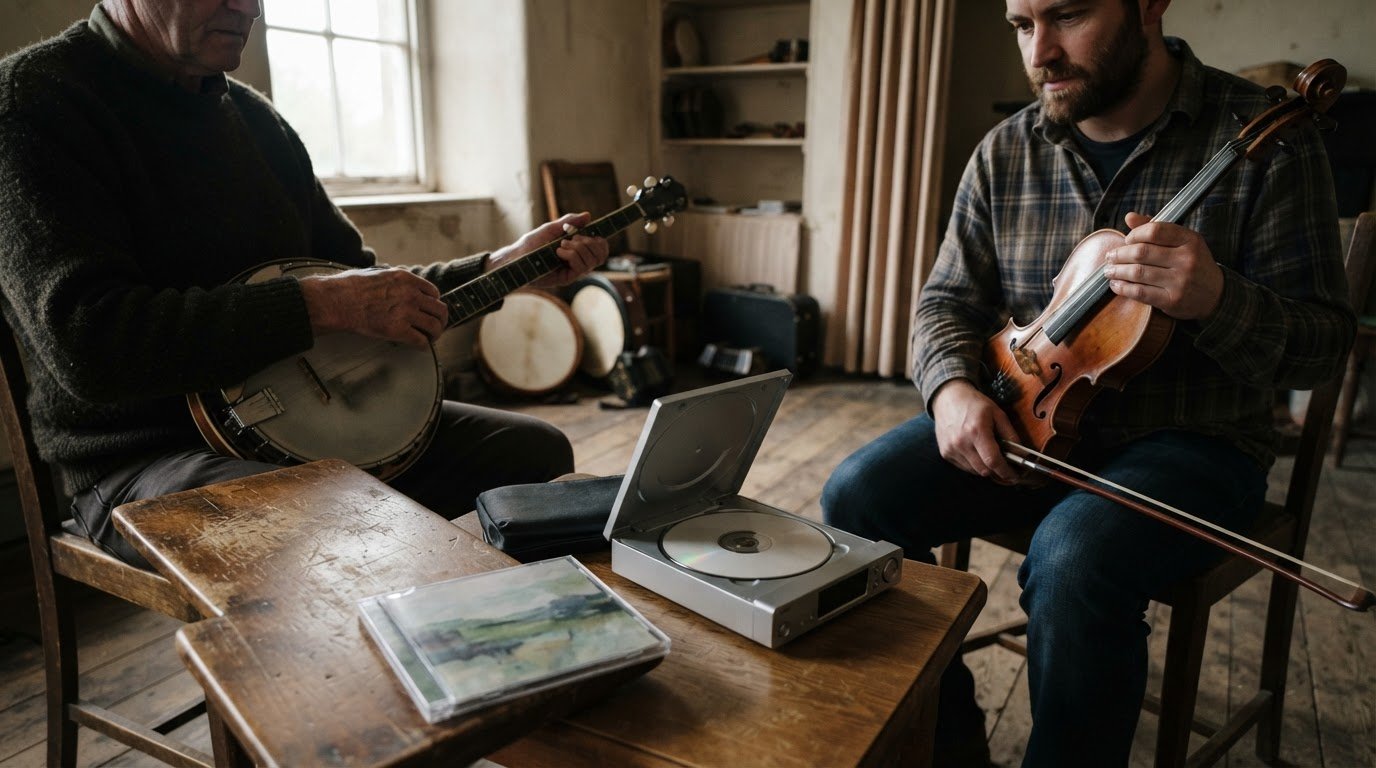
Start with the physical CD booklet, where album notes often sit beside track listings and performer credits. If you’re examining a specific release, look for tune names, musician roles, and recording details. A booklet showing only titles and credits gives you a useful reference, but not a sample of explanatory notes. Read a few entries to see whether the text adds context to the music.
For digital releases, check the album page and any accompanying booklet or notes file. A track list alone doesn’t show whether commentary is included. Search the release materials for a tune title, then see whether its entry explains the source, arrangement, or performers. This simple step distinguishes track-by-track notes from a general album description.
Artist and label release pages can also show how an album is presented. Search using the exact album title with terms such as “liner notes,” “booklet,” or “track notes.” For example, a query for Ó Riada sa Gaiety plus “liner notes” can help locate relevant release material. Treat search results as pointers, then read the actual notes before judging their depth.
Catalog records offer another starting point. Look for entries that describe a physical edition’s booklet or list supplementary material. A catalog record may identify the contents without reproducing the notes, so use it to locate the edition rather than as a substitute for reading. Match the album title and performer carefully, since similar titles can refer to different releases.
When you find a sample, assess it with three questions. Does it identify the tune or piece? Does it name the performers and explain their roles? Does it give a specific detail about the arrangement, recording, or musical background? An entry about a lively fiddle-led dance tune, for instance, becomes more useful when it tells you what to listen for.
Compare formats before drawing conclusions. A physical CD booklet may offer printed commentary, while a digital release may present credits separately from the audio. Note whether the sample covers every track or only selected pieces. That distinction matters: a thoughtful essay about the whole album isn’t the same as notes that guide you through each performance.
Keep a short record of the album title, edition, and one example of useful commentary. For a title such as The Gathering, note whether the material identifies the event or explains the repertoire. This makes later comparisons clearer and keeps your impressions tied to a particular release, not just its general description.
To put that listening approach into practice, explore an Irish traditional music album and follow its track sequence with these questions in mind.
Páraic Banjo: Not Before Time - 39 Years in the Making (Digital Album)
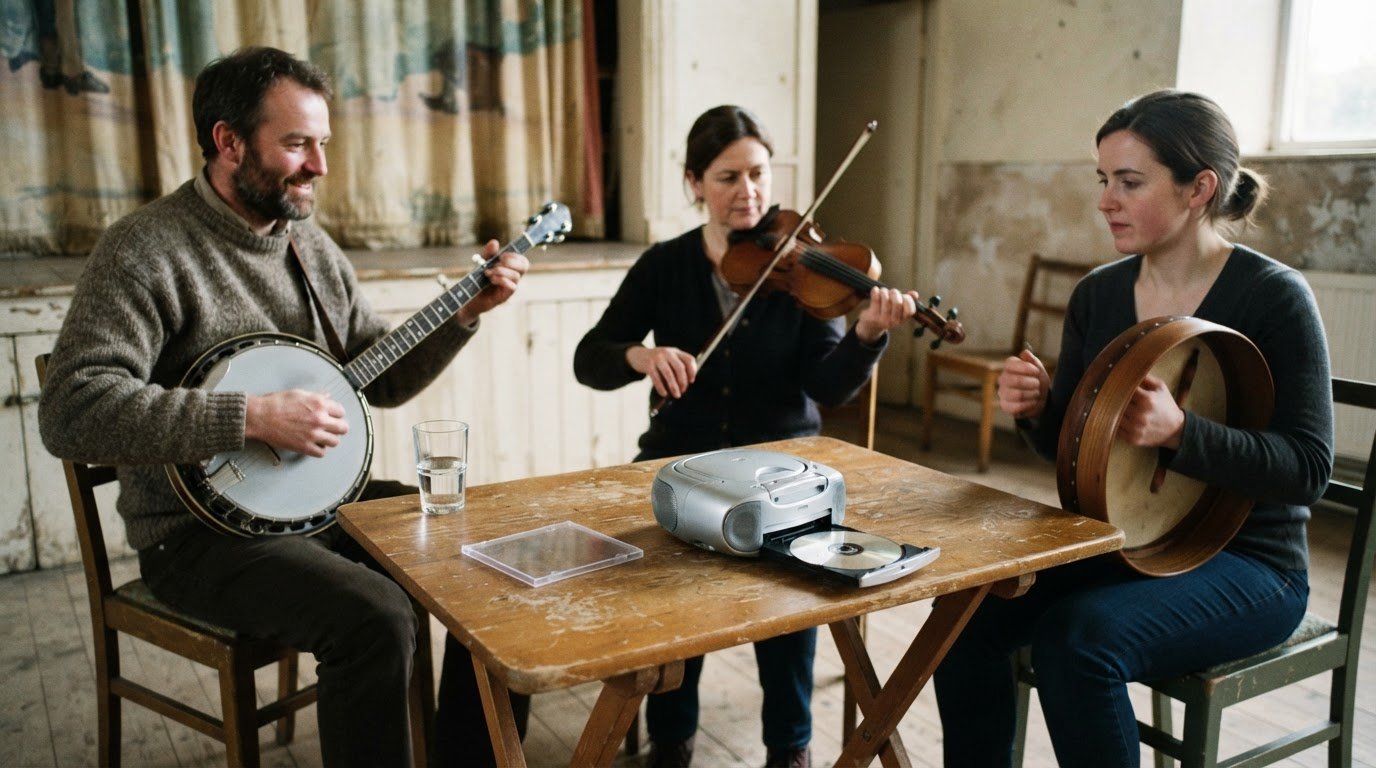
Not Before Time - 39 Years in the Making gives you a lively recording of Irish musicians playing together, with tunes and arrangements to explore. Its 18 tracks were recorded live, capturing the feel of a traditional Irish music gathering. Listen for how the musicians bring each tune to life, and use the track sequence to guide your own notes on sound and performance.
Choose the digital album for the complete collection, or individual digital tracks if you’d rather focus on particular performances. A physical CD is also available. This is a natural next listen if you want to hear a full set of traditional playing from one album. Enjoy the tunes, and contact Páraic Banjo if you’d like to get in touch.
Let the next tune lead you deeper
Make your next listen active: choose a tune, follow the melody, and notice how the musicians shape its energy. An Irish music album with detailed notes can add context to that experience, but your own ear is part of the discovery. Keep a few words about what stands out, then return to the track and hear it anew.
If you’d like to continue with traditional Irish session music, explore Not Before Time - 39 Years in the Making as a digital album or physical CD, or choose individual digital tracks. Pick the format that suits how you like to listen, then give the music room to unfold.
Contact Páraic Banjo about Irish music to get in touch. Enjoy the listening, and follow the tunes wherever they take you.
Comments