Irish Instrumental Album for Relaxation: A More Thoughtful Way to Listen

The most relaxing Irish instrumental album isn’t necessarily the slowest one. A tune with a steady pulse and a gentle lilt can feel restful, even when the music has energy. If you’re choosing music for a quiet moment, start by noticing what suits you: an unhurried melody, a rhythmic lift, or something that rewards close attention.
Labels like “calming” don’t tell you exactly how a recording will sound. A more practical approach is to listen for its pace, tune type and instrumentation, then match those qualities to what you’re doing. The same track might sit comfortably behind reading, make a short break feel livelier, or draw you into a focused listen.
Páraic Mac Donnchadha’s debut album, Not Before Time - 39 Years in the Making, brings together 18 tracks recorded live with expert musicians, rooted in East Galway and Clare traditions. To find instrumental selections, use the track information and liner notes as you listen. Notice what draws you in: a measured rhythm, a bright melody, or the interplay between musicians. No specialist knowledge needed. Just listen, and follow the sound that feels right.
Table of Contents
What Makes an Irish Instrumental Album Feel Relaxing?
People unwind in different ways. You might want quiet focus, a little gentle energy, or a melody that feels familiar. That’s why an irish instrumental album won’t sound relaxing to everyone in the same way. Traditional Irish music can be lively, reflective or full of contrast, sometimes within a single performance. Rather than looking for one universally calming sound, notice what works for the moment you’re in.
Instrumental music is music led by instruments rather than vocals. In Irish traditional music, melodies and rhythms take the lead, shaped by the players and the instruments they bring together. For a wider introduction to its musical traditions, see Music of Ireland. Here, relaxation describes a personal listening preference, not a guaranteed effect on your health.
Can lively traditional music still suit a quiet moment?
Yes. A tune doesn’t have to be slow or subdued to suit a quiet moment. You might enjoy its steady movement while reading, or find it engaging when you take a break. Try both ways: let a track play softly in the background, then give it your full attention another time. Notice whether the rhythm blends into what you’re doing or keeps drawing you back to the music.
Which sounds shape the listening mood?
Listen for four things: melody, the tune you follow; rhythm, its pattern of beats; tempo, how quickly or slowly it moves; and instrumental texture, the blend of sounds playing together. A tune type can influence its perceived energy, while repeated phrases or a bright, ornamented melody may catch your attention. These are useful clues, not rules for how you should feel.
For a simple first listen, choose a track and ask yourself: does its pace help me settle, or do I enjoy its lift and motion? Then try another track with a different feel. Comparing the two can tell you more than a broad “relaxing music” label, and it’s a practical way to discover what you enjoy in traditional Irish music.
How Irish Instrumental Music Creates Rhythm, Movement, and Contrast
Traditional Irish tunes often get their lift from rhythm and repetition. The melody returns in phrases, while the players shape its feel through timing, emphasis and the way their instruments work together. Those details create movement, but they don’t prescribe a mood. The same lively pulse might feel invigorating to one listener and simply engaging to another.
What should a beginner listen for in a jig or reel?
A jig and a reel are different kinds of traditional dance tune. Jigs commonly have a lilting, grouped beat, while reels usually have a more even, flowing pulse. You don’t need to count beats or identify every musical detail. Follow the melody as it comes around again and notice how the rhythm carries it.
Try this listening prompt: Can you follow the tune when it repeats, and what changes in the feeling of the beat? A small shift in emphasis can make a familiar phrase seem to skip, glide or press forward. Repetition gives your ear something to hold onto, while the rhythmic lift keeps the music moving.
How does live-session interplay affect the sound?
When musicians play together, the performance can feel conversational. One line may lead, another may answer, and the players’ combined timing gives the tune its pulse. Listen for how the parts meet rather than assuming anything about the setting around the recording.
Páraic Mac Donnchadha’s debut, Not Before Time - 39 Years in the Making, contains 18 tracks recorded live with expert musicians. As you listen, pick out one sound to follow, then listen again for how it connects with the others. The track information and liner notes offer context for exploring the album’s music. This kind of close listening is useful with any irish instrumental album: follow one part first, then notice how the other sounds support or answer it.
The University of Nevada, Reno’s music and relaxation resource discusses tempo as one aspect of listening. Treat pace as something to notice, not a promise of how you’ll feel. To explore a recording built around musicians playing together, take a look at Páraic Mac Donnchadha’s live-recorded album.
Choosing an Irish Instrumental Album for Your Listening Mood
Start with what you want from the music in that moment. For winding down, you might prefer a sound that feels spacious and unhurried. Reading may call for music that sits comfortably behind the words, while a break could be the time to enjoy more forward motion. If you want to give the music your full attention, look for details that reward another listen. These are starting points, not rules.
Genre labels can help you find Irish traditional music, but they don’t tell you exactly how a recording will feel. Consider its perceived energy, whether the melody sounds familiar to you, and how the instruments weave together. Use the comparison below as a listening guide.
What should you look for when you want gentle background music?
Set the volume at a comfortable level, then notice whether the music supports your activity or competes with it. A steady pulse may feel settled to one listener and distracting to another. No instrument or tempo guarantees a relaxing experience. Try a track while reading or resting, and adjust the volume or choose another if the music keeps pulling your attention away.
When is focused listening a better fit?
Sometimes it’s more rewarding to let the music take the foreground. Follow the melody, listen for small rhythmic details, and notice how one instrument answers or supports another. This makes listening an activity in its own right, rather than treating the album only as background sound. For context as you listen, explore the East Galway and Clare musical traditions.
If you specifically want instrumental music, use the track information to identify instrumental selections rather than relying on the album’s overall genre or description. The tracklist and liner notes can help you see what to expect from each selection. That way, you can choose an irish instrumental album that matches what you want to hear, track by track.
A Simple Way to Build a Relaxing Irish Music Listening Ritual
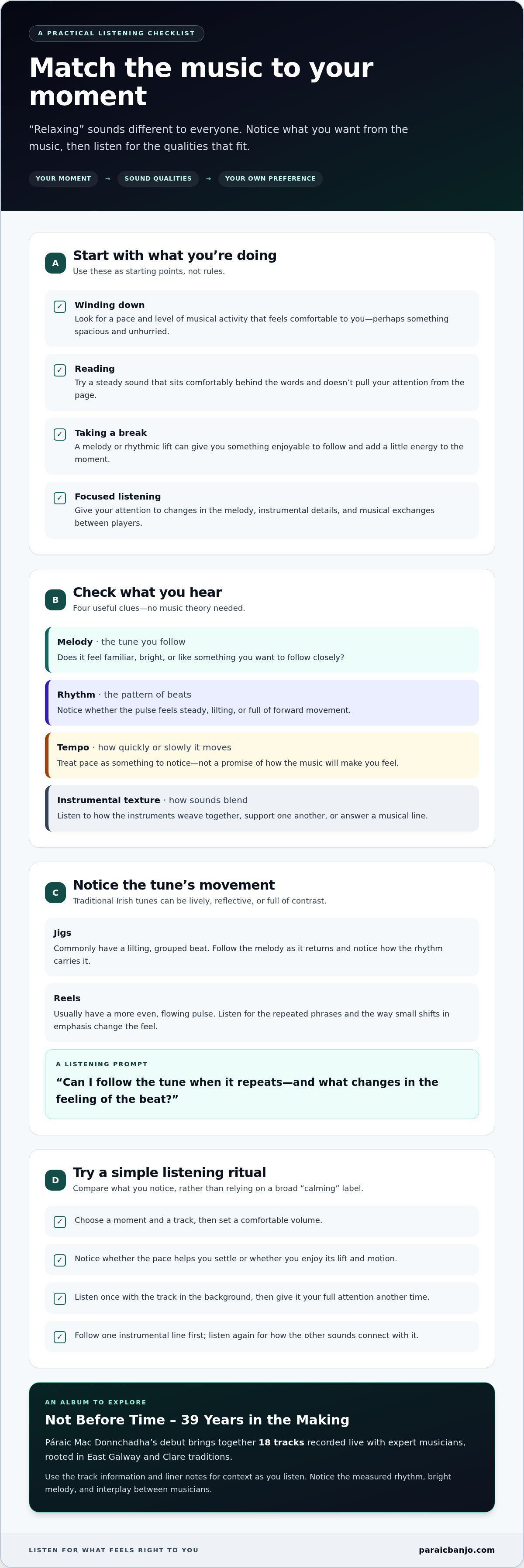
A listening ritual doesn’t need special equipment or a fixed schedule. Keep it simple, and adjust it to the kind of moment you have:
Choose a moment: Pick a quiet pause, a familiar evening activity, or another time that suits your routine.
Select a track: Start with one tune whose energy seems right for the moment.
Set a comfortable volume: Keep it low enough for background listening, or turn it up to hear the musical detail without making it intrusive.
Listen and notice: Pay attention to how the melody and rhythm fit the activity. If a phrase catches your ear, pause what you’re doing and give the music your full attention.
Try a different musical energy another time. You might jot down a few words about what you enjoyed, such as “steady pulse,” “familiar melody” or “lively but easy to follow.” After a few listening sessions, these notes can help you identify the qualities you like in an irish instrumental album, rather than relying on a general mood label.
How can you make music part of a wind-down routine?
Pair a track with something familiar and quiet, such as sitting with a cup of tea or taking a few minutes away from screens. If you want to focus on the music, choose a spot where interruptions are less likely, while keeping the routine flexible for your home and schedule. There’s no required length or perfect setting. Let the music fit into your evening, not the other way around.
For a place to continue exploring, Páraic Mac Donnchadha’s Not Before Time - 39 Years in the Making brings together 18 tracks recorded live with expert musicians. Listen to the album and use its liner notes to learn more about the musical traditions behind it. The track information can help you identify the instrumental selections that suit your listening plans.
How do you know whether an album suits you?
Try a representative track before setting aside time for a full-album listen. Ask whether its energy feels comfortable for your intended activity, then try another selection with a different feel. Don’t judge the whole album by one track or one particular mood. A tune that distracts you while reading might be exactly what you want to focus on during a break.
Ready to put the ritual into practice? Explore Páraic Mac Donnchadha’s album, choose a track, and see what you notice.
Explore Páraic Banjo's Live Irish Session Album and Its Musical Roots
Not Before Time - 39 Years in the Making is the debut album from Páraic Mac Donnchadha, an Irish tenor banjo player. It brings together 18 tracks recorded live with expert musicians, alongside detailed liner notes with stories and historical context about East Galway and Clare musical traditions.
The album offers a way to hear music shaped by a connection to traditional Irish music and to explore some of the places and traditions behind it. To find instrumental selections, look at the track information and liner notes. If you’re choosing an Irish instrumental album for a particular mood, listen to a track and consider its pace, rhythmic feel and instrumental details before deciding how it fits your moment.
What does the album's session context add to listening?
Music made by a group of players offers details to follow: how one part supports another, where the melody sits, and how the performance moves as a whole. On live-recorded tracks, listen for the shared musical feel and the way the players’ parts come together.
Try listening once for the main tune, then again for the way the musicians’ parts work together. The session context can make that second listen especially rewarding, turning a track from background music into a musical exchange worth your attention. For more on the story behind the recording, explore Páraic Mac Donnchadha’s debut album.
Where can a curious listener go next?
The album is available as a digital download and a limited-edition physical CD. Both offer a way into the music, and the liner notes add another layer with historical background and stories connected to East Galway and Clare. Read a little, listen, then return to the notes with the melodies fresh in your ear. You don’t need specialist knowledge to enjoy that back-and-forth.
If you’re exploring traditional Irish music, let the album be one listening stop rather than a definition of the whole tradition. Start with a track that catches your interest, notice how the players interact, and use the accompanying context to deepen the experience. Explore Páraic’s debut album and discover the music and its roots for yourself.
Make Your Next Listening Moment Your Own
There’s no single sound that makes Irish music relaxing for everyone. Start with the moment you have, then notice the tune’s pace, rhythmic lift and instrumental detail. A track that works quietly in the background might invite closer attention when you have time to listen. Let your own response guide the choice.
If you’re exploring an irish instrumental album, use the track information to identify instrumental selections. For a place to begin, Páraic Mac Donnchadha’s debut, Not Before Time - 39 Years in the Making, features 18 tracks recorded live with expert musicians. Its detailed liner notes add stories and musical context from East Galway and Clare.
Explore Páraic’s debut album, choose a track and spend time with it. Listen for the melody, follow the players’ interplay, and see where the music takes you. Enjoy the journey, one tune at a time.
Frequently Asked Questions
Can Irish instrumental music be relaxing even when the tunes are lively?
Yes, lively Irish instrumental music can suit a quiet moment if you enjoy its energy. Relaxation doesn’t have to mean silence or slow music. A repeating melody and steady pulse might feel engaging or familiar, though another listener may prefer something more subdued. Try playing a tune softly while you rest, then listen closely another time. Your own response matters more than a universal rule about which sounds should feel relaxing.
What makes instrumental music different from music with vocals?
Instrumental music is led by instruments rather than sung vocals. You follow the melody through the instruments and notice how their parts combine, repeat or answer one another. Music with vocals places a singer’s voice at the center, though instruments may still carry much of the arrangement. If you’re choosing music without singing, check the track information, since an album’s broad genre label may not describe every track.
How do I choose an Irish instrumental album for relaxing?
Choose an Irish instrumental album by matching its perceived energy to what you’re doing. For reading, try a track that doesn’t pull your attention away; for a break, you might enjoy a melody with more rhythmic lift. Notice whether the tune feels familiar and whether you like the instrumental details. Start with one track at a comfortable volume, then try another before deciding what suits your listening moment.
Are jigs and reels suitable for quiet listening?
They can be. Jigs and reels are traditional tune forms with distinct rhythmic feels, but neither creates one fixed mood. You may enjoy a jig’s lilting motion or a reel’s flowing pulse during a quiet activity, while another listener might find the movement distracting. Try listening at a lower volume, or give the tune your full attention. Notice how its repeated melody and rhythm feel to you.
Can I listen to traditional Irish music as background music?
Yes. Traditional Irish music can play in the background while you read, prepare a meal or take a quiet break. Set the volume so it sits comfortably alongside what you’re doing. A steady pulse may blend into an activity for some listeners but distract others, so adjust the volume or choose another track if needed. If a melody catches your ear, pause the activity and enjoy a more focused listen.
Does Not Before Time - 39 Years in the Making contain instrumental tracks?
Not Before Time - 39 Years in the Making is Páraic Mac Donnchadha’s debut album of traditional Irish session music, with 18 tracks recorded live alongside expert musicians. To find instrumental selections, use the track information and detailed liner notes to identify what’s on each track. Then choose the music that fits your listening preference.
What is the difference between focused listening and background listening?
Focused listening means giving the music your attention: follow the melody, notice its rhythm, and listen for how the instruments interact. Background listening means letting music accompany another activity, such as reading or relaxing, without concentrating on every detail. Both are valid ways to enjoy traditional Irish music. Try a track in each setting. If it competes with your activity, lower the volume or save it for a dedicated listen.
Comments