Irish Music from the 1970s: The Folk Revival, Rock and Traditions
What if Irish music from the 1970s is best heard not as one sound, but as several strands answering one another? A fiddle-led traditional tune, a rock guitar riff and a sharp new-wave song can sit in the same decade, yet each tells a different story.
If the artist lists feel disconnected, that’s understandable. The traditional revival, Celtic rock and punk didn’t share one musical style, even as they drew on overlapping places, histories and audiences. The roots of the revival also reach back to the 1960s, so hearing what came before helps make sense of the decade’s changes.
Here, you’ll meet artists and sounds that shaped the era, from Planxty and The Bothy Band to Horslips, Thin Lizzy and The Boomtown Rats. You’ll also learn what to listen for: the lift of a reel, traditional instruments in a rock arrangement, or the restless edge of new wave. Try comparing a traditional band’s arrangement with a rock track. Notice how each uses rhythm and melody, and you’ll have a practical way into a rich musical conversation that continues today.
Table of Contents
What Irish Music from the 1970s Sounded Like: A Decade of Many Voices
Irish music in the 1970s was a lively meeting of traditional tunes, folk-revival arrangements and rock, not a single style with one defining sound. In one recording, a melody might be carried by fiddle and pipes; in another, traditional material might be shaped for a contemporary folk group. Elsewhere, electric guitars and drums lead the way. These strands sometimes drew on shared musical roots, but they offered different listening experiences.
This guide covers Irish music released or active during 1970-1979. It’s an introductory map, not a complete catalogue or definitive ranking. Start by listening for what each kind of music is doing, rather than assuming that every artist belongs to the same story.
Why the 1970s Resist a Single Label
Traditional music centres on inherited tunes and styles, including dance melodies such as jigs and reels. It could be played in a session, arranged by a group or presented on record. Contemporary folk used acoustic instruments and song traditions in newer arrangements for performances and recordings. Rock grew from a different musical language, often led by electric instruments, a strong backbeat and amplified sound.
These labels are useful listening points, not sealed boxes. An artist could draw on Irish tunes or rhythms without making traditional music in the same way as a session player. A folk arrangement might bring traditional melodies to a concert stage, while a rock band could use elements associated with Irish music within a guitar-driven sound. The musicians, audiences and aims varied. Shared roots didn’t make the results interchangeable.
A Decade Shaped by Different Musical Settings
Think about where the music is happening. A traditional session is a social setting built around playing tunes together, while a folk performance presents songs or arrangements to an audience. The 1970s folk revival helped bring traditional music into concert and recording settings through groups with carefully shaped arrangements. The energy may still come from a dance tune, but the balance between instruments and the way a piece unfolds can feel different from a tune played among musicians.
Rock asks for another kind of attention. Listen for amplified guitar, drums and the weight of the beat, rather than expecting a reel or acoustic arrangement to lead. Horslips are associated with Celtic rock, while Thin Lizzy became a major Irish rock band. Neither should be treated as a folk group simply because they came from Ireland. For a selective reference to artists and recordings in the folk strand, explore Irish folk music in the 1970s.
As you listen, compare a tune-based arrangement with a rock track. Notice the instruments, rhythm and role of the melody. The sections ahead follow those contrasts through folk-revival artists such as Planxty and The Bothy Band, then turn to Irish rock and a practical listening route. That way, the decade’s variety becomes easier to hear, one sound at a time.
Irish Folk Revival and Traditional Music: Hear the Changes in the Sound
The folk revival of the 1970s brought fresh attention to traditional tunes and songs, but it’s better understood as a changing musical movement than as a single event with one cause. University College Dublin discusses the Irish Folk Music Revival as gaining popularity from the 1970s onwards. This is a useful frame that leaves room for the people, places and musical choices involved. The decade’s folk recordings didn’t replace older traditions. They offered new ways to perform, arrange and hear them.
The 1970s renewed interest in traditional tunes; they did not mark the beginning of the tradition. Tune-making, playing and passing music on existed long before the revival. Performers in this period brought traditional material to new audiences and settings. Apple Music’s playlist offers a starting set of names: Planxty, Andy Irvine, Paul Brady and The Bothy Band. Treat them as listening leads, not a complete account of the movement.
What to Notice in Traditional and Folk Recordings
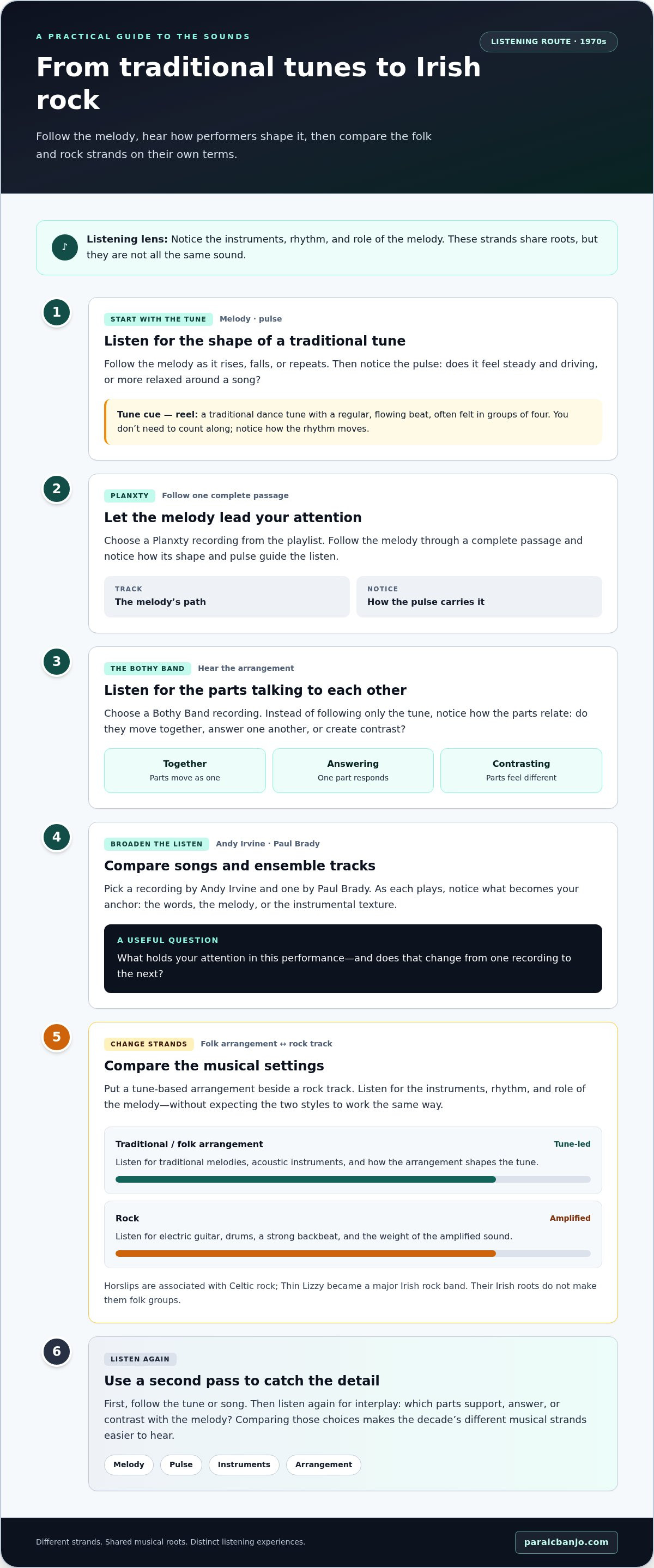
Start with the melody: follow the tune as it rises, falls or repeats. Then listen to the pulse. A reel is a traditional dance tune with a regular, flowing beat, often felt in groups of four. You don’t need to count along. Notice whether the rhythm feels steady and driving or more relaxed around a song.
Next, focus on the arrangement, meaning how performers shape the music together. Does the melody stay in front, or do other parts answer it? Can you hear a change in texture, where the sound becomes fuller or lighter? Listen once for the tune, then again for the interplay between performers. This second pass can reveal details that get lost when you’re only following the song.
Planxty and The Bothy Band as Listening Entry Points
Choose one recording by Planxty and one by The Bothy Band from the playlist. For Planxty, follow the melody through a complete passage, noticing how its shape and pulse guide your attention. Then try a Bothy Band recording and listen for how the parts relate: do they move together, answer one another or create contrast? These prompts are ways into the sound, not claims that either group used one fixed arrangement.
Andy Irvine and Paul Brady broaden the listening route beyond band names. Pick a recording by each and compare how a song or tune holds your attention alongside the ensemble tracks. Notice whether the words, melody or instrumental texture becomes your anchor. There’s no need to rank the performers. The point is to hear the choices that make each performance distinct.
To continue exploring after this historical listen, try a present-day example of traditional session music in Páraic Mac Donnchadha’s traditional Irish session album. It offers a way to hear continuity in the tradition without mistaking a modern recording for a document of the 1970s.
Irish Rock in the 1970s: How It Differed from the Folk Revival
Irish rock in the 1970s shared the decade with the folk revival, but it asked listeners to tune in to different things. Rather than making traditional tunes the centre of the arrangement, rock often put amplified instruments, a strong beat and the character of a particular song or performer up front. The strands could share cultural roots and audiences without sounding alike.
Apple Music’s playlist names Horslips, Rory Gallagher, Thin Lizzy and The Boomtown Rats as listening leads. They point to varied approaches, not one uniform Irish rock style. Try the examples below and listen for what each recording puts in the foreground.
Rock Artists and the Decade’s Wider Musical Picture
These cues focus on specific recordings, not everything an artist made. Gallagher’s reputation spans a longer career, so “Tattoo’d Lady” is a more useful starting point than treating one label as a summary of his whole sound. The cues for Horslips, Thin Lizzy and The Boomtown Rats also help you hear details in individual tracks. Listen once for the main hook, then replay the track and follow another instrument.
Compare Folk and Rock Without Flattening Either
Folk-revival recordings bring tune and arrangement into focus; rock recordings often place the song, amplified sound and beat at the centre. That’s a listening distinction, not a rule every recording must follow. Compare a folk, tune-led passage with one of the rock tracks above. Notice who carries the melody, how the rhythm moves, and whether the parts seem to answer one another or build toward a chorus.
The decade also unfolded amid political turmoil, particularly in Northern Ireland during the Troubles. Some punk and rock musicians addressed social or political concerns in their lyrics, but it would be too simple to treat the conflict as the cause of Irish rock or to assign one response to every artist. The music had varied purposes and audiences. Context can deepen a listen without explaining away the sound.
That’s the value of hearing these strands side by side. Keep the shared era in view, but let each recording speak through its own arrangement, performance and subject.
How to Explore Irish Music from the 1970s: A Practical Listening Route
A good listening route moves from a folk example to a rock contrast, then opens out into further artists and recordings. Apple Music’s playlist can help you find names such as Planxty and Thin Lizzy, but treat it as one discovery tool, not a complete or authoritative history. Let your own ear lead, and use recording dates and credits to check what you’re hearing.
Build a First Listening Session
Try these steps in order. Before reading descriptions or reviews, jot down what you notice: the mood, the instruments you can identify, and which sound holds your attention. Those first impressions give you something concrete to compare.
Begin with Planxty. Listen to “The Well Below the Valley” from the group’s 1973 album of the same name. Follow the tune and words, and note how the arrangement shapes the song’s pace.
Switch to Thin Lizzy. Play “The Boys Are Back in Town,” released in 1976. Listen for the electric-guitar parts and the way the beat carries the song. What feels different from the Planxty recording: the texture, the pulse, or the way the melody lands?
Broaden the route. Choose a track by another artist named in the playlist, then compare it with one of these recordings. Try Horslips, Rory Gallagher, Andy Irvine, Paul Brady or The Bothy Band. Look beyond the artist name to the track’s original release and credits.
Keep your notes simple. Write “acoustic,” “driving beat,” “voice in front” or “melody repeats” rather than reaching for specialist labels. Then replay each selection and focus on one detail you missed. A small change of attention can make a familiar passage sound newly alive.
Go Beyond a Single Playlist
Use artist names as paths to recordings, not as genre verdicts. If a playlist includes a track you like, check the album or single it came from, the release date and the musicians credited. A later compilation may gather recordings from different years, so don’t assume every track on a decade-themed playlist was released during the 1970s. Separate the original release date from the compilation date before describing a recording as a 1970s release.
From there, follow the credits to related work by the performers and compare more than one recording. Notice whether the mood shifts, whether the arrangement leaves space for a solo, and whether the performance feels song-led or tune-led. You can also explore regional traditions, including music associated with East Galway and Clare, while listening for local variation rather than expecting one standard sound. A traditional session recordings collector guide can offer another route into recordings and their context.
To make your discoveries easy to revisit, save the album title and release date alongside each track in your notes. Over time, you’ll build a listening map that shows which performers and recordings you want to follow next.
From 1970s Irish Music to Today’s Session Tradition
Traditional session music continues beyond the recordings of the 1970s, carried forward as musicians learn, interpret and share tunes. That continuity doesn’t make a present-day album a document of the decade. Each recording belongs to its own moment, performers and musical choices.
A Present-Day Recording Rooted in Traditional Session Music
Not Before Time, the debut solo album by Irish tenor banjo player Páraic Mac Donnchadha, is a present-day example of traditional Irish session music. It brings together live and studio performances with ten additional Irish musicians. The album runs for 70 minutes across 18 tracks and is described as 39 years in the making.
Keep its historical place clear as you listen: the album’s traditional repertoire connects with a living practice, but it isn’t a 1970s release. Notice how the tunes unfold and how the performers play together. Daniel Neely of the Irish Echo described it as “A absolute must-have for anyone who loves traditional Irish music.”
Follow the Music into a Deeper Listening Experience
The album includes a free 36-page booklet with detailed liner notes. Read a note after listening to a track, and use it to add context to what you’ve heard. That order lets your own impressions lead before background information shapes your view.
You can apply the same approach to historical recordings: listen first, then check the accompanying notes and credits. Keep track of the tune or performance detail that stayed with you. Comparing that observation with a present-day session recording can help you hear not just what has endured, but how musicians continue to make the tradition their own.
Keep the Listening Journey Going
Let your next listen begin with a question: what do you want to hear more clearly? Follow a melody, stay with the rhythm, or notice how musicians make space for one another. Then return to a track that caught your attention and see what you hear now. The best route through irish music from the 1970s isn’t a fixed checklist; it’s a growing connection between sounds, performers and the details your own ear picks up.
That curiosity can carry beyond the decade, too. Traditional music lives through people playing and sharing it, and each new recording offers another chance to listen closely. Continue with a present-day example by exploring Páraic Banjo’s traditional Irish session music.
Take your time with it. Follow the tune, catch the lift of the rhythm, and let the music lead you to the next discovery.
Frequently Asked Questions
What genres of Irish music were heard in the 1970s?
The decade included traditional music, folk, rock, Celtic rock, punk, new wave and showband entertainment. Showbands, known largely for playing covers of British and American hits, were losing ground as rock groups wrote original songs and folk groups presented traditional material in new arrangements. Late-decade punk brought another shift in energy. These strands overlapped in time, but each offered a different way for Irish musicians to perform and reach listeners.
Who were some well-known Irish musicians and groups of the 1970s?
Beyond the headline groups, explore De Dannan, Liam O’Flynn, Phil Lynott and Bob Geldof. Northern Ireland’s punk scene also produced The Undertones and Stiff Little Fingers. These names point to different corners of the decade, from traditional music to rock and punk. Choose one artist from a strand you haven’t explored yet, then use album credits to discover other performers involved in that recording.
Was traditional Irish music popular during the 1970s folk revival?
Yes, the revival raised the profile of traditional music, especially by presenting it in settings that could reach new audiences. That increased visibility doesn’t mean every listener shared the same taste or that traditional music replaced other popular styles. The useful question is what “popular” means in a particular account: wider recognition, more recordings, or greater interest among younger listeners. Those are related, but not identical, measures.
How did Irish rock differ from traditional and folk music in the 1970s?
One useful distinction is the material being presented: some folk groups arranged traditional tunes, while rock acts often built performances around songs and amplified band arrangements. The contrast wasn’t absolute, and an artist’s sound could vary from track to track. For a closer comparison, check whether a recording presents a traditional tune, an original song or a cover, then listen for how that choice shapes its arrangement.
Can I start exploring 1970s Irish music with a playlist?
Yes, a playlist makes it easy to sample performers without committing to a full album. Use it to find a track you want to revisit, then listen to that track in its original album sequence. The surrounding songs may reveal a different mood or pacing than a playlist does. Note the artist and track title so you can follow your interest rather than simply moving on to the next selection.
What should I listen for in a 1970s Irish folk recording?
If a recording moves through a set of tunes, listen for the point where one melody ends and the next begins. Notice whether the pace or mood changes, and whether the performers make the transition feel smooth or striking. Then check the track title and accompanying notes for clues about the tunes included. This can help you hear a multi-tune performance as a sequence of distinct melodies, not just one long passage.
Did the Troubles influence Irish music in the 1970s?
The Troubles formed part of the decade’s wider context, and the research for this article notes that violence contributed to some international acts avoiding tours in Ireland, helping foster a stronger domestic festival circuit. That context mattered, but it doesn’t explain every musical choice or career. A careful account separates broader conditions from a specific artist’s intentions, which should be grounded in the lyrics, interviews or reliable historical sources about that work.