Irish Traditional Music Download: Find Recordings Worth Keeping
A broad “Celtic” label won’t tell you whether a recording has the lift, character, and musicianship you’re after. Finding an irish traditional music download can mean sorting through background tracks and recordings rooted in a living tradition, so listen beyond the category name.
You’re looking for more than a tune that sounds vaguely Irish. The players, their rhythmic interplay, and the music’s regional roots all shape how a recording feels. This guide will help you judge those qualities, choose between individual tracks and a full album, and find a convenient way to enjoy a traditional release.
Páraic Mac Donnchadha’s Not Before Time - 39 Years in the Making is one place to start. The album brings together 18 tracks recorded live with expert musicians. Its East Galway and Clare roots, along with detailed liner notes, offer useful context as you listen. Use the practical listening tips below to explore the sound and story behind the music, then choose a recording you’ll want to return to.
Table of Contents
What to look for in an Irish traditional music download
A traditional Irish music recording features tunes or songs rooted in Ireland’s traditional repertoire and playing practices. That’s different from generic Celtic-style production music made mainly as a background cue. This distinction helps cut through broad catalogue labels. A Celtic tag may describe a mood or arrangement, but it doesn’t tell you whether you’re hearing traditional dance tunes, songs, or musicians playing together in a session style.
Irish traditional music isn’t one uniform sound. Repertoire, instruments, arrangements, and regional influences vary, and musicians bring their own touch to familiar tunes. Before choosing an irish traditional music download, decide what you want to hear: the lift of a lively ensemble, a particular instrument, a song, or music connected to a region or tradition. For an introduction to the music’s forms and instruments, see Traditional Irish Music on Wikipedia.
Traditional session recordings and general Irish music
A session is musicians playing traditional tunes together, often in an informal setting. That can help you listen for the give-and-take between players, but it doesn’t mean every traditional recording was captured live or made in a pub. Some recordings are arranged or recorded in a studio. What matters is the music and how the players bring it to life.
Instrumental repertoire often includes dance tunes such as jigs, reels, and hornpipes. Traditional songs are another important part of Irish music, while modern arrangements may combine traditional melodies with newer choices in instrumentation or structure. Each offers a different listening experience. A song puts the words and vocal delivery at the centre; an instrumental set lets you follow the tune and the players’ exchanges.
Try this quick listening check: identify the tune type if it’s given, notice which instruments carry the melody, then listen for how the musicians respond to one another. Does the rhythm feel buoyant? Do the instruments move together or trade phrases? Those details tell you more about a recording than a broad genre label.
What does a digital music download offer?
A digital music download is a recording you purchase in digital form. Unlike streaming, you buy the audio rather than listen through a streaming service. It’s also different from licensed background music, which is supplied for use in a particular setting or project. You can choose a digital album or individual digital tracks, depending on whether you want a complete release or a focused selection.
Read the release description to understand what you’re choosing. Look for details about the performers, repertoire, and any background notes that help place the music. Then match the purchase to the listening experience you want: one track offers a direct way into a particular tune or sound, while an album lets you spend time with a broader set of performances. Start with what catches your ear and follow the thread from there.
How musicianship, ensemble, and regional context shape a recording
Two performances of the same tune can leave very different impressions. To compare them, listen to a short passage more than once and focus on one element each time: how the melody is shaped, how the pulse moves, and how the players’ parts fit together. This gives you something concrete to notice before deciding whether a recording’s character suits your taste.
Listen for the ensemble, not just the instrument
Use this quick checklist as you listen:
Notice the balance: Can you follow the melody while still hearing what the other parts contribute?
Follow the phrasing: Do the players shape a musical line together, or does one instrument stand out with its own turns?
Compare the pulse: Does the performance feel light, steady, driving, or relaxed to you?
There’s no correct answer. These questions help you describe your own response, not grade the musicians. A spare arrangement may draw you in through clarity, while a fuller texture may reward attention to the way parts overlap. On a second listen, follow one instrument from phrase to phrase. Then listen again with your attention on another part. This makes small changes in emphasis easier to hear.
The way performers shape and answer musical phrases can tell you whether their playing feels connected, even before you know the tune. Use that impression as one guide among several, rather than treating any single sound as the measure of tradition.
Use regional context to guide your listening
A regional label is a useful starting point, not a rulebook. It can point towards a musical history or a local approach to repertoire, but it can’t predict every musician’s phrasing, tone, or arrangement. Individual players learn from different sources and make their own choices. Let regional context raise questions rather than settle them in advance.
For a practical comparison, choose two recordings whose descriptions mention different places or traditions. Listen to a similar passage in each and jot down what you hear: where the tune seems to lean, how the pulse feels, and which phrases catch your attention. Keep your notes specific to those performances. One observation shouldn’t become a claim about everyone from a region.
The East Galway and Clare music guide offers a way to explore how regional context can inform listening. Read it alongside your own observations, then return to the music and notice what stands out. Explore Páraic Mac Donnchadha’s recorded music and try the checklist on a performance that catches your ear.
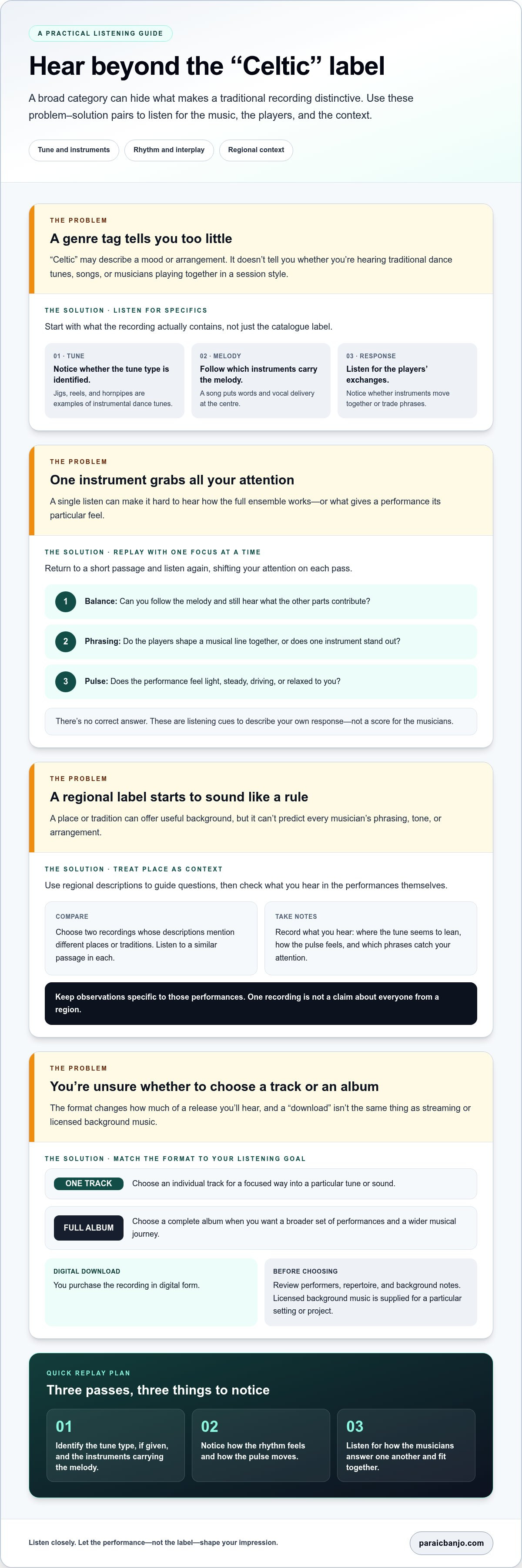
Individual track or full album: which Irish music download fits?
Your listening habits can make the choice clearer. Are you looking for a particular tune to return to, or do you want to hear a release from start to finish? Think about whether you’re exploring one sound or getting to know an artist’s wider musical perspective. This comparison shows what each purchase suits, so you can choose with your own listening in mind.
When individual tracks are the right fit
An individual track suits a focused choice. Perhaps a tune’s shape, an instrument’s tone, or a performance you’ve heard has sparked your interest. Páraic Banjo offers individual digital tracks, so you can select a particular piece rather than commit to exploring a whole release at once.
Before choosing, consider what you want that selection to do for you. If you’re drawn to one specific performance, a single track may be all you need. If you’re trying to understand an artist’s range or the relationship between pieces, one selection may leave useful context unexplored. Let your reason for listening guide your decision.
When a complete album makes more sense
A digital album makes sense if you enjoy following a release as a whole. Moving through its sequence gives you a chance to notice contrasts between pieces, shifts in energy, and connections that may not be apparent from a standalone selection. It’s also a way to settle into an artist’s musical world without deciding in advance which tunes will appeal most.
Not Before Time - 39 Years in the Making is available as a digital album. Its detailed liner notes offer background for listeners who want to explore the music’s context as they listen. If you’re weighing digital listening against adding a physical CD to your collection, the traditional Irish session music CD guide can help you think through that preference. The story behind Not Before Time offers more about the release.
Choose the format that fits how you want to spend time with the music. Explore the digital album and individual tracks and find the listening experience that feels right.
A practical checklist before choosing an Irish music download
A little thought before you buy can help you choose music you’ll enjoy returning to. Rather than relying on a broad genre label, identify how you want to listen, review the release details, choose an individual track or full album, then complete your purchase.
Match the recording to your listening plans
Start with the experience you’re after. Do you want one performance to focus on, the lively feel of musicians playing together, or a recording with regional context to explore? Think about the instruments and style of playing that appeal to you, too. A broad description such as “Celtic” may not tell you whether a release centres on traditional tunes, songs, or a particular ensemble.
Next, read the release description. Look for performer names, the repertoire, and available background notes. Those details help you decide whether the recording suits your listening plans, especially if you’re choosing between an individual track and a complete release. Ask yourself: What do I want to hear, and does the description point to that?
Understand what the release includes
Check the purchase option carefully. An individual digital track gives you a focused selection; a digital album is the complete release. If liner notes are available, use them to learn more about the performers and the music’s background. That context can add meaning to a tune without dictating how you should hear it.
For an irish traditional music download, base your decision on the music and release details. Choose a track if one performance is what you’re looking for, or the album if you want to hear the wider sequence.
Identify your listening preference. Decide whether you want a focused performance, ensemble energy, or regional musical context.
Review the recording description. Look for performers, repertoire, and available background notes.
Choose the purchase option. Select an individual track or the complete digital album to suit your goal.
Complete the purchase. Digital access is available immediately after a completed digital transaction.
This checklist keeps the choice practical: decide what you want to hear, read the release details, select a track or album, and purchase the option that fits. Then give the music your attention. Follow a melody, notice the players’ timing, or read the notes alongside your listening. A good recording can offer more each time you return to it.
Ready to put the checklist into practice? Explore Páraic Mac Donnchadha’s digital music and choose the release option that fits how you want to listen.
Discover Páraic Mac Donnchadha's Irish traditional music download
Once you know what you value in a recording, bring those listening questions to a specific artist’s work. Páraic Mac Donnchadha’s Not Before Time - 39 Years in the Making offers a place to begin. The release invites you to listen with curiosity rather than rely on a broad genre label.
An 18-track album shaped by collaboration
Approach the music with your own listening goals in mind. Choose one instrument or musical phrase to follow, then listen again with attention on a different part. Notice what draws you back: a particular moment, the way the tune moves, or details you hear on a second pass. You don’t need to know every tune beforehand. Let your first impressions guide you, then use the listening cues in this guide to explore further.
Choose the album or explore individual tracks
Give the release a listen and see what holds your attention. To explore Páraic Mac Donnchadha’s music, explore Not Before Time and choose your download. Start where your interest leads, take your time, and let the music reward another listen.
Let the next tune find you
The best irish traditional music download is one that makes you want to listen again. Give a recording your attention: follow a tune’s phrasing, notice how the musicians respond to each other, and let the music’s story unfold at its own pace. You don’t need to know every regional detail before you begin. Curiosity is enough. Each listen can bring a different instrument, rhythmic turn, or musical conversation into focus.
Choose the listening experience that feels right, whether that means settling in with a complete album or starting with a track that catches your ear. Then make room for the music and see where it leads. Explore Páraic Mac Donnchadha’s digital album and tracks, and find a recording to return to.
Frequently Asked Questions
Is Irish traditional music always recorded live?
No. Irish traditional music describes a musical tradition, not a recording method. Musicians may perform together or record in other ways, including arranged studio sessions. Also, “live recording” doesn’t necessarily mean an audience was present; it can describe musicians performing together. If that distinction matters to you, look for recording details in the release description. Not Before Time is identified as a live ensemble recording.
What is the difference between a reel and a jig?
Reels and jigs have different rhythmic groupings: a reel generally has an even pulse, while a jig is commonly felt in groups of three. You don’t need to name the tune type to enjoy it. Try tapping along and notice where the pulse seems to fall. This simple listening exercise can help you discover whether you’re drawn to a reel’s steady drive or a jig’s lilting feel.
Can I download individual Irish traditional music tracks instead of an album?
Yes. Páraic Banjo offers individual digital tracks as well as the complete Not Before Time - 39 Years in the Making album. A single track suits you if one performance has caught your attention. Before choosing, consider whether you want that selection on its own or would enjoy hearing it alongside the other performances. That can help you decide how much musical context you want.
How can I tell whether an Irish music recording is traditional or Celtic-style background music?
Look for specifics in the release description rather than relying on a broad “Celtic” label. Named performers, tune titles, instruments, and notes about the music’s roots give you useful clues. Then listen for how the melody and accompaniment work together. For an irish traditional music download, details about the players and repertoire can help you understand what you’re hearing and whether it fits your interests.
What does a session recording sound like?
There isn’t one fixed session sound. Listen for how the musicians keep the tune moving together, and notice whether parts enter, recede, or answer one another. You might hear a melody continue while another instrument adds rhythmic support, then catch a small change in emphasis as the tune unfolds. The instruments and performance approach shape each recording, so focus on the way this particular group plays together.
Are liner notes useful when downloading traditional Irish music?
Yes, especially if you want to connect what you hear with the people and traditions behind a release. Try reading the notes after your first listen. With the melodies and performances in mind, the background is easier to follow. The liner notes for Not Before Time include historical context connected to East Galway and Clare, offering another way to explore the music beyond the sound itself.