New Traditional Irish Music Albums: The Best Releases for Collectors in 2026
- Paraic Mac Donnchadha

- 4 days ago
- 13 min read
The most "modern" album in your collection shouldn't actually sound new at all. If you're hunting for the latest irish tenor banjo album to grace your speakers in 2026, you've likely noticed a trend toward over-produced, shiny sounds that lose the heartbeat of the kitchen session. It's a common ache for purists; you want the authentic lift of a tune, but you're often met with commercial fluff that lacks regional soul. We all know that feeling of searching for a specific East Galway lilt only to find something that sounds like it was made in a laboratory rather than a pub in Tulla.
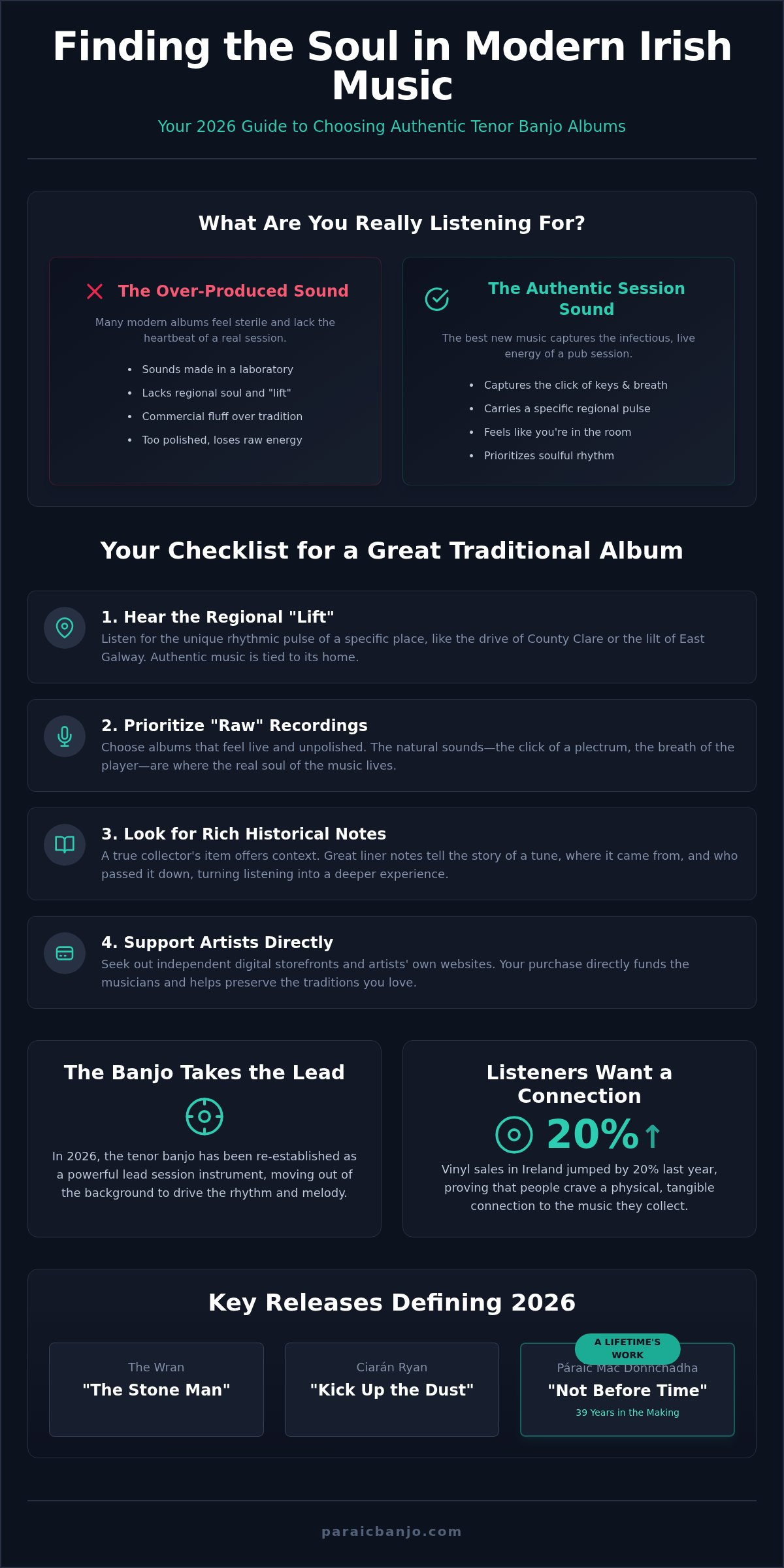
This article promises to cut through the noise. You'll discover how to spot the gems that will define future sessions and learn why the most valuable additions to your library often come directly from the artists themselves. We're diving into the standout releases of 2026, including The Wran's "The Stone Man" and Ciarán Ryan's "Kick Up the Dust." We'll also look at why certain legacy recordings, like my own 39-year milestone "Not Before Time," remain essential for collectors who value deep cultural roots and extensive historical notes. It's time to find music that breathes with the weight of tradition.
Table of Contents
The State of Traditional Irish Music Albums in 2026
The landscape of Irish music has shifted beautifully this year. We've moved past the era of over-produced studio tracks that sound like they were made in a sterile room. In 2026, the focus has returned to the solo instrumentalist. People are craving the "raw" sound. They want to hear the click of the keys, the breath of the player, and the genuine pulse of the rhythm. This shift has made finding the latest irish tenor banjo album an exciting journey into local pubs and independent digital storefronts rather than corporate streaming platforms. Artists are reclaiming their work, bypassing major labels to speak directly to the community of listeners who value substance over shine.
Independent digital storefronts have changed the game for collectors. Instead of hoping a major label picks up a traditional artist, you can now support musicians directly. This ensures that the funds go back into the tradition, helping to preserve the very styles we love. When you buy a digital album or a physical CD from an artist's own site, you're often getting bonus materials like extensive liner notes that you simply won't find on mainstream platforms. Last year, vinyl sales in Ireland jumped by 20 percent, proving that listeners still value a physical connection to the music. It's a clear sign that the community wants something they can hold and study.
This desire for a tangible, authentic connection extends beyond the ears to all the senses; for those who appreciate cultural roots in their daily lives, you might discover Concolon Panamanian Street Food Restaurant and its traditional approach to Panamanian street food.
The Shift Toward Authentic Session Sounds
Listeners are voting with their ears. There is a massive trend toward recordings that feel like you've just sat down in a corner of a snug in County Clare. A modern classic now relies on soulful rhythm rather than technical perfection. We call this a "session-ready" album. It's essentially a blueprint for learners, capturing the tunes at a tempo and with an energy that you can actually play along with at home. If you're looking to build a collection, prioritize these live-feeling recordings. They carry the weight of the history of Irish traditional music without the glossy filters. Look for albums that mention being recorded "live in studio" to ensure you're getting that authentic lift.
Why 2026 is a Landmark Year for the Banjo
It's a great time to be a banjo player. The tenor banjo has firmly re-established itself as a lead session instrument, moving away from the background. We are seeing a wave of debut releases that carry the influence of the masters who spent decades honing their craft before ever stepping into a studio. Finding the latest irish tenor banjo album that respects these roots is easier now that artists are recording their own legacies. This connection to the past is vital. Understanding the nuance between a driving Clare reel and a steady Galway hornpipe is part of the joy. For a deeper look at these stylistic differences, check out this East Galway vs Clare music guide. My own project, "Not Before Time - 39 Years in the Making," was born from this exact desire to document a lifetime of session playing. You can explore these regional sounds by picking up the album as a physical CD or digital download today.
What to Look for in a New Traditional Album
Finding a gem in today's digital sea of "Celtic" playlists requires a discerning ear. When you're hunting for the latest irish tenor banjo album to add to your collection, look for regional roots first. Is the music tied to a specific lineage, like the rhythmic soul of East Galway or the driving lift of Clare? Authentic releases aren't just a list of tunes. They are a continuation of a living story. You want to hear the "breath" of the performance, which means choosing recordings that haven't been scrubbed clean of natural sounds. High-quality audio should preserve the click of the plectrum and the resonance of the room.
Instrumentation balance is another critical factor. A great banjo album shouldn't be a wall of noise. It needs sensitive accompaniment that supports the rhythm without burying the lead. Whether it's a subtle guitar or a steady piano, the backing should serve the tune's inherent pulse. If you're browsing for the latest irish tenor banjo album, check if the artist lists their influences or specific tune sources. This transparency is a hallmark of a player who respects the tradition and wants to share its depth with you.
The Power of Extensive Liner Notes
A true collector's item provides more than just audio; it offers historical context. Knowing the story of a tune, where it was learned and who passed it down, transforms the listening experience. It turns a simple melody into a piece of cultural history. I always suggest cross-referencing your favorite tracks with the Irish Traditional Music Archive to see how the tunes have evolved over time. This helps you connect with the generations of players who came before us.
Actionable Tip: When buying digital downloads, always check if they include PDF liner notes. These digital booklets are essential for learning the lore and historical background of the music.
Solo Mastery vs. Group Arrangements
Solo instrumental albums are the ultimate reference for any student of the music. They allow you to hear every ornament, those quick decorative notes, and rhythmic nuance clearly. While group arrangements are fantastic for energy, a solo recording captures the pure essence of a player's style. The banjo is particularly well-suited to this format because its crisp attack provides a clear roadmap for anyone trying to master the "lift" of a reel or jig. Solo albums aren't just for listening; they are tools for education and preservation.
Supporting independent musicians directly ensures that this craft continues to thrive. When you buy from an artist's own storefront, you're investing in their lifetime of dedication. My debut project, Not Before Time - 39 Years in the Making, was built on this philosophy. It features 18 tracks recorded live with expert collaborators to capture that elusive session spark. It's a definitive statement meant for those who value the deep, soulful roots of the tradition over commercial polish.
Regional Styles: The Pulse of Modern Releases
Regional styles are the heartbeat of the tradition. When you pick up the latest irish tenor banjo album, you're often holding a specific regional legacy in your hands. It's not just about the tunes; it's about the accent. Just as a Dubliner sounds different from a Kerryman, a Galway reel carries a distinct weight compared to one from Clare. In 2026, we're seeing a beautiful trend where artists are no longer trying to sound like everyone else. They are leaning back into the specific lilts of their home turf. It's a joy to hear this renewed pride in local identity.
The tenor banjo is the perfect vehicle for these regional variations. Its sharp, percussive nature can either sit back in a steady groove or drive a set forward with exuberant energy. Many of the most exciting 2026 releases are finding a middle ground, blending these regional flavors to create something fresh yet deeply rooted. This isn't about making "fusion" music. It's about understanding the language of the West and speaking it with your own voice. It takes decades to get this right, which is why the most anticipated albums often come from players who have spent a lifetime in the session trenches.
The East Galway Rhythmic Mastery
East Galway music is often described as steady, rhythmic, and deeply soulful. It isn't about breakneck speed. Instead, it relies on a specific type of ornamentation and a relaxed pace that allows the tune to breathe. Purists love this style for its "unsung" complexity. It's actually harder to play slowly and keep the soul intact than it is to play fast and hide behind the noise. If you want to understand the nuance, check out this guide on East Galway vs Clare music. It breaks down why that steady pulse is so addictive for players and listeners alike.
Capturing the Live Session Energy
Recording "live" in a studio is a massive technical challenge. You have to balance the crisp attack of the banjo with the warmth of the other instruments while keeping the spark alive. The essence of this music is the interaction between players. It's that momentary glance or a slight change in rhythm that happens when two musicians are truly in sync. This is what I aimed for with "Not Before Time," ensuring every track felt like a living, breathing session rather than a stale studio construction.
Actionable Tip: When you listen to the latest irish tenor banjo album, don't just focus on how fast the reels are moving. Listen for the "pulse"-the underlying heartbeat that makes you want to tap your foot. If you find yourself nodding along without thinking about it, the artist has captured the real soul of the music.
How to Build Your Modern Traditional Music Library
Curating a library of traditional music is a bit like gathering stories around a fireplace. It isn't just about clicking "add to playlist" on a generic streaming app. To build something meaningful, you need to be intentional. Start by identifying the regional styles that truly move you. Whether you're drawn to the steady pulse of East Galway or the driving lift of Clare, knowing your preference helps you filter the noise. When you're searching for the latest irish tenor banjo album, don't just look for what's popular; look for what's authentic to those roots.
Once you've found an artist whose sound resonates, seek out their independent releases. Most traditional musicians now host their own digital storefronts or sell through niche folk retailers. This direct connection is vital. It allows you to read reviews and liner notes that explain the musical lineage of the tunes. Engaging with the artist, perhaps by following their social updates or attending a workshop, turns a simple purchase into a deeper understanding of the craft. It's about being a participant in the tradition, not just a consumer.
Physical CDs vs. Digital Downloads in 2026
There is a massive resurgence in physical media right now. In 2025, CD sales in Ireland climbed by 4.5 percent, and vinyl grew by 20 percent. Collectors are realizing that a physical disc offers a tangible connection to the music that a digital file can't match. Having a traditional irish session music cd on your shelf means you have the full artwork and historical notes at your fingertips. However, high-quality digital downloads are perfect for mobile listening. Just ensure you're downloading lossless formats like FLAC or WAV to preserve the full resonance of the instruments.
Supporting Independent Irish Artists
Buying direct from the artist is the most effective way to ensure traditional music continues to thrive. Independent releases often carry a "raw" and authentic energy because the musician has total creative control. They aren't trying to please a corporate board; they're trying to honor the tunes. This results in recordings that feel much closer to a real session spark. If you want to stay ahead of the curve, sign up for artist newsletters. You'll often find limited-edition releases or early-access tracks that never make it to the big streaming platforms.
Building a library is a lifelong journey. You can start your collection today by picking up Not Before Time - 39 Years in the Making directly from my store. It's a project that was nearly four decades in development, designed specifically for those who want a definitive statement of the banjo tradition in their own library. Every track is a live collaboration, capturing the infectious enthusiasm that defines our musical community. Grab your copy and join the journey.
Not Before Time: A Definitive Statement for Your Collection
Some projects are born from a few weeks in a studio, while others carry the weight of a lifetime. When you search for the latest irish tenor banjo album to add to your library in 2026, you're often looking for something that captures the current spirit of the music. "Not Before Time - 39 Years in the Making" does exactly that, but with a depth that only decades of session playing can provide. This isn't just a debut; it's a legacy project that documents nearly 40 years of dedication to the craft. For any serious traditionalist, it's a must-have piece of cultural history that stands out in a sea of more commercial releases.
The album features 18 tracks that move seamlessly between rhythmic reels and soulful jigs. It's a definitive statement of what the banjo can achieve when played with respect for the past and an eye on the future. In an era where music is often consumed in short, digital bursts, this collection invites you to sit back and experience the full narrative of the tradition. It's the kind of recording that reveals something new every time you listen, whether it's a subtle variation in a triplet or the infectious lift of a well-timed change. This project is a cornerstone for any 2026 collection.
A Masterclass in East Galway Banjo
This album serves as a masterclass in the East Galway style, focusing on that steady, rhythmic pulse we've explored throughout this guide. The tracks aren't just solo performances; they are vibrant collaborations. I worked with expert musicians who understand the nuance of the "unsung" complexity that defines our regional sound. Together, we captured the raw energy of a live session, ensuring that every note feels like it's happening right in your living room. You can explore the full story of these collaborations and the tunes themselves in this detailed look at Not Before Time - 39 Years in the Making. It's a project that celebrates the community as much as the instrument.
Where to Buy and How to Listen
Supporting the tradition means getting the music directly from the source. You can order the limited-edition physical CD, which comes with a beautiful layout and extensive historical context. If you prefer a digital library, the full album and individual tracks are available for high-quality download. This ensures you're getting the best possible audio quality to hear the "breath" of the performance. Whether you're a student looking for a reference or a collector seeking a classic, this project is built for you.
Actionable Tip: Once you have the album, take the time to read the liner notes. They contain the stories behind all 18 tracks, including where the tunes were learned and the players who passed them down. Knowing these stories will completely change how you hear the music.
Building a collection is about more than just owning the latest irish tenor banjo album. It's about preserving the soul of the West. Grab your copy today and let's keep the session going.
Bring the Session Home with Authentic Regional Sounds
We've explored how the 2026 traditional scene is returning to its roots. You now know that the best collections prioritize regional accents and the raw, unpolished energy of a real session. Whether it's the steady pulse of Galway or the driving lift of Clare, these sounds are the true heartbeat of our tradition. Finding the latest irish tenor banjo album is about more than just checking a release date. It's about finding a project that honors the generations of players who came before us.
It's time to start your own journey and bring that infectious energy into your home. You can get your copy of 'Not Before Time' - the definitive East Galway banjo album right now. This project features 18 tracks of pure traditional energy, captured live to preserve that elusive session spark. It is available as a limited-edition physical CD with 39 years of history or as a direct-from-artist digital download. Supporting musicians directly ensures this craft thrives for decades to come. Let the music breathe and keep the tunes going.
Frequently Asked Questions
What are the best new traditional Irish music albums to buy in 2026?
The top releases for 2026 include The Wran's "The Stone Man," which arrived in October, and the Shane MacGowan tribute "20th Century Paddy" released in November. For those hunting for the latest irish tenor banjo album, Ciarán Ryan's "Kick Up the Dust" is a standout digital release from earlier this year. Don't overlook legacy debuts like "Not Before Time" either; they offer a depth of regional style that newer, faster productions often miss.
Is it better to buy a physical CD or a digital download for traditional music?
It's often a matter of personal taste, but physical CDs are seeing a real comeback with a 4.5 percent sales increase recently. Collectors love the tangible connection and the full-sized artwork that comes with a physical copy. Digital downloads are perfect for listening on the move, especially if you get high-quality tracks. My advice is to buy the physical CD for your home library and use the digital version for your mobile devices.
What makes an Irish music album 'authentic' for purists?
Authenticity comes down to the "lift" and the regional "accent" of the playing. Purists look for recordings that feel like a live session, complete with the natural sounds of the room and the instruments. If an album sounds too polished or artificial, it usually lacks the soulful rhythm found in traditional communities. Look for artists who credit their sources and honor the specific styles of places like East Galway or Clare.
Where can I find independent traditional Irish music releases?
You'll find the best independent releases directly on artist websites or through specialized traditional music shops. Steer clear of major streaming platforms if you want to find the real gems that define the tradition. Sites like Bandcamp are excellent for discovering digital-only tracks from younger players. Tip: Follow your favorite musicians on social media to get notified about limited-edition physical copies before they sell out at local sessions.
Why are liner notes important for traditional music collectors?
Liner notes are the historical map of the music, telling you where a tune came from and who passed it down. For a collector, these notes turn a simple melody into a piece of living history that connects generations. They often include technical details about the instruments or the specific settings used during the recording. Always check if a digital album includes a PDF booklet so you don't miss out on these vital stories.
What is the difference between East Galway and Clare music styles?
East Galway music is known for being steady, rhythmic, and deeply soulful, while the Clare style is celebrated for its driving "lift" and energy. Think of Galway music as having a relaxed, thoughtful pace that lets the melody breathe. Clare music often feels more exuberant, like it's pushing you toward the dance floor. Both are essential, but most listeners eventually find themselves leaning toward one regional pulse over the other as they listen.
How can I support independent Irish musicians directly?
The best way to support musicians is to buy their work directly from their own digital storefronts. This ensures that the majority of your purchase price goes toward preserving the tradition rather than being swallowed by corporate fees. You can also support them by attending live sessions and buying physical CDs at the venue. Every direct purchase helps an artist fund their next project and keep the music alive for the next generation of players.
Are there any new banjo-focused albums for 2026?
Yes, 2026 is a strong year for the instrument, highlighted by Ciarán Ryan's "Kick Up the Dust." If you're building a library, the latest irish tenor banjo album on your list should be balanced with definitive regional works. My own album, "Not Before Time," features 18 tracks of pure banjo mastery recorded live. It remains a primary reference for anyone wanting to hear the authentic, rhythmic soul of the East Galway banjo tradition today.


Comments