Soulful Irish Instrumental Music: Finding the Heartbeat of Tradition
- Paraic Mac Donnchadha

- Jul 30
- 13 min read
Updated: 4 days ago
Real soul in Irish music isn't found in how slow you can play a lament; it lives in the "nyah" and the rhythmic pulse of a player’s personal style. You've likely felt the frustration of searching for something deep only to find thin, synthesized "Celtic" tracks that sound like they were made by a machine. It's difficult to feel a connection when the music lacks a heartbeat. This guide will help you look past that generic background noise to discover the deep, rhythmic roots of authentic soulful irish instrumental music.
We'll dive into how regional traditions, specifically the flowing styles of East Galway and Clare, create a unique emotional power that transcends simple commercialism. You'll learn to identify genuine recordings that capture the energy of a live session. Whether you're a long-time listener or a newcomer, we'll show you how to build a collection of music that carries the weight of a lifetime's passion, much like the 39-year journey behind my own debut album. Let's find the music that actually speaks to you.
Table of Contents
What Defines Soulful Irish Instrumental Music?
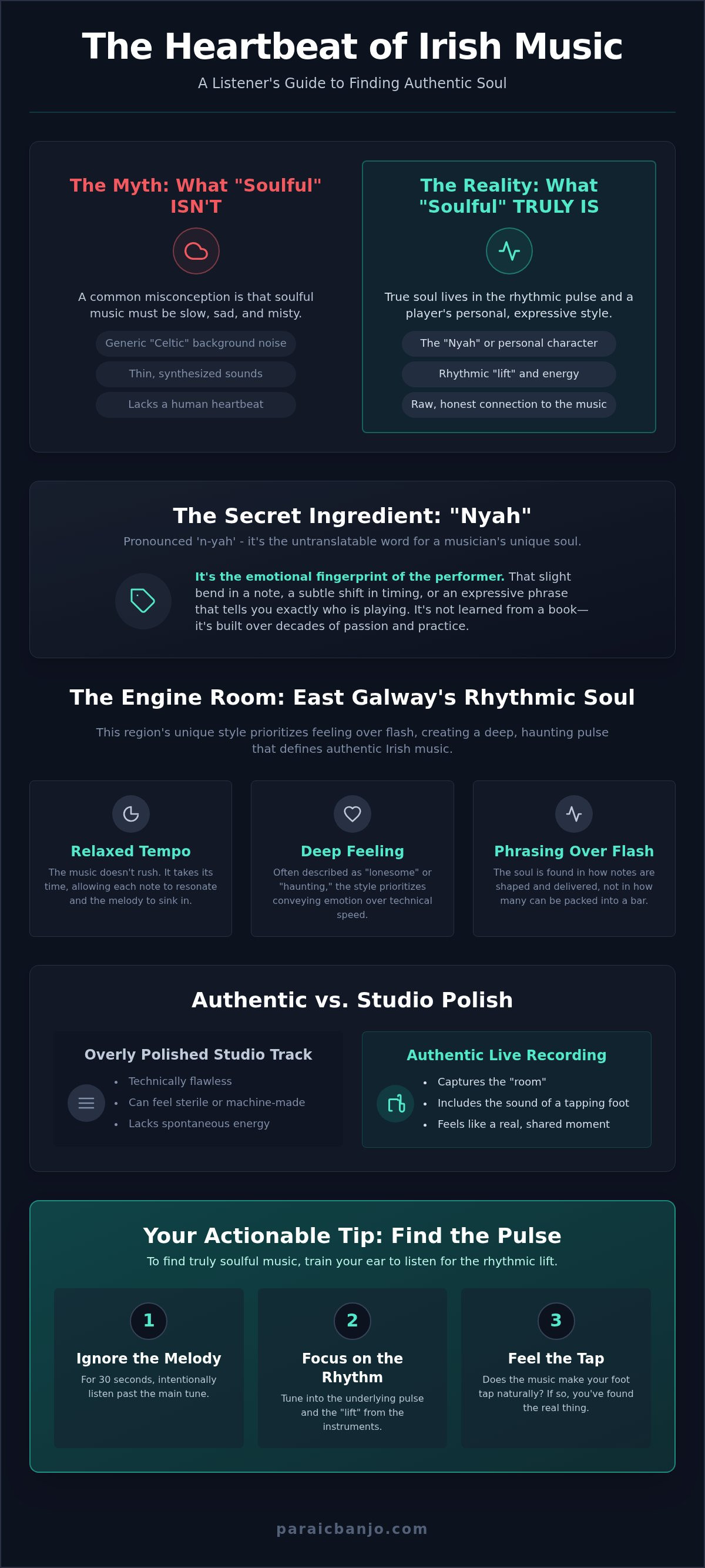
Soul is often mistaken for sadness. In many commercial circles, people think that for a track to be soulful, it must be slow, atmospheric, and perhaps a bit misty. That's a myth. In the world of authentic Irish traditional music, soul is found in the rhythmic "lift" and the personal character a musician brings to the tune. It's the difference between a generic background track and a recording that makes you want to lean in closer. Soulful irish instrumental music is defined by its heartbeat.
Even a fast-paced reel can carry immense emotional weight when the player understands the pulse. This isn't about studio polish or perfect production. It's about the raw, honest connection between the artist and the instrument. When you hear a track from my debut, Not Before Time – 39 Years in the Making (Digital Album), you aren't just hearing notes; you're hearing nearly four decades of life distilled into sound. The music breathes because it was recorded live, capturing the spontaneous energy that defines our tradition.
The "Nyah": The Secret Ingredient of Irish Music
If you ask a traditional musician what makes a performance great, they might mention the "nyah." It's a word that’s hard to translate, but you know it when you hear it. It describes the expressive, soulful quality in a musician’s phrasing. It's that slight bend in a note or a subtle shift in timing that tells you exactly who is playing. This sound isn't learned from a book. It’s built over decades of sessions, late nights, and a deep love for the craft. The nyah is the emotional fingerprint of the performer. If you're looking for this authentic feeling, check out the Individual Digital Tracks available from my latest collection to hear how each tune carries its own unique spirit.
Why Instrument Choice Matters for the Soul
Every instrument brings its own flavor to the tradition, but the tenor banjo has a specific kind of resonance. It’s a percussive instrument at its core. When played with a steady, relaxed pace, it creates a "heartbeat" effect that grounds the entire session. This rhythmic foundation allows other instruments, like the fiddle or the flute, to soar as soulful counterparts. The interplay between these sounds creates layers of emotional depth that you just won't find in synthesized music. You can experience this live session energy for yourself with the Not Before Time – 39 Years in the Making (Physical CD), which captures the authentic sound of musicians playing together in a real room.
Actionable Tip: To truly appreciate the soul in a track, try this: ignore the main melody for thirty seconds and focus entirely on the rhythmic "lift." If the music makes your foot tap naturally without being forced, you've found the real thing.
Rhythmic Soul: The East Galway and Clare Traditions
The West of Ireland isn't just a place on a map; it's the spiritual engine room for traditional music. If you've ever felt that certain tracks have a deeper gravity, you're likely hearing the influence of the East Galway or Clare traditions. Unlike generic commercial "Celtic" playlists, these regional styles have distinct rhythmic identities that purists look for when seeking soulful irish instrumental music. It’s about the geography of the sound. Every parish has its own lilt, and understanding these differences is how you move from being a casual listener to a true enthusiast.
The East Galway Pulse: Steady and Deep
In East Galway, the music doesn't rush. It takes its time. The style is defined by a relaxed tempo that allows the melody to really sink in. Musicians often describe this sound as "lonesome" or "haunting," even when the tune is in a major key. It’s a style that prioritizes feeling and phrasing over flashy speed. My own playing is deeply rooted in this heritage. Having spent 39 years honing this specific pulse, I can tell you that the soul of a tune isn't found in how many notes you can cram into a bar, but in how you let the ones you play resonate. This patience creates a depth of emotion that feels ancient and grounded.
Session Dynamics: The Soul of the Collective
Traditional music is rarely a solitary pursuit. The real magic happens in a session when a group of musicians "locks in." They find a shared rhythmic soul that isn't dictated by a conductor but by mutual listening and respect. This collective energy is what gives various instrumental music types their distinct "lift." When players are in sync, the music becomes more than the sum of its parts. It becomes a conversation. If you want to hear this in its purest form, you need recordings that capture the unpolished, breathing reality of a room full of players.
Actionable Tip: When building your library, look for albums recorded "live in studio" or in actual pubs. Heavily layered tracks often lose the micro-adjustments in timing that happen when musicians react to each other in real time. For a genuine taste of this session energy, you might enjoy exploring the Individual Digital Tracks from my debut album, where every note was captured live with expert collaborators.
The Clare style offers a beautiful contrast to its Galway neighbor. It’s known for a driving energy and a rhythmic "lift" that feels like a coiled spring. It’s infectious. It demands a physical reaction. When these two traditions meet, as they do in many of the sets on Not Before Time – 39 Years in the Making (Digital Album), the result is a balanced, powerful sound. It’s the antidote to the sterile, synthesized tracks that dominate the background music market. You aren't just listening to a melody; you're feeling the heartbeat of a community that has kept this music alive for centuries.
Authentic Recordings vs. Studio Polish
If you’ve ever walked into a pub in Feakle or Galway, you know the sound isn't perfect. There’s the clink of a glass, the low hum of a conversation, and the steady, rhythmic thump of a musician’s boot on the floorboards. In the world of soulful irish instrumental music, these aren't distractions. They are the heartbeat of the performance. Many commercial studio albums try to scrub these sounds away, creating a "sterile" environment that feels more like a waiting room than a living tradition. Cleaner isn't always better.
When you listen to Authentic Recordings, you’re hearing a moment in time that can never be replicated. It’s raw. It’s honest. This is why I chose to record my debut, Not Before Time – 39 Years in the Making (Digital Album), live with a group of musicians I’ve known for decades. We didn't want to hide the "dirt" of the session; we wanted to celebrate it. The soul of the music lives in those tiny imperfections and the spontaneous way we react to one another. If you're looking to build a library that feels real, you should prioritize traditional irish session music cds that preserve this unpolished energy.
The Pitfalls of Synthesized "Celtic" Music
It’s easy to get fooled by flashy production. You’ll often find tracks labeled as "soulful" that are drenched in excessive reverb, featuring synthesized harps and repetitive loops. These tracks lack the human "swing," that subtle, rhythmic sway that only comes from a person physically playing an instrument. It feels plastic. To avoid this, take a minute to check the artist's background. Are they rooted in a specific regional tradition? If they don't have a history of playing in sessions, the music likely lacks the depth you’re seeking. Authentic soulful irish instrumental music requires a human touch, not a computer algorithm.
The Value of Liner Notes for the Soulful Listener
A tune is more than just a sequence of notes; it is a memory captured in sound. This is where the story behind the music becomes vital. Knowing that a specific reel was learned from an old neighbor or played at a wedding forty years ago adds a layer of soul that you can't get from a digital file alone. This is why I poured so much effort into the 36-page booklet accompanying the Not Before Time – 39 Years in the Making (Physical CD). Those liner notes act as a bridge, connecting you to the people and places that birthed the music. It turns a simple listening experience into a journey through time.
Actionable Tip: Before you buy a track, check for "live-in-room" credits. If an album was recorded with all the musicians playing together at once, it’s far more likely to have the "nyah" and rhythmic soul we’ve been talking about. You can hear this live energy in every one of the 18 tracks on my latest release.
How to Build Your Soulful Irish Music Library
Building a collection of soulful irish instrumental music is an art in itself. It’s more than just filling a digital folder; it’s about gathering stories, rhythms, and the lived experiences of the players. If you want a library that truly resonates, you have to move beyond the convenience of generic playlists and look for the heart of the tradition. Curation requires a bit of effort, but the payoff is a permanent connection to a living culture.
Follow these practical steps to ensure your library is authentic:
Buy directly from the artist: This ensures you get the highest quality files while supporting the musician's ability to keep playing.
Seek out physical editions: A CD often comes with artwork and liner notes that provide essential context for the tunes.
Prioritize high-resolution audio: Choose FLAC or WAV formats. These preserve the sharp, percussive snap of the tenor banjo and the subtle overtones of the fiddle that MP3s often lose.
Look for seasoned debuts: Some of the most soulful albums come from players who waited decades to record. They’ve distilled a lifetime of sessions into one definitive statement.
Use regional search terms: Instead of searching for "Celtic," try "East Galway" or "Clare." These specific keywords act as a filter, leading you past commercial fluff to the real soulful irish instrumental music that purists value.
Supporting Independent Artists Directly
When you choose to buy traditional irish music from an artist’s own site, you’re helping preserve rare styles. It allows musicians to bypass the tiny streaming payouts that make it hard to sustain a career. For example, the Not Before Time – 39 Years in the Making (Physical CD) includes a 36-page booklet. This isn't just a list of names. It’s a historical guide that explains where each tune came from and why it matters. These physical copies often become cherished collectors’ items because they represent a lifetime of dedication.
What to Look for in a Track List
A great track list should feel like a well-paced session. It needs a balance of reels, jigs, and hornpipes. Reels provide that driving 4/4 energy, while jigs have a rolling 6/8 lift. Hornpipes add a stately, rhythmic bounce. Look for albums that group these into "sets." This is how we play them in a real pub setting. Check the guest list, too. Masters of the tradition often collaborate, so a guest appearance by a respected fiddle player is a great sign of quality. It shows the artist is part of a real musical community.
Ready to start your collection? You can purchase the full Digital Album or Individual Digital Tracks to experience the authentic heartbeat of the tradition right now.
Experience the Soul: "Not Before Time" by Páraic Banjo
After exploring the history and the heartbeat of this tradition, it’s time to hear it in action. My debut album, Not Before Time – 39 Years in the Making (Digital Album), is more than just a collection of tunes. It is a definitive statement of a lifetime spent immersed in the "nyah" and the rhythmic pulse of the West. Across 18 tracks, I’ve worked to capture the exact feeling we’ve discussed: the raw, unpolished, and deeply moving sound of soulful irish instrumental music. This isn't background noise. It’s a front-row seat to a living tradition.
To ensure the soul remained intact, we didn't hide away in a sterile studio booth. We recorded live with a group of expert musicians, capturing the spontaneous energy that only happens when players are truly "locked in." You can hear the resonance of the tenor banjo meeting the lift of the fiddle in real time. It’s the antidote to generic, synthesized tracks. Whether you choose the digital version or the Not Before Time – 39 Years in the Making (Physical CD), you’re getting an authentic slice of the East Galway and Clare traditions.
A Lifetime of Music in One Album
Why did it take 39 years to release a debut? Because this music needs time to settle. It’s about the decades of sessions, the tunes shared across pub tables, and the friendships forged through a shared rhythm. This album represents that long-term development. I was joined by master musicians who understand this pulse as deeply as I do, ensuring every set has the right "swing." If you want the full experience, I highly recommend you buy traditional irish music direct from the artist. Doing so gives you access to the 36-page booklet of liner notes that tell the stories behind the tunes, a feature purists won't want to miss.
Actionable Tip: If you're unsure where to start, listen to the sets that mix reels and jigs. Notice how the rhythmic shift between the 4/4 and 6/8 time signatures creates that soulful "lift" we’ve been talking about. It’s the best way to train your ear for authenticity.
Ready to Start Your Journey?
You don't have to take my word for it. Head over to the shop to listen to track previews and feel the rhythmic soul for yourself. If you aren't ready for the full album, you can always pick up Individual Digital Tracks to sample specific regional styles. Every purchase helps keep this tradition breathing and supports the preservation of these rare regional sounds. This journey has been 39 years in the making, and I’m thrilled to finally invite you into the session. Explore Páraic Banjo’s soulful debut album here. Enjoy the tunes!
Bring the Tradition Home
You’ve seen that the soul of this music doesn’t hide in synthesized effects; it lives in the steady pulse of a well-played reel and the personal "nyah" of the performer. By choosing regional styles like East Galway and prioritizing live recordings, you're doing more than just listening. You're preserving a heartbeat that has survived for generations. Finding authentic soulful irish instrumental music is a rewarding journey that connects you to the very hands and hearts that keep the tradition alive.
My debut project was 39 years in the making, and it’s finally ready for you to explore. With 18 tracks of authentic session music and rich, detailed liner notes to guide you, it’s a definitive statement of a lifetime's passion. It’s time to move beyond the background noise and experience the real thing. Whether you're a lifelong fan or just starting your collection, these tunes are meant to be shared and celebrated.
Order "Not Before Time" – The Soulful Irish Banjo Debut and start building a library that truly resonates. I can't wait for you to hear the energy we captured in these sessions. Enjoy the music!
Frequently Asked Questions
What makes Irish instrumental music sound "soulful"?
It is the "nyah," a term used to describe the expressive feeling and emotional lift a player gives a tune. This quality comes from a musician's personal phrasing rather than just playing the notes on a page. It is built through decades of playing and listening within a specific community. When you hear that subtle bend or rhythmic sway, you are experiencing the heartbeat that defines soulful irish instrumental music.
Is the tenor banjo a traditional Irish instrument?
Yes, the four string tenor banjo has been a staple of the tradition for over a century. While it arrived in Ireland later than the fiddle, it quickly became essential for its percussive "pop" and ability to drive a session's rhythm. In the hands of a master, it transitions from a rhythmic tool to a lyrical voice capable of incredible emotional depth and intricate ornamentation that resonates deeply with listeners.
How is East Galway style different from other Irish music styles?
The East Galway style is famous for its relaxed, steady tempo that allows the melody to breathe. Unlike the faster Sligo style, it prioritizes a "lonesome" or haunting quality that emphasizes phrasing over speed. This slower pace creates a deep, resonant soul that feels grounded and ancient. It is a style that invites the listener to focus on the story each note tells rather than just the tempo.
Why should I buy music directly from the artist instead of just streaming it?
Buying direct ensures the artist receives fair compensation, which is vital for sustaining a career in traditional music. Streaming platforms often pay as little as €0.003 per play, making it difficult for independent musicians to fund future projects. When you purchase an album directly, you also get access to higher quality audio files and exclusive materials, like historical notes, that aren't available on standard streaming services.
What are liner notes and why are they important for traditional music?
Liner notes are the written background materials included with an album that explain the history and origin of each track. In traditional music, these notes are essential because they act as a bridge to the past, telling you who wrote the tune or which neighbor passed it down. They transform a simple track list into a historical document, preserving the lore and lineage of the music for future generations.
Can fast Irish reels still be considered soulful?
Absolutely, because soul is not just about slow tempos; it is about the rhythmic "lift" and pulse of the performance. A fast reel becomes soulful when the musician plays with a swing and feeling that makes the music dance. It is the human connection to the rhythm that creates that emotional weight, proving that soulful irish instrumental music can be as energetic as it is deep and moving.
What is an Irish music "session" and why does it sound different from a studio recording?
A session is an informal gathering where musicians play together in a pub or home, focusing on spontaneous collaboration. It sounds different because it captures the "live" energy of a room, including the tapping of feet and the natural resonance of instruments reacting to each other. Unlike a polished, layered studio recording, a session preserves the raw, unedited heartbeat that makes the tradition feel alive and breathing in the moment.
Is "Not Before Time" available as a physical CD or just digital?
Both formats are available to suit your listening preference. You can choose the digital album for immediate high quality downloads or the limited edition physical CD. The physical version is particularly special because it includes a 36 page booklet filled with detailed historical notes and personal stories. It is a definitive statement of a 39 year journey, designed to be a permanent and cherished part of your musical collection.


Comments