The Beginner’s Listening Guide to Irish Tenor Banjo: Unlocking the Rhythmic Soul

What if the secret to mastering the Irish tenor banjo isn't found in a fingering chart, but in the way you hear the music? It's easy to feel overwhelmed when you first dive into traditional sessions. The tunes often fly by at a blistering pace, and finding a clear listening guide to irish tenor banjo for beginners can feel like searching for a needle in a haystack. You might find yourself wondering how anyone picks out the melody or understands the difference between a frantic flurry of notes and a truly soulful, rhythmic performance.
We're going to bridge that gap together. You'll discover how to hear the "pulse" that drives a great reel and learn to identify the seasoned masters who defined the instrument's unique voice. We'll explore the grit of the GDAE tuning, the subtle lift of regional styles like East Galway, and build a solid starter list to anchor your musical journey. It's a storied tradition, and you're officially invited to join the conversation. Let's start by training your ears to catch that unmistakable rhythmic growl.
In this guide, you will:
Learn why the GDAE tuning is essential for that authentic Irish "growl" and melody-focused playstyle.
Use this listening guide to irish tenor banjo for beginners to decode the "pulse" and those signature rhythmic triplets.
Explore the soulful, relaxed pace of East Galway to understand how regional styles shape the music.
Build a starter list with masters like Barney McKenna and Kieran Hanrahan to ground your learning.
Learn the unwritten rules of session etiquette; then hear these techniques in action on the album Not Before Time – 39 Years in the Making.
Table of Contents
What is the Irish Tenor Banjo Sound?
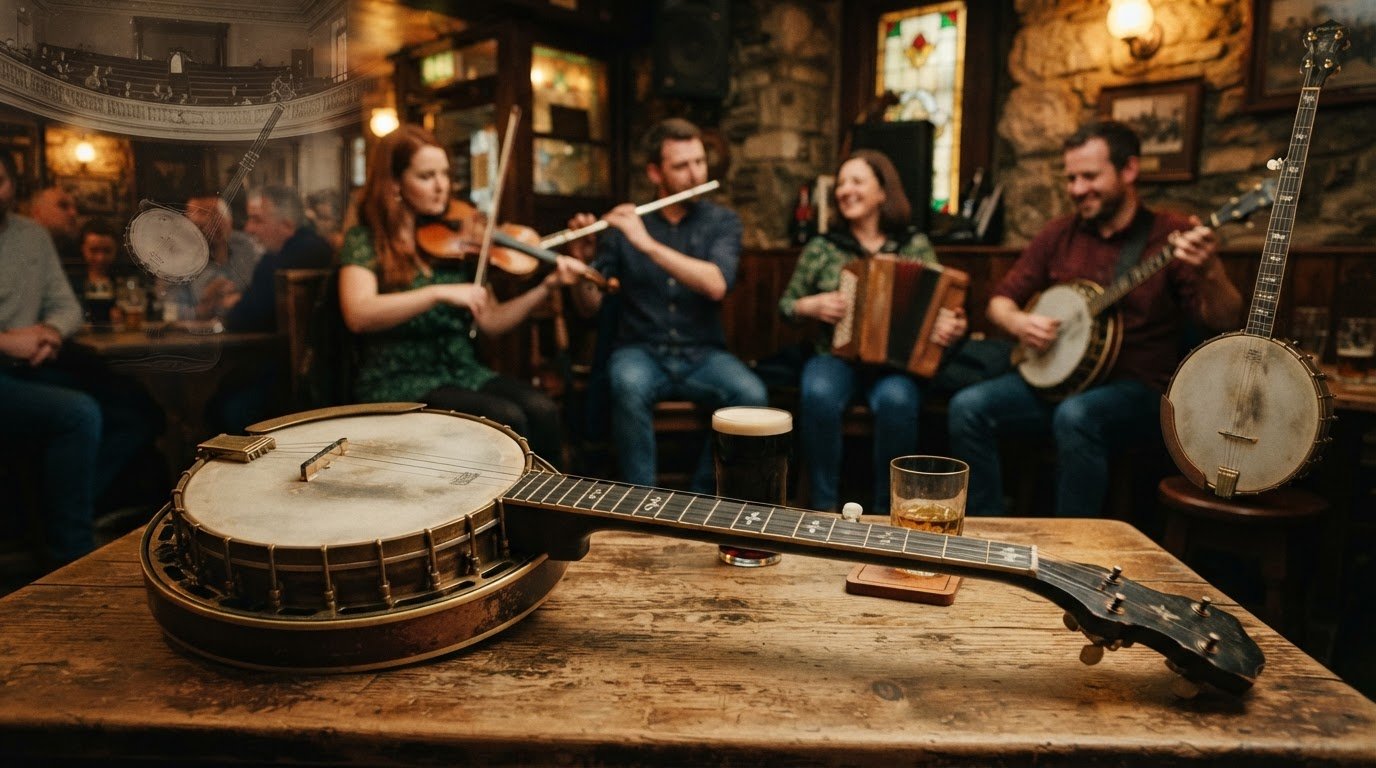
The Irish tenor banjo has a voice that is both punchy and deeply resonant. It's not the high, twangy sound you might associate with a mountain porch in the Appalachians. Instead, the Irish style is defined by a four-string Tenor Banjo tuned specifically to GDAE. This tuning is exactly one octave below a fiddle. It gives the instrument a unique "growl" that cuts through the noise of a crowded pub session. For anyone using this listening guide to irish tenor banjo for beginners, the first thing to realize is that the banjo in Ireland isn't there to just play chords. It's a lead instrument. It's a melodic powerhouse that carries the tune with a grit you won't find anywhere else.
In a traditional session, the banjo serves a rhythmic and soulful role. It's the engine room of the group, providing a percussive drive that makes people want to move. But it's also about the soul. A great player finds the emotion in a slow reel or a bouncy jig by using subtle shifts in volume and timing. It's about the space between the notes as much as the notes themselves. This soulful quality is what separates a mechanical player from a true traditionalist who understands the heart of the music.
Actionable Tip:
Start by listening for the melody; the banjo in Ireland is a storyteller, not just a rhythm-keeper. As you use this
listening guide to irish tenor banjo for beginners
, try to hum the main tune along with the banjo player to see how they navigate the notes.
The Four-String Difference
Why only four strings? In the world of Irish traditional music, we need agility to keep up with fast-paced reels. A shorter neck and four strings allow the player to navigate complex melodies without the extra "drone" string found on five-string banjos. The GDAE tuning provides a rich depth that anchors the higher whistles and fiddles. It acts as the heartbeat of the melody section, providing a percussive drive that keeps the whole group in sync.
Melody vs. Accompaniment
If you listen to American bluegrass, you'll hear "rolls" and finger-picking patterns designed to fill space. Irish players take a different path. We play the tune itself. We use a plectrum, or pick, to strike each individual note. This creates a sharp, crisp attack that defines the genre's energy. The banjo becomes a storyteller, mimicking the ornaments and phrasing of a singer or a piper. If you want to hear this clarity for yourself, you can explore the best traditional Irish session music CDs to see how the banjo holds its own in a full ensemble. It's a vibrant, living sound that has been decades in the making.
The Listener’s Toolkit: What to Hear in a Tune
Most instructional books start by telling you where to put your fingers, but this listening guide to irish tenor banjo for beginners starts with your ears. To truly appreciate this instrument, you need to look past the blur of notes and find the structure underneath. When you listen to a master player, you aren't just hearing a melody. You're hearing a complex layering of rhythm, texture, and subtle changes that keep a simple eight-bar phrase feeling fresh even after five minutes of play. Learning to identify these elements will transform the way you experience a live session or a studio recording.
The beauty of Irish music lies in its repetition. However, that repetition is never static. Great players use variation to keep the listener engaged. They might flip a phrase up an octave, omit a note to create a rhythmic gap, or add a slight delay to a melodic turn. It's a conversational style of playing. If you listen closely to the tracks on Not Before Time – 39 Years in the Making, you can hear how the banjo interacts with the other instruments, shifting its focus to highlight different parts of the tune with every pass.
Actionable Tip:
Close your eyes and try to count the "beats" in the music. If it's a reel, count in 4/4 time (ONE-two-three-four). If it's a jig, try to feel the 6/8 time (ONE-two-three, FOUR-five-six). Being able to identify the time signature by ear is the first step toward feeling the music's natural flow.
Finding the Pulse
In Irish music, we often talk about "the lift." This isn't about how fast a person plays. In fact, playing too fast often kills the lift entirely. The lift is that buoyant, rhythmic energy that makes a tune feel like it's bouncing rather than dragging. It's the internal "pulse" that makes your feet tap without you even thinking about it. For a beginner, focusing on this rhythm is far more important than trying to track every single note. Páraic Mac Donnchadha is known for this specific rhythmic "drive." His playing emphasizes the strong beats, creating a solid foundation that allows the melody to soar without losing its grounding.
Decoding the Triplet
If the pulse is the heart of the tune, the triplet is its pulse. A triplet is a sequence of three quick notes played in the same amount of time it would normally take to play one or two. On the banjo, this is achieved with a rapid down-up-down movement of the pick. It creates a crisp, percussive "pop" that adds incredible texture to a melody. Think of triplets as the seasoning of the banjo sound. They shouldn't be everywhere, but when they appear, they provide a flourish that defines the instrument's character. Listen for that sudden "rattle" in the middle of a phrase; that’s the banjo showing its true teeth.
East Galway vs. Clare: Understanding Regional Flavours
Irish music isn't a single, uniform sound. Just as a person from Cork speaks with a different lilt than someone from Donegal, a banjo player from Clare will have a completely different "accent" than one from East Galway. As you develop your own listening guide to irish tenor banjo for beginners, you'll start to notice these beautiful regional dialects. Recognizing these styles is like learning to see in color after years of black and white. It adds a layer of depth to every tune you hear.
The Clare style is often described as "flowing" or even "lonesome." It has a lyrical quality that feels like a river moving steadily toward the sea. Players from this region tend to use subtle ornamentation, letting the melody speak for itself with a light, airy touch. On the other hand, the East Galway style is famous for its relaxed pace and deep, soulful rhythm. It's music that isn't in a hurry. It has a specific "weight" to it that feels grounded and ancient. To really dive into the technical nuances of these two giants, you can read more about East Galway vs Clare music.
Actionable Tip:
Find a recording of a common reel, like "The Mason's Apron," and listen to it played by a Clare master and then an East Galway master. Pay attention to the speed and where they place the emphasis. You'll quickly start to hear the difference in the musical "accent."
The Soul of East Galway
East Galway music is a world of its own. It's often played slightly slower than the frantic pace you might hear in modern sessions, but don't let that fool you into thinking it's easy. This style requires a massive amount of "weight" and control. The rhythm is deep and driving, influenced by the landscape and the tight-knit communities where these tunes were preserved for generations. It’s a soulful approach that prioritizes the feeling of the tune over flashy speed. It’s about the "nyah"—that indefinable quality of soul and authenticity that sticks in your throat.
Why Style Matters for Beginners
When you're first starting out, the sheer volume of recordings can be paralyzing. Choosing a specific regional style to "follow" helps focus your ears. It gives you a roadmap. Instead of trying to learn everything at once, you can immerse yourself in the relaxed, rhythmic world of the West of Ireland. Páraic’s album is a definitive statement of this passion, preserving these specific traditions that have been 39 years in the making. You can explore this authentic East Galway music style on Páraic’s debut album, where every track is a masterclass in regional character. It’s a direct connection to a storied past, and it’s a perfect place to ground your listening journey. Happy listening!

Building Your Ear: An Essential Listening List
You've decoded the triplets and found the pulse. Now, it's time to fill your ears with the masters who defined the instrument. This list is a vital component of any listening guide to irish tenor banjo for beginners because it connects you to the actual lineage of the music. You aren't just listening to notes; you're hearing decades of dedication and cultural history. By studying these specific players, you'll start to recognize the different ways a plectrum can dance across the strings.
No list is complete without Barney McKenna. As a founding member of The Dubliners, he's the man who made the tenor banjo famous in Ireland. His playing was robust, full of character, and deeply melodic. Then you have Kieran Hanrahan, a master of the rhythmic, driving style that keeps a session moving like a freight train. For a taste of the North Connacht and Galway traditions, John Carty is a key figure whose precision and lift are legendary. Finally, for a modern look at the soulful, rhythmic East Galway style, Páraic Mac Donnchadha carries the torch with a deep respect for the "nyah" or soul of the tune.
Actionable Tip:
Search for "banjo solo" tracks on your favorite streaming platform. Hearing the instrument without the distraction of a full band makes it much easier to identify the subtle ornaments and rhythmic choices that define a player's unique style.
The Golden Era Recordings
The period between the 1920s and the 1960s was a transformative time for the instrument. Archival recordings from this era are like a map for modern players. They capture the raw energy of the revival and show how the instrument transitioned from a rhythmic backing tool to a melodic powerhouse. These early masters set the blueprint for the 4-string tenor as we know it today. Listening to these "lo-fi" tracks helps you focus on the core structure of the tunes before modern production added more polish.
Modern Masters to Follow
Today, the tradition is in safe hands. Modern masters are pushing the boundaries while keeping one foot firmly in the past. One benefit of modern recordings is the production quality. You can actually hear the "click" of the plectrum and the resonance of the banjo's head. This clarity makes it easier for you to "see" the music as you hear it. To support this living tradition and the people who keep it alive, you can Buy traditional Irish music directly from the artists. It’s the best way to ensure these stories keep being told for another 39 years and beyond.
From Listening to Living: Immersing Yourself in the Music
You have built your list, identified the regional accents, and learned to spot a triplet from a mile away. Now comes the most rewarding part of the journey: stepping out of your headphones and into the living tradition. While recordings provide a perfect classroom, the true soul of this instrument is found in the shared air of a room. This listening guide to irish tenor banjo for beginners isn't just about digital tracks; it's about preparing you to experience the music as a living, breathing conversation.
When you sit in a corner of a pub and listen to a session, you are witnessing a communal history being retold in real time. It is a completely different energy than a polished studio album. You’ll hear the grit, the occasional stray string, and the spontaneous laughter that defines the "craic." It is raw and unfiltered. To get the most out of these moments, you have to be more than a passive observer. You have to be an active listener who understands the nuances of the room.
Actionable Tip:
When you buy a physical CD, always take the time to read the liner notes. They are the "map" to the music’s history, often detailing where a tune came from or the specific person who passed it down to the player.
The Magic of the Live Session
Session music is inherently conversational. It isn't a performance for an audience; it’s a dialogue between the musicians themselves. You might notice a fiddle player "answer" a banjo’s rhythmic flourish with a subtle variation of their own. This back-and-forth is the heartbeat of the tradition. If you’re wondering what is session music?, think of it as a gathering of friends where the tunes are the guests of honor. As a listener, the unwritten rule is simple: respect the space. Keep your voice low, don't tap on the tables, and let the music lead the way.
Your First Collection: Not Before Time
If you are looking for the perfect companion to this listening guide to irish tenor banjo for beginners, look no further than Not Before Time – 39 Years in the Making. This isn't just an album; it’s a definitive statement of a lifetime's passion for the East Galway style. Páraic Mac Donnchadha has curated 18 tracks that capture the rhythmic "drive" and soulful "nyah" we’ve discussed. It’s an authentic, grounded resource that feels like being invited into a private session. You can Order the physical CD to get the full historical liner notes, which offer a deep dive into the stories behind every reel and jig. It’s the perfect way to bring the spirit of the West of Ireland into your own home. Enjoy the journey!
Start Your Musical Journey Today
You now have the tools to hear beyond the speed of a session. By understanding the deep GDAE growl and recognizing the rhythmic "lift" that defines the West of Ireland, you've turned noise into a story. This listening guide to irish tenor banjo for beginners is just the first step in a lifelong appreciation for the craft. You're no longer just a listener; you're part of a tradition that celebrates every triplet and soulful turn of a phrase.
If you're ready to put your ears to the test, there's no better way than with an acclaimed debut 39 years in the making. Featuring 18 tracks recorded live with expert musicians, the album includes detailed liner notes celebrating East Galway heritage. It's a definitive statement of passion that brings the pub session right to your living room. Experience the rhythmic soul of the banjo; get "Not Before Time" on CD or Digital. Keep your ears open and your feet tapping. Happy listening!
Frequently Asked Questions
Is the Irish tenor banjo different from the one used in Bluegrass?
Yes, the Irish tenor banjo is a completely different beast than the five-string model used in Bluegrass. It features only four strings and a shorter neck, which makes it much easier to navigate fast-paced melodies. While Bluegrass players use finger-picks to roll through chords, Irish players use a single flat plectrum to strike every individual note of the tune. It's a percussive, melody-driven approach that defines our tradition.
What tuning is used for the Irish tenor banjo?
The standard tuning for an Irish tenor banjo is GDAE, which is exactly one octave below a fiddle or a mandolin. This specific setup is what gives the instrument its signature "growl" and allows it to sit perfectly within the melody section of a pub session. It’s a crucial detail to remember when using this listening guide to irish tenor banjo for beginners to identify the instrument's deep, resonant voice in a crowded room.
Can I learn to play by just listening?
Listening is the most important foundation you can build, though you'll eventually need to pick up the instrument to master the physical side. In the Irish tradition, we call this "learning by ear." It means internalizing the tune and the rhythm before you ever try to find the notes on the fretboard. If you can hum the melody and feel the pulse, you’re already halfway to becoming a player. Listening teaches the soul of the music.
Why is it called "tenor" banjo if it plays the melody?
The name "tenor" is actually a historical leftover from the instrument's roots in early 20th-century jazz and dance bands. Back then, it played a rhythmic, chordal role in the tenor range of the orchestra. When it arrived in Ireland, musicians realized its potential as a powerful lead instrument for traditional tunes. We kept the name, but we completely reinvented how it’s used, turning it into a storyteller that carries the heart of the melody.
How can I tell a reel from a jig when listening?
You can tell them apart by counting the beats and feeling the "swing" of the music. A reel is in 4/4 time and feels like a steady, driving walk: ONE-two-three-four. A jig is in 6/8 time and has a much bouncier, "rashers and sausages" feel: ONE-two-three, FOUR-five-six. If the rhythm makes you want to skip rather than march, you're almost certainly listening to a jig. Pay attention to that internal triplet pulse.
Where can I find the best traditional Irish banjo recordings?
You should seek out recordings that prioritize the rhythmic "lift" and authentic soul of the instrument. Masters like Barney McKenna and Kieran Hanrahan are the perfect place to start. For those who want a modern look at the East Galway style, the album Not Before Time – 39 Years in the Making offers 18 tracks that capture the true session spirit. It’s an essential resource for anyone following a listening guide to irish tenor banjo for beginners.
Comments