The Best Background Music for an Irish Dinner Party: An Authentic Guide
- Paraic Mac Donnchadha

- Jun 19
- 13 min read
Updated: Jul 6
What if the most common choice for an Irish gathering is actually the one thing that kills your dinner party conversation? Most hosts instinctively reach for rowdy pub songs or high-speed reels, thinking they're creating a festive mood, but they often end up with a "tourist trap" vibe that makes talking nearly impossible. Finding the right background music for an Irish dinner party is about more than just noise; it's about finding a rhythmic pulse that invites your guests into a storied tradition. You want an atmosphere that feels warm and personal, rather than distracting and cliché.
I understand the desire to host a "real" Irish experience that honors the craft. After 39 years of honing my skill on the banjo, I've seen how the right session tunes can transform a room from a simple meal into a soulful event. In this guide, I'll show you how to curate a sophisticated, authentic backdrop that moves beyond the typical stereotypes. We'll explore the difference between instrumental tunes and vocal songs, how to balance the energy of the music, and why selecting tracks with a traditional East Galway lift can be the ultimate conversation starter for your evening.
Table of Contents
Why Background Music is the Secret Ingredient of an Irish Dinner Party
Music isn't just noise in the background. It's the pulse of the evening. In Ireland, we call the spirit of a good gathering the "Craic." It's that spark where talk flows easy and laughter feels natural. Choosing the perfect background music for an Irish dinner party means finding a sound that breathes with the room. You want the woody, resonant tones of a tenor banjo or the sweet, crying pull of a fiddle. These acoustic instruments carry a warmth that digital synthesizers just can't mimic. They fill those tiny, quiet gaps in conversation, making sure the energy never drops without being intrusive.
Guests can feel when they're being fed a commercial tourist loop. It feels hollow and repetitive. Real heritage has weight. It has history. When you play music that comes from a lifetime of practice, you aren't just playing a track. You're sharing a story. Authenticity matters because it sets a standard of quality for the whole evening. If you're looking for that specific, authentic soul, my album, Not Before Time – 39 Years in the Making, was recorded to capture exactly this spirit. You can find the digital album or individual tracks on my site to start building your perfect evening playlist.
The Role of the "Session" Atmosphere
Long before traditional music hit the stage, it lived in the kitchen. People gathered around the hearth to share tunes in an informal Irish music session. This is the gold standard for your dinner party. It isn't performative or loud. It's communal. This style creates an intimate vibe where the music feels like a guest at the table rather than a performer on a stage. It invites people in.
Actionable Tip: When building your playlist, look for "live-feel" recordings. These tracks often capture the natural resonance of the room and the subtle, percussive sounds of the instruments. They feel much more "human" than sterile, over-produced studio albums. They add a layer of texture that makes your home feel like a cozy West of Ireland cottage.
Creating a Connection Through Heritage
Music serves as a bridge. It gives your guests a way to touch a culture that might be thousands of miles away. You can even use the music as a talking point. For instance, explaining the difference between East Galway vs Clare music styles can spark a fascinating conversation about regional "lift" and tempo. It shows your guests that you've put thought into the atmosphere, making the experience feel curated and special. This level of detail is what separates a standard dinner from a memorable event.
Session Music vs. Pub Songs: Choosing Authenticity Over Cliché
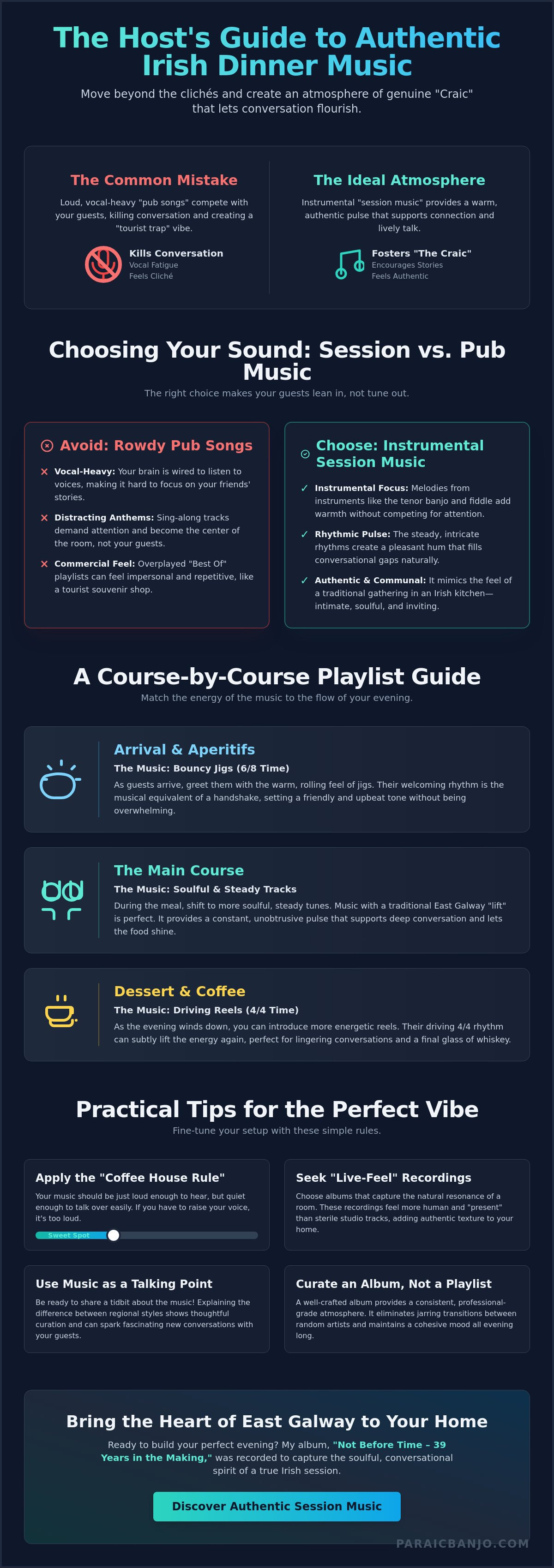
Many hosts make the mistake of reaching for a "Best of Ireland" playlist that's packed with rowdy ballads and sing-along anthems. While those songs have their place in a crowded pub at midnight, they're often the wrong choice for an intimate meal. These "pub songs" rely heavily on vocals, which naturally compete with the dinner table conversation. Your brain is wired to pay attention to human voices. When a singer is belting out a story in the background, your guests have to work twice as hard to focus on the person sitting across from them. This leads to vocal fatigue and a room that feels cluttered rather than cozy.
True traditional session music is almost entirely instrumental. It focuses on the intricate interplay of the melody and the pulse of the dance. This is the secret to the best background music for irish dinner party. Instrumental tunes provide a constant, pleasant hum that fills the air without demanding center stage. It's a much more sophisticated approach. If you're curious about the depth of this tradition, the Irish Traditional Music Archive offers a wealth of resources on how these tunes have been preserved for generations. By choosing instrumental tracks, you're giving your guests the space to talk while still immersing them in a rich cultural soundscape.
Recognizing the Rhythms: Jigs vs. Reels
Understanding the difference between a jig and a reel is the first step to becoming a master host. Jigs are played in 6/8 time. They have a "bouncy," rolling feel that's incredibly welcoming. Think of them as the musical equivalent of a warm handshake. Reels, on the other hand, are in 4/4 time. They have a "driving," steady energy that pushes the night forward. They're more intense and rhythmic, perfect for when the meal is in full swing and the energy in the room is at its peak.
Actionable Tip: Structure your playlist to mirror the flow of your evening. Start with mid-tempo jigs during the arrival and appetizers to create a light, social atmosphere. As you move into the main course and the conversation becomes more animated, transition into reels to maintain that lively, driving momentum.
The Soul of the Banjo
The tenor banjo is often called the heartbeat of a traditional session. It's a rhythmic powerhouse. In my own work, especially on my debut album Not Before Time – 39 Years in the Making, I focus on a style that prioritizes the "lift" and the soul of the tune over raw speed. A banjo shouldn't just be fast; it should be rhythmic and evocative. It provides a steady pulse that anchors the other instruments, creating a solid foundation for the entire room's atmosphere. This soulful approach ensures the music feels alive and personal, rather than like a sterile recording.
Mapping Your Music to the Menu: A Course-by-Course Guide
Pairing your music with your menu is just as vital as picking the right wine. You wouldn't serve a heavy stout with a delicate fish course, and you shouldn't play a high-octane reel while your guests are just settling in with their first drink. To create the perfect background music for an Irish dinner party, you need to think about the emotional "lift" of each course. The rhythm should mirror the energy of the room, growing and receding as the night unfolds.
Arrival & Aperitifs: Start with mid-tempo jigs. These 6/8 rhythms have a natural "bounce" that feels like a warm welcome. It sets a social, light-hearted tone that encourages people to mingle without feeling rushed.
The Main Course: This is where you want soulful, steady tunes. Look for tracks that provide a constant, comforting hum. You want music that stays in the "pocket" of the rhythm, offering a rich texture that supports the clinking of cutlery and the low murmur of happy guests.
Dessert & Coffee: As things wind down, transition to slower tracks or "airs." An air is a slow, melodic piece often played with deep emotion and without a strict dance beat. It allows for a moment of reflection and creates a space for deeper storytelling as the meal concludes.
The After-Dinner Drink: Now is the time to lift the energy again. Bring in the faster reels. These 4/4 driving rhythms provide a spirited conclusion to the night, leaving your guests feeling energized and celebratory as they finish their evening.
Timing the Transitions
A common mistake is having the music cut out just as the conversation gets good. Actionable Tip: Always curate a playlist that is at least 20% longer than you expect the dinner to last. If you think you'll be at the table for two hours, prepare two and a half hours of music. My album, Not Before Time – 39 Years in the Making, is designed with this natural flow in mind. You can use the individual digital tracks to bridge the gaps between courses, ensuring the transition from a bouncy jig to a steady reel feels seamless and intentional. It keeps the "craic" moving without any awkward silences.
Using Liner Notes as Conversation Starters
While streaming is convenient, there is a special magic in having physical traditional irish session music CDs on hand. The liner notes are often packed with stories about where a tune came from or the legendary musicians who passed it down. Sharing a quick detail about a track’s origins in East Galway adds a layer of "flavor" to the meal that a random digital shuffle simply can't provide. It turns the music into a shared experience. If you prefer the digital album, you can still find these stories in the supplementary notes, giving you plenty of material to spark a chat between bites. It shows your guests that you aren't just playing music; you're sharing a piece of living history.
Practical Tips for Managing Volume and Flow
Even the most soulful tunes can become a nuisance if they're played at the wrong volume. I always suggest following the "Coffee House Rule" for your gathering. If you find that you or your guests have to raise your voice even slightly to be heard over the music, it's too loud. The goal of background music for an Irish dinner party is to sit just beneath the conversation. It should feel like a warm, rhythmic blanket that wraps around the room, not a performance that demands your full attention. If the music is too quiet, it can feel like a distraction; too loud, and it becomes an obstacle. It's a balance you can feel.
Speaker placement is another detail that many hosts overlook. Avoid placing your speakers at ear level near the dining chairs. This creates "hot spots" where one guest is blasted with sound while another can barely hear it. Instead, aim for a more diffused sound. You want the music to feel like it's coming from the room itself, not from a specific black box. Also, be wary of the "loop trap." It's tempting to put on a 10-minute YouTube loop of traditional tunes, but these often become repetitive and robotic. Real music has a natural rise and fall that keeps the atmosphere feeling fresh and authentic. Trust your ears.
Technical Setup for Home Hosts
You don't need a massive sound system to get this right. In fact, a single high-quality speaker placed in a corner can often mimic the resonance of a live musician sitting in the room. This corner placement uses the walls to help reflect the sound more evenly throughout the space. Sound consistency is also vital. If your tracks vary wildly in recording quality or volume, it will pull your guests out of the moment. Selecting digital tracks from the same session or album ensures a professional, cohesive flow from the first course to the last. It makes all the difference.
High-Quality Audio vs. Compressed Streams
The equipment you use matters, but the source of your music is just as important. Many free streaming services compress their audio so much that the instruments lose their natural, woody warmth. This can result in a "tinny" sound that feels fatiguing over several hours. Choosing high quality irish music downloads ensures that the full range of the tenor banjo or fiddle is preserved. A physical CD or a high-bitrate digital file carries a depth and resonance that mimics the feeling of being at a real session. It’s the difference between a flat image and a three-dimensional experience. If you’re ready to elevate your hosting, you can browse my full collection of digital tracks and albums to find the perfect sound for your home.
Bring the Heart of East Galway Home with 'Not Before Time'
After you have mastered the volume and the flow of your evening, you need the actual soul of the event. This is where my debut album, Not Before Time – 39 Years in the Making, truly shines. This project isn't just a collection of tracks; it's a definitive statement of a lifetime spent immersed in the tradition. With 18 carefully selected tracks, this album provides the ideal background music for an Irish dinner party because it captures the authentic, unhurried "live energy" of a West of Ireland session. It feels human. It feels real.
The music on this album isn't about showing off with blinding speed that cuts through conversation. Instead, it’s about the rhythmic mastery that only comes from decades of playing. When you play these tracks, you’re bringing a blend of soulful storytelling and technical precision into your dining room. It’s a sound that feels personal and storied. Your guests will feel as though they’ve been invited into a private musical circle rather than just listening to a sterile digital file. It’s the perfect way to anchor the "craic" in your home.
The Story of 39 Years
This album took nearly four decades to reach its final form. That long-term development adds a layer of depth you won’t find in modern, rushed recordings. One reason this project works so well for dining is the specific East Galway style I’ve focused on. This regional tradition is famous for its steady, relaxed tempo and melodic "lift." It doesn't push the listener or demand attention. Instead, it creates a welcoming space that invites people to lean in and share a story.
The album also functions as a piece of education for those who want to dive deeper. The detailed liner notes act as a guide through the history of the tunes and the performers involved. Actionable Tip: Keep the digital or physical liner notes handy on your phone or tablet. If a guest asks about a particular track, you can share its history or the story of the musicians who carried it before me. It adds a wonderful layer of cultural "flavor" to your meal that goes beyond just the food on the plate.
Where to Find the Music
If you want to ensure your gathering is rooted in genuine heritage, it’s best to buy traditional irish music directly from the artist. This supports the continuation of the craft and ensures you’re getting the highest quality recording for your home system. As of June 2026, physical copies of the limited edition CD are currently on backorder due to high demand, but you don't have to wait to start your party planning.
You can immediately access the Not Before Time – 39 Years in the Making (Digital Album) or pick out Individual Digital Tracks to customize your own unique playlist. These digital downloads offer the same warmth and clarity as the physical disc, making them perfect for setting the mood tonight. You can get your digital copy here and start building an atmosphere that your guests will remember long after the last drink is poured. Enjoy the tunes and the company.
Host a Gathering Your Guests Won't Forget
Creating a memorable evening is about more than just the food on the plate. It's about the pulse of the room. By choosing instrumental session tunes over vocal-heavy pub songs and mapping your playlist to the courses of your meal, you build a space where conversation flows and the "craic" feels natural. Always keep that volume at a level where stories can be told without effort. This thoughtful approach ensures your background music for irish dinner party feels like a warm, personal invitation into a storied tradition.
If you're ready to bring a piece of living history to your table, my debut album offers the perfect solution. It features 18 tracks of pure, rhythmic tenor banjo and includes detailed liner notes that share the deep heritage of West Ireland. You can add the authentic soul of East Galway to your dinner party with "Not Before Time", which is available as a limited-edition physical CD or a high-quality digital download. I'm truly excited for you to share these tunes with your loved ones. Go on and make some memories. Happy hosting.
Frequently Asked Questions
What is the best genre of Irish music for a quiet dinner?
Traditional instrumental session music is the best choice for a quiet dinner. Unlike vocal-led tracks, these tunes focus on the melody of the tenor banjo or fiddle; this provides a steady rhythmic pulse without interrupting your talk. It creates a sophisticated atmosphere that feels authentically Irish rather than like a commercial performance. You'll find this style much more conducive to a relaxed evening where the focus remains on your guests.
How loud should background music be at a dinner party?
Your background music for irish dinner party should be loud enough to fill the silence but quiet enough that nobody has to raise their voice. If you find yourself straining to hear a guest across the table, turn it down immediately. The goal is to create a warm sonic layer that sits just beneath the conversation, supporting the mood rather than dominating the room's energy and focus.
Is it better to use a pre-made playlist or a specific album?
A specific, well-curated album is usually better than a randomized playlist for maintaining a consistent mood. Albums like Not Before Time are recorded with a unified sound and recording quality; this prevents jarring jumps in volume or style. This consistency helps the music blend into the room. If you do use a playlist, ensure the tracks share a similar live session feel to keep the atmosphere cohesive and authentic throughout the entire night.
What is the difference between a Jig and a Reel in a session?
The main difference lies in the rhythm; a Jig is in 6/8 time with a "bouncy" feel, while a Reel is in 4/4 time with a "driving" energy. Think of a jig as having a rolling, three-beat pulse that's great for welcoming guests. A reel has a more constant, four-beat push that works well for the main course. Both are staples of the traditional Irish session and offer different energy levels for your night.
Can I use Irish pub songs for my dinner party?
You can use pub songs, but they are often too distracting for a dinner setting. Most traditional pub songs are designed for singing along and feature loud vocals that compete with your guests' voices. For a sophisticated dinner, stick to instrumental tunes. Save the sing-along ballads for the very end of the night once the plates are cleared and the drinks are flowing more freely to ensure everyone can talk comfortably.
Where can I buy authentic traditional Irish music that isn’t commercialized?
Buying directly from the artist's website is the best way to find authentic, non-commercialized music. This ensures you are getting high-quality recordings that haven't been over-produced for a mass market. You can find Not Before Time – 39 Years in the Making as a digital album or individual tracks on my site. This supports the tradition and gives you access to detailed liner notes that tell the music's true story.


Comments