The Best Irish Banjo Albums: A Collector’s Guide to Essential Traditional Recordings

Most "Celtic" compilations you find today are little more than sonic wallpaper, lacking the grit and lift that defines a true session. You have likely felt the frustration of digging through digital bins only to find generic tracks that miss the soul of the instrument. It's a crowded market, but we are currently living in a golden era for the Irish banjo. With artists like Ciarán Ryan releasing "Kick Up the Dust" in early 2026 and pushing the boundaries of what four strings can do, there has never been a better time to be a listener.
I want to help you build a collection that matters. This guide identifies the best irish banjo albums that every serious listener needs, from the steady flow of the East Galway style to the driving, punchy rhythm of the Clare tradition. You will learn how to distinguish these regional nuances and get practical advice on sourcing high-quality physical copies directly from the makers. If you're looking for a definitive statement of a lifetime's passion, you can start your collection today by picking up the digital album or physical CD of "Not Before Time – 39 Years in the Making". Let's explore the recordings that shaped this tradition and see which ones belong on your shelf.
Key Takeaways
Master the art of listening for "the pulse" so you can identify the driving rhythm and intentional ornamentation that separate legendary recordings from generic tracks.
Navigate the essential classics and modern gems to find the best irish banjo albums, ensuring your collection represents the full breadth of the tradition.
Understand the specific characteristics of regional styles like North Connacht to better appreciate the technical mastery of both veteran players and new voices.
Build a world-class library by focusing on albums with minimal overdubbing to preserve that authentic, live session energy we all love.
Discover how a project 39 years in the making captures the spirit of the tradition, then grab your own digital tracks or physical CD to hear it for yourself.
Table of Contents
What Makes an Irish Banjo Album 'The Best'?
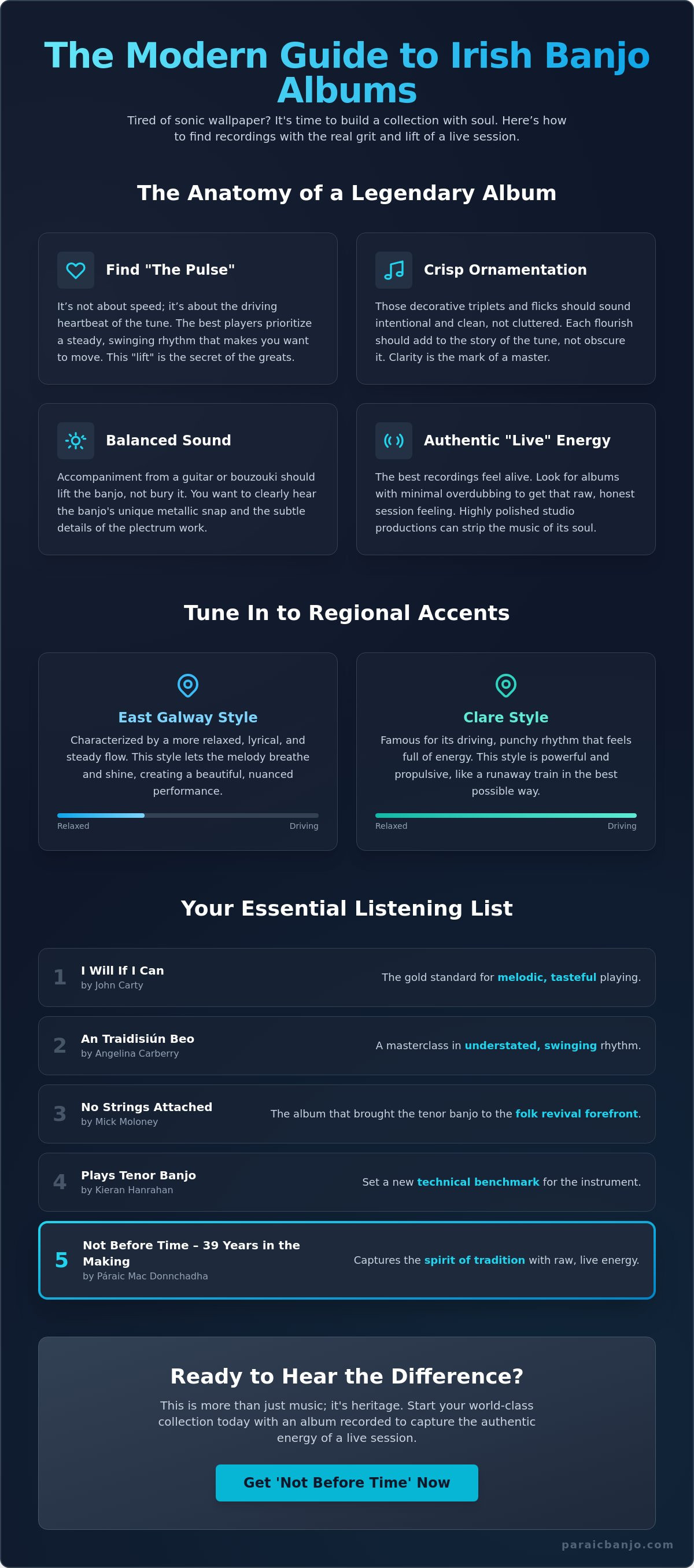
When you're hunting for the best irish banjo albums, it's easy to get distracted by sheer speed. But the real magic isn't in how many notes a player can cram into a bar. It's about the "pulse." This is the internal clock of the tune, that steady, driving heartbeat that makes you want to tap your foot on a dusty pub floor. A great album captures this conversation between the player and the tradition, reflecting a deep understanding of the history of banjo music and how it found its home in Ireland.
Every triplet and flick should be crisp. If the ornamentation, those little decorative flourishes, sounds cluttered, the tune loses its shape. It should feel intentional, like a well-placed word in a story. This clarity is what separates a world-class recording from a mediocre one. You also need to listen for the balance of accompaniment. Whether it's a piano, bouzouki, or guitar, the backing should lift the banjo, providing a solid foundation without burying the instrument’s unique metallic snap. If the backing is too loud, you lose the subtle nuances of the plectrum work.
Finally, look for authenticity. Highly polished studio productions often strip away the soul. The best recordings feel alive; they have that "session energy" where you can almost feel the room's atmosphere. This is exactly why I recorded "Not Before Time – 39 Years in the Making" live to tape. It preserves that raw, honest connection that only happens when the music is allowed to breathe. We are currently in a golden era for the instrument, and the finest albums are those that treat the music as a living, breathing thing rather than a museum piece.
Rhythm Over Speed: The Secret of the Greats
The greats know that a steady beat beats a fast one every time. A rhythmic tenor banjo style keeps the listener engaged because it prioritizes the swing of the tune over flashy gymnastics. Speed can be impressive, but rhythm is what makes you dance. If a player rushes, the melody becomes a blur and the soul of the tune evaporates. It's about the space between the notes as much as the notes themselves.
Actionable Tip: When you're listening to a new track, focus on the "lift" at the end of a musical phrase. If the music feels like it's taking a tiny, energetic breath before the next part starts, you're hearing a master at work. You can find this exact kind of rhythmic drive in our individual digital tracks if you want to hear it in action.
The Significance of Regional Flavor
Knowing an artist’s home region helps you understand their musical "accent." For example, the East Galway style is often characterized by a more relaxed, lyrical pace that lets the melody shine. In contrast, the Clare style is famous for its driving, punchy rhythm that feels like a runaway train in the best possible way. Understanding these nuances makes your collection much more rewarding. Don't just settle for generic compilations. Look for the best irish banjo albums that proudly celebrate these specific roots, as they offer a direct link to the community that nurtured the music. It’s about more than just tunes; it’s about heritage.
The Essential Classics: 5 Banjo Albums Every Fan Should Own
Building a collection of the best irish banjo albums often feels like a treasure hunt. Many lists you see online are stuck in the early 2000s, but the tradition hasn't stopped moving. To truly understand the instrument, you need to hear the recordings that defined its voice. We'll start with John Carty’s I Will If I Can. It remains the gold standard for melodic, tasteful playing. As of May 2026, you can still pick this up directly from John’s website for €17.00, and it's worth every cent for the sheer elegance of his phrasing.
Next on the list is Angelina Carberry’s An Traidisiún Beo. It's a masterclass in understated, swinging rhythm. While it's currently found mostly on the resale market, with copies selling for between $24 and $36, the investment is vital for anyone wanting to hear how a banjo can truly "sing" in a traditional setting. We also have to tip our hats to Mick Moloney’s No Strings Attached, the album that arguably brought the tenor banjo to the forefront of the folk revival, and Kieran Hanrahan’s Plays Tenor Banjo, which set a technical benchmark that remains a challenge for players today.
Finally, I’ve included my own work, Not Before Time – 39 Years in the Making. This album is a definitive statement of the East Galway pulse. It’s not just a collection of tunes; it’s a lifetime of session energy captured live to preserve that raw, honest lift. If you want to hear that specific regional drive, you can find it on the Not Before Time physical CD or digital album.
Why These Albums Stand the Test of Time
These recordings aren't just old tracks; they are the textbooks of our tradition. They feature the famous Irish banjo players who influenced every session you walk into today. From the technical brilliance of a modern banjo master Gerry O'Connor to the soulful simplicity of the older styles, these albums show the evolution of the four strings. They teach us how to back a tune and when to let the melody breathe.
Actionable Tip: Don't try to digest these all at once. Start with one "classic" like Mick Moloney and one "modern" release to hear how the plectrum work has evolved over the decades.
Spotlight on Independent Releases
You won't find many of the best irish banjo albums on major labels. The most authentic music is often released independently. Buying directly from the artist ensures the tradition continues and usually gets you access to better liner notes. These notes are often filled with stories about where the tunes came from, which adds a whole new layer to the listening experience. Supporting independent music keeps the heartbeat of the tradition strong and ensures the next generation of players has a foundation to build upon. It’s a direct connection between the listener and the maker.
Exploring Modern Masters and Hidden Gems
The tradition didn't stop with the masters of the 70s and 80s. We are currently witnessing a "golden era" for the instrument, where a new generation is breathing fresh life into four strings while keeping their feet firmly planted in the soil. If you're looking for the best irish banjo albums from the modern era, you have to start with Shane Mulchrone’s Solid Ground. It’s a gritty, beautiful deep dive into the North Connacht style. It doesn't hide behind studio tricks; it just delivers the music straight, with a rhythmic honesty that's hard to find. It’s a benchmark for anyone who values the "dirt" of the tradition over clinical perfection.
Brian McGrath’s Pure Banjo is another essential for your shelf. Brian is a powerhouse whose playing has a raw, focused energy that reminds us why the banjo became a staple in the first place. For something that blends technical brilliance with deep roots, Theresa O’Grady’s Banjo’ista is a revelation. She manages to execute complex, modern ideas without ever losing the essential lift of a reel. This evolution is part of a broader journey you can read about in The Bluegrass Situation on Irish Banjo, which highlights how the instrument continues to cross borders while staying true to its core.
Don't overlook Cathal Hayden’s Handed Down either. While many know him as a titan of the fiddle, his banjo playing is high-octane and incredibly infectious. These modern releases aren't just copies of what came before; they are vibrant, living statements. They prove that you can be a virtuoso without being "notey" for the sake of it. If you want to hear this balance of old and new in your own home, you can explore the individual digital tracks from my own project, which was 39 years in the making to ensure that same level of authenticity.
The New Wave of Traditional Banjo
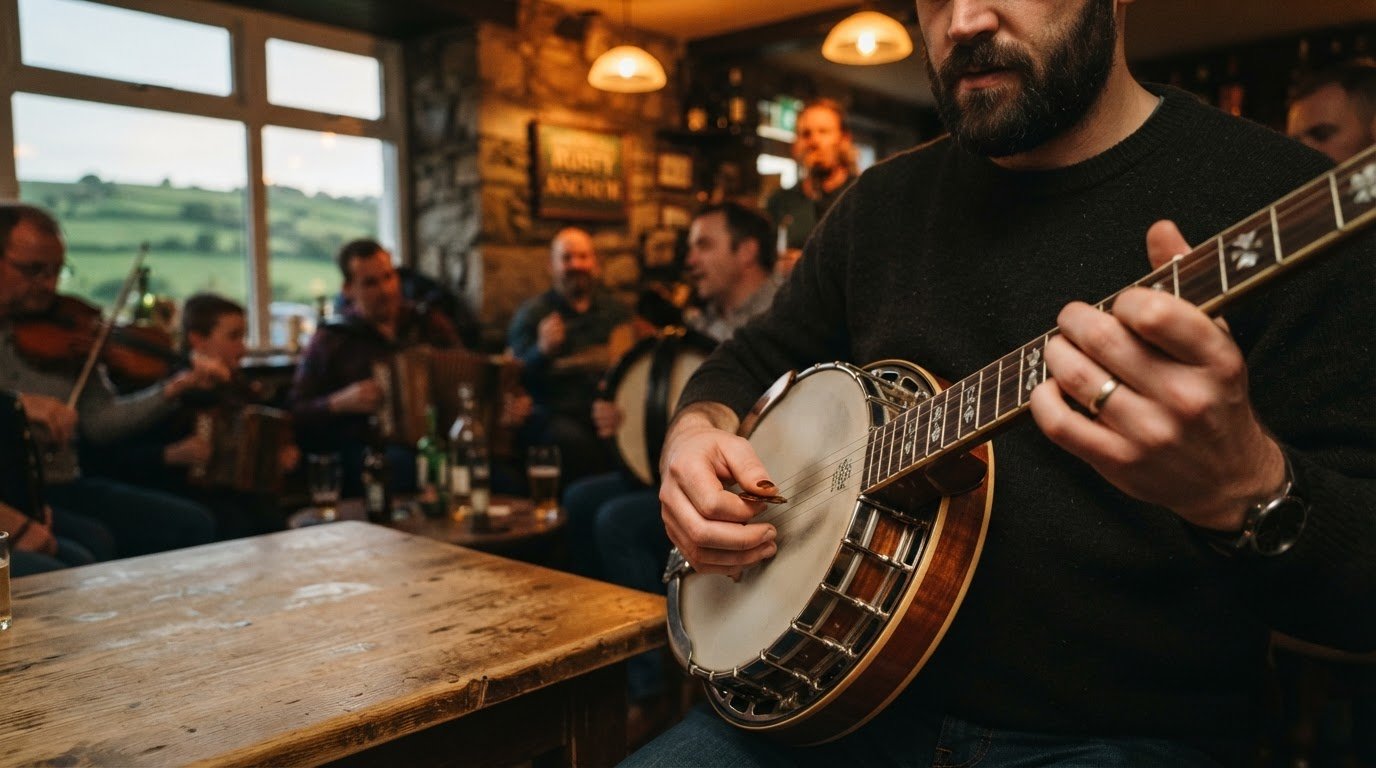
Modern recording technology now captures soulful Irish banjo music with a clarity that old vinyl couldn't dream of. We're seeing a shift toward "session-style" recordings. These albums feel like you’re sitting in a snug in County Galway rather than a sterile studio. The goal is to preserve the atmosphere of the room. Actionable Tip: Follow your favorite artists on Bandcamp. It’s the best way to find independent releases that might not make it to mainstream streaming services, and it puts more money directly into the hands of the players.
Why Rhythm Still Rules the Modern Scene
There’s a common misconception that modern playing has to be "jazzy" or overly complex to be good. That’s simply not the case. Players like Páraic Mac Donnchadha show that you can maintain an old-school pulse while using modern production. The East Galway style is a rhythmic, steady approach to tunes that prioritizes a relaxed flow over frantic speed. It’s about the swing, the lift, and the shared heartbeat of the room. That’s the feeling we tried to bottle in Not Before Time, and it’s what keeps the tradition alive for the next generation.
The Collector’s Checklist: How to Build Your Library
Building a world-class library of the best irish banjo albums is about more than just filling a hard drive with files. It’s about the connection to the music. When you’re hunting for new additions, look for live energy. Favor albums recorded with minimal overdubbing, as this preserves the "pulse" we talked about earlier. You want to hear the room. You want to hear the tiny, honest imperfections that prove a human being is behind the plectrum. If a recording is too polished, it often loses that vital session lift.
Always check the personnel listed on the back. A great banjo player is only as good as the rhythm behind them. Look for names you recognize on piano, guitar, or bouzouki; the best players tend to gravitate toward accompanists who understand how to drive a tune without smothering the melody. Audio quality matters too. If you're going digital, prioritize high-bitrate downloads or FLAC files. This ensures you can hear the sharp "snap" of the strings and the subtle ornamentation that defines the best irish banjo albums. It’s the difference between a flat recording and one that feels three-dimensional.
Whenever you can, support the source. Buy direct from the artist’s website or at a gig. This ensures the margins go back to the musician, helping them keep the tradition alive. You can start your collection the right way by picking up the Not Before Time – 39 Years in the Making Physical CD, which was crafted specifically to offer this kind of authentic, high-fidelity experience.
Why Liner Notes are Your Secret Weapon
Liner notes are the "why" behind the music. They provide the history of the tunes and the lineage of the players. Reading them while you listen creates a deeper connection to the stories being told. My own project, Not Before Time, includes 18 tracks paired with rich historical context. It’s not just a list of names; it’s a map of a lifetime’s musical journey. Actionable Tip: Don't skip the text. Set aside twenty minutes to listen through a set of tunes while reading the notes to truly understand the artist's intent.
Digital vs. Physical: Which is Better for You?
Digital tracks offer immediate access and portability. They're perfect for the car or the gym. However, physical CDs remain the gold standard for collectors. You get superior documentation, collectibility, and the tactile joy of the artwork. Actionable Tip: Use a hybrid approach. Get the CD for your home listening setup to enjoy the full audio depth and liner notes, then use the digital tracks for when you're on the move. It gives you the best of both worlds while ensuring you have a permanent copy of the music you love.
Why 'Not Before Time' is a Must-Have for Your Collection
After exploring the legends and the modern gems, we come to a project that sits right at the intersection of both. Not Before Time – 39 Years in the Making isn't just a debut; it’s a lifetime’s worth of music finally captured in one place. When people ask about the best irish banjo albums, they’re usually looking for that elusive "lift" that happens in a real session. This album delivers exactly that because we refused to over-engineer it. It’s a project born from decades of playing in snugs and halls, finally distilled into a single, definitive collection.
We gathered 18 tracks and recorded them live to tape. This wasn't about seeking clinical perfection. It was about capturing the energy of the room and the shared heartbeat between the banjo and a cast of traditional music heavyweights. By bringing together the relaxed, flowing East Galway style with the driving rhythm of Clare, we created a bridge between two of the most influential traditions in the country. It’s an honest, raw statement that honors the heritage while showing how vibrant the music remains. You won't just hear the notes; you'll hear the history behind them.
Capturing the Soul of the Session
The danger with many modern studio productions is that they can make the music feel sterile and disconnected. We avoided that trap by prioritizing the "pulse" over everything else. The rhythmic drive on this record makes it a perfect addition to the best irish banjo albums for anyone who wants to learn the tunes or simply enjoy the swing of a real session. The album serves as a definitive statement of the East Galway banjo style, focusing on that steady, melodic flow that keeps a session grounded. It’s music meant to be felt as much as heard, stripped of the artificial polish that often dulls the spirit of traditional tunes.
How to Get Your Copy Today
Starting your collection or adding this milestone to your shelf is simple. We offer the choice between a Physical CD, which includes the full artwork and extensive liner notes, or a Digital Album for those who prefer high-quality files on the go. If you only have a few favorite sets, you can even pick up individual digital tracks to round out your playlist. We provide worldwide shipping for our physical copies, ensuring that collectors across the globe can hold this piece of tradition in their hands. Don't wait another 39 years to hear these tunes. Bring the heartbeat of the session home with Not Before Time and experience the music as it was meant to be played. Cheers for being part of this journey!
Start Your Banjo Journey Today
You now have the roadmap to move past generic compilations and find the real soul of the tradition. Remember to listen for the "lift" in every tune and prioritize recordings that capture that raw, honest session energy. By choosing albums that celebrate specific regional accents, you aren't just buying music; you're preserving a piece of heritage. Building a library of the best irish banjo albums is a rewarding pursuit that connects you directly with the makers and the stories they tell.
If you're ready to add a definitive statement of this passion to your shelf, order your copy of "Not Before Time" – 39 Years in the Making today. This project features 18 tracks of pure traditional session music and comes with extensive liner notes to provide the historical context you need. Whether you choose the limited-edition physical CD or the high-quality digital download, you're getting a front-row seat to a lifetime of mastery. The tradition is alive and well, and your support keeps that heartbeat going. Keep the tunes flowing and the plectrum moving!
Frequently Asked Questions
What is the best Irish banjo album for a beginner to start with?
John Carty’s "I Will If I Can" is widely considered the perfect starting point for any new listener. Its melodic clarity and steady, tasteful pace make it easy to follow the tune without getting lost in a blur of notes. When you're looking for the best irish banjo albums to kick off your collection, you want recordings that prioritize the melody over sheer speed. This album sets a high bar for what the instrument can achieve in a traditional setting.
Are these banjo albums good for learning tunes by ear?
Yes, especially those that emphasize a strong rhythmic drive and clear ornamentation. Learning by ear requires you to hear the "lift" at the end of each phrase, which is much easier on recordings with minimal studio overdubbing. Albums like "An Traidisiún Beo" by Angelina Carberry are fantastic for this because the rhythm is so consistent. You can also use the individual digital tracks from my own project to loop specific sets while you work out the fingering at home.
Why do many traditional Irish music fans prefer physical CDs over streaming?
Physical CDs offer superior audio depth and come with extensive liner notes that you won't find on a streaming app. These notes often contain the history of the tunes and personal stories from the artist, which adds a layer of soul to the listening experience. For many collectors, the physical copy is a tangible connection to the tradition. Plus, buying a CD ensures that a much larger portion of your support goes directly to the musician.
What is the difference between the East Galway and Clare banjo styles?
The East Galway style is known for its relaxed, lyrical flow and steady "pulse," while the Clare style often features a more driving, punchy rhythm. Think of the Galway approach as a smooth, rolling conversation and the Clare style as a high-energy dance. Both are essential to the tradition, but understanding these regional accents helps you appreciate the nuance in the best irish banjo albums. It’s all about how the player handles the swing of the tune.
How can I tell if a banjo album is "authentic" traditional music?
Authentic albums usually capture a "live-feel" and sound like they could be happening in a local snug. You should look for recordings where the banjo is the clear lead but is supported by sympathetic accompaniment that doesn't bury the melody. If the production feels too clinical or the rhythm feels artificial, it might be missing that essential session energy. True traditional music always prioritizes the shared heartbeat of the room over flashy studio tricks.
Who are the most influential Irish tenor banjo players on record?
Legends like Mick Moloney, Kieran Hanrahan, and Barney McKenna have left an indelible mark on the way we play today. These masters brought the tenor banjo from the fringes of the band to the very center of the session. Their recordings serve as the textbooks for modern players. Today, artists like Theresa O’Grady and Shane Mulchrone continue this legacy, blending technical brilliance with a deep respect for the older regional styles that came before them.
Can I buy these albums directly from the artists?
You absolutely can, and it’s the best way to ensure the tradition stays vibrant. Most traditional musicians sell their work through their own websites or platforms like Bandcamp. You can pick up "Not Before Time – 39 Years in the Making" as a physical CD or digital album right here on this site. Supporting artists directly allows them to keep producing high-quality recordings and sharing the music we all love with the next generation.
Is the tenor banjo different from the 5-string banjo used in bluegrass?
Yes, the Irish tenor banjo has only four strings and is played with a plectrum, or pick, rather than finger-picks. The tuning is also different, usually GDAE, which is an octave below a fiddle. This allows us to play the same ornaments and triplets as a fiddle player. While the 5-string banjo is iconic in bluegrass, the 4-string tenor banjo is the undisputed voice of the instrument in the Irish traditional music scene.

Comments