The Collector’s Guide to Finding the Best Traditional Irish Session Music CD in 2026

Have you ever hit play on a new album only to find it sounds more like a sanitized hotel lobby than a roaring fire in a Clare pub? It's a common frustration for anyone hunting for a genuine traditional irish session music cd that actually captures the lift and pulse of the tradition. You want the grit, the shared breath of the musicians, and that driving tenor banjo rhythm that makes your feet move before your brain even catches up.
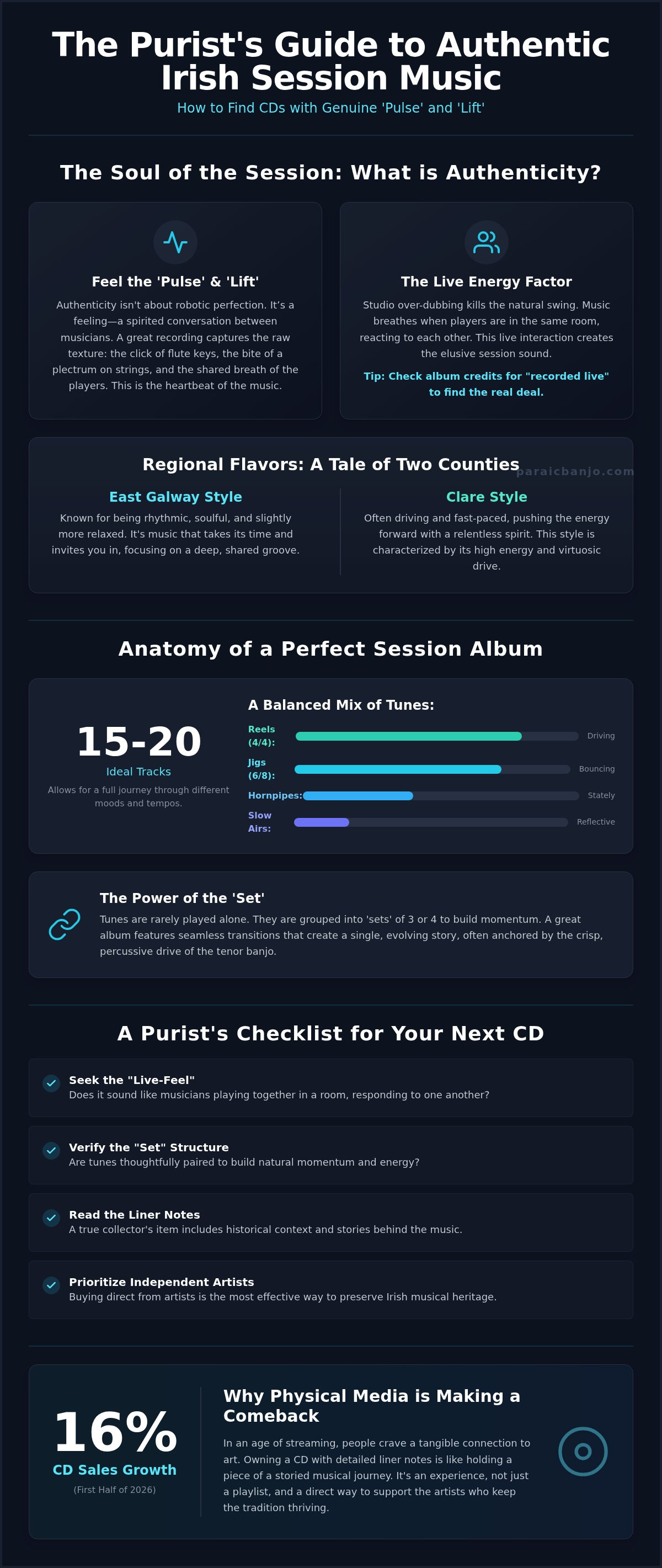
We've all been there, staring at a screen full of generic Celtic pop while searching for something with real dirt under its fingernails. This guide changes that. You'll learn how to spot an authentic recording from the over-produced fluff, understand why regional styles like East Galway matter, and discover why physical media is making a massive comeback in 2026. CD sales grew by 16 percent in the first half of this year for a reason. People want a tangible connection to the art.
I'm sharing the lessons learned from nearly four decades of playing, focusing on how to find music that honors the past while feeling alive in the present. We'll look at the importance of detailed liner notes and how to support independent artists who keep the session culture thriving. It's about more than just tracks. It's about owning a piece of a storied musical journey.
Table of Contents
What Makes a Traditional Irish Session Music CD Authentic?
Authenticity isn't a checklist. It's a feeling. When you're hunting for a traditional irish session music cd, you aren't just looking for a collection of tunes. You're looking for the "pulse." That's the heartbeat of the music. If you've ever squeezed into a crowded corner at a pub, you know exactly what I mean. It isn't about playing every single note with robotic perfection. It is about the "lift." A genuine recording should feel like a spirited conversation between friends, not a dry recital. To really get it, you have to understand what is a traditional Irish session at its core. It is a communal experience. The collective energy of the group always matters more than any single ego. Purists crave the "raw" sound. They want the click of the flute keys. They want the bite of the plectrum on the strings. These aren't flaws. They are the very texture of the tradition. You want to hear the shared breath of the players. That's where the magic happens.
The Live Energy Factor
Studio over-dubbing is a common trap. When musicians record their parts separately at different times, it often kills the natural swing of a jig. Music is a conversation. When players are in the same room, they react to each other. They catch a subtle shift in tempo or a sudden flourish in volume. This live interaction creates that elusive session sound. It breathes. It has life. If the album was built layer by layer, it usually feels static. Check the credits. Look for notes mentioning that the tracks were recorded live or together in one room. This is the simplest way to ensure you're getting the real deal. High-quality recordings preserve that unpolished energy without sacrificing clarity.
Regional Flavors: Galway vs. Clare
Regionality is the true backbone of our music. Every county has its own distinct "accent" or way of phrasing a tune. The East Galway style is legendary for being rhythmic, soulful, and slightly more relaxed. It’s music that takes its time. It invites you in. On the other hand, the Clare style is often driving and fast-paced, pushing the energy forward with a relentless spirit. If you want to understand the rhythmic soul behind these traditions, explore this comparison of East Galway vs Clare music. Choosing a traditional irish session music cd based on regional style ensures your collection has variety and depth. It helps you connect with the specific history of the tunes you're hearing. Knowing the difference between a West Clare reel and an East Galway jig is the mark of a true collector.
The Anatomy of a Perfect Session Tracklist
A superior traditional irish session music cd isn't just a collection of songs; it’s a carefully curated journey. To capture the true atmosphere of a pub session, an album needs a specific architecture. Most collectors look for a comprehensive tracklist containing between 15 and 20 tracks. This allows for a full exploration of different moods and tempos. You need the high-octane energy of reels, the bouncing lift of jigs, and the stately pace of hornpipes. Occasionally, a slow air provides a necessary moment of reflection, giving the listener a breather before the next set kicks off. It’s about balance. If an album is all fast reels, it loses its impact. If it’s too many slow pieces, it loses the session spirit.
Central to this experience is the "set" structure. In a session, tunes are rarely played in isolation. Instead, they’re grouped together, usually in threes or fours, to build momentum. The transition from one tune to the next is a critical skill. It requires a deep understanding of how to pair melodies that complement each other while steadily raising the stakes. The tenor banjo often serves as the rhythmic anchor here, providing a crisp, percussive drive that keeps the whole group locked in. When you hear a set that works, it feels like a single, evolving story rather than three separate pieces of music.
Reels and Jigs: The Heartbeat
Understanding the difference between a reel and a jig is essential for any collector. A reel is driving and energetic, written in 4/4 time. You can think of it as a steady, four-beat march. A jig, by contrast, has a rolling, triplet feel in 6/8 time. It has a "one-two-three, four-five-six" rhythm that creates the "lift" that gets people dancing. Actionable tip: When you're browsing for a traditional irish session music cd, listen closely to the transitions between tunes within a set. A great recording will feature sets that move smoothly between keys. For example, a set might shift from a bright G major tune into a moodier, minor-sounding scale. This change creates a fresh feeling that keeps the listener engaged. On my album, Not Before Time – 39 Years in the Making, the 18 tracks were specifically chosen to showcase this variety and flow. You can explore the full tracklist and the stories behind the sets at paraicbanjo.com.
Instruments You Should Hear
The best session recordings highlight the interplay between the lead instruments. You want to hear the banjo, fiddle, and accordion weaving in and out of each other's lines. The accompaniment, whether it’s a guitar or a bouzouki, should act as a supportive foundation. It shouldn't overpower the melody; its job is to provide the rhythmic "chunk" that lets the leads shine. Actionable tip: Listen for "unison playing." This is when multiple lead instruments play the melody exactly together. It’s a sign of a tight, professional session where the musicians have spent years honing their shared timing. If the instruments sound like they're fighting for space, the session lacks that essential communal spirit. A well-balanced recording makes you feel like you're sitting right in the middle of the circle.
How to Choose the Right CD: A Purist’s Checklist
Choosing a traditional irish session music cd in 2026 is a bit like hunting for rare whiskey. You can find mass-produced options anywhere, but the real flavor lives in the small batches. A purist knows that a great recording is about more than just the audio. It’s about the lineage. Before you buy, check the artist’s pedigree. Have they spent decades in the corner of a pub, or are they just session players for hire? You want someone who has lived the tunes. This deep connection to the community ensures the music has that essential "lift" that makes the tradition feel alive. It isn't just about playing fast. It's about playing with soul.
When you’re browsing for your next addition, keep these criteria in mind:
Check the Producer: Look for albums where the musician also served as the producer. This usually means the sound hasn't been "sanitized" by a label executive who doesn't understand the session environment.
Verify the Source: Does the artist mention where they learned the tunes? A real traditional player will often credit a specific piper, fiddler, or neighbor from their youth.
Prioritize Independent Releases: Independent projects often prioritize the art over commercial appeal. They aren't afraid of a little "raw" energy or the natural sounds of the instruments.
The Value of Liner Notes
Liner notes are much more than just a list of names. They are a map to the history of the music. A high-quality traditional irish session music cd should include detailed notes that explain the "why" behind the "what." For example, Not Before Time – 39 Years in the Making comes with a 36-page booklet. This isn't just fluff. It identifies the source of the tracks, like a tune learned from a specific musician in 1982. This context helps you understand the regional nuances of East Galway and Clare. If you want a deeper dive into these criteria, check out this guide on How to Buy Traditional Irish Music.
Artist-Led vs. Commercial Labels
Commercial labels sometimes "clean up" the sound so much that it loses its soul. They might remove the natural percussive sounds of the banjo or the rhythmic breathing of the flute to make it "radio-friendly." Buying direct from the artist ensures you’re hearing their original, unvarnished vision. It also means your support goes straight to the people keeping the heritage alive. Actionable tip: Always look for a physical CD if you can. While digital tracks are convenient, the physical format offers superior audio quality and a tangible connection to the craft that streaming simply can't match. It's a definitive statement of a lifetime's passion, preserved in a way that feels permanent.
Why Buying Direct is the Best Way to Support Irish Music
Streaming services are a marvel of convenience, but they rarely tell the full story. For an artist, the difference between a listener clicking "play" on a playlist and a collector purchasing a traditional irish session music cd is vast. When you buy direct, you aren't just paying for a plastic disc or a digital file. You are providing the fuel for the next generation of music. These sales allow independent musicians to fund future heritage projects, record with expert collaborators, and keep regional styles like the East Galway tradition alive. It’s a direct investment in the culture itself. You become part of the journey.
Buying from an artist's personal storefront creates a connection that a giant digital platform can't replicate. You're often dealing with the musician or their small team directly. There is a palpable sense of pride in every package sent out. This isn't just commerce; it's a handshake across the miles. It’s a way of saying that the 39 years of effort that went into a project like Not Before Time – 39 Years in the Making actually matters. It transforms a simple transaction into a shared celebration of the craft.
The Impact of Your Purchase
The math is simple but startling. It can take thousands of streams to equal the revenue generated by a single physical CD sale. By choosing the physical format, you’re ensuring the artist can actually afford to maintain their instruments and travel to the sessions that keep their skills sharp. Actionable tip: Always check for "Limited Edition" or "First Pressing" status on artist websites. These are often the true gems for collectors, as they may include exclusive inserts or signatures that won't be available in later runs. For a deeper look at how this ecosystem works, read our guide on how to Buy Traditional Irish Music Direct from Artist.
Global Shipping for Local Music
Don't let the distance discourage you. Most independent traditional musicians ship their work worldwide directly from Ireland. Whether you're in Boston or Berlin, you can have a piece of Galway on your doorstep in a matter of days. To keep your purchase secure, look for the padlock icon in your browser's address bar and check that the site uses established payment gateways like Stripe or PayPal. These steps ensure your data is protected while you support the craft. Ready to add a masterpiece to your shelf? You can order the physical CD or digital album today and help preserve the pulse of the tenor banjo for years to come.
Experience the Soul of the Banjo with ‘Not Before Time’
When you finally find that one definitive traditional irish session music cd to ground your collection, everything clicks. It’s the moment the theoretical advice about "pulse" and "lift" becomes a physical reality in your living room. For tenor banjo enthusiasts and collectors of the East Galway tradition, that moment has arrived. Páraic Mac Donnchadha’s debut album isn't just another recording. It is a milestone that has been decades in the making. It represents the quiet confidence of a master who has spent a lifetime honing his craft in the corners of pubs and at the heart of the most respected sessions in Ireland. This is the sound of a musician who has nothing to prove but everything to share.
39 Years in the Making
The title of the album, Not Before Time – 39 Years in the Making, is a literal testament to Páraic’s dedication. He didn't rush into the studio. Instead, he allowed his style to mature like a fine whiskey, soaking up the rhythmic nuances of the East Galway and Clare traditions. This album is a definitive statement of a career spent preserving the soulful, steady pace that characterizes the West of Ireland sound. It captures a specific cultural space that often gets lost in more commercial, fast-paced recordings. You can feel the weight of those 39 years in every strike of the plectrum. It’s a celebration of patience and persistence. Get your copy of Not Before Time – 39 Years in the Making here to experience this legendary debut for yourself.
What’s Inside the CD?
This traditional irish session music cd features 18 tracks that were recorded live to preserve that essential session energy. Páraic didn't record this in isolation. He brought in a group of expert musicians to ensure the interplay was authentic and reactive. The result is a rhythmic and soulful experience that feels like you've been invited into a private, high-level session. The physical CD is a true collector’s item, featuring deluxe packaging and a 36-page booklet of historical notes. These notes provide the "map" we discussed earlier, detailing the origins of the tunes and the stories of the people who passed them down.
Actionable tip: To get the most out of this experience, don't just put the music on in the background. Sit down with the 36-page booklet and read the liner notes while you listen. Fully immersing yourself in the history of each set will help you hear the subtle regional variations and the "pulse" of the banjo in a much deeper way. It transforms the act of listening into a journey through Irish musical heritage. This is a work of passion, and it deserves your full attention. Welcome to the tradition.
Bring the Authentic Session Spirit to Your Home
Finding a traditional irish session music cd that actually resonates with the soul of the pub isn't just about the music; it's about the connection to the players and the past. You now know to look for that live-recorded energy and the deep regional flavor that sets a master's work apart from generic copies. By focusing on independent releases and detailed liner notes, you're doing more than just listening. You're becoming a guardian of a storied tradition that thrives on community and shared history.
It's time to put these tips into practice. If you're ready to own a piece of East Galway history, Not Before Time – 39 Years in the Making is the definitive choice. With 18 live-recorded tracks and the weight of 39 years of mastery, this album brings the session right to your door. We offer worldwide shipping to ensure this music reaches every corner of the globe. It's a direct link to the fireside sessions of the West.
Order the "Not Before Time" Physical CD Now and feel the lift of the tenor banjo in its truest form. We can't wait to share this journey with you. Happy listening!
Frequently Asked Questions
What is the difference between a session recording and a studio album?
A session recording captures the live, reactive energy of musicians playing together in one room. Studio albums are often built in layers, with musicians recording their parts separately. A traditional irish session music cd should feel like a real conversation. Actionable tip: check the sleeve for "recorded live" to ensure you're getting that authentic pub lift rather than a sanitized, multi-tracked version that lacks the communal spirit.
Why is the tenor banjo so popular in Irish session music?
The tenor banjo provides a crisp, percussive drive that cuts through the sound of fiddles and flutes. It acts as a rhythmic anchor. Its sharp attack helps maintain the "pulse" of the set. This makes it essential for driving the energy in a crowded pub environment. It bridges the gap between melody and percussion, keeping everyone in time and ensuring the rhythm stays tight.
Can I buy a physical Irish music CD if I live outside of Ireland?
Yes, most independent artists provide global shipping to reach collectors worldwide. My own storefront, Páraic Banjo, ships the physical album globally from its base in Ireland. Actionable tip: if you're ordering internationally, check the shipping lead times for 2026 to ensure your CD arrives promptly. Always look for secure payment gateways like Stripe or PayPal during the checkout process to keep your personal information safe while supporting the music.
What are liner notes and why do they matter for traditional music?
Liner notes are the printed stories and technical details included with a CD. They are vital because they document the lineage of the tunes. For example, Not Before Time – 39 Years in the Making includes a 36-page booklet. This helps you learn where a tune came from and who played it. It turns a simple recording into a historical archive for the listener to explore.
Is it better to buy a digital download or a physical CD?
It depends on your needs, but purists often prefer the physical CD for its superior audio quality and tangible connection. A traditional irish session music cd offers high-fidelity sound that isn't compressed like some streaming files. Plus, you get the physical booklet. Digital downloads are great for immediate access on your phone, but the CD remains the definitive collector's item for those who value heritage and history.
What defines the East Galway style of banjo playing?
The East Galway style is known for being relaxed, soulful, and rhythmically precise. It isn't about speed for the sake of speed. Instead, it focuses on the lonesome quality of the melodies and a steady, rolling pulse. This style values phrasing and variation over flashy ornamentation. It’s a tradition that invites the listener to sit back and feel the weight of every note, creating a grounded listening experience.
How many tracks are usually on a traditional Irish music CD?
A standard comprehensive album usually features between 15 and 20 tracks. This allows the artist to showcase a wide range of reels, jigs, and hornpipes. My debut album features 18 tracks, which is the perfect number to provide a full session experience. Actionable tip: look for tracklists that group tunes into "sets" of three or four to see how the momentum builds naturally throughout the disc.
How do I know if an Irish music website is legitimate?
Look for signs of the artist’s direct involvement, such as personal stories or detailed track descriptions. Legitimate sites will have clear contact information and secure checkout icons in the browser bar. Check for a history of the artist's career. If the site feels like a generic storefront with no soul or specific regional context, it might be a mass-market reseller rather than a true independent source.


Comments