The Cultural Significance of Irish Session Music: More Than Just a Tune

Imagine walking into a dimly lit corner of a pub in County Clare where the air is thick with the scent of turf and the rhythmic pulse of a wooden flute. You see a circle of musicians tucked away, lost in a flurry of jigs, and you might feel like you've stumbled upon a private conversation you don't quite have the vocabulary to join. It's a common feeling. Many people love the sound but worry about the unwritten rules or the technical jargon that seems to gatekeep the experience. However, understanding the cultural significance of irish session music isn't about memorizing academic dates or complex theory. It's about recognizing that these gatherings are the heartbeat of a community.
You're about to discover how the Irish session serves as the beating heart of identity and a living history that spans generations. We'll strip away the boring technicalities to show you the social rules that make these gatherings tick. You'll learn to spot the difference between the driving rhythm of a Sliabh Luachra polka and the lonesome soul of a Clare fiddle tune. My own journey with the banjo, which led to the release of Not Before Time – 39 Years in the Making, has taught me that this music is a shared gift. We'll explore how you can connect with these tunes on a deeper level, moving from a curious observer to someone who truly feels the spirit of the tradition.
Table of Contents
Understanding the Irish Session: A Living Community Tradition
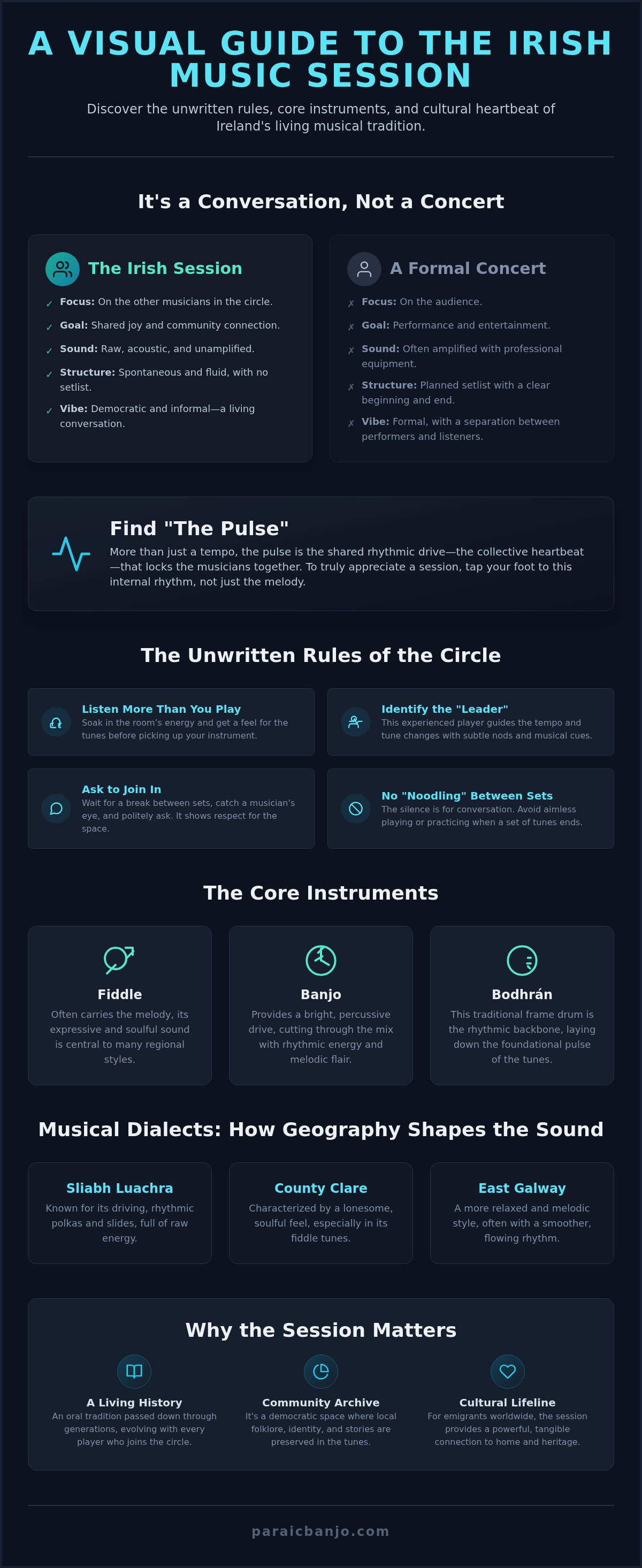
An Irish session isn't a concert where you sit in rows and clap at the end of every set. It's a democratic, informal gathering where musicians share tunes for the sheer joy of it. There's no stage and no spotlight. Instead, the cultural significance of irish session music lies in its role as a living, breathing community archive. When you walk into a pub and hear a group playing, you're hearing an oral history being passed from one generation to the next in real time. It's about the collective sound, not individual ego. There is no lead singer here; the music belongs to everyone in the circle.
At the center of every great session is "the pulse." This isn't just a tempo or a speed setting. It's a rhythmic drive that keeps the group locked together. It's the heartbeat of the music. If you want to really appreciate a session, try to tap your foot to the internal rhythm rather than just listening to the melody. This deep, driving energy is exactly what I spent 39 years honing before releasing Not Before Time – 39 Years in the Making. Capturing that pulse on a recording is like catching lightning in a bottle.
The Difference Between a Concert and a Session
In a concert, the focus is on the audience. In a session, the focus is on the other musicians. You'll notice players sitting in a circle, often leaning in to catch the subtle nuances of a fiddle's bow or a banjo's pluck. The sound is raw and acoustic. There are no amplifiers or fancy light shows; you're hearing the natural resonance of wood and string. There's no setlist either. The music flows based on the mood of the room, shifting from a lively reel to a soulful jig as the energy changes. If the room is buzzing, the music rises to meet it.
Why the Session is the Heartbeat of Irish Identity
This music has always been a lifeline. During waves of emigration, the session provided a sense of home and continuity in far-flung corners of the world. It’s a space where local folklore is preserved through the very tunes we play. Understanding the cultural significance of irish session music means seeing it as an evolving conversation rather than a museum piece. It isn't frozen in time. It evolves every time a new player joins the circle. If you're looking to bring that authentic atmosphere into your own home, you can explore the 18 live-recorded tracks on my digital album, Not Before Time – 39 Years in the Making. It's designed to make you feel like you're sitting right there in the middle of the group.
The Social Unspoken Rules: Etiquette as Cultural Preservation
If the tunes are the bones of a session, then etiquette is the grease that keeps the whole skeleton moving smoothly. It’s easy to think of these rules as barriers, but they’re actually there to protect the music. The cultural significance of irish session music is rooted in this mutual respect. When you sit in, you aren't just playing notes; you’re entering a social contract. The most important rule? Listen more than you play. Even after 39 years of playing, I still spend the first few sets of a new session just soaking in the room’s energy before I ever pick up my banjo.
Every session usually has a "Leader." This isn't a title someone wears on a badge. It’s usually the most experienced player who subtly guides the tempo and chooses when to shift gears. They don't wave a baton. Instead, they lead with a nod or a slight change in the "lift," which is the rhythmic feel and bounce of the tune. If you’re a newcomer, look for that person. They’re the anchor of the night.
Actionable Tip: Want to join in? Don't just sit down and start playing. Wait for a natural break between sets. Catch the eye of the lead musician and ask, "Mind if I join you for a few?" It’s a simple gesture that shows you value the space they’ve created.
Respecting the Tradition of "The Set"
We don't just play one tune and stop. We play a "set," which is usually three reels or jigs linked together in a sequence. The art is in the transition. You’ll hear a musician shout "hup!" or see a quick lift of the fiddle neck to signal the change. Once a set ends, resist the urge to "noodle," which is playing aimlessly or practicing your scales. Silence between sets allows for conversation and lets the room breathe.
The Role of the Listener in a Session
You don't need an instrument to be part of the session. A good audience feeds the musicians. A well-timed shout of "good man!" or a steady foot-tap on the floorboards can lift the energy of the whole pub. But remember, silence is just as powerful. During a "slow air," which is a lonesome, non-dance melody, the room should be still. This shared experience is what makes the music feel alive. Understanding the cultural significance of irish session music means recognizing that the listener is just as vital as the player. If you want to hear that energy captured perfectly, you can explore the live tracks on my debut album, which was recorded to feel like you're sitting right in the middle of the circle.
Regional Identities: How Geography Shapes the Sound
Irish music is like the landscape it comes from. It isn't a single, uniform sound. Instead, it’s a collection of local dialects that have evolved over centuries. The cultural significance of irish session music is deeply tied to these regional accents. A musician from Donegal might play with a fast, aggressive bow, while someone from the West has a completely different "swing." This variety is what keeps the tradition from becoming a museum piece. It’s a living map of the country, heard through the notes of a reel or a jig.
The East Galway style is a personal favorite of mine. It’s known for being melodic and relaxed. It doesn't rush. It breathes. There’s a deep, rolling rhythm to it that feels like an easy conversation between friends. Compare that to the Clare style, which often has a more "lonesome" or soulful touch. It’s often a bit more driving, but with a distinct, haunting quality. While modern travel and the internet have blended these styles together, purists still cherish the roots. They want to hear the specific "lift" that tells you exactly which parish the tune was born in.
The East Galway Banjo Legacy
Mastering the East Galway style requires a specific kind of rhythmic focus. It isn't just about speed; it’s about where the notes sit in the beat. I’ve spent my life immersed in this tradition, learning how to make the banjo sing with that particular West of Ireland lilt. My debut album, Not Before Time – 39 Years in the Making, is a direct result of that decades-long immersion. It features 18 tracks that celebrate this specific way of playing. If you want a deeper look at these nuances, you can read more about the East Galway vs Clare music styles and how they shape the rhythmic soul of the West.
Why Style Matters to the Session's Significance
Style is the unique fingerprint a community leaves on a tune. It’s like an accent; it tells you where the musician is from and who taught them. When we play a tune in a specific regional way, we’re honoring the "old masters" who came before us. We’re preserving local history without saying a single word. This is the true cultural significance of irish session music. It’s a way of keeping the memory of a place alive through the vibration of a string or the breath in a flute. It's about identity. It's about knowing where you stand in a long line of players. Every time you pick up an instrument, you’re adding your own voice to that storied history.
How to Experience a Session: Tips for Listeners and Learners
Walking into an Irish pub for the first time can feel like crashing a family reunion. You see the cluster of chairs, the pints on the table, and the flurry of fingers. Don't be put off. The cultural significance of irish session music is built on sharing, not exclusion. To truly enjoy the experience, you need to know what you're hearing. If you approach it as a curious observer rather than a passive tourist, you'll find the room opens up to you in a completely different way.
Actionable Tip: Start by identifying the instruments and their roles. The fiddle often carries the melody with its singing bow. The flute adds a hollow, woody texture that fills the gaps. The banjo, my own instrument of choice, provides a bright, percussive drive that cuts through the room. Finally, look for the bodhrán, which is a traditional Irish frame drum that acts as the heartbeat. Understanding these roles helps you appreciate how the collective sound is constructed without a single conductor.
You’ll also hear a shift in energy throughout the night. A "slow air" is a melody played without a steady beat; it’s purely emotional and often based on old Gaelic songs. When the tempo kicks up into a "reel," you’re hearing fast, driving dance music. If a tune catches your ear, wait for a break between sets. Most musicians are happy to tell you the name of a tune if you ask politely. It’s a great way to start building your own mental library of the tradition.
Finding an Authentic Session
Authenticity isn't found on a stage with a microphone. Look for "corner sessions" where the players are sitting in a circle, often in the quietest part of the pub. These are the real deal, where the cultural significance of irish session music is most palpable. You can check local community boards for "trad sessions" to find where the locals gather. Before you head out, check out our guide on how to buy traditional Irish music so you know what to listen for in a quality performance.
Starting Your Own Music Collection
If you want to learn, avoid over-produced studio tracks that lose the grit and energy of the real thing. Instead, look for "session-style" albums. These recordings capture the raw interaction between players. Actionable Tip: Always choose albums with detailed liner notes. They are a goldmine for learning the history and the specific regional style behind each track. Listening to the rhythmic drive on my debut album can help you get that specific East Galway swing into your head. If you’re ready to start your collection, you can explore the tracks on Not Before Time – 39 Years in the Making here.
Preserving the Pulse: Why Recording the Session Matters Today
Recording a session is a bit like trying to bottle a storm. You can capture the sound, but it’s much harder to catch the energy, the eye contact, and the split-second decisions that happen between players. This is where the true cultural significance of irish session music becomes a challenge for the studio. For my debut, Not Before Time – 39 Years in the Making, I knew we couldn't just play into microphones in isolated booths. We had to record live. We brought together a group of incredible performers to capture those 18 tracks in a way that feels raw and immediate. It’s about preserving that "pulse" we talked about earlier, ensuring you feel like you are sitting right there in the snug.
Actionable Tip: When you get a new album, sit down with the liner notes first. Treat them like a map. They often reveal the stories behind the tunes, the people who taught them, and the specific regional history that gives the music its soul. These notes act as a written record of an oral tradition that might otherwise be lost to time.
The Role of the Modern Collector
Physical CDs remain the gold standard for purists and historians alike. While digital files are convenient, a physical disc with its accompanying artwork and notes is a piece of history you can hold. Supporting artists by buying direct ensures that this tradition continues to thrive. It allows a musician to spend decades, in my case 39 years, honing their craft before releasing a definitive statement of their life's work. If you are looking for something tangible to add to your library, exploring the best traditional Irish session music CDs is a great way to start your journey as a dedicated collector.
Conclusion: Bringing the Session Home
The session is a gift of community that belongs to everyone. It doesn't matter if you have been playing for forty years or if you have never held a fiddle in your life; you can still feel the heart of it. This music isn't a museum piece. It is a living, breathing conversation that invites you to pull up a chair. Take that first step in your journey by listening to authentic recordings that honor the roots of the tradition. You can experience the soul of the session with 'Not Before Time – 39 Years in the Making' by Páraic Banjo and bring that storied energy into your own home today. I hope these tunes speak to you as deeply as they have spoken to me over the years. Cheers for listening.
Join the Living Tradition
The Irish session isn't just a gathering in a pub; it's a vibrant oral archive that keeps our history alive through every pluck and bow. By understanding the etiquette of the circle and the distinct accents of regional styles, you move from being a spectator to a guardian of the tradition. The cultural significance of irish session music lives in that shared pulse between the musicians and the listeners. It’s a gift that spans generations, and it’s one you can now carry with you wherever you go.
If you’re ready to bring that authentic energy into your own home, you can own a piece of Irish musical history with 'Not Before Time – 39 Years in the Making'. This debut album was 39 years in the making, featuring 18 tracks recorded live to capture the raw spirit of a real gathering. I’ve also included deeply researched liner notes to act as your guide through the stories and styles of the West. Pick up your copy and let the music start its own conversation in your living room. The tradition is waiting for you. Pull up a chair and listen in.
Frequently Asked Questions
What is the difference between an Irish session and a Ceili?
An Irish session is an informal gathering where musicians play for each other; a Ceili is a structured dance event where the music provides the rhythm for specific sets of steps. While sessions happen in pub corners without a stage, Ceilis often take place in larger halls with a band on a platform. If you’re at a session, you’re there to listen or play. At a Ceili, you’re there to move and follow a caller’s instructions.
Can anyone join an Irish music session?
Most sessions are open to newcomers, provided you follow the unwritten rules of etiquette. It's essential to listen for a few sets before asking the lead musician if you can sit in. If you don't know the tunes being played, it's better to keep your instrument in its case. This respect for the circle is part of the cultural significance of irish session music, ensuring the quality and flow of the music remain high for everyone.
Why is the tenor banjo so popular in Irish session music?
The tenor banjo is beloved because its bright, percussive tone cuts through the sound of louder instruments like the accordion or pipes. It provides a crisp rhythmic drive that helps define the "lift," which is the bouncy, infectious feel of a tune. Unlike the five-string banjo used in bluegrass, the four-string tenor banjo is tuned to match the range of the fiddle, making it perfect for playing the fast-paced melodies found in traditional Irish music.
What are the most common tunes played at an Irish session?
You’ll mostly hear three main types of tunes, with reels being the most common staple. Tunes like "The Maid Behind the Bar" or "The Kesh Jig" are found in the general pool of 400 to 500 commonly played pieces.
Reels: Fast tunes with a steady, four-beat rhythm.
Jigs: Bouncy tunes with a triplet feel.
Hornpipes: Slower tunes with a distinctive rhythmic swing.
Learning these standards helps you participate, as a proficient player often needs a repertoire of over 200 tunes.
How long does a typical Irish music session last?
A typical session usually lasts between two and four hours, though they can go much longer if the energy is right. Most pub sessions start around 9:00 PM and wrap up near closing time. There aren't formal breaks like you’d find at a concert. Instead, the music flows in sets, with short pauses for conversation and a sip of a pint between the tunes. It's a marathon of shared stamina and spirit.
Is it okay to record a session on my phone?
It’s generally polite to ask the musicians before you start recording on your phone. Most players don't mind if it's for personal use or learning, but holding a bright screen in their faces can be distracting. If you want to record, try to be discreet and keep the phone at chest level. Remember that a live session is about the moment; sometimes it's better to just put the phone away and soak in the atmosphere.
What does 'playing with spirit' mean in traditional music?
Playing with spirit means injecting emotion and "lift" into the music rather than just playing the notes perfectly. It's about that rhythmic bounce that makes people want to tap their feet. In the context of the cultural significance of irish session music, spirit is the connection between the player, the instrument, and the community. It’s the difference between a technical exercise and a living, breathing piece of Irish heritage that feels soulful and authentic.
Where can I find the best Irish session music to listen to at home?
For a truly authentic experience, look for live-recorded albums that capture the raw interaction of a group. My debut album, Not Before Time – 39 Years in the Making, features 18 tracks recorded live to mirror the energy of a real session. Unlike polished studio productions, these tracks preserve the natural resonance and rhythmic drive of the East Galway style. You can find the physical CD or digital download on this website to bring the session home.


Comments