The Essential Albums Showcasing East Galway Banjo Style in 2026
- Paraic Mac Donnchadha

- Jun 28
- 13 min read
The secret to a great banjo tune isn't how many notes you can cram into a measure, but how much room you leave for the rhythm to breathe. If you've ever felt that modern recordings move too fast to catch the subtle details, you aren't alone. It's easy to get frustrated when the distinct, rhythmic lift of a regional tradition gets lost in a blur of speed. Finding the right albums showcasing east galway banjo style is about more than just picking a record; it's about finding a heartbeat that matches the dancers on the floor.
I've spent nearly four decades immersed in this music, and I know how confusing it can be to separate the driving Clare pulse from the soulful, relaxed swing of East Galway. This guide cuts through the noise to bring you a curated list of recordings that define our tradition. You'll learn how to identify that gritty nyah, which is the soulful, authentic feeling in the playing, and the specific rhythmic lilt that makes this style so infectious. Whether you're a seasoned player or a newcomer, you can pick up the digital album of Not Before Time to hear these principles in action. Let's look at the albums that serve as the ultimate roadmap for your own playing.
Table of Contents
The Pulse of the West: What Defines East Galway Banjo Style?
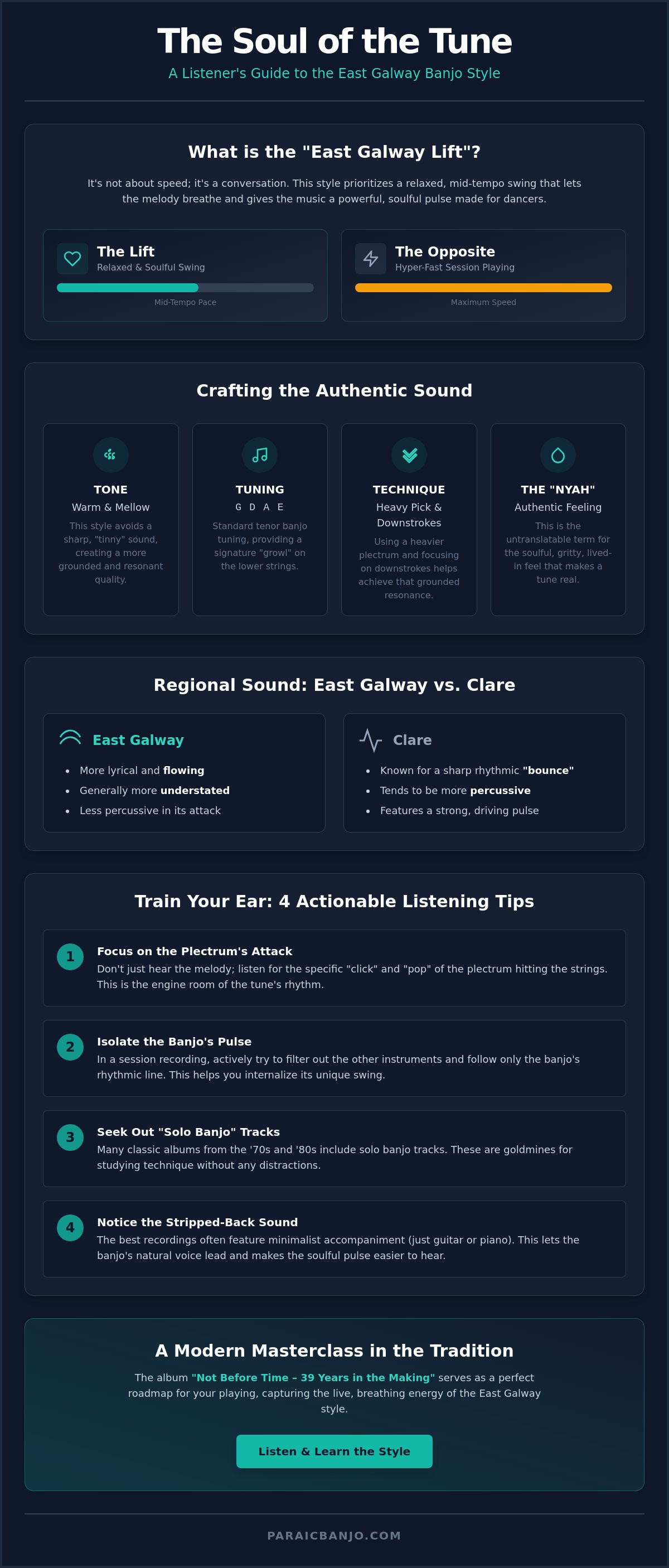
The East Galway style isn't a race. It's a conversation. While some regions prize blistering speed, this tradition focuses on a relaxed, mid-tempo pace often called the "East Galway Lift." This isn't just about playing slower; it's about prioritizing the melody and finding the soulful pulse that makes people want to dance. When you're hunting for albums showcasing east galway banjo style, you're looking for that specific swing that feels like a deep breath. It's a style built on feeling, where every note is given its own space to shine. It's the opposite of "hyper-fast" session music that can sometimes feel like a blur.
You'll notice right away that the sound is different. Many players in this region shy away from a sharp, "tinny" tone in favor of something much warmer and more resonant. This mellow quality is often achieved through specific plectrum choices and the heavy GDAE tuning common on the tenor banjo. This tuning provides a signature "growl" on the lower strings, giving the music a gritty, authentic texture. If you want to capture this yourself, try using a slightly heavier pick and focus on your downstrokes to find that grounded resonance. You can hear this rich sound across all the individual digital tracks of my recent work, where the instrument's natural voice really takes center stage.
The Ballinakill Influence
The roots of this sound stretch back to the early 20th century. The Ballinakill Céilí Band set a standard for tempo and phrasing that still influences us today. They taught us the importance of articulation, which means making sure every single note counts rather than letting them run together. For anyone starting their musical journey, this deliberate approach is the perfect foundation. It forces you to master the rhythm before you ever worry about the tempo.
Galway vs. Clare: Spotting the Difference
It's easy to get the two mixed up, but they have distinct souls. Galway’s approach is often more lyrical and flowing, while Clare music tends to have a sharper rhythmic "bounce." They overlap beautifully, but the East Galway sound is generally more understated and less percussive. For a deeper dive into these regional nuances, check out our East Galway vs Clare music guide to see how these identities live side-by-side.
To really "hear" this style, listen for the plectrum attack. Don't just listen to the melody; listen for the "click" and "pop" of the strings against the skin of the banjo. That's the engine room of the tune. If you're looking for a definitive example of this rhythmic soul, you can find the physical CD of Not Before Time – 39 Years in the Making, which captures that live, breathing energy perfectly. It's about finding the "nyah," that soulful, gritty feeling that makes a tune feel lived-in and real. This is why albums showcasing east galway banjo style are so vital; they preserve a way of playing that refuses to sacrifice soul for speed.
The Legends: Classic Albums Every Banjo Purist Needs
Finding the right albums showcasing east galway banjo style means looking backward before you look forward. For many of us, the recordings from the 1970s and 80s remain the absolute gold standard. These albums aren't just collections of tunes; they are the "Old School" blueprint that teaches us how to handle the instrument with respect. They capture an unbroken chain of musical lineage, passing down the secrets of the great masters who played in kitchens and dance halls long before recording studios existed. If you want to hear the plectrum work with total clarity, a great tip is to look for albums that specifically label tracks as "Solo Banjo." This removes the "wall of sound" from large bands and lets you study the subtle triplets and rhythmic variations that define our region.
The beauty of these classic recordings often lies in what is missing. You won't find heavy drums or complex synthesizers here. Instead, you'll hear minimalist guitar or piano accompaniment that stays out of the way, allowing the banjo's natural voice to lead. This stripped-back approach is essential for anyone trying to master the style. It highlights the "soulful pulse" we discussed earlier, making it easier to hear how the player interacts with the rhythm. For those building a library, exploring a traditional irish session music cd can provide a broader context for how the banjo fits into the wider West of Ireland sound.
Essential Historical Recordings
You can't talk about the history of the instrument without mentioning the Flanagan Brothers. Their early Irish-American recordings brought a lively, driving energy that still resonates today. Later on, Kieran Hanrahan’s contributions became vital for anyone seeking technical clarity and a true regional sound. While some of these gems might be out of print, many have been preserved in digital archives or re-released for a new generation of listeners. Recent academic work, including a stylistic analysis of East Galway banjo, has highlighted just how important these historical figures are to our modern understanding of the craft.
Why Purists Prefer These Recordings
Purists often gravitate toward these older albums because they lack the over-production common in modern folk-pop. You hear the raw resonance of the wood and strings, capturing that authentic session energy even in a studio setting. There's a certain "grit" in these recordings that feels deeply personal, as if you're sitting right across from the player. If you're looking to bring that same authentic feel into your own home, you can start by exploring individual digital tracks that focus on these traditional techniques. It’s about honoring the past while finding your own voice within it. Happy listening!
The Modern Torchbearers: New Recordings Preserving the Tradition
The idea that this music only exists in grainy, black-and-white archives is a myth. Today, a "New Wave" of players is using 21st-century technology to capture the East Galway sound with breathtaking clarity. These modern albums showcasing east galway banjo style prove that you don't need to play at breakneck speeds to be relevant. In fact, many of today’s finest musicians are deliberately slowing things down to ensure the "lift" remains the priority. When you’re looking for these gems, there is a significant shift toward buying traditional irish music direct from artist. This ensures the heritage is supported and that you’re getting the most authentic version of the work, often with personal notes that you won't find on major streaming platforms.
High-Quality Digital vs. Physical CDs
Choosing between a download and a disc often comes down to how you like to learn. High-bitrate digital files are incredible for hearing the "attack" of the plectrum, allowing you to catch every subtle triplet. However, physical CDs remain the gold standard for those who love the story behind the tunes. They offer detailed liner notes that act as a masterclass in history. A quick tip for your search: always check the sample tracks before you commit. Look for a steady, driving rhythm that feels grounded. If the sample feels like it's tripping over itself, it might not be the pure East Galway sound you're after. You can find this balance of modern clarity and traditional soul in the digital album of Not Before Time, which was designed to bridge this gap.
The Role of Collaboration
Modern recordings often highlight the classic pairing of the flute and banjo. This combination is a cornerstone of East Galway's musical traditions, where the breathy notes of the flute complement the percussive "pop" of the strings. In these settings, guest musicians are there to enhance the banjo's pulse, not drown it out. The goal is to capture a "live" feel within the studio, mimicking the energy of a real session. This collaborative spirit is what keeps the music evolving while staying rooted in the past. It’s a joy to hear how different instruments can lean into that shared rhythmic lilt without losing their own unique character. If you're looking for a definitive statement on this, my own physical CD features 18 tracks recorded live with a host of incredible musicians who understand this delicate balance. Let's dig deeper into how you can train your ears to spot these nuances.
How to Listen: Actionable Tips for Spotting the East Galway Lift
Listening is a skill you sharpen over time. It’s the difference between hearing a wall of sound and hearing the individual heartbeat of a tune. When you’re diving into albums showcasing east galway banjo style, you need to move past passive enjoyment. Start by isolating the plectrum. Don’t just follow the melody; listen for the physical "click" and "pop" of the pick hitting the strings. This percussive attack is the engine room of the East Galway sound. It’s what gives the music its grit and authenticity. Without that physical connection to the instrument, the tunes lose their grounded, earthy feel.
One of the best ways to test a player’s regional roots is the "Triplet Test." In our tradition, triplets aren't just fancy decorations. They are rhythmic tools used to drive the tune forward. A triplet is simply three notes played in the time it usually takes to play two. Listen for how the player places them. Do they feel rushed? Or do they land with a solid, grounded weight? In the individual digital tracks of my latest project, I’ve made sure these ornaments serve the rhythm first, keeping that soulful pulse alive throughout every set. It’s about using the instrument to create momentum rather than just showing off speed.
The Two-Step Listening Technique
If you’re struggling to find the "lift," try this two-step approach. First, ignore the banjo entirely and listen only to the bass note of the accompaniment. This is your pulse. Second, bring your focus back to the banjo and see how the player "pushes" or "pulls" against that pulse. The "lift" is the tiny delay before a beat that creates a sense of anticipation. It’s that slight hesitation that makes your foot want to tap. It’s a feeling you can’t transcribe on paper, but you’ll know it when you feel it in your bones.
Identifying Regional Tunes
Certain reels and jigs are the bread and butter of the East Galway repertoire. Tunes like "The Shaskeen" or the intricate compositions of Paddy Fahey are perfect benchmarks. Because so many players record these, you can use them to compare different styles side-by-side. Notice how a Clare player might bounce through a reel while a Galway player lets it flow with a more lyrical, steady drive. To build a collection that truly represents these nuances, I always recommend you buy traditional irish music that includes detailed information on tune origins. This context is what turns a casual listener into a true student of the tradition. If you’re ready to start your own analysis, you can download the digital album of Not Before Time and start mapping out these rhythms today.
Not Before Time: A Masterclass in Rhythmic Soul
It’s one thing to talk about the "lift" and the "nyah" of a tradition, but it’s another thing entirely to hear it distilled into a single project. After decades of playing in kitchens, pubs, and concert halls, I finally put those years of experience into "Not Before Time – 39 Years in the Making". This isn’t just a debut album; it’s a definitive statement on what makes our music breathe. When people ask for albums showcasing east galway banjo style, this is the work I point to because it refuses to compromise on the soul of the music. We recorded 18 tracks with a focus on raw, session-style energy, ensuring that the rhythmic clarity remains the star of the show. It’s a project that honors the past while standing firmly in the present.
One of the best ways to use this album as a learning tool is to pair your listening with the detailed liner notes. These notes aren't just filler. They are a vital part of preserving our musical history. A practical tip for any student of the banjo is to use these notes to trace the lineage of each tune. Understanding who played a reel forty years ago helps you understand why we play it the way we do today. This context is what gives your playing depth and authenticity. You can hear this historical weight in every set, from the driving reels to the more lyrical jigs that define the West of Ireland sound.
What Makes This Album Unique?
The "39 years in the making" philosophy means this project wasn't rushed to meet a commercial deadline. It was allowed to mature, much like the tunes themselves. I chose a mix of rare gems that haven't been heard in years along with beloved standards from the West. The collaborative spirit on the record is palpable. I was joined by expert musicians who don't just play the notes; they understand the regional pulse. This isn't the work of a solitary artist, but a celebration of a community that has kept this music alive for generations. It captures that elusive "live" feel that is so often lost in modern studio recordings.
How to Get Your Copy
You have a few ways to bring this music into your own home and support the tradition. For the collectors, the limited-edition physical CD is the way to go. It comes with the full artwork and those essential notes we discussed. If you’re eager to start listening right now, the high-quality digital album gives you immediate access to all 18 tracks. You can even pick up individual digital tracks if there’s a specific set that you want to analyze first. To start your journey and hear one of the definitive albums showcasing east galway banjo style, you can order Not Before Time – 39 Years in the Making directly from me today. Let the music do the talking!
Keep the Tradition Alive in Your Own Playing
The journey into the heart of East Galway music is one of discovery and steady rhythm. You've learned how to spot the "lift" and why a mellow, grounded tone defines our regional soul. By training your ears to catch the plectrum attack and focusing on the space between the notes, you're already becoming a more mindful listener and player. Finding the right albums showcasing east galway banjo style is the best way to keep that inspiration flowing in your daily practice.
It’s about more than just collecting tracks; it’s about joining a living lineage. My debut album, Not Before Time – 39 Years in the Making, was created to be a definitive resource for this very purpose. Featuring 18 tracks of pure traditional session music, it captures the raw energy of a lifetime spent within the tradition. You can pick up the limited-edition physical CD to enjoy the full artwork and historical notes, or start your study immediately with a digital download. Explore the Soulful Sound of "Not Before Time" – Shop Now and bring the pulse of the West into your home. Don't be afraid to take it slow and let the tunes sink in. The music is waiting for you to find your own place within it. Keep the plectrum moving!
Frequently Asked Questions
What is the East Galway style of Irish music?
It’s a relaxed, mid-tempo approach that puts the melody first and refuses to rush. This tradition is heavily influenced by the regional flute and fiddle players, creating a lyrical flow that feels grounded and steady. It’s built specifically for dancers, focusing on a rhythmic "swing" rather than the "hyper-fast" speeds you might hear in modern sessions.
Why is the tenor banjo so important in East Galway music?
The banjo serves as the percussive engine that keeps the melody moving. Its sharp attack provides a clear definition that cuts through the fluid lines of other instruments. In our part of the world, the banjo isn't just playing notes; it’s providing a soulful, driving heartbeat that keeps the dancers on the floor and the rhythm in check.
What is the best tuning for an Irish tenor banjo?
GDAE is the standard tuning, which sits exactly one octave below a fiddle. This setup is crucial because it allows the instrument to produce a signature "growl" on the lower strings. To get that authentic resonance, I recommend using a slightly heavier string gauge, which helps you achieve the mellow, soulful tone that East Galway players prefer over a sharp or tinny sound.
Can I learn the East Galway style by listening to albums alone?
Listening is the foundation, but you have to move from passive hearing to active analysis to truly catch the nuances. Studying albums showcasing east galway banjo style helps you internalize the rhythmic lift and the subtle plectrum work that defines our sound. Use these recordings as a roadmap, focusing on slow, deliberate articulation before you ever try to increase your speed.
Where can I buy authentic East Galway banjo albums?
You’ll find the most authentic recordings by looking for independent retailers who live and breathe traditional music, or by purchasing directly from an artist's own site. Buying direct is a fantastic way to support the heritage and often gives you the best access to background stories and tune origins. For a deep dive into this regional sound, you can pick up the physical CD or digital album of Not Before Time – 39 Years in the Making right here on our storefront.
Are digital downloads as good as physical CDs for traditional music?
High-bitrate digital downloads are incredible for hearing the "click" and "pop" of the plectrum with total clarity. However, physical CDs are still the gold standard for anyone who values the story behind the music. They offer detailed liner notes that act as a historical masterclass. If you’re looking for immediate access to 18 traditional tracks, our digital album captures every rhythmic detail without losing the soul of the session.
What is the difference between East Galway and Clare banjo styles?
Galway’s approach is generally more lyrical and flowing, while the Clare style is known for a sharper, more percussive "bounce." Galway players tend to let the melody breathe with a steady drive, whereas Clare music often has a more pronounced rhythmic "hop." Both are beautiful, but the Galway swing is often described as being more understated and soulful in its delivery.
Who are the most famous East Galway banjo players?
Páraic Mac Donnchadha is a modern master of the craft, and his debut is widely regarded as one of the essential albums showcasing east galway banjo style in the modern era. You should also look into the historic recordings of the Ballinakill Céilí Band and technical masters like Kieran Hanrahan. These players have spent decades honing the specific rhythmic "nyah" and soulful lift that make our music so distinct.


Comments