The History of the Tenor Banjo in Irish Music: Legends, Styles, and the Rhythmic Pulse

What if the most essential instrument in a crowded Irish pub session wasn't the fiddle or the pipes, but a four-stringed immigrant from the American vaudeville stage? It's a bold claim, but for those who've felt the floorboards shake during a high-energy reel, it's an undeniable truth. You've likely felt the frustration of scrolling through generic "Best of Irish" playlists that miss the true soul of the tradition; or perhaps you've been left scratching your head when a session player mentions the subtle, rhythmic "lift" of an East Galway tune. We know that finding an authentic, storyteller-led perspective in a sea of digital noise can be a real struggle.
This article changes that. You're going to discover the history of the tenor banjo in irish music and how this "gutsy growl" became the heartbeat of the session. We'll explore the secrets of the masters who shaped its soulful sound, from the steady pulse of Clare to the intricate ornamentation of Galway. By the end, you'll have a curated list of essential legends to listen to and a deeper understanding of the regional styles that define our living tradition. It's a journey through a musical legacy that, much like the debut album Not Before Time – 39 Years in the Making, represents a lifetime of passion. Let's dive in.
Table of Contents
The Unlikely Journey: History of the Tenor Banjo in Irish Music
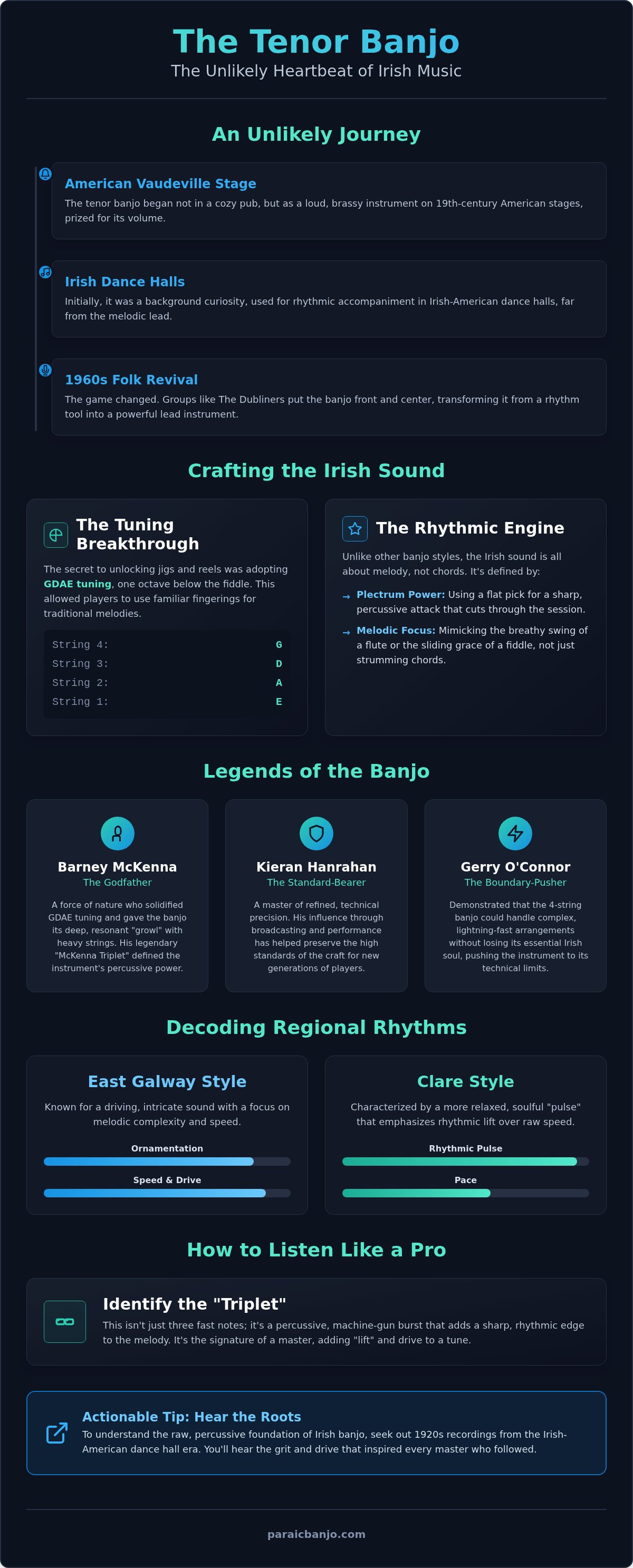
The banjo didn't arrive on Irish shores with a pedigree of ancient reels. It was a loud, brassy immigrant from the 19th-century American vaudeville stage. Exploring the History of the Banjo reveals a winding path from African roots to the United States before it ever found its way into the hands of Irish emigrants. For decades, it remained a curiosity in dance halls, often relegated to the background. Then, something shifted. By the 1960s folk revival, the tenor banjo exploded into the mainstream. Groups like The Dubliners didn't just include it; they put it front and center. Barney McKenna’s heavy, melodic picking style turned what was once a rhythmic accompaniment tool into a lead powerhouse. It’s a transformation that defines the history of the tenor banjo in irish music, proving that tradition isn't static; it's alive and hungry for new sounds.
From Rhythm Section to Center Stage
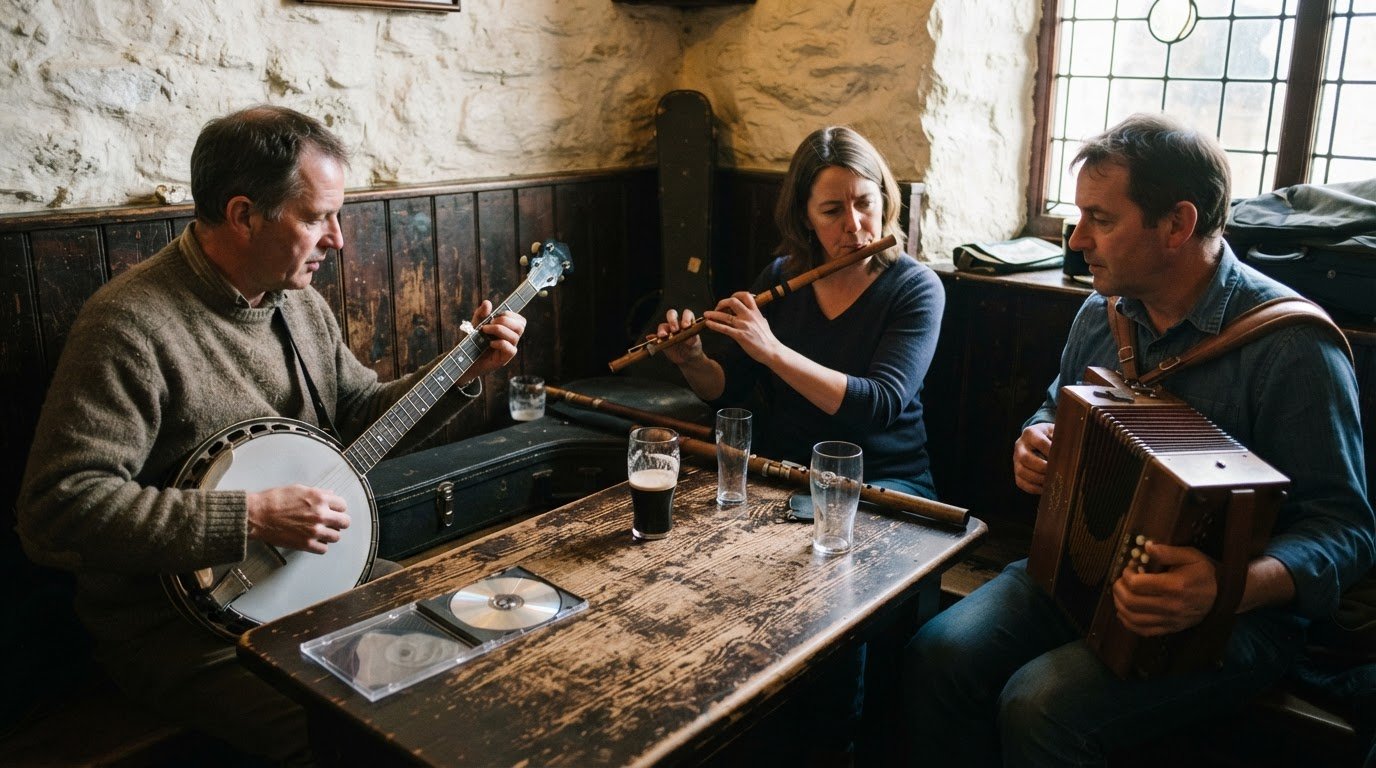
Why did players choose the 4-string tenor over its 5-string cousin? It came down to the roar of the room. Before microphones became standard, musicians needed sheer volume to be heard over stomping feet in crowded pubs. The tenor banjo, with its shorter neck and punchy resonator, cut through the noise like a knife. The real breakthrough was the widespread adoption of GDAE tuning. By tuning the instrument one octave below the fiddle, players could use familiar fingerings for jigs and reels. This allowed the banjo to move from clunky, three-chord strumming to the crisp, intricate melodic lines we celebrate today. It stopped being the "noise in the corner" and became the rhythmic engine of the session.
Defining the 'Irish' Tenor Banjo Sound
Irish banjo playing is a different beast entirely from bluegrass or jazz. We don't focus on rolls or complex chords. Here, it’s all about the melody. The use of a plectrum or flat pick is essential, providing the sharp, percussive attack needed for those driving triplets that mimic the "lift" of a master fiddler. When you hear a great player, you're hearing the banjo mimic the breathy swing of a flute or the sliding grace of a fiddle. It's a rhythmic pulse that feels both ancient and electric. It’s exactly that live, breathing energy we captured across the tracks of Not Before Time – 39 Years in the Making. Understanding the history of the tenor banjo in irish music means recognizing this shift from mere rhythm to soulful, melodic expression.
Actionable Tip: To truly understand the raw, percussive roots of the instrument, seek out 1920s recordings from the Irish-American dance hall era. You'll hear a grit and drive that laid the foundation for every master who followed.
The Mount Rushmore of Irish Banjo: Legends You Need to Know
If the 1960s revival provided the spark, then a handful of masters provided the fuel that changed the instrument's trajectory forever. The history of the tenor banjo in irish music is etched into the fingertips of a few legendary figures who dared to treat the four-string as a serious melodic voice. While we've discussed how the instrument arrived in Ireland, it was these individuals who gave it a soul. They didn't just play tunes; they built a vocabulary of triplets, slides, and rhythmic pulses that we still study today.
Barney McKenna: The Godfather of the Tenor
You can't speak about the banjo without starting with "Banjo Barney" McKenna. He was a force of nature. By opting for heavy gauge strings and solidifying the GDAE tuning, he gave the banjo a deep, resonant growl that could hold its own against any accordion or fiddle. His most significant contribution was the "McKenna triplet." This wasn't just a technical flourish; it was a percussive, machine-gun burst of three notes that added a sharp edge to standard jigs and reels. He moved the instrument from the background into the spotlight, proving it could lead a band with both power and grace. His work with The Dubliners remains the definitive starting point for any serious student of the history of the banjo in the tradition.
Kieran Hanrahan: A master of refined, technical precision whose influence through broadcasting has helped preserve the high standards of the craft.
Gerry O'Connor: Often cited as a boundary-pusher, Gerry demonstrated that the 4-string banjo could handle complex, lightning-fast arrangements without losing its Irish heart.
John Carty: Represents the "soulful flow." His playing feels completely effortless, prioritizing the melodic "swing" over sheer speed.
Technical Innovators vs. Traditional Purists
As the music evolved, a fascinating divide emerged between high-speed technical innovators and those dedicated to the traditional rhythmic pulse. While "flashy" playing can be breathtaking, many seasoned players argue that the "swing" is what truly matters in a session. Players like Tommy Sullivan helped define this rhythmic drive, ensuring that the banjo remained the engine of the music. It’s a balance of speed and soul. If you want to hear this balance in action, you can explore the authentic regional styles captured on my latest project, which serves as a tribute to these very traditions.
Actionable Tip: Seek out early live tracks from The Dubliners. Don't just listen to the singing; focus on the raw energy Barney McKenna brings to the plectrum. You’ll hear a grit that digital recordings often smooth over.
East Galway vs. Clare: Exploring Regional Rhythmic Styles
Regional styles are the true heartbeat of the tradition. If you've spent any time in the West of Ireland, you'll know that a player’s identity is often tied to the soil they stand on. In the history of the tenor banjo in irish music, these regional nuances aren't just minor details; they're the very soul of the performance. It’s the difference between a tune that races toward the finish and one that takes the scenic route. For a dedicated listener, being able to distinguish a Galway "pulse" from a Clare "lift" is like learning to read the secret map of the music itself.
The East Galway Pulse
The East Galway style is often described as "lonesome" or "soulful." It’s a deliberate, steady approach that prioritizes the resonance of the string over the speed of the plectrum. You aren’t just hitting notes; you’re letting them speak. This style is heavily influenced by the local fiddle and flute traditions, where the melody is allowed to stretch and sigh. It’s about the "nyah" or the feeling behind the tune. For a deeper dive into these nuances, you can Learn more about East Galway vs Clare music in our detailed guide. Recent academic research on the banjo in Irish music highlights how these regional identities were forged through local house sessions and the migration of tunes between parishes.
Clare Rhythms and the Session 'Lift'
Clare music is famous for its "lift." It’s that bouncy, infectious energy that compels you to tap your foot before you even realize you’re doing it. In a Clare session, the banjo often takes on a percussive role, providing a rhythmic drive that keeps the dancers moving. The pulse here is brisk but never rushed; it’s a controlled energy that keeps a session together even when the tempo picks up. It’s a dance-first philosophy that has defined the history of the tenor banjo in irish music in the county for generations.
My own playing is a bridge between these two worlds. Across the 18 tracks of Not Before Time – 39 Years in the Making, I’ve aimed to capture that specific West of Ireland energy where the soul of Galway meets the drive of Clare. It’s a definitive statement of a lifetime spent listening to these regional masters and finding where their rhythms intersect.
Actionable Tip: Find a recording of a common reel, like "The Mason's Apron," played by a Galway player and then by a Clare player. Pay close attention to the space between the notes. You'll quickly spot the difference in the "swing" and how the rhythm moves.
How to Listen Like a Pro: Identifying Banjo Mastery
Listening to a master isn't about counting notes per second. It's about feeling the space between them. When you dive into the history of the tenor banjo in irish music, you realize the best players aren't always those who play the fastest, but those who play with the most "lift." Mastery is subtle. It’s found in the way a player leans into a turn or how they vary a melody when it repeats for the third time. To truly appreciate the craft, you have to look past the surface and hear the conversation happening between the plectrum and the strings.
One of the clearest signs of a pro is their relationship with the beat. We call it the "pulse." While a beginner might hit every note exactly on the metronome, a master often stays slightly "behind the beat." This creates a swingy, relaxed feel that makes the music breathe. It’s a rhythmic tension that defines the great West of Ireland sessions. If the music feels like it’s rushing you, it’s likely missing the soul. If it feels like it’s inviting you to dance, you’re listening to a master at work.
Decoding Ornamentation (Triplets and Cuts)
The "triplet" is the hallmark of the Irish banjo. It’s three notes played in the space of one or two beats, creating a percussive, machine-gun burst. But it’s not just for show. The best players use triplets, cuts, and rolls to add texture and mimic the techniques of fiddlers and pipers. They use these flourishes to enhance the rhythm, never to hide a lack of melody. A well-placed cut provides a sharp, rhythmic accent that gives a reel its "drive." If you can hear the individual notes within the triplet clearly, you’re listening to someone with serious plectrum control.
Building an Authentic Collection
If you want to hear the real sound, avoid over-produced studio albums. They often polish away the very thing that makes the banjo special: the "click." That percussive sound of the pick hitting the string is part of the instrument's DNA. Purists value the raw, "live" energy of a recording because it captures the session's heartbeat. It’s why we recorded all 18 tracks of Not Before Time – 39 Years in the Making live in the studio. To help you find the good stuff, Check out our guide on how to buy traditional Irish music. For those ready to experience the rhythmic soul of the East Galway tradition, you can explore my latest recordings here.
Actionable Tip: Close your eyes and don't try to follow the melody. Instead, try to tap your foot only to the "swing" of the rhythm. If you find yourself naturally swaying rather than just tapping, the player has mastered the pulse.
Keeping the Pulse Alive: Supporting the Living Tradition
The history of the tenor banjo in irish music isn't a closed book found on a dusty library shelf. It’s being written right now in the quiet kitchens of East Galway and the crowded back rooms of Clare pubs. This music is a living, breathing thing, but it’s also fragile. It relies on more than just nostalgia; it requires a community that values the "nyah" and the specific, soulful nuances of regional styles. When you support independent artists, you aren’t just buying a collection of tunes. You’re ensuring that the rhythmic engine of our culture keeps turning. Every plectrum stroke on a new recording is a bridge to the masters who came before us and a signal to those yet to pick up the instrument.
The Story of 'Not Before Time – 39 Years in the Making'
My debut album, 'Not Before Time – 39 Years in the Making,' is a definitive statement of this enduring legacy. This wasn't a project born of a quick studio session or a commercial deadline. It represents nearly four decades of listening, learning, and absorbing the pulse of the West. To capture the honest, unvarnished energy of a real session, we recorded 18 tracks live with a group of expert collaborators. There are no digital tricks or overdubs here; just the raw, percussive drive of the banjo as it was meant to be heard. You can Discover the definitive Not Before Time – 39 Years in the Making album and hear how these recordings serve as a historical record of our shared tradition.
Support Independent Irish Music Directly
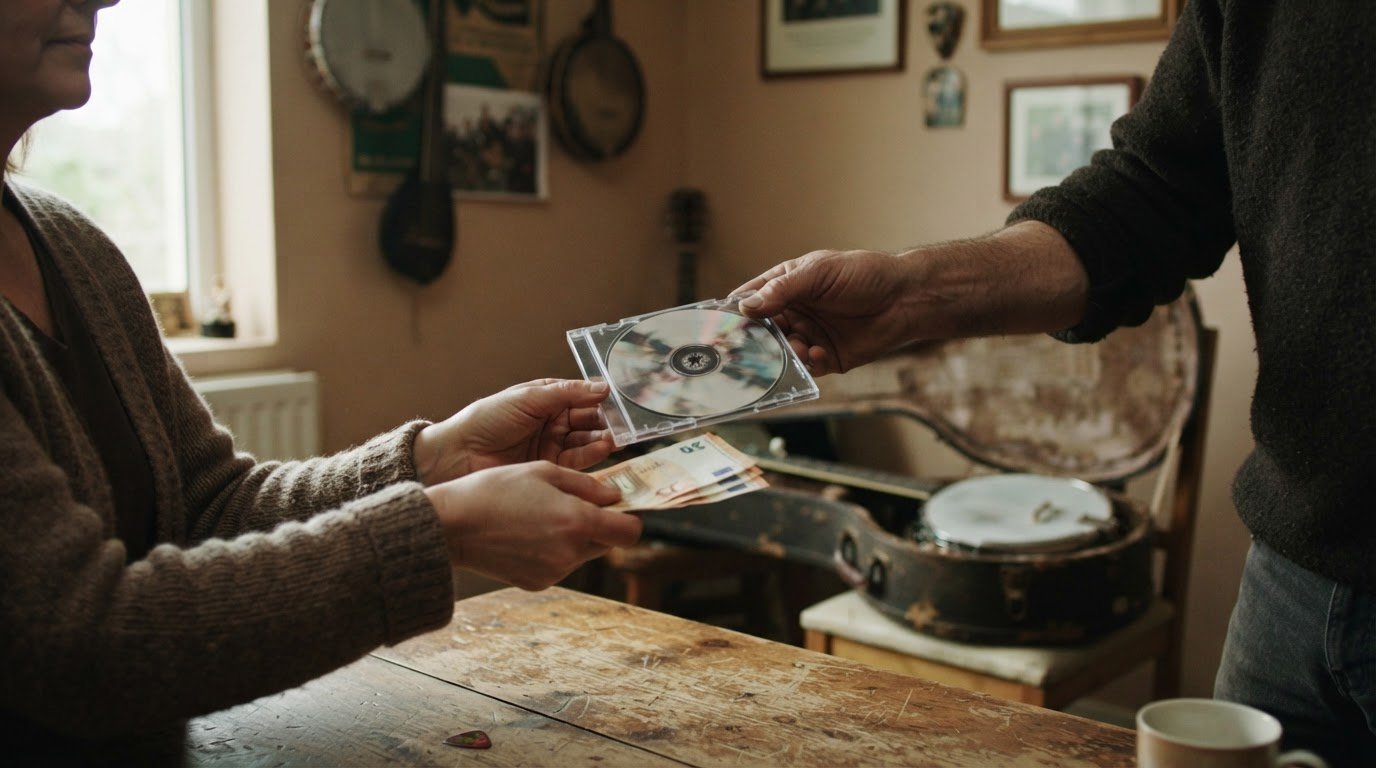
In our modern world of generic streaming playlists, the stories behind the tunes often vanish into the digital ether. There’s a profound weight to holding a physical CD and reading through detailed, historical liner notes. For a serious collector, those notes are as vital as the music itself. They anchor the tunes in a specific time and place, connecting you to the history of the tenor banjo in irish music through the stories of the people who played them. When you choose to Explore the album and individual tracks directly from Páraic here, you’re making a choice to keep these stories alive. It’s a direct, person-to-person connection that bypasses the noise and puts the focus back on the craft.
Actionable Tip: Whenever possible, buy music directly from the artist’s website or at a live session. This ensures the maximum support goes toward the person actually doing the work, allowing the tradition and the stories to continue for another generation.
Carry the Rhythmic Pulse Into the Future
The journey from a brassy American import to the soulful, melodic voice of the West is a testament to the instrument's incredible versatility. We've seen how the history of the tenor banjo in irish music is defined by seasoned legends who prioritized the melody and the specific regional pulses of Galway and Clare. It’s a living tradition that thrives on the "lift" of a crowded session and the stories passed down through generations of players. Understanding the nuances of the triplet and the relaxed swing of the beat is just the beginning of a lifelong appreciation for this craft.
To truly immerse yourself in this heritage, you need to hear the music as it was meant to be played: raw, live, and full of heart. My debut album, Not Before Time – 39 Years in the Making, features 18 authentic session tracks recorded live to capture that infectious energy. With 39 years of musical heritage behind every note and deeply personal historical liner notes included, it's a definitive statement of a lifetime's passion. You can Order 'Not Before Time – 39 Years in the Making' directly from Páraic today. Let's keep the plectrum moving and the pulse of the tradition strong. Happy listening!
Common Questions About the Irish Tenor Banjo
Who is considered the greatest Irish banjo player of all time?
Barney McKenna is widely regarded as the most influential figure in the history of the tenor banjo in irish music. While "greatest" is a subjective term, his decision to use GDAE tuning and heavy strings created the modern session sound. Other masters include Kieran Hanrahan and Gerry O'Connor. Each player brings a unique "lift" to the tradition, but Barney's percussive triplets remain the gold standard for anyone picking up the plectrum today.
What is the difference between a tenor banjo and a 5-string banjo?
The primary difference lies in the string count and playing technique. A tenor banjo has four strings and a shorter neck, making it ideal for the fast, single-note melodies of Irish jigs and reels. In contrast, the five-string banjo features a thumb-string and is usually associated with bluegrass fingerpicking styles. Irish players use a plectrum to achieve a sharp, rhythmic attack that cuts through the noise of a crowded pub environment.
How do I identify the East Galway style of banjo playing?
You can identify the East Galway style by its deliberate, soulful tempo and focus on melodic resonance. Unlike more aggressive styles, this tradition emphasizes the "lonesome" quality of the music. It’s less about sheer speed and more about the "nyah" or feeling behind each note. My album, Not Before Time – 39 Years in the Making, was specifically recorded to capture this rhythmic, soulful approach that defines my home region in the West.
Is the tenor banjo hard to learn for beginners?
The tenor banjo is accessible for beginners, though mastering the rhythmic "pulse" takes dedicated practice. If you already play the fiddle or mandolin, the GDAE tuning will feel very familiar. The biggest challenge for most newcomers is developing a relaxed plectrum hand for those crisp, driving triplets. It’s a rewarding journey. While I don't offer lessons myself, listening to authentic regional recordings is the best way to train your ear and learn the soul of the tunes.
Why is the GDAE tuning used in Irish traditional music?
GDAE tuning is the standard because it mirrors the fiddle, which is the backbone of the Irish tradition. By tuning an octave below the fiddle, banjo players can use the same fingerings for thousands of traditional tunes. This specific setup also provides a deep, "gutsy" growl that adds a powerful rhythmic layer to any session. It’s this resonance that helped the instrument find its permanent home in the history of the tenor banjo in irish music.
Where can I find authentic recordings of traditional Irish session music?
Authentic recordings are best found by looking for "live" studio sessions that skip the over-production of modern pop. You want to hear the "click" of the plectrum and the natural energy of musicians playing together in a room. My debut album features 18 tracks recorded live with expert musicians to preserve that exact session feel. These recordings offer a direct connection to the living tradition and the rhythmic heartbeat of the West of Ireland.
What should I look for in the liner notes of an Irish music album?
High-quality liner notes should provide the "pedigree" of the tunes and the stories of the people who passed them down. Look for details on regional styles, specific tune names, and historical context. For serious collectors, these notes turn an album into a historical record. I’ve included extensive background notes with Not Before Time – 39 Years in the Making to ensure the stories of East Galway and Clare aren't lost to time.
Can I buy traditional Irish music direct from the artist?
You can and should buy music directly from the artist whenever possible. Purchasing from a personal storefront ensures that your support goes straight to the musician who spent years honing their craft. On my website, you can find the Not Before Time – 39 Years in the Making physical CD, the digital album, or individual tracks. It’s the most effective way to help independent artists preserve specific regional legacies for the next generation of players.
Comments