The Legends of the Four Strings: Most Famous Irish Banjo Players You Should Know

The Irish tenor banjo is the rhythmic architect that transformed a foreign import into the driving force of the modern session. It's a bold claim, but anyone who's heard the percussive snap of a well-tuned four-string knows it's the truth. If you've ever felt overwhelmed by endless lists of obscure names or confused by the difference between a clawhammer 5-string and a flat-picked tenor, you're not alone. Finding that definitive, "pure drop" irish tenor banjo player album can feel like a daunting task when you just want the music to speak for itself.
I've spent decades immersed in this craft, and I promise to guide you through the technical virtuosos who defined our sound across generations. You'll discover the legends who shaped the tradition, from the "banjo rebel" Enda Scahill to the East Galway masters who brought a soulful, rolling lift to every tune. We'll look at influential milestones, including the 2025 Banjovial project and rising stars like Oisín Murphy who received the TG4 bursary last year. This is your curated map to the greats, designed to help you find the authentic sound you've been searching for. Let's dig into the stories and the recordings that make this four-stringed journey so infectious.
Key Takeaways
Identify the unique GDAE tuning of the four-string tenor banjo to distinguish it from the five-string and understand its storied journey into the pub session.
Uncover the technical secrets behind the "pure drop" sound, focusing on the rhythmic punch of triplets and the intricate trebles that bring a tune to life.
Decode the regional flavors of East Galway and Clare, learning why a slower, rolling tempo often carries more weight than raw speed.
Build a world-class collection by identifying the gold-standard irish tenor banjo player album recordings that represent the pinnacle of the craft.
Witness the evolution of the instrument as progressive masters blend our ancient tradition with modern influences to keep the music vibrant and alive.
Table of Contents
The Trailblazers: How the Banjo Became an Irish Legend
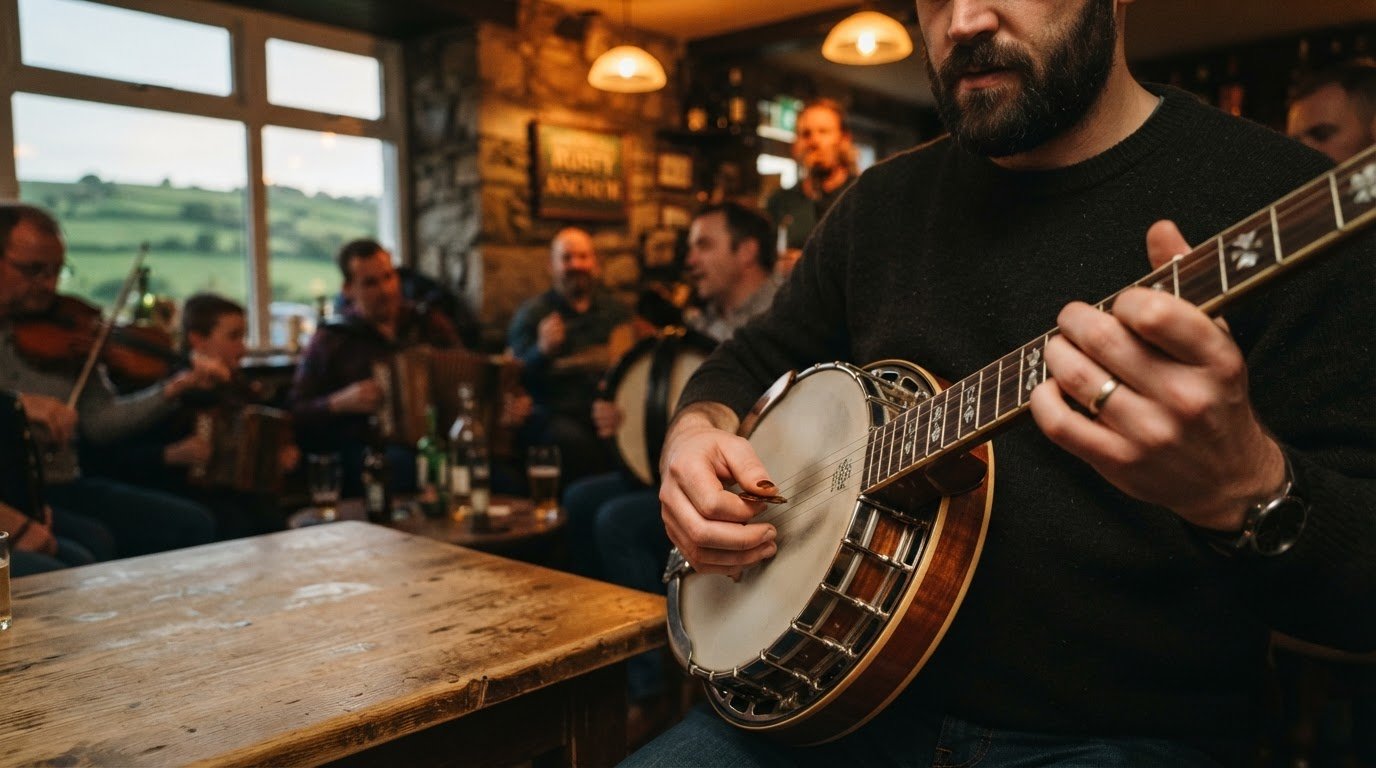
The Irish tenor banjo player is a specialist, a musician who commands a four-stringed beast tuned GDAE. This isn't the light, airy sound of the American five-string. It is a deep, percussive growl that sits an octave below the fiddle. We don't just play melodies; we provide the rhythmic architecture of the session. To understand the soul of a modern irish tenor banjo player album, you have to look back at how this instrument claimed its seat at the table. The history of the banjo in Irish music is a fascinating journey of adaptation. It transitioned from the fringe of 19th-century minstrelsy into the pulsing heart of the 20th-century pub session. This evolution wasn't accidental. It was driven by masters who saw the potential for the banjo to drive a reel with more power than almost any other instrument.
Rhythmic mastery is the defining trait of a legend. It's the ability to hold a "lift" that makes a room full of people want to dance. While many instruments can play the notes, the banjo dictates the pace. In the 1960s, groups like The Dubliners took this sound to a global audience, proving that the banjo could be both a melodic lead and a rhythmic engine. They turned a once-obscure addition into a cultural icon.
Barney McKenna: The Godfather of the Tenor Banjo
Barney McKenna changed everything. Before Barney, the banjo often struggled to find its place in the complex fingering of Irish traditional music. His revolutionary decision to use GDAE tuning allowed for fiddle-style fingering, opening the door for intricate ornamentation. He gave the music its "pulse." Barney's playing wasn't just about speed; it was about the drive. Every modern player, including those featured on a contemporary irish tenor banjo player album, owes a debt to his 1960s performances. He made the instrument indispensable.
The Flanagan Brothers: Pre-War Virtuosity
Long before the folk revival, the 1920s New York recording scene was buzzing with the sound of the Flanagan Brothers. Mike Flanagan’s playing was characterized by a crisp, staccato style that defined the "old style" for generations. These historical recordings are essential for any purist. They capture a time when the banjo was still finding its voice in the New World, yet the Flanagan Brothers played with a technical brilliance that remains a gold standard today. Their influence reminds us that the banjo's Irish identity was forged in the diaspora as much as in the west of Ireland. It's a storied tradition that continues to inspire every time we pick up the plectrum. Digging into these roots makes the music we play today feel even more vital. Don't you think?
The Technical Masters of the Traditional Sound
While the trailblazers built the foundation, a new wave of masters emerged to refine the instrument's voice. These players moved beyond raw power to embrace the "pure drop," a philosophy where clarity and soulful expression take precedence over sheer velocity. It's about the space between the notes as much as the notes themselves. To truly appreciate a modern irish tenor banjo player album, one must understand the technical wizardry required to maintain a percussive backbone without losing the sweetness of the melody. This balance defines the transition from simple accompaniment to the solo virtuosity that blossomed in the 1980s and 90s.
The secret lies in the ornamentation. Unlike the fiddle or pipes, the banjo relies on plectrum-driven techniques like triplets and trebles to mimic the fluidity of traditional singing. A well-placed "crann" on the banjo isn't just a decoration. It is a rhythmic statement. This technical evolution was deeply rooted in Barney McKenna's influence, which taught us that the banjo could be as expressive as any other lead instrument in the Irish tradition. By focusing on these nuances, masters ensure the music breathes, pulsing with a life that feels both ancient and fresh. It is a demanding craft that requires years of dedicated practice to perfect.
John Carty: Elegance and Mellow Tones
John Carty is a master of understated brilliance. His playing is often described as fluid, possessing a mellow quality that many didn't think possible on a four-string instrument. He treats the banjo with the same lyrical grace he applies to the fiddle. For any serious student of the tradition, his recording I Will If I Can remains a seminal irish tenor banjo player album. He often blends the tenor banjo with the tenor guitar, creating a rich, harmonic texture that emphasizes melody over flash. It’s a masterclass in how to be technically perfect without being clinical.
Angelina Carberry: The Queen of Rhythmic Plucking
If John Carty represents elegance, Angelina Carberry represents the soul of the "swing." Coming from a deep family legacy in County Longford, her style is unique and instantly recognizable. She uses an understated, staccato plucking technique that emphasizes the internal rhythm of a tune. Her recordings are essential for anyone wanting to understand modern session dynamics because she doesn't just play the tune; she inhabits it. Her ability to find the "lift" in a simple jig is a testament to her technical precision and deep respect for the tradition. If you are looking for that same authentic pulse in a modern recording, you might enjoy exploring the tracks on Not Before Time, which carries that same spirit of rhythmic integrity. These technical masters proved that the banjo isn't just a loud addition to a session. It is a sophisticated, melodic powerhouse.

Regional Virtuosos: The East Galway and Clare Connection
Regional styles are the dialects of our musical language. They provide the accent, the phrasing, and the specific "lift" that tells you exactly where a player learned their craft. In the world of traditional music, where you're from is just as important as what you play. The development of the Irish tenor banjo was never a uniform process. It happened in kitchen sessions and pub corners across the country, each area molding the instrument to fit its own local pulse. When you listen to an irish tenor banjo player album, you aren't just hearing four strings. You're hearing the landscape of a specific county.
East Galway and Clare stand as the two great pillars of this regional identity. While other styles might chase speed, these regions prioritize a soulful connection between the player and the tune. It's a deep, rhythmic bond that makes the music feel lived-in. This regional pride ensures the tradition stays grounded, preventing the banjo from becoming a mere tool for technical display. It keeps the heart in the wood.
The East Galway Rhythmic Architects
In East Galway, the music is defined by a relaxed, rolling tempo. It’s a style that breathes. Key figures like Mike Flanagan laid the groundwork for this sound, emphasizing "the lift" over sheer velocity. This isn't about playing as many notes as possible. It’s about the bounce. By keeping the tempo steady, East Galway players preserve the dance-like quality of the tunes. It feels like a conversation. Every triplet is intentional, serving the rhythm rather than the ego. It’s a masterclass in restraint and deep, pulsing groove.
Clare Masters: Drive and Soul
Clare music is a different beast entirely. It possesses a drive and a "lonesome" quality that is hard to define but easy to feel. Masters like Kevin Griffin, particularly on his landmark recordings like Across the Pond, showcase this perfectly. In Clare, the banjo often interacts closely with the concertina, leading to a punchy, staccato style that still manages to feel incredibly fluid. There’s a certain "heart" to Clare playing. It’s evocative and haunting, often leaning into the minor keys with a grit that feels ancient. It’s music that demands your full attention.
Choosing your favorite irish tenor banjo player album often comes down to which of these regional voices speaks to you. Do you crave the steady, rolling lift of the Galway fields or the driving, lonesome soul of the Clare coast? Both are essential. Both are beautiful. Understanding these nuances is what transforms a casual listener into a true student of the tradition. It’s a journey that takes time, but it’s a journey worth taking. Stick with it. The rewards are endless.
Modern Icons and the Evolution of the Banjo Sound
The 21st century has witnessed a remarkable expansion of what the four strings can achieve. While we hold the "pure drop" sacred, modern masters are increasingly inviting jazz and bluegrass influences into the fold. This isn't a dilution of the craft. It's a celebration of its versatility. We see this most clearly in the cross-genre collaborations that have defined recent years. A prime example is the Banjovial project by Damien O'Kane and Ron Block, scheduled for release on October 3, 2025. Projects like these prove that the banjo can bridge the gap between Irish traditional music and American bluegrass without losing its soul. It's a thrilling time to be a listener, especially when a new irish tenor banjo player album hits the shelves with such innovative energy.
Independent artists are the lifeblood of this evolution. They keep the tradition alive by funding their own visions and capturing the raw, live energy of a session in a studio setting. Recent recognition from the TG4 Gradam Ceoil bursaries in 2025 for players like Oisín Murphy and Erin Rose Ní Mhaolain shows that the future is in capable hands. These young virtuosos are pushing the technical limits while staying rooted in the history we've discussed in previous sections. They understand that every note carries the weight of those who came before. If you want to experience this blend of long-term dedication and fresh energy, you can explore my debut album Not Before Time, which represents 39 years of this evolving passion.
Enda Scahill: Technical Precision and Education
Enda Scahill is a four-time All-Ireland Champion who has earned the title of "banjo rebel." He doesn't just play; he educates. His "Irish Banjo Tutor" has become the definitive guide for training the next generation of pickers. Through his work with We Banjo 3, he pioneered the "Celtgrass" movement, blending traditional Irish melodies with the driving rhythms of American folk. He manages a rare feat. He maintains commercial success on a global stage while never turning his back on his traditional roots. His precision is staggering, but his heart remains in the session.
Eamonn Coyne: Versatility and Collaboration
Eamonn Coyne is often described as the bridge between the old world and the new. His work, particularly on Through the Round Window, showcases a fearless approach to contemporary folk arrangements. He uses the tenor banjo as a versatile tool for collaboration, proving it can thrive in diverse musical settings. Whether he is playing a standard reel or a complex modern composition, his touch is unmistakable. He reminds us that the banjo is not a museum piece. It is a living, breathing instrument that continues to find new things to say in the right hands. It’s about the journey, isn't it?
Continuing the Legacy: Essential Albums for Your Collection
Curating a personal library of traditional music is a sacred task for any enthusiast. It isn't just about filling a shelf or a hard drive. It's about surrounding yourself with the masters who defined the sound. When you seek out a definitive irish tenor banjo player album, you are essentially inviting a seasoned storyteller into your home. I always encourage listeners to buy directly from the artist whenever possible. This direct support is what allows independent musicians to continue the work of preservation. It keeps the tradition from becoming a museum piece. Beyond the music itself, there is immense value in the supplementary materials that come with a physical release. The liner notes for my debut, for instance, detail the history of the 18 tracks on the CD, offering a window into the community that shaped these melodies.
The auditory experience of a high-quality recording should be sensory and evocative. You should be able to hear the plectrum strike the string and feel the resonance of the drum-head. This level of detail is what separates a generic recording from a legendary one. It’s about capturing the soul of the room. Every track is a milestone. Every tune is a memory. Let's look at the recordings that belong in every serious collection.
The Pure Drop: Must-Have Traditional Recordings
For those who crave the "pure drop," two names stand above the rest. John Carty’s The Cat That Ate the Candle is essential listening for anyone who appreciates a mellow, fiddle-like approach to the banjo. It’s elegant and timeless. Then there is Angelina Carberry’s An Traidisiún Beo. This recording is a masterclass in the rhythmic "swing" of the Longford and Galway styles. Both albums are benchmarks of technical precision and traditional integrity. The pure drop is the unadulterated, acoustic essence of Irish music.
A Modern Masterpiece: Not Before Time
After years of playing in the shadows of the greats, I am proud to present Not Before Time - 39 Years in the Making. This isn't just another irish tenor banjo player album to add to a list. It is the culmination of a life's work. It represents nearly four decades of immersion in the East Galway and Clare traditions. Each of the 18 tracks was carefully selected to represent the "lift" and the "lonesome" quality of the west of Ireland. The 39-year development of this project allowed me to collaborate with a wide array of featured performers, ensuring the final result is a definitive statement of my passion. It’s a relief and a joy to finally share it with you. Experience the rhythmic pulse of Páraic Banjo - Order the CD today! I can't wait for you to hear the stories hidden within these four strings. Keep the music playing!
Step Into the Living Tradition
We've traveled from the early days of the Flanagan Brothers to the technical brilliance of modern icons, uncovering how the four-string banjo became the percussive soul of the Irish session. You've seen how regional "dialects" like the rolling lift of East Galway and the driving heart of Clare define a player's unique voice. Whether you are a seasoned session regular or just starting to build your first irish tenor banjo player album collection, the journey through these four strings is a rewarding, lifetime pursuit. The music isn't just a recording; it's a connection to a community that spans generations.
Now is the time to immerse yourself in that authentic sound. My debut collection captures 39 years of this passion across 18 tracks of pure, live session energy. With rich historical liner notes that guide you through every tune, you'll experience the true spirit of the East Galway and Clare styles in every note. Bring home the pulse of tradition - Shop the "Not Before Time" collection. Let these melodies find a home in your heart and keep the tradition vibrant for years to come. Happy listening!
Frequently Asked Questions
Who is considered the greatest Irish banjo player of all time?
Barney McKenna is widely regarded as the most influential figure in the history of the instrument. His work with The Dubliners brought the four-string banjo to a global audience and established the standard for modern playing. While technical virtuosos like Gerry O'Connor and John Carty have pushed the boundaries of the craft, Barney remains the "Godfather" who started it all. Most players agree that his rhythmic drive is the foundation we all build upon.
What is the difference between an Irish tenor banjo and a 5-string banjo?
The Irish tenor banjo features four strings and a shorter neck, whereas the American 5-string banjo has an additional short drone string. In the Irish tradition, we play with a plectrum to execute fast melody lines, reels, and jigs. Bluegrass players typically use fingerpicks or a "clawhammer" style on the 5-string. The tenor banjo's specific construction allows it to cut through the sound of a crowded session with a sharp, percussive snap.
Is the tenor banjo a traditional Irish instrument?
The banjo is an "adopted" instrument that became a staple of the tradition during the 20th century. It originated in Africa and evolved in America before finding its way into Irish dance halls and pub sessions. While it isn't as ancient as the pipes or the harp, it's now considered essential to the "pure drop" sound. Its ability to provide both melody and a percussive backbone makes it a favorite in modern sessions.
What are the best Irish tenor banjo albums for beginners?
Beginners should listen to John Carty's I Will If I Can or Enda Scahill's Pick It Up for technical clarity and inspiration. If you want to hear the soul of the West, my own irish tenor banjo player album, Not Before Time, offers a deep dive into the East Galway style. These recordings provide a roadmap for understanding how to balance ornamentation with a steady, driving rhythm. It's about finding the "lift" in every tune.
How do you play the "East Galway style" on the banjo?
Playing in the East Galway style requires a relaxed tempo and a focus on the internal "bounce" of the rhythm. It's less about sheer velocity and more about the rolling, soulful lift that supports the dancers. You achieve this by using subtle ornamentation and keeping the plectrum work steady and grounded. This regional style prioritizes the heart of the melody over technical flash, creating a deep connection between the player and the tune.
Why is Barney McKenna so famous in the banjo world?
Barney McKenna revolutionized the instrument by introducing GDAE tuning, which is one octave below the fiddle. This allowed traditional musicians to play complex fiddle tunes with familiar fingering, effectively carving a permanent place for the banjo in Irish music. His infectious enthusiasm and unmistakable "pulse" made him a legend. Every time a player strikes a triplet today, they are echoing the path Barney cleared back in the 1960s.
Where can I buy authentic traditional Irish session music?
You can buy authentic recordings directly from independent artists to ensure the tradition continues to thrive. My online store at paraicbanjo.com features my debut irish tenor banjo player album in both physical CD and digital formats. Purchasing directly supports the creation of future projects and the preservation of regional styles. Each track on Not Before Time was recorded to capture the raw, live energy of a real session.
What tuning do famous Irish banjo players use?
Famous players almost exclusively use GDAE tuning, which mirrors the fiddle but sits an octave lower. This tuning is what gives the Irish tenor banjo its signature deep growl and resonant punch. It's different from the CGDA tuning used in jazz or the various open tunings found in bluegrass. By using GDAE, the banjo can perfectly complement the other lead instruments in a traditional session while providing a powerful rhythmic engine. It's the gold standard for our craft.

Comments