The Living Pulse: A Guide to West of Ireland Music Traditions in 2026
- Paraic Mac Donnchadha

- Aug 6
- 14 min read
Updated: 3 days ago
You’re standing in a dimly lit pub in Ennis, the air is thick with the scent of turf smoke, and the first few notes of a reel begin to lift off a fiddle. Is this the genuine heartbeat of a centuries-old heritage, or just a polished performance for the tour bus crowd? It’s a common frustration for many who want to truly connect with west of ireland music traditions. You want the real thing, the "savage beauty" of a session that feels like a conversation between friends rather than a staged show.
It’s completely normal to feel overwhelmed by the sheer variety of styles found along the Atlantic coast. You might know you love the sound, but distinguishing the driving lift of a Clare jig from the smooth, lyrical flow of an East Galway reel can feel like learning a secret language. This guide is here to change that. I’ll show you how to identify the "East Galway" sound, where to find authentic recordings that haven't been over-polished in a studio, and how to understand the deep cultural history of these shores. We are going to explore the technical nuances and the soulful stories that make this music a living, breathing pulse in 2026.
Table of Contents
The Soul of the West: Defining West of Ireland Music Traditions
The West of Ireland isn't just a place on a map. It's a living, breathing soundscape where the music is as rugged and enduring as the limestone of the Burren. While Irish traditional music is celebrated globally, the specific west of ireland music traditions found in Clare and Galway carry a distinct weight and history. It's a heritage built on the rhythmic pulse of the dance, a "lift" that makes it impossible to keep your feet still. This isn't the sanitized, over-rehearsed music you often hear on big stages. It’s the raw, crackling energy of a session that has been 39 years in the making, much like the tracks you’ll find on Páraic Mac Donnchadha’s debut album.
These traditions aren't museum pieces. They are evolving conversations that happen every night in crowded corners of pubs, where the only thing that matters is the flow of the tune. Within these counties, the music serves as a regional dialect, spoken through fiddles, pipes, and banjos. It is a definitive statement of a lifetime's passion, where every note carries the echoes of the masters who came before. If you're looking to bring that feeling home, you can explore the 18 tracks on Not Before Time – 39 Years in the Making (Digital Album), which focuses on this very heritage.
Landscape and Lilt: How Geography Shaped the Sound
Isolation was the great preserver. Before the digital age, the rocky fields of East Galway and the windswept coast of Clare acted as natural barriers. This allowed regional dialects to flourish. The music here absorbed the energy of the Atlantic; it’s resilient, sometimes dark, but always driving. In these pockets of the West, tunes were passed down from hand to hand, house to house. This direct transmission kept the "lilt" alive, a specific way of phrasing a melody that feels like the rise and fall of a local voice.
While other areas saw their styles homogenized, the West held firm to its roots. This resilience is why people still travel to events like the Feakle International Traditional Music Festival, confirmed for August 5 to August 10, 2026, to hear the authentic "crackle" of a West coast fiddle or banjo. This connection to the land is what makes west of ireland music traditions so evocative. It's music that sounds like the place it was born.
The Social Heart: The Irish Session Explained
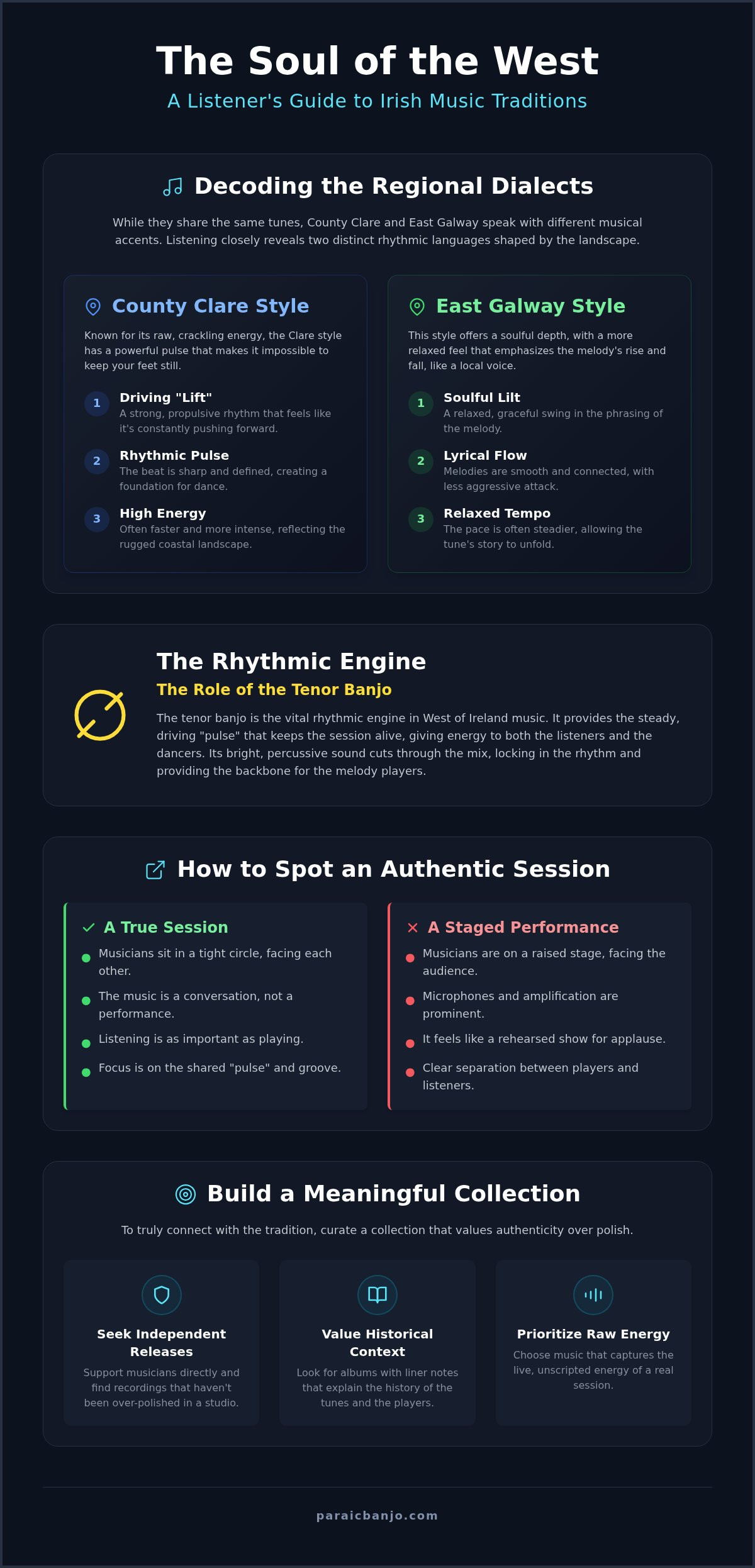
If you want to experience the true soul of the West, you have to understand the session. It isn't a performance. It’s a communal conversation. In a real session, there is no "lead" singer and no spotlight. Instead, there is a shared understanding of the "pulse," that steady rhythmic engine that drives every reel and hornpipe. Listening is just as important as playing. It’s about fitting into the groove and respecting the history of the tune. This is why the extensive liner notes included with Not Before Time – 39 Years in the Making (Physical CD) are so vital. They provide the historical context that turns a simple melody into a storied tradition.
Actionable Tip:
To find an authentic experience, look for sessions where the musicians are sitting in a tight circle, facing each other rather than the audience. This setup shows they are playing for the music itself, not for a round of applause. If the musicians are on a raised stage with microphones, it’s likely a performance for tourists rather than a traditional session.
You can hear this authentic energy captured beautifully in Individual Digital Tracks from Páraic’s collection. Each recording is a testament to the decades spent in these very circles, ensuring the spirit of the session remains intact. By choosing authentic recordings, you are supporting the continuation of this vibrant history and keeping the regional styles alive for the next generation.
East Galway vs. Clare Music: Decoding the Regional Dialects
Many visitors to the West hear one continuous stream of reels and jigs. But if you listen closely, you’ll hear two distinct rhythmic languages. These Regional Styles of Irish Traditional Music are the secret ingredients that make the coast so musically rich. While Clare often steals the spotlight with its famous pubs, the East Galway style offers a soulful depth that is just as vital to the west of ireland music traditions. Understanding these differences changes how you experience a session.
These styles aren't rivals; they’re more like cousins. They share the same tunes but speak them with different accents. Musicians from both sides of the border have been swapping tunes and techniques for generations, creating a beautiful crossover that keeps the music fresh. It’s a rhythmic conversation that has been happening for centuries. You can hear this interplay throughout the 18 tracks on my debut album, where the drive of one style meets the lilt of the other.
Rhythmic Mastery in East Galway
The East Galway style is often described as "laid-back." Don't let that fool you. Slower doesn't mean easier. In fact, playing slower requires a deeper sense of internal rhythm to keep the tune from falling flat. It’s about finding the "soulful lilt" in every note. This style was pioneered by legendary figures who preferred a relaxed tempo that allowed the melody to breathe. It’s music that invites you to lean in and listen. If you want to dive deeper into these nuances, check out this guide on East Galway vs Clare music.
The Driving Energy of the Clare Tradition
If East Galway is the breath, Clare is the heartbeat. The music here is defined by "lift" and "drive," a rhythmic pulse that feels like it’s pushing you toward the dance floor. This energy was cemented by the great Tulla and Kilfenora Céilí Bands. It’s a highly ornamented style, filled with "rolls" and "crans" (specific types of musical flourishes) that add texture and momentum to the melody. The music doesn't just sit there; it moves with a purposeful, infectious energy.
Actionable Tip:
To tell the difference, listen for the "swing" in a reel. In Clare music, the first note of a pair is often held slightly longer, creating a bouncy, rhythmic gait. In East Galway, the notes are often more even, giving the music a flowing, lyrical quality that feels almost like singing.
Understanding these regional dialects turns you from a casual listener into a true connoisseur of the tradition. If you’re ready to hear these styles in action, you can explore the Not Before Time – 39 Years in the Making (Digital Album), which captures the authentic "crackle" of these traditions recorded live with expert musicians. It’s a celebration of the styles I’ve spent nearly four decades living and breathing.
The Tenor Banjo: The Rhythmic Engine of the West
If the fiddle provides the soul of the West, the tenor banjo provides the bone and muscle. It’s the instrument that glues the session together, acting as a rhythmic engine that keeps the dancers’ feet moving and the melody players in line. Within the scope of west of ireland music traditions, the banjo isn't just an accompaniment; it’s a powerhouse of precision. Unlike its five-string cousins in bluegrass, the Irish tenor banjo is tuned GDAE, exactly like a fiddle but an octave lower. This allows it to mirror the intricate melodies of the West while adding a percussive "crack" that cuts through even the loudest pub crowd.
My own journey with this instrument has been a lifetime’s work, a project decades in the making. In my approach, I prioritize a soulful, rhythmic style over flashy speed. It’s about finding that steady, melodic pulse that defines the Galway style. This isn't just about hitting the notes; it's about how you hit them. For a deeper look at the instrument's history and technique, you can explore The Essential Guide to Irish Tenor Banjo Music. It’s a tradition that demands respect and a keen ear for the "lift" in the music.
Why the Tenor Banjo Fits the West
In a busy session, fiddles and flutes can sometimes blend into a beautiful, hazy wall of sound. The banjo breaks through that. Its sharp attack and resonance provide the "pulse" that musicians rely on to stay grounded. My style focuses on maintaining that steady, unwavering lilt, ensuring the tune never loses its way. It’s a delicate balance of power and restraint, a signature of the west of ireland music traditions that I’ve spent nearly 40 years honing. This clarity is essential for dancers, who need that sharp, rhythmic anchor to time their steps.
Actionable Tip:
To get that authentic Western drive, pay close attention to your pick direction. Most of the "pulse" comes from a strong down-stroke on the beat. If your picking is too even or "floaty," the tune will lose its rhythmic weight. Practice keeping your wrist loose but your down-strokes purposeful to anchor the melody and give it that essential lift.
Famous Proponents of the Western Banjo Style
We stand on the shoulders of giants. Legends of the past brought the banjo from the fringes to the very center of the session circle. They proved that this instrument could be as expressive as any fiddle. Over my 39 years in the session scene, I’ve watched this style evolve from a rare curiosity into a staple of the West. It has been a long road. A storied journey. The result is a sound that feels both ancient and fresh, a testament to the enduring power of our regional music.
This evolution is captured in every note of my debut project. It’s a celebration of the community and the collaborators who keep this flame alive. You can experience the authentic sound of the West on Not Before Time – 39 Years in the Making. These recordings aren't just tracks; they are a definitive statement of a life spent chasing the perfect rhythm. Dive in and feel the pulse for yourself.
How to Find and Experience Authentic West of Ireland Music
Finding the genuine pulse of west of ireland music traditions requires a bit of detective work and a lot of listening. It’s easy to get swept up in the neon lights of tourist traps, but the real magic happens in the quiet corners. If you want the "savage beauty" of a real session, you have to know where to look and what to listen for. It’s an art form in itself. A storied journey that leads you away from the stage and into the heart of the community.
Step 1: Look beyond the main tourist hubs. While places like Doolin and Galway City have vibrant scenes, the most authentic sessions often hide in smaller villages. In 2026, keep an eye on townlands near the Feakle International Traditional Music Festival (August 5-10) or the Ennis Trad Fest (November 5-9). These local spots are where the music breathes.
Step 2: Research the musicians. Authentic sessions usually feature local masters who have spent decades honing their craft. These aren't background players; they are the keepers of the flame.
Step 3: Check the repertoire. Listen for regional reels and jigs. If the musicians are playing tunes specific to the East Galway or Clare dialects we discussed earlier, you’ve found the real deal.
Step 4: Support the artists directly. The best way to keep these traditions alive is to buy the music from the source. It ensures the lineage continues.
You can start your journey into authenticity by exploring the 18 tracks on Not Before Time – 39 Years in the Making. These recordings were captured live with expert musicians, prioritizing the raw energy of the West over sterile studio polish.
Pub Etiquette for Music Lovers
Attending a session is a social contract. There are unwritten rules that keep the music flowing. Respect the circle. Musicians often sit close together to hear the subtle "lift" in each other’s playing. It’s a conversation, not a performance for an audience. Wait until a set of tunes is completely finished before you clap. Breaking the silence between a reel and a jig can disrupt the momentum the players are building.
Actionable Tip:
Never put your drink on the musicians' table. It might look like a convenient spot, but that space is strictly for instruments. A spilled pint can cause thousands of euros in damage to a vintage fiddle or a handcrafted banjo. Keep your glass on your own coaster and give the players the room they need to move.
Identifying Authentic Recordings
When you’re looking to bring the sound of the West home, be picky. Studio albums can sometimes feel too clean, stripping away the "crackle" that makes the music live. Look for recordings that capture the spontaneous energy of a session. Detailed liner notes are a huge green flag. They provide the historical context and the "why" behind the tunes, acting as an educational bridge for the listener. For more tips on building a soulful library, check out this guide on How to Buy Traditional Irish Music. It’s about more than just a transaction; it’s about becoming a part of the tradition yourself.
Preserving the Tradition: Why Curation Matters in 2026
Preservation isn't just about looking backward. It’s about the choices we make right now to keep the music healthy. In 2026, as Comhaltas Ceoltóirí Éireann celebrates its 75th anniversary, there is a renewed energy around how we carry west of ireland music traditions into the future. This spirit of local support is mirrored in how we consume information; platforms like Templemore.ie demonstrate the importance of community-focused news and business blogs in keeping local culture thriving. The listener plays a massive role in this ecosystem. With vinyl sales in Ireland seeing a 20% jump in 2025, it’s clear that people are moving away from disposable streaming and toward collections that actually mean something. When you choose to support independent releases, you’re helping to ensure that the specific, regional "dialects" of the West aren't smoothed over by generic, commercial sounds.
Curation is a powerful tool for the modern music lover. Digital downloads offer the convenience we need for a busy life, but physical CDs provide a tactile connection that’s hard to beat. Each format serves a different purpose for the collector. By being intentional about what you listen to, you become a guardian of the "lift" and the "pulse" that make this heritage so unique. It’s a way of saying that this music matters, that the 39 years spent honing a single style is worth more than a fleeting click.
Inside 'Not Before Time – 39 Years in the Making'
This project is my personal definitive statement. It’s a lifetime's passion finally captured in 18 tracks of pure, rhythmic heritage. I wanted to record these sets live with my closest collaborators to ensure the "crackle" of a real session was preserved. There’s a certain relief in finally sharing this work, knowing it captures the authentic sound of the West without any sterile studio polish. It’s a storied journey that I’m proud to finally put into your hands.
Actionable Tip:
Take the time to read the liner notes. In the
Not Before Time – 39 Years in the Making (Physical CD)
, I’ve included extensive background on the tunes and the masters who passed them down. These stories are the map to the music, helping you understand the cultural history behind every reel and jig.
Building Your Authentic Irish Music Library
If you want to build a library with a real heartbeat, buy directly from the artist whenever you can. It’s the most direct way to keep the tradition thriving. Whether you’re looking for the full Not Before Time – 39 Years in the Making (Digital Album) or just want to pick up some Individual Digital Tracks to round out your collection, your support keeps the regional styles alive. For more advice on finding the good stuff, take a look at this guide on how to Buy Traditional Irish Music Direct from Artist.
The music of the West is a living thing, and you’re now a part of its story. I invite you to Get your copy of Not Before Time today and feel the rhythmic soul of Galway and Clare for yourself. It’s been a long road to get these tracks to you, and I can’t wait for you to hear them. Cheers to the music, and to the community that keeps it breathing.
Keep the Rhythmic Heart Beating
You’ve journeyed through the soulful lilt of East Galway and felt the driving lift of the Clare tradition. Now, you have the tools to identify authentic sessions and appreciate the percussive power of the tenor banjo. These west of ireland music traditions aren't just relics of the past; they are a vibrant, breathing legacy that thrives when we choose to listen deeply and support the masters who carry the torch. It’s a storied journey that belongs to all of us.
This heritage is captured in every note of my debut project, a work that is truly 39 years in the making. With 18 tracks recorded live alongside expert musicians, it offers the raw, honest energy of a real session. You can choose the digital album for convenience or secure the limited edition physical CD to enjoy the extensive historical liner notes. Own a piece of West of Ireland history—Buy 'Not Before Time' by Páraic Mac Donnchadha. Let these tunes become a part of your own story. I’ll see you down the road at the next session!
Frequently Asked Questions
What is the difference between East Galway and Clare music styles?
The primary difference lies in the tempo and the rhythmic "lift" of the tunes. Clare music is celebrated for its driving, bouncy energy that often feels like it’s pushing toward the dance floor. In contrast, the East Galway style is defined by a more relaxed, lyrical flow. It’s a contrast between a heartbeat that makes you want to jump and a lilt that makes you want to lean in and listen.
Is the tenor banjo a traditional Irish instrument?
The four-string tenor banjo has been a staple of the tradition since the early 20th century. It’s tuned GDAE, matching the fiddle exactly but an octave lower. This allows it to play the intricate melodies central to west of ireland music traditions. Its sharp, percussive attack makes it the perfect rhythmic engine for a crowded session where other instruments might get lost in the noise.
Where can I find the most authentic Irish music sessions in the West?
Authentic sessions are most often found in small, local pubs away from major tourist thoroughfares. Towns like Ennis and Feakle, along with various villages throughout East Galway, host sessions where local masters play for the love of the craft. Look for musicians sitting in a tight circle rather than on a raised stage. This is a clear sign they’re playing for the music itself, not just for a show.
What are reels and jigs in Irish music?
Reels and jigs are the two most common types of dance tunes you’ll hear in a session. Reels are played in 4/4 time and have a steady, driving feel that’s perfect for fast footwork. Jigs are in 6/8 time and have a distinctive, "tri-ple-it" bounce. Understanding this rhythmic difference is the first step in identifying the tunes. It helps you feel the pulse of the west of ireland music traditions.
Why should I buy music directly from independent Irish artists?
Buying directly ensures that your support goes straight to the creator, helping to preserve rare regional styles. Independent releases often prioritize cultural authenticity over commercial studio polish. This direct connection keeps the lineage alive and allows artists to continue documenting their lifetime's work. It’s the best way to ensure the music stays in the hands of the community that created it.
What makes the East Galway banjo style unique?
The East Galway banjo style is characterized by a steady, melodic approach that avoids excessive speed. It focuses on clarity and a "soulful" lilt rather than flashy, fast ornamentation. This style emphasizes the beauty of the melody and maintains a relaxed, unwavering pulse. It’s a deliberate way of playing that demands a keen ear and a deep respect for the history of the tune.
Can I download traditional Irish music in high-quality digital formats?
You can definitely download high-quality digital tracks that capture the raw energy of a live session. Many artists now offer their work in formats that preserve the technical details and sensory experience of the performance. For example, all 18 tracks from my debut project are available as individual digital downloads. This gives you the convenience of modern technology without sacrificing the authentic sound of the West.
What are 'liner notes' and why are they important for folk music?
Liner notes are the written background materials that accompany an album, providing the stories and lineage of the tunes. They are essential for folk music because they document the "why" behind the notes. Reading these notes turns a simple listening experience into an educational journey. It connects you to the masters who kept the tradition breathing and explains the technical nuances of the regional styles.


Comments