The Making of Not Before Time: A 39-Year Journey into Irish Banjo Tradition

It took nearly four decades of sessions, stories, and shared tunes before Páraic Mac Donnchadha finally stepped into the studio to capture his definitive sound. You've probably felt the frustration of listening to traditional Irish music albums that feel a bit too polished, losing that raw, rhythmic "lift" you only find in a crowded kitchen or a late-night pub session. It's often difficult to find recordings that truly respect the East Galway pulse without burying it under layers of modern studio magic. This article dives deep into the making of Not Before Time album, a project that prioritizes soul and heritage over clinical perfection.
You're about to discover the intimate story and technical craft behind Not Before Time – 39 Years in the Making. We'll explore how Páraic and his collaborators captured that elusive live energy across 18 tracks, ensuring the "pulse" remained the heartbeat of the project. From the specific rhythmic nuances of the East Galway style to the 39-year journey that led to its 2018 launch at the Feakle Festival, you'll get a front-row seat to a lifetime of musical dedication. Let's look at how this record became a landmark for the tradition.
Table of Contents
The 39-Year Journey to Not Before Time
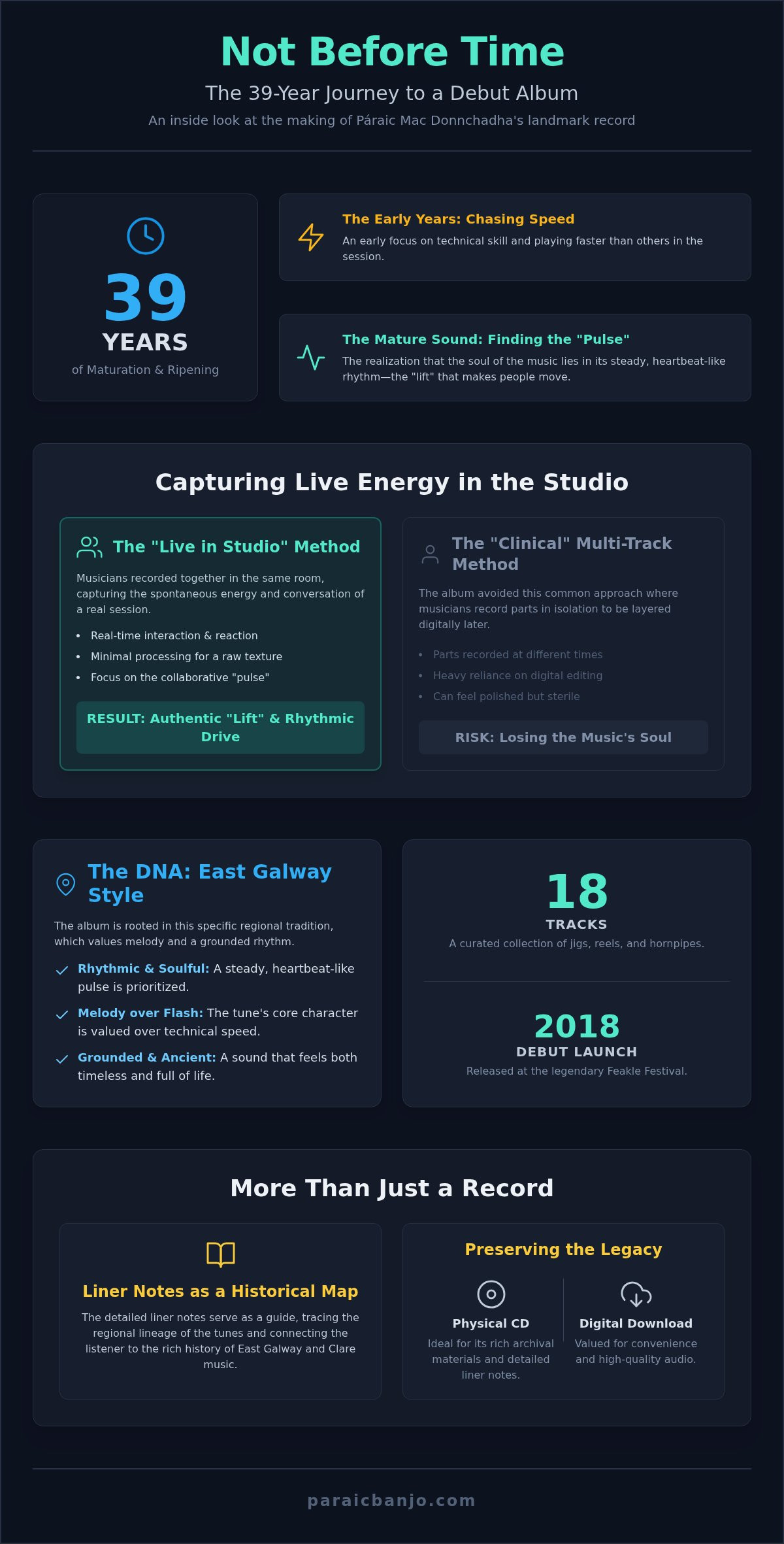
39 years is a long time to wait for a debut. Most artists rush into the studio after a few months of practice, but in the world of Irish traditional music, time is a different currency altogether. For Páraic Mac Donnchadha, this wasn't about procrastination. It was about maturation. Every session in a dimly lit pub and every tune shared with a mentor was a brick in the foundation. The making of Not Before Time album represents nearly four decades of living and breathing the music before a single note was ever recorded for the public.
Why Wait Four Decades for a Debut?
There's a specific philosophy of "ripening" that defines the best traditional players. You don't just learn a tune; you let it settle into your bones. In the early years, it's easy to focus on technical speed, trying to play faster than everyone else at the table. But as you mature, you realize that the soul of the tenor banjo isn't found in a frantic pace. It's found in the "pulse", the steady, heartbeat-like rhythm that makes people want to tap their feet.
Committing these tunes to disc after 39 years brought a massive sense of relief and celebration. It's a definitive statement of a lifetime's passion. If you're a musician yourself, try this: don't record your first draft. Play a tune for at least a few months before you even think about hitting the record button. You'll hear the difference in the "lift" of the music. This patience is exactly what gives the 18 tracks on this album their unique authority.
The Influence of East Galway Roots
The East Galway style is the backbone of this project. If you're new to the tradition, think of it as a rhythmic, soulful, and steady approach that values melody over flash. Páraic’s upbringing in this specific musical heritage shaped the DNA of every track. It's a sound that feels grounded and ancient, yet full of life. To truly understand the nuances of this regional flavor, you can read more about East Galway vs Clare Music: A Guide to the Rhythmic Soul of the West.
Transitioning from a session regular to a recording artist meant taking those years of unrecorded energy and focusing them into a professional production. The making of Not Before Time album wasn't just a technical challenge; it was an emotional one. It required honoring the teachers and friends who shared these tunes over the decades. It's a milestone that proves some things are simply worth the wait. This album isn't just a collection of songs; it's a documented history of a living tradition.
Capturing the Pulse: The Recording Process
Recording traditional music is a delicate balancing act. If you lean too hard into modern studio techniques, you risk stripping away the very soul of the tunes. Many contemporary albums use multi-tracking, where musicians record their parts in isolation at different times. The making of Not Before Time album deliberately rejected this clinical approach. To capture the authentic "lift" of a session, the musicians needed to be in the same room, breathing the same air, and reacting to every subtle rhythmic shift in real time.
Creating this environment was essential for the 18 tracks that made the final cut. We transformed the recording space into a communal hub where the "pulse" of the banjo could lead the way. It wasn't just about capturing sound; it was about capturing a conversation. When musicians can see each other's hands and catch a nod during a change in a set of reels, the music gains an effortless energy that you simply can't manufacture through digital editing.
Technical Setup for Traditional Sound
The goal was to maintain the raw, acoustic texture of the banjo without over-production. We used minimal processing to ensure the "rhythmic mastery" of the playing remained front and center. This means you hear the honest resonance of the instrument rather than a polished, artificial version of it. Tip: When you listen to the tracks, pay close attention to the transition between tunes in a set. That natural surge in energy is the sound of live interaction that only happens when performers are locked in together.
The Collaborative Spirit of the Tracks
Páraic has always viewed his music as a community effort rather than a solo pursuit. This debut features a cast of expert guest musicians who brought their own regional flavors to the mix, creating a rich, layered soundscape. The chemistry between the banjo and the backing instrumentation is what turns these sets into a modern classic. It’s a testament to decades of shared sessions and mutual respect. You can Explore the tracks and the musicians behind them here.
Selecting the sets was another vital part of the making of Not Before Time album. Each set of jigs, reels, or hornpipes was chosen to mimic the natural flow of a live performance. We looked for combinations that felt right, moving through different keys and tempos to keep the listener engaged. It’s this thoughtful curation, combined with the live-recorded energy, that makes the album feel like a definitive statement of the East Galway and Clare traditions. Why not grab a copy and hear the difference for yourself?
Inside the Liner Notes: More Than Just Packaging
In an era dominated by faceless digital playlists, the physical CD remains a vital piece of the puzzle for traditional music fans. The making of Not Before Time album involved more than just setting up microphones; it required a deep dive into the archives to document the lineage of every tune. For Páraic, the liner notes are a way to honor the oral tradition that passed these melodies down through generations. Purists often prefer the physical format because it offers a level of historical detail that digital platforms simply can't replicate. It’s the difference between looking at a photo of a vintage instrument and actually holding it in your hands. The texture of the paper and the clarity of the print add to the sensory experience of the music.
Tracing the Heritage of 18 Tracks
Every one of the 18 tracks on this album has a story. Whether it’s a reel learned in a kitchen in East Galway or a jig picked up at a festival in Feakle, the liner notes provide the necessary context. You aren't just hearing a melody; you're learning about the people who kept it alive for decades. This documentation helps players and listeners alike understand the regional nuances that distinguish a Clare tune from a Galway one. It’s about the "why" behind the "how." You can find a deeper breakdown of this in our post Inside the Liner Notes: 18 Tracks of Pure Banjo.
A Guide for the Traditional Purist
If you want to get the most out of your listening experience, try this practical tip: read the notes while the music plays. This allows you to identify regional variations in real time. The notes act as an educational bridge, explaining the structure of the music for newcomers. For example, you'll see how "sets" are formed. A set is simply a group of tunes played one after another to build energy. You'll also learn to distinguish between "reels," which have a driving 4/4 rhythm, and "jigs," which carry a bouncy 6/8 feel.
Understanding these terms is essential for anyone looking to join a session or simply appreciate the technical craft. The making of Not Before Time album was a project of preservation as much as it was a musical debut. By including these stories, Páraic ensures that the heritage of the music isn't lost to the shuffle of a digital algorithm. It’s an invitation to become a part of the tradition yourself. Pure banjo. Pure tradition. This is how we keep the flame alive for the next 39 years and beyond.
Selecting the Sets: Jigs, Reels, and Hornpipes
Building a set of tunes is an art form that often goes unnoticed by the casual listener. It isn't just about picking three reels you like and playing them back-to-back. During the making of Not Before Time album, every set was constructed with a specific emotional arc in mind. We looked at how the keys shifted, moving from a bright G major into a more driving D major to create a natural surge of energy. This thoughtful approach ensures that the 18 tracks on Not Before Time – 39 Years in the Making feel like a cohesive story rather than a random collection of melodies.
The Heartbeat of the Album: The Reels
Reels are the engine room of the East Galway banjo style. They provide the momentum that defines the tradition. For those new to the genre, "lift" in an Irish reel is that magical rhythmic bounce that makes the music feel like it's taking flight, even when the tempo stays perfectly steady. It’s about the internal pulse rather than sheer speed. In this collection, you'll hear iconic sets that capture the "drive" often associated with a Clare session. These tracks aren't just technical exercises; they are snapshots of a living tradition. To experience this energy for yourself, get the full digital album to hear these sets in high quality.
Balancing the Energy with Jigs and Hornpipes
While reels provide the drive, jigs and hornpipes offer the necessary contrast. Jigs, with their bouncy 6/8 time signature, require a different technical approach on the tenor banjo. Unlike the steady alternate picking of a reel, a jig often demands a specific "down-up-down" stroke to emphasize the triplets. This change in picking style creates a completely different auditory texture. It’s a subtle shift that keeps the listener engaged across the entire project.
Hornpipes bring a slower, more deliberate pace to the album. They allow for more "soulful" moments where the melody can breathe. My advice for listeners during these tracks is to focus on the "swung" rhythm. Pay attention to the subtle delays and the way the notes are clipped. This "dot-and-cut" style is what gives the hornpipe its distinctive, jaunty character. By balancing these high-energy reels with more measured pieces, the album offers a varied listening experience that mirrors a real-world session. It’s about the light and the shade.
Preserving the Legacy: CD vs. Digital Download
Choosing how to experience this music often comes down to a personal preference between modern speed and old-school substance. While the making of Not Before Time album was a lengthy, 39-year process, getting the music into your ears doesn't have to be. Digital downloads offer that instant connection we've all come to expect, but for those who value the weight of tradition, the physical CD is an irreplaceable artifact. It’s about more than just the audio; it’s about owning a piece of a significant career milestone. Buying direct from the artist ensures that your support goes straight into preserving these East Galway and Clare traditions for the next generation of listeners.
The Case for the Physical CD
If you're a serious collector, the physical CD is the clear choice. It includes those extensive liner notes we discussed earlier, providing a tactile link to the history of the 18 tracks. The making of Not Before Time album was as much about the documented heritage as it was the music. Think of it as a limited-edition document of a specific musical era. It also makes a fantastic heritage gift for anyone in your life who loves the sound of a well-played banjo. There’s something special about unwrapping a physical disc and seeing the artwork for the first time. You can learn more about Why Collectors Still Prefer the Physical CD Format here.
The Convenience of Digital Media
Digital media isn't just about speed; it's about quality. Discerning Irish music fans often look for high-fidelity formats like WAV or FLAC, which preserve every nuance of the live-recorded energy. These high-quality downloads ensure you don't lose the "lift" of the session through heavy audio compression. If you're starting to build a digital Irish music library, this debut is the perfect cornerstone. You can easily organize your tracks by tune type or key, making it simple to find that one specific reel you want to practice.
Tip: Always download the highest resolution available to get the full studio experience on your home speakers. High-fidelity files take up more space, but the clarity of the banjo's resonance is worth every megabyte. It allows you to hear the subtle nuances of the East Galway style that might get lost on a standard streaming service. Ready to bring this 39-year journey into your home? Order your copy of Not Before Time – 39 Years in the Making today.
Bring the Heart of the Session into Your Home
The making of Not Before Time album was never about rushing to the finish line. It was about waiting for the right moment to capture a sound that's been ripening for nearly four decades. You've seen how this project prioritizes the raw, live energy of a real session over clinical studio perfection. By focusing on the "pulse" of the East Galway tradition and documenting the history behind every set, Páraic has created more than just a debut; it's a living archive of the music we love. It's a definitive statement of a lifetime's passion.
Whether you choose the high-fidelity digital tracks or the physical CD for its richly detailed historical liner notes, you're supporting the preservation of a storied craft. This album represents a celebration of community and the teachers who shared these tunes over the years. Secure your limited-edition copy of Not Before Time here to experience 18 tracks of authentic Irish banjo and 39 years of musical heritage. We can't wait for you to hear the lift in these tunes. Enjoy the music!
Frequently Asked Questions
What is the story behind the album title Not Before Time?
The title is a humorous and honest nod to the fact that this debut was 39 years in the making. It reflects a lifetime spent playing in sessions and festivals before finally stepping into a professional studio. For Páraic, it was about waiting until the music felt truly ripe and ready. This sense of timing adds a legendary status to the release, making it a definitive statement of a career spent honing the craft.
How many tracks are included on the Not Before Time album?
There are 18 tracks of pure banjo music included on the album. Each track was carefully selected to represent the rich traditions of East Galway and Clare. These recordings aren't just single tunes; they're often sets of reels, jigs, or hornpipes that flow together naturally. This generous selection provides a comprehensive look at Páraic’s repertoire and the rhythmic "lift" that defines his specific playing style across nearly four decades.
Who are the guest musicians featured on the recordings?
The album features a collaborative cast of expert traditional musicians who provide backing and accompaniment. While the banjo is the star, the chemistry with these guest performers creates a conversational, session-like atmosphere. The making of Not Before Time album relied on these deep musical friendships to ensure every track felt alive. You'll hear various instruments that complement the banjo's resonance, reflecting the communal spirit of the Irish music tradition.
Is the Not Before Time album available for international shipping?
Yes, the physical CD is available for worldwide shipping to fans of traditional music everywhere. Whether you're in Ireland, the US, or elsewhere, you can have this piece of heritage delivered to your door. Shipping and handling fees are calculated during the checkout process on the official website. This global availability ensures that the specific sounds of East Galway can reach a dedicated audience regardless of their geographic location.
What is the difference between the digital download and the physical CD?
The primary difference lies in the physical artifact and the extensive historical liner notes. The CD is a limited-edition physical product that includes stories and context for each tune, making it a perfect gift or collector's item. The digital download offers immediate access to high-quality audio files. While both versions feature the same 18 tracks, the physical format provides a tactile connection to the 39-year journey behind the music.
Can I buy individual tracks from the album?
You can certainly purchase individual digital tracks if you're looking for a specific set of reels or jigs. This option is available through the online storefront for those who want to build their library one tune at a time. However, many listeners prefer the full album to experience the complete emotional arc and the professional curation of the sets. Each track is delivered as a high-quality audio file immediately after your purchase.
Why is the East Galway style of banjo playing significant?
The East Galway style is significant because it prioritizes a steady, rhythmic "pulse" over technical flash or sheer speed. It's a soulful approach that focuses on the "lift" of the music, making it incredibly infectious for listeners and dancers alike. This regional tradition has a unique DNA that Páraic has spent decades preserving. Understanding this style helps newcomers appreciate the depth of Irish music beyond the fast-paced recordings often found in mainstream media.
How was the live session energy captured in a studio environment?
Live energy was captured by having the musicians record together in the same room rather than using isolated multi-tracking. This allowed the performers to react to each other's cues and rhythmic shifts in real time. The making of Not Before Time album focused on this acoustic interaction to maintain the raw texture of a pub session. Tip: Listen for the natural surges in energy during the tune changes; that's the sound of genuine collaboration.


Comments