The Soul of the Session: Discovering the Stories Behind Traditional Irish Tunes
- Paraic Mac Donnchadha

- Aug 4
- 13 min read
Updated: 5 days ago
Have you ever sat in a dimly lit pub, gripped by the energy of a fiddle player, only to realize you're just scratching the surface of what's being played? It's a common frustration to listen to what sounds like generic Celtic music and sense there's a deeper layer you're missing. The truth is that a traditional Irish tune is never just a melody; it is a storied artifact. When you start uncovering the stories behind traditional irish tunes, you move from being a spectator to a participant in a living history that has been centuries in the making.
Table of Contents
What are the Stories Behind Traditional Irish Tunes?
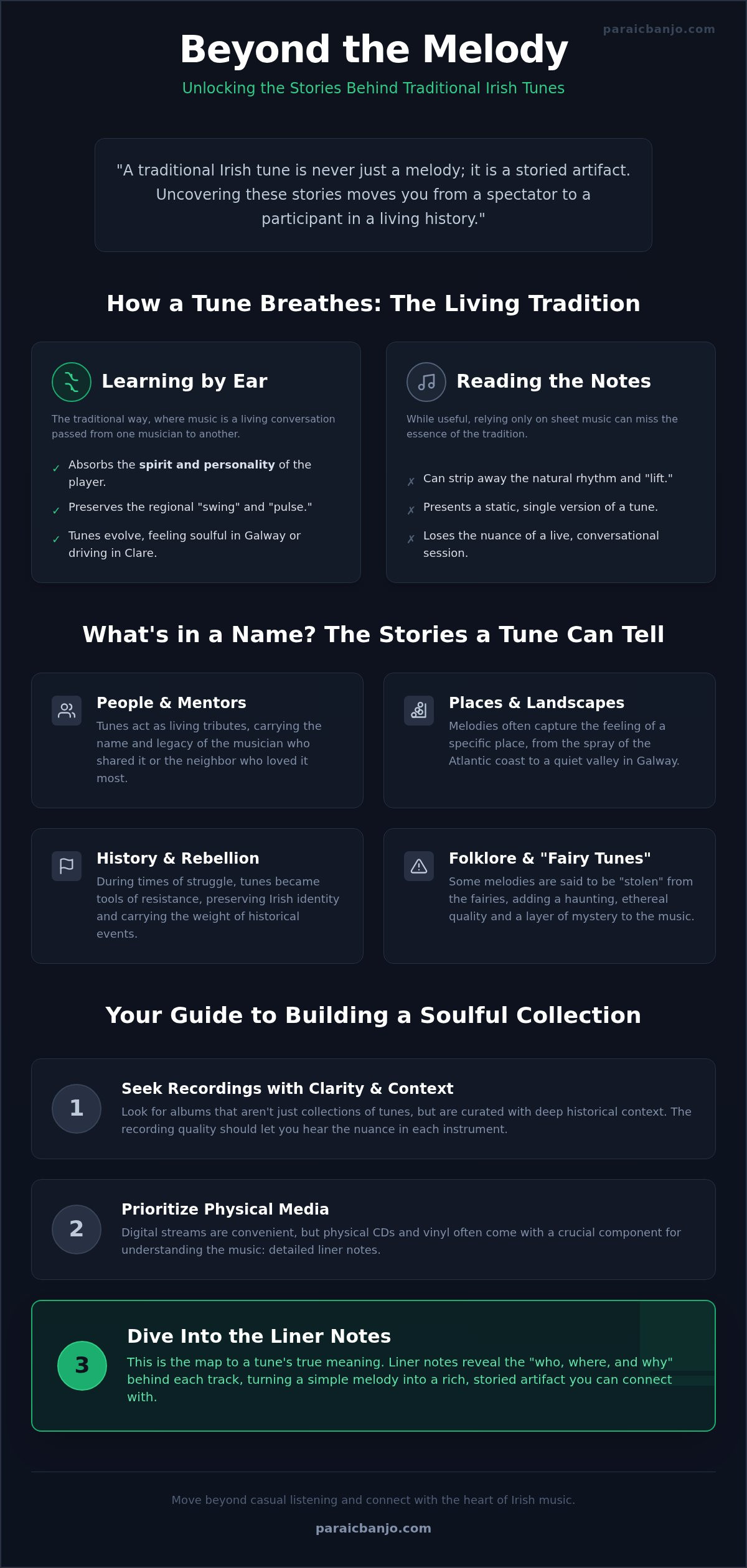
In the world of Irish trad, a tune is a living, breathing thing. It's not a static line of ink on a page. For centuries, these melodies have been oral histories, passed from one musician to another through "the ear." This isn't just about memorizing notes; it's about absorbing the spirit of the person who played it before you. When you start digging into the stories behind traditional irish tunes, you realize that every jig and reel is a tribute. They are bookmarks for specific people, local landmarks, or historical events that shaped a community. Understanding these narratives is the first step. Move from a casual listener to a dedicated collector. It's time to find the soul of the music.
The Oral Tradition: Learning by Ear
Traditionalists often shy away from sheet music because it can strip the "swing" or "pulse" right out of a melody. In a session, the music is a conversation. You listen to the lift in a fiddler's bow or the ghost notes on a banjo, and you learn the tune's personality. This is why a tune might sound bright and driving in Clare but take on a soulful, relaxed feel when it travels to East Galway. The session is the ultimate classroom. It's where the story of the tune is told through the rhythm itself. Listen closely. The history is right there in the strings. My debut album, Not Before Time – 39 Years in the Making, captures 18 tracks recorded live to preserve that very session soul and the legends behind them.
The Difference Between a Name and a Story
A title like "The Mason’s Apron" or "The Wind That Shakes the Barley" isn't a random choice. These names are woven into the social fabric of rural Ireland. Some reflect the hard work of the trades, while others carry the weight of rebellion. Historically, this connection between narrative and melody was so strong that even poets like Thomas Moore took notice. In Thomas Moore's Irish Melodies, he set new lyrics to old folk tunes to ensure the stories survived, though the instrumental tradition keeps the legends alive without needing a single word.
Unlocking the stories behind traditional irish tunes also serves as a vital mnemonic device. It's much easier to remember a complex melodic structure when you associate it with the neighbor who loved the tune or the hill where it was supposedly composed. To truly connect with the music, you need to look past the title. Actionable Tip: Always check the liner notes for the "who" and "where" of a track. These notes are the map to the tune’s origin. If you want to dive deep, my album Not Before Time – 39 Years in the Making is available as a Physical CD or Digital Album, and it includes extensive notes I've gathered over nearly four decades. These details turn each track into a storied artifact you can hold in your hands.
Common Themes in Irish Music Folklore
The lore surrounding this music is as vast and deep as the Atlantic itself. While some might focus solely on the mathematical structure of a reel, the real magic lies in the stories behind traditional irish tunes. These melodies often act as sonic monuments. Some honor a local fiddler who played with a particular "lift," while others capture the spray of the sea or the quiet gloom of a Galway valley. During times of political struggle, these tunes became tools of resistance. They kept the Irish identity alive when it was under threat from outside forces. Understanding the history of traditional Irish music helps us see how these themes evolved from simple folk expressions into a sophisticated cultural anchor for our people.
People and Mentors: The Living Legacy
In the trad world, we talk a lot about "pedigree." This isn't about snobbery; it’s about knowing your musical lineage and respecting the source. Most tunes carry the name of the person who first shared them or the neighbor who loved them most. If I play a tune I learned from a friend in East Galway, I’m not just playing notes. I’m carrying their legacy forward into a new generation. On my album, Not Before Time – 39 Years in the Making, I’ve carefully selected tracks that honor the mentors who shaped my hands and my heart. It’s a way of saying "thank you" to the masters who spent decades honing their craft before passing it on to me.
The Fairies and the Fiddle: Supernatural Origins
Then there are the "fairy tunes." Irish folklore is thick with stories of musicians who fell asleep on a fairy mound and woke up with a melody they’d never heard before. These "stolen tunes" often have a haunting, ethereal quality that sets them apart from standard dance music. While we might treat these tales with a wink and a nod today, they add a layer of mystery that gives the performance its soul. It reminds us that the music belongs to the land as much as it belongs to the people who play it. These legends transform a simple 4/4 rhythm into something ancient and otherworldly.
To truly appreciate these themes, you have to hear the music in its most raw, honest form. Actionable Tip: When listening to a new track, try to visualize the landscape it describes or the person it commemorates. It changes the way you perceive the rhythm and helps you connect with the artist’s personal journey. If you're looking for a collection that embodies these legends, you can explore the individual digital tracks from my latest project to find the specific stories that resonate with you. Every track is a definitive statement of a lifetime's passion, recorded live to keep that storytelling energy alive.
How Stories Shape the Rhythmic Soul of the West
When you understand the stories behind traditional irish tunes, you stop hearing just notes and start hearing the actual geography of Ireland. The history of a region dictates how its musicians breathe life into a melody. In the West, this manifests as "pulse" and "swing." If a tune tells a story of a quiet, misty morning in East Galway, the tempo naturally settles into something soulful and relaxed. Conversely, if the legend is about a boisterous wedding in Clare, the rhythm takes on a driving, percussive lift. The story is the conductor of the session, telling the musician exactly how much space to leave between the notes.
East Galway vs. Clare: A Tale of Two Pulses
The contrast between these two neighboring regions is legendary among those who live for the music. East Galway is famous for its melodic sweetness. Here, the musicians prioritize the beauty of the melody over raw speed. It's a "not-too-fast" pace that allows every ornament to ring out clearly. Clare, however, is the heartbeat of the session. Its style is defined by a rhythmic, dancing lift that makes it nearly impossible to keep your feet still. You can learn the nuances of East Galway vs Clare music to see how these localized histories created such distinct sounds. It’s about the difference between a soulful sigh and a joyous leap.
Hearing the History in the Banjo
The tenor banjo serves as the percussive heart of this music. Its crisp, bright tone is perfect for highlighting the specific "accent" of a regional style. Many players chase technical speed for speed’s sake, but the true masters know that soul always trumps tempo. My own rhythmic approach is the result of 39 years of listening to the stories behind traditional irish tunes. Every strike on the string is informed by the legends I've gathered over nearly four decades of playing in kitchens and pubs. Authentic recordings are those that capture this "lift." This isn't something you can learn from a textbook; it comes from a deep, personal connection to the tune's roots and the people who kept them alive.
To truly connect with this sound, you have to listen for the "swing" that separates a mechanical performance from a living one. Actionable Tip: To improve your own listening, try to identify the "pulse" of a recording. Does it feel like a gentle stroll or a spirited dance? Recognizing this difference helps you build a more authentic collection of music that actually has something to say. If you're ready to experience this firsthand, you can pick up my debut album, Not Before Time – 39 Years in the Making, as a Digital Album or Physical CD. It features 18 tracks recorded live to capture that raw, West-of-Ireland energy that can only come from a lifetime of dedication.
Researching Your Own Collection: A Collector’s Guide
Building a library of trad music is like assembling a puzzle of Irish history. You want the pieces to fit perfectly. To do this, you have to be selective. Start by looking for "solo" or "small group" recordings. These stripped-back settings allow you to hear the instrument clearly. You can catch every ornament and every subtle rhythmic shift that defines the regional style. When you seek out the stories behind traditional irish tunes, you need to hear the music without the clutter of a big band. Avoid those "Big Label" compilations. They often prioritize commercial polish over cultural grit, stripping the tunes of their historical weight and leaving you with a generic sound that lacks the true soul of the session.
You should also investigate the artist’s background. Are they rooted in a specific regional tradition? A player from East Galway will bring a different "swing" than one from Clare, as we explored earlier. By focusing on musicians with deep ties to a community, you ensure the music you're collecting is an authentic representation of a living lineage. It makes the listening experience feel personal rather than transactional.
The Treasure Map: Why Liner Notes Matter
For a serious collector, liner notes are the ultimate treasure map. They act as the "expert-as-educator" tool, providing the citations for the stories behind traditional irish tunes. These notes tell you who composed the tune, where it was first heard, and which regional variant you're listening to. Streaming services often fail the traditional music fan by omitting this crucial data. Without the notes, you're just listening to a melody without a home. You miss the context that turns a simple jig into a piece of history.
Buying Direct: Supporting the Living Tradition
There is a profound difference between a digital file and a storied artifact. Buying traditional Irish music direct from artists ensures that the craft remains sustainable. It keeps the tradition moving. A limited-edition physical CD is more than just a storage device; it's a piece of heritage for your library. When you hold a project like "Not Before Time," you're holding 39 years of research and passion. Use it as a benchmark for authentic track curation. It’s about the relief of finding something real.
Ready to start your collection with a definitive statement of a lifetime's work? You can order the physical CD or digital album here to get the full historical context and detailed liner notes that bring these melodies to life. It’s time to own a piece of the tradition. Cheers!
Not Before Time: 18 Tracks of Living History
My debut album, Not Before Time – 39 Years in the Making, is the realization of a lifetime spent in the heart of the tradition. It isn't just a collection of melodies; it's a 39-year archival project that I’ve carried with me through every session and every kitchen conversation. When I sat down to record these 18 tracks, I knew they had to be more than just technically proficient. They needed to carry the rhythmic integrity and the historical weight of the West. By focusing on the stories behind traditional irish tunes, I’ve tried to create something that feels like a conversation across generations. We recorded everything live to capture that raw, unpolished energy of a real session. There are no studio tricks here, just the honest pulse of the music as it was meant to be heard.
39 Years in the Making
Some might ask why I waited nearly four decades to release a debut. The truth is that I wanted to ensure the timing, the style, and the spirit were exactly right. This "slow-cooked" approach allowed me to refine my connection to the East Galway and Clare styles until the music felt authoritative and soulful. You can read the full story behind the Not Before Time album to understand the decades of listening that went into every note. It’s a project born from patience and a deep respect for those who came before me. It’s a relief to finally have it out in the world, and the response from the community has been a true celebration of the craft.
The Perfect Entry Point for Collectors
If you’re looking for a way to connect with real Irish culture, this album is the ideal starting point. It functions as a storied artifact for your collection. I’ve included extensive liner notes that act as your guide, inviting you into the specific world of the tunes I’ve selected. These notes provide the context that streaming services often ignore, giving you the "who" and the "where" for every track. Whether you prefer a Physical CD to sit on your shelf or a Digital Album for your library, we offer global delivery to bring these stories to your door. You can even pick up individual digital tracks if there’s a specific legend you want to explore first.
Don't settle for generic recordings that strip the soul from the melody. Actionable Tip: Use the liner notes in this album to cross-reference other recordings in your collection. You’ll start to see the patterns and lineages that define the stories behind traditional irish tunes in a whole new light. It’s an education as much as it is an experience. I’m proud to finally share this work with you. It’s been a long road, but the music is ready. Order "Not Before Time" and own a piece of Irish musical history today. Let’s keep the tradition alive together. Cheers!
Bring the Music to Life in Your Own Collection
The music is waiting for you to look beyond the notes. By now, you know that the "swing" of a tune isn't just a technical choice; it's a reflection of the land and the legends that birthed it. Whether you're drawn to the sweet, soulful pulse of East Galway or the driving lift of Clare, you're now equipped to listen with a collector's ear. Remember to prioritize those small group recordings and dive deep into the liner notes to truly grasp the stories behind traditional irish tunes. This context turns a simple melody into a living piece of our shared heritage.
If you're ready to own a piece of this history, my debut album is the perfect place to start. It features 18 tracks of authentic music recorded live to capture that raw session energy. I’ve included detailed historical notes to help you understand the "why" behind every melody. We offer worldwide shipping for physical CDs, so you can have this storied artifact in your hands no matter where you live. Buy "Not Before Time" Direct from Páraic and start your journey into the soul of the session today. It’s been a lifetime in the making, and I can’t wait for you to hear it. Keep the tradition alive!
Frequently Asked Questions
Why do traditional Irish tunes have such strange names?
Tune names usually act as a shorthand for the people, places, or historical events that inspired the melody. A title like "The Wind That Shakes the Barley" isn't just a random phrase; it’s a direct reference to the 1798 Rebellion. These names help musicians remember the melody and honor the social history of rural Ireland. It’s a way of keeping a local legacy alive through every set played in a session.
What is the difference between a reel, a jig, and a hornpipe?
The primary difference lies in the rhythm and time signature used for the dance. Reels are driving 4/4 time pieces, often considered the backbone of any session. Jigs have a bouncy 6/8 feel, often remembered by the rhythm of the phrase "rash-er-of-ba-con." Hornpipes are also in 4/4 but played with a distinct "dotted" or swung rhythm that gives them a characteristic lift. Each structure changes how the musician approaches the pulse of the tune.
Why are liner notes so important for traditional music collectors?
Liner notes are the only reliable way to uncover the stories behind traditional irish tunes in a digital world. They provide the "pedigree" of a track, listing the composer, the regional variant, and the musician who passed the tune down. Without these notes, you’re just listening to a melody without its history. Serious collectors use them to ensure they are preserving the authentic oral tradition rather than just a generic, context-free recording.
Is traditional Irish music the same as "Celtic music"?
Traditional Irish music is a specific, living tradition, while "Celtic music" is often a broad marketing term used to group many different styles together. Irish trad focuses on specific regional pulses, like those from East Galway or Clare, and relies on an oral tradition of learning by ear. Many Celtic recordings can be over-produced, which sometimes lacks the raw session energy and historical depth found in an authentic, live instrumental performance.
How can I tell if an Irish music recording is authentic?
Authentic recordings usually feature solo instruments or small groups rather than large, orchestral arrangements. You should listen for the "lift" and "pulse" that suggest the musician has a deep, personal connection to a specific regional style. High-quality, authentic projects often prioritize live recording sessions to capture the natural energy and "swing" of the music. Checking for detailed background information about the tune’s source is another great way to verify its roots.
What makes the East Galway style of banjo playing unique?
The East Galway style is defined by its melodic sweetness and a relaxed, soulful tempo. Unlike styles that prioritize raw speed, East Galway players focus on the clarity of the melody and a specific "swing" that feels more lyrical. This approach allows the "accent" of the region to come through, making the banjo sound like a percussive heart rather than just a fast-paced lead instrument. It’s a style built on 39 years of listening and respect.
Do digital downloads from paraicbanjo.com include the track stories?
Yes, every digital album and individual digital track from my site is designed to share the stories behind traditional irish tunes. I believe that the music is incomplete without its history, so I’ve ensured that the digital versions carry the same weight as the physical CD. You get the full archival context of my journey, allowing you to connect with the history of each melody from the moment you hit play on your device.
Can I buy traditional Irish music as a gift for someone living abroad?
You can absolutely buy my music as a gift, as we offer worldwide shipping for the physical CD edition of "Not Before Time." This makes it an ideal choice for friends or family abroad who want a piece of real Irish culture. If they prefer digital access, the Digital Album provides an instant way to enjoy all 18 tracks. It’s a definitive statement of a lifetime's passion that can be shared across any distance. Cheers!


Comments