Top Traditional Irish Music Albums: The Essential Collector’s List for 2026
- Paraic Mac Donnchadha

- 4 days ago
- 13 min read
Most "Best of Ireland" collections you find online are little more than watered-down background noise for gift shops. They lack the genuine lift and lilt that defines a true session. If you're tired of generic compilations and want to build a library with real soul, you need the top traditional irish music albums that actually capture the pulse of the tradition. It's about finding those recordings where the music feels like a living, breathing thing rather than a polished museum piece.
I understand the struggle of trying to distinguish between regional styles or finding that elusive "live" energy in a studio setting. You want to feel the rhythmic drive of the East Galway style and understand the history behind the tunes. This guide provides a definitive collector's list for 2026, mapping out the essential recordings from 1970s legends to modern innovators like Clare Sands. These are the blueprints of our culture. I've spent 39 years immersed in this music, and I'm thrilled to show you the albums that belong in every serious collection.
Table of Contents
What Makes a 'Top' Traditional Irish Music Album?
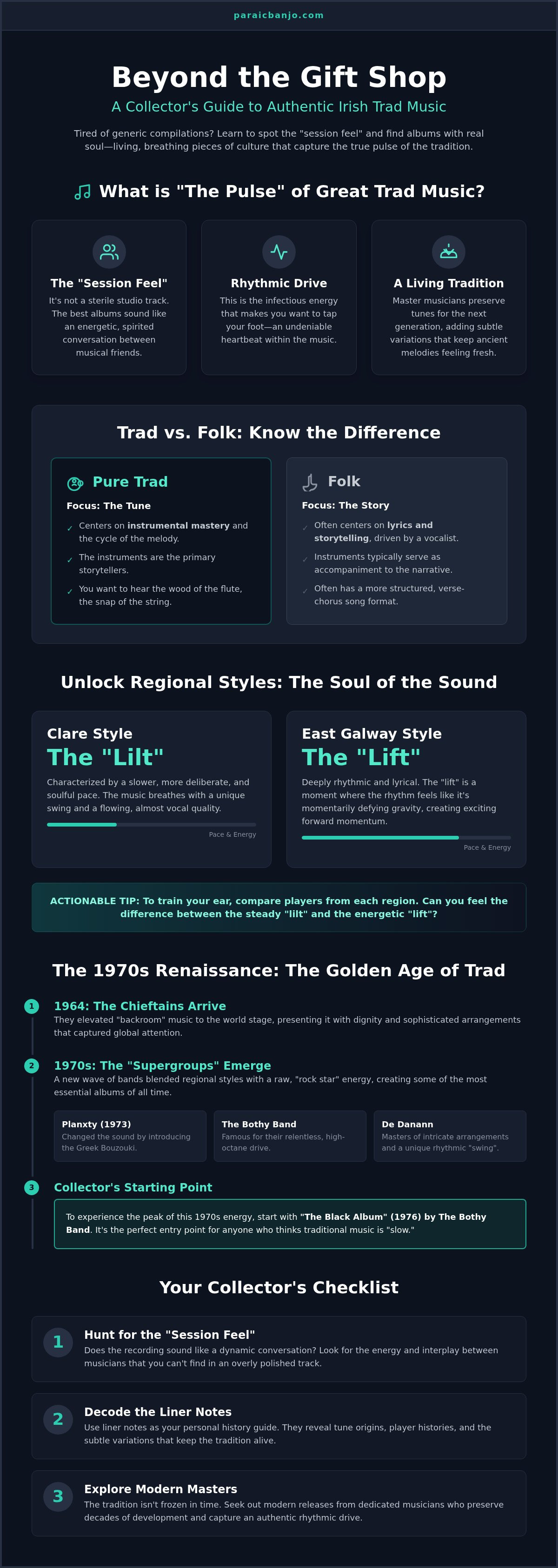
Identifying the top traditional irish music albums isn't just about picking the loudest or most famous records. It's about finding the "pulse." For those of us who have spent decades in the corner of a pub with a banjo or a fiddle, we know that a truly great album must capture the rhythmic drive of a real session. It shouldn't feel like a sterile museum piece. Instead, the best recordings sound like a spirited conversation between friends. They possess a longevity that keeps them sounding fresh even in 2026 because they are rooted in a living, breathing tradition.
A master musician does more than just play notes. They preserve tunes for the next generation, adding their own subtle variations without losing the core of the melody. This is why Irish traditional music legends from the 1970s still resonate today. They offer a blueprint for how to play with soul and technical precision. When you listen to these masters, you aren't just hearing a track; you're hearing a lifetime of dedication to the craft.
Trad vs. Folk: Know the Difference
While folk music often centers on lyrics and storytelling, pure "trad" focuses on instrumental mastery and the cycle of the tune. Purists often hunt for unadorned recordings. We want to hear the wood of the flute and the snap of the banjo string. "The Pulse" is that infectious, rhythmic drive that makes you want to tap your foot. If a recording is buried under high-production pop-folk layers, that heartbeat gets lost. Don't settle for generic "Irish-themed" music. Look for albums where the instruments are the primary storytellers.
The Vital Role of Regional Styles
Geography dictates the "swing" of a reel. If you listen to a Clare player, you'll notice a slower, more deliberate pace known for its "lilt." Move into East Galway, and the music becomes lyrical, soulful, and deeply rhythmic. These regional nuances are what give the music its character.
Actionable Tip: To train your ear, listen for the "lift." This is the moment where the rhythm feels like it's momentarily defying gravity. It's not about speed; it's about the energy behind the note. Try comparing a Galway fiddle player with a Clare flautist to see if you can feel the difference in the beat.
Finding music that hits these marks is a journey. If you're building a library, look for projects that took time to mature. For instance, my own debut, Not Before Time - 39 Years in the Making, was built on nearly four decades of musical development to ensure that East Galway "lift" was captured perfectly. You can find the physical CD or digital tracks on this site to see how these elements come together in a modern recording that respects the old ways.
The Essential Classics: The Albums That Started the Renaissance
To truly understand the top traditional irish music albums, you have to look back at the 1960s and 70s. This was a time of massive rediscovery. The Chieftains led the charge in 1964, taking what was often seen as "backroom" music and presenting it with a dignity that captured the world's attention. They didn't just play tunes; they orchestrated them. This era wasn't about changing the music to fit the times, but rather showing the world that the "old" music was actually timeless and incredibly sophisticated.
The Supergroups of the 1970s
By the 1970s, the scene exploded with what we now call the "Supergroups." Bands like Planxty and The Bothy Band became the gold standard for every collector. Planxty changed everything in 1973 by introducing the bouzouki, a Greek instrument they adapted to create a percussive, ringing accompaniment. These groups created what many consider the top traditional irish music albums of all time because they didn't just repeat tunes; they reimagined them with a raw, "rock star" energy.
De Danann also emerged during this period, mastering a specific rhythmic "swing" and intricate arrangements. If you're interested in the technical side, this scholarly analysis of Trad music explains how these complex arrangements evolved. These bands blended regional styles from across the country into a cohesive sound that felt both local and universal.
Actionable Tip: If you want to experience the peak of this 1970s energy, start with "The Black Album" by The Bothy Band. It's famous for its relentless drive and is the perfect entry point for anyone who thinks traditional music is "slow."
Solo Masters: The Foundation of the Sound
While the big bands get the headlines, solo masters are the true foundation. You can't appreciate the uilleann pipes without hearing Seamus Ennis or Willie Clancy. Solo recordings are vital because they let you hear the nuance of ornamentation. These are the tiny grace notes, rolls, and triplets that give a tune its unique personality.
For banjo fans, hearing early tenor banjo recordings is a lesson in precision. You learn how a single player can carry the rhythm of an entire room. These solo records are the "history books" of the tradition. They show us how a master handles a melody when there's no one else to hide behind. It's pure, unadorned skill.
These classics laid the groundwork for everything I do today. My own project, Not Before Time - 39 Years in the Making, is a direct tribute to that era of mastery and rhythmic focus. You can explore the tracks here to hear how that legendary 1970s swing continues to influence modern East Galway playing. It's a journey that's still unfolding, one tune at a time.
Finding the Soul: East Galway and Clare Regional Recordings
Many casual listeners think all music from the West of Ireland sounds the same. That's a mistake that will keep you from finding the real gems. If you want to own the top traditional irish music albums, you have to understand the border between Galway and Clare. These two regions offer completely different auditory experiences. While they share the same repertoire of reels and jigs, the way they "feel" the music is worlds apart. It's the difference between a steady, driving heartbeat and a playful, bouncy lilt.
Regionality is the secret weapon of any serious collector. It tells you where a musician learned their craft and whose "ghosts" they are chasing in their playing. When you listen to these recordings, you aren't just hearing a tune; you're hearing the landscape of the West captured in sound. It's about the soul of the community, preserved through decades of sessions and kitchen dances.
East Galway vs Clare Music: A Rhythmic Guide
East Galway music is often described as lyrical and soulful. It has a specific "swing" that feels deeply rhythmic but never rushed. It's a style that prioritizes the melody's emotional weight. In contrast, the Clare style is famous for its "lilt." It's a bouncy, slightly slower, and more deliberate pace that feels like it has a spring in its step. Legendary players from Clare, like the fiddle masters of the past, focused on a relaxed "lift" that makes the music feel effortless.
If you're trying to decide which style speaks to you, I've put together a detailed East Galway vs Clare Music: A Guide to the Rhythmic Soul of the West. This will help you decode the nuances before you commit to your next purchase. Both styles are essential, but you'll likely find yourself gravitating toward one as your collection grows.
The Banjo in the West: A Tradition Revived
The tenor banjo holds a special place in the Galway tradition. It acts as the "rhythm section" of the ensemble, providing a percussive drive that keeps the other instruments locked in. In a Galway session, the banjo isn't just a melody instrument; it's the engine. You can spot a master of the East Galway banjo style by their use of triplets. These aren't just fast notes for the sake of speed. They are rhythmic accents that emphasize the "swing" of the tune.
Actionable Tip: When listening to a new album, try to isolate the banjo in the mix. If it feels like the instrument is "pushing" the tune forward with a steady, driving pulse, you're likely listening to a Galway-influenced recording. If the banjo feels more melodic and airy, you're hearing a different regional approach.
Building a library of the top traditional irish music albums requires an ear for these subtle shifts. My debut album, Not Before Time - 39 Years in the Making, was specifically recorded to highlight that East Galway banjo drive. It's a style I've spent nearly four decades honing, and it’s a vital part of the West's musical identity. You can find the physical CD or digital tracks right here on the site to hear that Galway swing in action. It's a direct connection to the masters who came before us.
How to Listen Like a Musician and Build Your Collection
Building a library of the top traditional irish music albums involves more than just hitting "play" on a generic streaming service. You need to develop a musician's ear. Start by focusing on the "Pulse." Tap your foot while you listen. If the rhythm feels natural and infectious, the player has captured the heartbeat of the tradition. If it feels stiff or overly rehearsed, it’s likely missing that essential session energy we discussed earlier. The music should move you, literally and emotionally.
Listen closely for variation. A master player rarely plays a tune the same way twice. The first time through, they might establish the core melody. The second time, they'll add subtle ornaments, triplets, or rhythmic shifts. This is where the soul of the music lives. It's a conversation that evolves with every repeat. Learning to spot these tiny changes is what turns a casual fan into a true connoisseur of the craft.
The Art of the Liner Note
Liner notes are the history books of our tradition. They tell you where a tune came from, who the composer was, and which session it was "borrowed" from. Knowing the story of a tune changes how you hear it. It adds a layer of respect and connection to the generations of players who kept these melodies alive through lean times.
Actionable Tip: Use the liner notes to track down the names of the original composers. You'll often find that a "traditional" tune was actually written by a master fiddler or piper just a few decades ago. This helps you map out the family tree of the music you love.
Building a Purist's Library
For serious collectors, physical CDs remain the preferred format. They offer un-filtered audio quality and the tactile experience of those all-important notes. In the digital age, buying direct is the best way to support independent artists. It ensures the music stays in the hands of the people who create it. If you're looking for guidance on how to navigate this, check out The Collector’s Guide: How to Buy Traditional Irish Music Direct from Artists in 2026.
Capturing this live energy was my main goal for Not Before Time - 39 Years in the Making. I included extensive notes to give you that historical context and a direct look into the East Galway style. You can purchase the physical CD or digital album here to start your collection with a project that respects the history of the craft. It's about more than just songs; it's about preserving a legacy.
A Modern Essential: 'Not Before Time' and the Future of Trad
I’ve spent my life in the corner of sessions, learning that the best music isn’t something you can rush. My debut album, Not Before Time - 39 Years in the Making, is the definitive statement of that lifelong journey. It took nearly four decades of playing, listening, and absorbing the lilt of the West to get these 18 tracks exactly right. This isn't just another entry in the list of top traditional irish music albums; it's a labor of love that honors the masters who came before me. There's a palpable sense of relief and celebration in these recordings, a feeling that the work is finally ready to be shared with the community.
It’s a rare thing to wait nearly forty years to release a debut. But for me, it was essential. I wanted to ensure every triplet and every rhythmic accent carried the weight of the tradition. This album isn't just a collection of tunes; it's a conversation across time. It bridges the gap between the 1970s legends we've discussed and the vibrant future of the music. We didn't want a sterile studio sound. We wanted the listener to feel like they were sitting in the middle of a high-energy session in a Galway pub.
Capturing the Pulse of East Galway
The heart of this album is the rhythmic drive of the East Galway style. I carefully selected a mix of reels and jigs that define the energy of a real, breathing session. We recorded these tracks live with a group of expert collaborators to keep that authentic soul intact. If you're searching for soulful banjo music that prioritizes the "swing" over pure mechanical speed, this record is for you. It’s about that steady, driving pulse that makes you want to tap your foot before the first bar is even finished. Every note is played with the intention of preserving that specific regional lilt.
Why 'Not Before Time' Belongs in Your Collection
Serious collectors understand that the best albums are those that offer a deep dive into the history of the craft. That’s why I’ve made sure the limited-edition physical CD includes extensive liner notes. These aren't just track names; they are the stories and backgrounds of the tunes themselves. When you order direct from an artist, you're doing more than just buying music. You're actively supporting the preservation of the East Galway tradition. You can find more details on why this project is considered the Not Before Time - 39 Years in the Making: The Definitive Irish Banjo Debut. It's an invitation to join a storied musical tradition that’s still very much alive and kicking in 2026.
Start Your Journey into the Heart of the Tradition
Building a collection of the top traditional irish music albums is a journey that never truly ends. You've learned to listen for the "pulse" that separates a sterile studio track from a living session. You now know how regional styles, like the soulful East Galway swing or the bouncy Clare lilt, provide the essential character for any purist's library. These recordings are more than just music. They are vibrant records of our heritage that deserve to be heard, shared, and studied.
If you're ready to add a modern classic to your shelf, my debut project is waiting for you. It was 39 years in the making and features 18 authentic session tracks that capture the true spirit of the banjo. I offer worldwide shipping for physical CDs so you can hold the history in your hands. Order 'Not Before Time' - The Definitive East Galway Banjo Album today to support the preservation of this incredible music. Keep your ears open and your feet tapping. The music is alive, and you're now a vital part of its story.
Frequently Asked Questions
What are the most influential traditional Irish music albums of all time?
The Chieftains 1 (1964) and Planxty (1973) are essential cornerstones that redefined the genre for the modern era. These records moved the music from rural kitchens to the world stage without losing its heart. The Bothy Band’s debut is also vital for its raw, "rock star" energy. These are the top traditional irish music albums that every serious collector uses as a foundation for their library.
Is it better to buy digital downloads or physical CDs for Irish music?
Physical CDs are usually the preferred choice for purists because they contain high-fidelity audio and those all-important liner notes. Digital downloads offer great convenience for listening on the move, but you often miss out on the historical context provided in the physical booklet. My debut, Not Before Time - 39 Years in the Making, is available in both formats to ensure every fan can access the music.
What is the difference between East Galway and Clare music styles?
The main difference is found in the rhythm and the "swing" of the tunes. East Galway music is characterized by a lyrical, soulful feel and a steady, driving pulse. Clare music is famous for its "lilt," which is a slightly slower, more deliberate and bouncy pace. Both styles are beautiful, but they offer a completely different auditory experience during a session or on a recording.
Who are the best Irish tenor banjo players to listen to?
You should start with legends like Barney McKenna and Kieran Hanrahan to hear how the instrument first gained its place in the tradition. For a focus on the rhythmic East Galway style, it’s important to listen to players who prioritize the "swing" over raw speed. My own project, Not Before Time - 39 Years in the Making, features 18 tracks designed to showcase this specific, soulful regional approach.
How can I tell if an album is 'authentic' traditional Irish music?
Authentic recordings prioritize the melody and the rhythmic pulse rather than heavy studio production or pop-folk layers. You want to hear the "wood" of the instruments and a session energy that feels like a conversation. If the rhythm makes you want to tap your foot naturally, the pulse is likely correct. Look for projects led by musicians who are deeply rooted in their local communities.
What are the best Irish session recordings for beginners?
Beginners should look for albums that capture a "live" feel, such as the early works of Planxty or De Danann. These recordings help you understand how different instruments like the fiddle, flute, and banjo interact. Finding the top traditional irish music albums that feature clear, distinct melodies makes it much easier to identify the differences between a reel, a jig, and a hornpipe as you start your collection.
Why are liner notes so important in traditional Irish music?
Liner notes act as the "history books" for the tunes, preserving the lineage of the music for future generations. They tell you who composed a tune, where the player learned it, and which regional masters influenced the arrangement. In a tradition that was passed down orally for centuries, these notes provide a vital map of our culture. They turn a simple tracklist into a deep educational resource.
Where can I buy traditional Irish music direct from the artist?
Buying direct from an artist’s personal website is the best way to ensure your support goes straight to the creator. This helps musicians continue to preserve and record these storied traditions. You can purchase Not Before Time - 39 Years in the Making as a physical CD or digital album right here on this site. We provide worldwide shipping for physical copies to help share the East Galway style with the world.


Comments