Traditional Irish Instrumental Music: A Guide to the Rhythmic Soul of the West
What if the "fast and loud" music you hear in every crowded pub isn't actually the heartbeat of the tradition, but just its most frantic surface? It's a common frustration for many listeners. You feel the pull of traditional irish instrumental music and want to dive deeper, only to get stuck wondering why a reel sounds so different from a jig. Maybe you've wondered why some players focus on a driving rhythm while others seem to just race to the finish line. It's tough to find your footing when you're looking for something authentic that resonates with the soul rather than just the feet.
This guide is here to clear the mist. You'll discover the rich history and distinct regional styles that define this art form, moving far beyond the basics. I'll help you identify the subtle differences between tune types and understand the unique role of instruments like the tenor banjo in the East Galway and Clare traditions. By the time we're done, you'll know exactly how to start an authentic music collection that captures the true, rhythmic spirit of the West. It's a journey through a lifetime of passion, and I'm thrilled to share these stories with you.
Table of Contents
What Defines Traditional Irish Instrumental Music?
Traditional irish instrumental music is much more than a collection of old melodies. It is a living, breathing conversation between the past and the present. At its heart, this is an oral tradition. For centuries, tunes were passed from teacher to student and neighbor to neighbor without a single scrap of sheet music. This created a culture where listening is just as important as playing. It's about absorbing the "lift" of a tune, that indefinable rhythmic bounce that makes you want to move.
The beauty of the music lies in its focus on melody and rhythm. Unlike other genres that rely on complex harmony, Irish music thrives on the variation and ornamentation of a single melodic line. It’s a rhythmic soul that feels deeply personal, yet belongs to a whole community. To hear how these melodies come to life in a modern context, you can explore the 18 tracks on my debut album, Not Before Time - 39 Years in the Making, which is available as a physical CD or digital download.
The Core Instruments of the Tradition
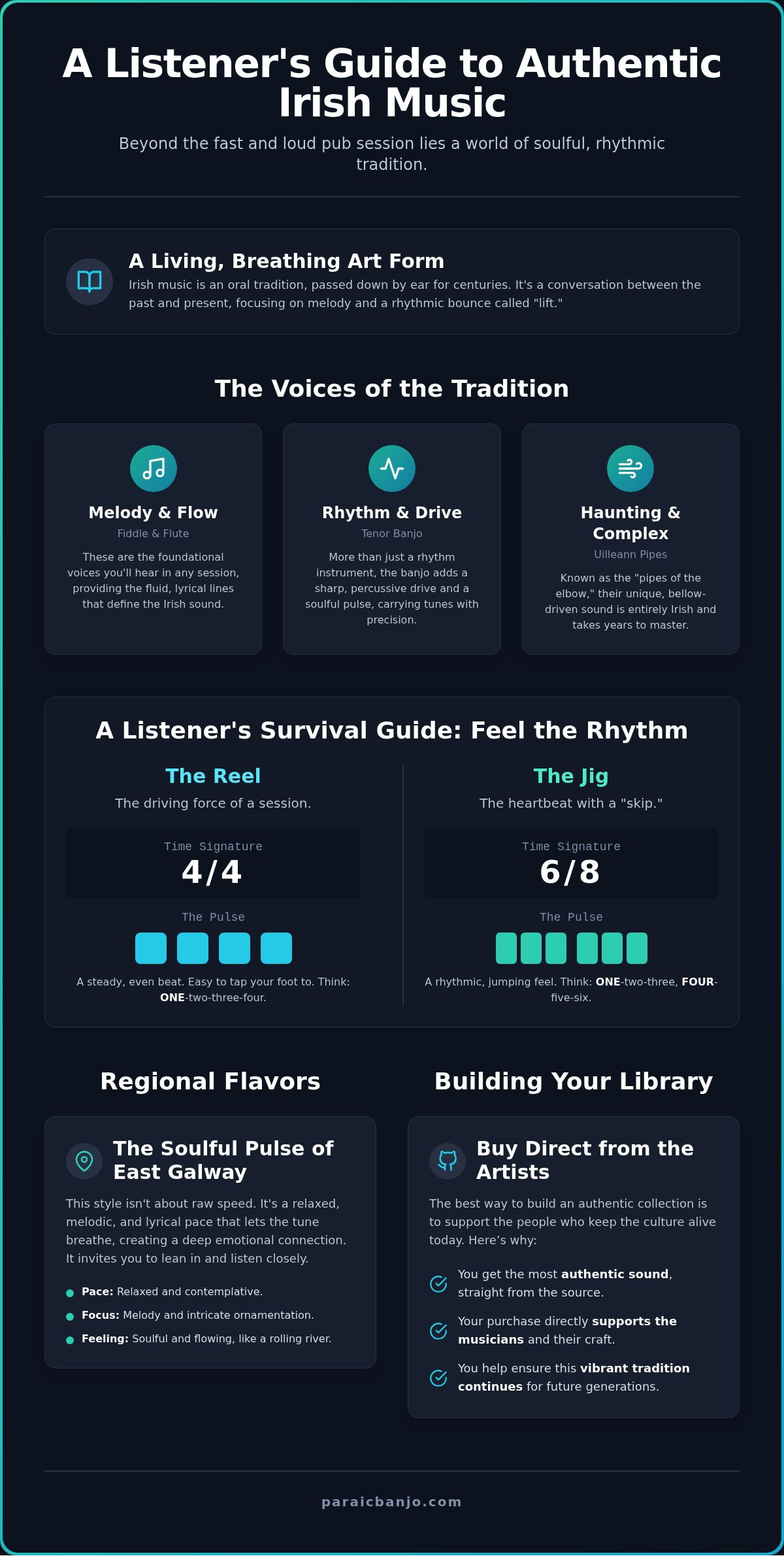
The fiddle and flute are the foundational voices you'll hear in almost any session. They provide the fluid, lyrical lines that define the Irish sound. However, the uilleann pipes offer something truly unique. Known as the "pipes of the elbow," they use bellows to create a complex, haunting sound that is entirely Irish. It takes years to master the regulators, which allow the piper to play rhythmic chords alongside the melody.
Then there is the tenor banjo. It brings a sharp, percussive drive and a soulful pulse to the mix. In the right hands, the banjo isn't just a rhythm instrument; it’s a melodic powerhouse that can carry a tune with incredible precision. I spent decades honing my style to capture the raw energy of the East Galway and Clare traditions. You can hear this drive in the individual digital tracks available on this site, each one representing a lifetime of dedication to the craft.
A Living History in Every Note
Because the music was passed down by ear, it is constantly evolving. A reel played in East Galway might have a different "swing" than the same tune played in Donegal. This regional variety is what makes the tradition so rich. Dance has always been the silent partner of the music. The structures of the tunes, like the 4/4 time of a reel or the 6/8 jump of a jig, were designed specifically to keep dancers on the floor.
Don't make the mistake of thinking "traditional" means "old-fashioned" or "static." It is a vibrant, modern art form. The modern "session" is the ultimate proof of this. It’s a social gathering where musicians of all ages sit in a circle, sharing tunes and stories. If you are looking to start your own collection, I recommend buying traditional irish music direct from artists. This ensures you get the most authentic sound while supporting the people who keep the culture alive today. Try tapping your foot to a reel. It’s a simple 4/4 rhythm. If the beat feels like it's jumping or skipping, you've likely found a jig.
Regional Flavors: The Soulful Pulse of East Galway and Clare
If you want to understand the true depth of traditional irish instrumental music, you have to look at the map. Regional styles are the "secret sauce" that gives a tune its distinct character. It's the difference between a brisk mountain wind and a steady, rolling river. In the West of Ireland, two neighboring counties, Galway and Clare, have shaped some of the most influential sounds in the tradition. These styles aren't just about geography. They're about how you feel the rhythm in your bones and how you choose to tell a story through your instrument.
The Rhythmic Mastery of East Galway
East Galway is legendary for its relaxed, melodic, and lyrical pace. Here, the music isn't about raw speed. It's about letting the melody breathe. This tradition values a tempo that allows for intricate ornamentation and a deep emotional connection to the tune. I've spent decades immersed in this sound. It's a style where the banjo and fiddle often lead with a smooth, flowing grace. Listeners often find this style more contemplative than the high-octane sessions found in the cities. It invites you to lean in and listen closely.
Actionable tip: When you are listening to a Galway-style player, focus on the repeated phrases. Instead of playing them exactly the same way twice, the player will often introduce subtle variations in the notes or the timing. Try to spot these tiny shifts. It's a great way to train your ear to the nuances of the tradition.
Clare Music: The Heartbeat of the Dance
Just across the border, the Clare tradition takes on a different energy. It's all about "lift" and "swing." In Clare, the music is inseparable from the dance. The rhythm has a specific bounce that makes it nearly impossible to keep your feet still. It's a driving, infectious pulse that prioritizes the groove of the tune over sheer technical display. Many players today find that blending these two neighboring traditions creates a perfect balance of melody and drive. If you're curious about the specific nuances between the two, checking out a comparison of east galway vs clare music can help you find which pulse resonates most with you.
These regional traditions aren't just found in history books. They're alive in every note of a live session. My debut album, Not Before Time - 39 Years in the Making, is a direct reflection of these influences. It captures that authentic regional energy through 18 tracks recorded live with expert musicians. You can find the full experience on physical CD or as a digital album right here on the site. It is a definitive statement of a lifetime spent in these traditions.
Reels, Jigs, and Hornpipes: A Listener’s Survival Guide
Walking into a session can feel like stepping into a whirlwind of sound. To the untrained ear, it might just seem like a blur of fast notes. But once you understand the rhythmic bones of traditional irish instrumental music, the patterns start to emerge. Most of what you hear falls into three main categories: reels, jigs, and hornpipes. Each has its own distinct personality and purpose, shaped over centuries by the dancers who needed specific beats to keep their steps in time.
The reel is the undisputed king of the session. It’s a high-energy 4/4 rhythm that feels like a steady, driving run. Think of it as the "straight" beat of the tradition. Then you have the jig, which is the heartbeat of Ireland. It uses a 6/8 time signature that creates a distinctive "jumping" or "skipping" feel. If you want to identify a jig instantly, try this: count "1-2-3, 4-5-6" in your head. If the music fits that rolling, triple-time pulse, you’ve found a jig. Finally, there is the hornpipe. It’s usually played at a slower, more deliberate pace than a reel. It features a "dotted" rhythm, which gives it a characteristic "thump" or bounce at the end of phrases. It’s a sophisticated rhythm that requires real precision from the player.
Decoding the Structure of an Irish Tune
Most tunes follow a simple AABB structure. The "A" part is the first melody, played twice. Then comes the "B" part, often called the "turn," which is also played twice. This repetition isn't just for show. It gives the player a chance to add ornamentation like "cuts" and "rolls." These are tiny, rapid-fire notes that decorate the main melody. For banjo players, mastering "triplets," which are three notes picked in the space of one, is essential for adding that rhythmic drive. You can hear these techniques in action across the 18 tracks on my album, Not Before Time - 39 Years in the Making.
The Art of the Set
In a session or on a recording, you'll rarely hear just one tune played in isolation. Musicians group two or three tunes together to create a "set." This is all about building momentum. The real magic happens during the transition between tunes. That sudden shift is where you feel the "lift," a burst of energy that carries the music to a new level. It takes a lifetime of practice to construct a set that flows naturally. If you're looking to hear how a well-constructed set should sound, you can explore the individual digital tracks on this site. Each one was recorded live to capture that raw, infectious energy. Don't be afraid to tap your foot; that’s exactly what the music is for.
Building Your Library: How to Buy Traditional Irish Music
Starting a music collection is about more than just filling a playlist. It's about preserving a piece of the tradition. When you look for traditional irish instrumental music, the source matters. Streaming services are convenient, but they often pay artists fractions of a cent. This hardly supports the years of dedication required to master these tunes. I believe that buying traditional irish music direct from artists is the most powerful way to ensure the heartbeat of the West keeps thumping. It turns a simple transaction into a meaningful connection between the player and the listener.
Actionable tip: Always look for "independent releases" when searching for new albums. These are projects led by the musicians themselves rather than large commercial labels. They offer the most authentic sound because the artist has total control over the repertoire and the "swing" of the performance. It feels like being invited into a private session rather than a polished studio set. You get the raw energy of the instruments exactly as they were meant to be heard, without unnecessary filters or over-production.
The Value of the Physical CD
In a world of digital clouds, the physical CD remains a treasure for the serious collector. It offers high-quality audio that streaming services often compress. You lose the subtle grit of a bow on a string or the sharp pop of a banjo pick in a digital file. More importantly, the CD includes liner notes. These are the "missing link" in the digital age. They provide the stories behind the tunes, the names of the composers, and the history of the regional styles. Many listeners search for a traditional irish session music cd to serve as a permanent archive of the tradition.
Where to Buy for Authenticity
To find the real thing, you must learn to distinguish between "tourist" compilations and artist-led projects. Authentic recordings focus on the integrity of the tune rather than generic "Celtic" atmosphere. When you choose to buy traditional irish music from independent sites, you are directly supporting the heritage. Digital downloads are a fantastic option for instant access, especially if they include high-resolution files. You can start your authentic collection today by picking up Not Before Time - 39 Years in the Making, which captures 39 years of dedication in 18 live tracks.
Experience the Pulse: 'Not Before Time' by Páraic Mac Donnchadha
After nearly four decades of playing, listening, and learning, I felt the time was finally right to put a definitive stamp on my musical journey. Not Before Time - 39 Years in the Making is more than just a debut album. It is a celebration of the East Galway and Clare traditions that have been my life's work. I wanted to create something that felt real, something that mirrored the energy of a late-night session where the tunes just flow. To achieve that, we recorded 18 tracks live with some of the finest expert musicians in the tradition. This isn't a project that was rushed; it’s one that was allowed to ripen until every note felt exactly right.
Traditional irish instrumental music thrives on interaction. When you hear the album, you aren't just hearing a solo banjo. You're hearing a conversation between the fiddle, the flute, and the pulse of the rhythm section. We didn't use sterile studio tricks. Instead, we captured the raw, infectious spirit that happens when players who truly understand each other sit down in a room together. It's about that shared lift and the driving rhythm that defines our corner of the West. It is a definitive statement of a lifetime's passion, and I am incredibly proud to finally share it with you.
39 Years of Musical Dedication
People often ask why I waited 39 years to release this. The answer is simple: I wanted to honor the masters who taught me while ensuring I had something unique to contribute. This album features collaborations with musicians who share that same respect for the heritage. We spent hours selecting sets that flow naturally, moving from soulful melodies to high-energy reels that will have you tapping your foot before the first phrase is over. It is a collaborative effort that values the contribution of every performer involved.
Actionable tip: When you first get the album, start right at track 1. It sets the tone for the whole experience, showcasing the specific rhythmic drive of the tenor banjo that we've discussed throughout this guide. Close your eyes and imagine you're sitting in the corner of a warm pub in East Galway. The music is designed to take you there. Let the rhythm guide you through the history of each set.
Get Your Copy of the Tradition
I know many of you value the history as much as the sound. That's why the physical CD includes detailed liner notes. These notes are my way of acting as your educator, providing the background on where these tunes came from and the people who kept them alive. If you prefer immediate access, the digital album and individual digital tracks are also available for download. Whatever format you choose, you're getting a pure, unadulterated slice of Irish heritage. You can bring the soul of Irish music home with Not Before Time and start your journey into the heartbeat of the West today.
Start Your Musical Journey Today
You now have the tools to navigate the beautiful complexities of traditional irish instrumental music with confidence. By understanding the distinct lift of a Clare jig or the relaxed, melodic flow of the East Galway style, you're no longer just a listener; you're part of the conversation. Remember that this tradition is a living history. It thrives when we choose to support independent artists and dive deep into the stories behind the tunes. Those stories are what turn a simple melody into a lifelong passion.
If you're ready to bring that authentic pulse into your home, my debut album is the perfect place to start. It features 18 tracks of pure session music, representing 39 years of dedication to the craft. Whether you're a seasoned collector or a newcomer, the detailed liner notes will act as your guide to the history of every set. We offer worldwide shipping, so the spirit of the West is never out of reach. Order the "Not Before Time" Physical CD & Liner Notes and experience the raw energy of a live recording today. I can't wait for you to hear it. Happy listening!
Frequently Asked Questions
What is the difference between a reel and a jig?
A reel is in 4/4 time while a jig is in 6/8 time. Reels feel steady and driving, like a constant heartbeat that keeps the energy high. Jigs have a distinctive jumping or skipping feel that you can count as 1-2-3, 4-5-6. This rhythmic difference was originally designed to support different types of traditional dance steps. Understanding these pulses is the first step toward appreciating the complexity of traditional irish instrumental music.
Why is the tenor banjo used in Irish music instead of the 5-string banjo?
The tenor banjo is preferred because its four strings and shorter neck allow for the rapid, percussive melodic playing required in Irish sessions. Unlike the 5-string banjo used in bluegrass, which often relies on finger-picking rolls, the tenor banjo is played with a plectrum. This creates a sharp, clear tone that cuts through the sound of fiddles and flutes, making it perfect for driving the rhythmic soul of a tune. It is a foundational voice in the West.
Where can I buy authentic traditional Irish music online?
You can buy authentic music directly from independent artist websites like paraicbanjo.com. Buying direct ensures that your support goes straight to the musicians who preserve the tradition. On this site, you can find the album Not Before Time - 39 Years in the Making as a physical CD or digital download. This is a reliable way to avoid generic, commercialized compilations and find high-quality, artist-led projects that carry real cultural weight and integrity.
What makes East Galway style music different from other regions?
East Galway style is distinguished by its relaxed tempo and lyrical, melodic focus. While some regions prioritize raw speed, Galway players often lean into a slower pace that allows for intricate ornamentation and deep emotional expression. It’s a soulful approach that values the swing of the tune over technical flashiness. This creates a contemplative listening experience that highlights the subtle variations and rhythmic nuances inherent in traditional irish instrumental music. It invites the listener to lean in closer.
Is it better to buy a physical CD or a digital download for Irish music?
A physical CD is often better for collectors who want high-quality audio and detailed background information. While digital downloads offer immediate access and convenience, they often lack the extensive liner notes found in physical packages. My album, Not Before Time - 39 Years in the Making, is available in both formats. The CD version serves as a permanent archive, ensuring you have the best possible sound quality without the compression used by many modern streaming services.
What are liner notes and why are they important for collectors?
Liner notes are the printed materials included with an album that provide essential context about the tunes and the performers. They are a vital resource for anyone looking to understand the heritage of the music. These notes often include the origins of specific tunes, credits for guest musicians, and personal stories from the artist. For serious collectors, these materials turn a simple recording into a valuable educational tool and a permanent piece of history you can hold.
How do I know if an Irish music album is authentic or commercialized?
Authentic albums are typically led by the musicians themselves and focus on regional integrity rather than generic themes. You can spot a commercialized project by its use of stock imagery or vague titles like "Best Irish Hits." Authentic recordings, such as those found on this site, are often recorded live with expert musicians to capture the raw energy of a session. They prioritize the traditional structure of the tunes and the specific pulse of the instruments.
Can I learn about the history of the tunes through the album notes?
Yes, the album notes are specifically designed to educate the listener on the history of the tunes. In my debut album, released in 2021, I have included detailed background information to help you understand the roots of the East Galway and Clare traditions. These notes explain where the tunes came from and how they have evolved over time. It’s a great way to deepen your connection to the music while building a truly authentic and informed collection.