Traditional Irish Music Albums for Sale: How to Find Authentic Recordings in 2026
- Paraic Mac Donnchadha

- Jun 27
- 13 min read
Updated: Jul 6
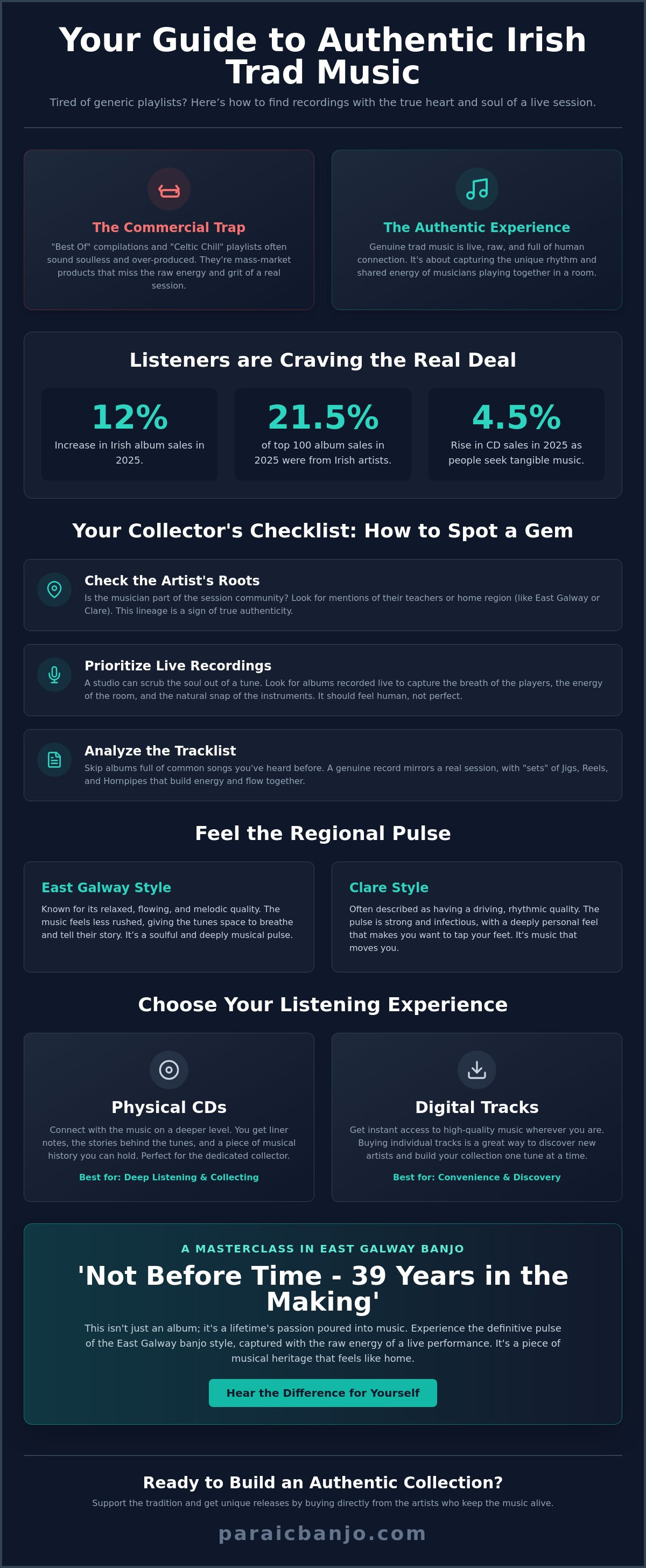
Have you ever hit play on a "Best of Celtic" playlist only to find it sounds more like elevator music than a real pub session? It's a common frustration for anyone seeking the grit and lift of the real thing. You want to hear the wood of the flute and the rhythmic snap of the banjo, not a polished studio track that's had the soul scrubbed out of it. Finding high-quality live recorded traditional irish music can feel like searching for a needle in a haystack of mass-produced compilations. With Irish album sales jumping 12% in 2025, the market is busier than ever; it's easy to get lost in the noise.
I've spent decades immersed in these tunes, and I can tell you that the most soulful music isn't found on a generic "Top 100" list. This article will show you how to bypass those commercial traps and find independent recordings that capture the true spirit of a session. We'll look at the nuances of regional styles from East Galway and Clare. You'll also learn why physical media is making a comeback, with CD sales rising by 4.5% in 2025 as listeners crave the stories and liner notes that digital files often leave behind. Let's find you a piece of musical heritage that feels like home.
Table of Contents
Finding Authentic Traditional Irish Music Albums for Sale in 2026
Authentic Irish music isn't a product made in a factory; it's a living, breathing tradition born in the corners of crowded pubs and quiet kitchens. In 2026, we're seeing a massive shift back to these roots. Irish artists accounted for 21.5% of the top 100 album sales in 2025, a significant jump that shows listeners are craving something real. People are tired of the polished, soul-less tracks found on big streaming platforms. They want the grit, the lift, and the story behind the tune. They want the music to feel like a conversation between old friends.
When I talk about authenticity, I'm talking about acoustic instruments played with a specific rhythmic lift. The tenor banjo often leads the way here, acting as a soulful, rhythmic lead that cuts through the chatter of a session. It isn't just about playing fast notes; it's about the pulse that keeps the room moving. This is why live recorded traditional irish music is so special. It captures the minor slips, the breath of the flute player, and the shared energy of the room. It feels human. The recordings aren't scrubbed clean in a studio; they're left raw to preserve that infectious enthusiasm. It sounds like home.
The Problem with Generic 'Best Of' Compilations
You've seen them in airport gift shops or at the top of generic search results: CDs with names like "Ultimate Celtic Chill" or "Irish Pub Favorites." These are often over-produced and lack the soul of a real session. If you want a genuine experience, skip the generic compilations. Look for artist-led projects instead. A quick tip: check the tracklist. If it's a list of famous songs you've heard a thousand times, it's likely a mass-market souvenir. If you see specific sets of Reels and Jigs named after their composers or regions, you're on the right track. You can even start your collection today by grabbing individual digital tracks from independent artists who actually play the sessions.
Why Regional Styles Matter for Collectors
Every county has its own heartbeat. In Irish traditional music, these are known as regional pulses. In East Galway, the music tends to be slightly more relaxed and melodic. In contrast, Clare music often has a driving, rhythmic quality that feels deeply personal. Understanding these regional styles turns you from a casual listener into a collector of history. When you pick up a physical CD like Not Before Time - 39 Years in the Making, you aren't just buying music. You're owning a specific regional legacy, complete with the stories behind the tunes. It's a definitive statement of a lifetime's passion, and you can feel that weight in every note. Grab a copy and hear the difference for yourself.
The Collector's Checklist: How to Spot a Genuine Irish Trad Gem
Finding a record that feels like a real night in a Clare pub requires a sharp eye. It's easy to get fooled by flashy covers and generic titles. Start by checking the artist's background. Are they respected in the session community? Genuine Traditional Irish Music is passed down through generations. Look for mentions of their teachers or the specific region they learned in, like East Galway or Clare. This isn't just about notes on a page; it's about the lineage and the pulse of the community.
There's a specific magic in live recorded traditional irish music that you just won't find in a sterile studio. It captures the shared breath of the players and the natural acoustic ring of the instruments. When you're browsing, look for albums that celebrate this collaborative spirit. Read the descriptions carefully. If a project mentions years of development or a lifetime's passion, you've likely found a keeper. Check out this guide to buying traditional Irish music for more tips on building a collection you'll actually treasure.
Evaluating the Tracklist and Tune Selection
A well-rounded album shouldn't just be a random collection of tracks. It should mirror a real session. Look for a mix of jigs, reels, and hornpipes. Jigs usually have a bouncy 6/8 rhythm, while reels are driving and fast in 4/4 time. The best albums use "sets," where two or three tunes are grouped together. This creates a flow that builds energy, just like a live performance. If the tracklist features traditional names like "The Mason's Apron" or "The Bucks of Oranmore" alongside newer compositions, it shows the artist respects the past while contributing to the living tradition.
The Importance of Featured Collaborators
Irish music is rarely a solo sport. It's a conversation. The best albums feature guests on fiddle, flute, or piano to add layers and texture to the sound. This collaborative approach is what gives live recorded traditional irish music its infectious enthusiasm. Check the liner notes for detailed credits. A seasoned master will always highlight their fellow musicians. This transparency isn't just professional pride; it's a mark of authenticity. It tells you the music was made by people who love playing together, creating a definitive statement of their shared craft. Don't settle for "anonymous" studio musicians; look for the names that make the tradition move.
Physical CDs vs. Digital Downloads: Which Format Wins for Trad Fans?
Choosing between a physical CD and a digital download isn't just about how you listen; it's about how you connect with the tradition. While audio streaming in Ireland reached a massive 13.2 billion streams in 2025, many dedicated fans are moving back toward physical ownership. In fact, CD sales grew by 4.5% that same year. There's something irreplaceable about holding a piece of history in your hands. When you own a physical copy of live recorded traditional irish music, you aren't just renting a temporary license from a streaming platform. You own the pulse, the stories, and the spirit of the session forever. For serious students, having a tangible disc is the best way to study the nuances of a player's style without the distractions of an algorithm.
Digital convenience has its place, especially if you're a musician on the move. Getting immediate access to high-quality files means you can start learning a new set of tunes the moment inspiration strikes. However, digital files can be fragile. Hard drives fail and streaming services can remove albums without warning. A physical CD is a permanent record that doesn't require a subscription to enjoy. It becomes a family heirloom, a snapshot of a specific musical moment that stays in your collection for decades. Whether you prefer the tactile feel of a jewel case or the speed of a download, the goal is the same: supporting the living tradition.
The Magic of Liner Notes and Physical Media
Liner notes are the small booklets tucked inside a CD case, and for a trad fan, they're pure gold. They explain where the tunes came from, who taught them to the artist, and the stories behind the sets. These notes are essential for understanding the 39 years of history packed into a project like Not Before Time. Without them, you're just hearing notes; with them, you're hearing a legacy. If you're building a library, explore the best traditional Irish session music CDs for collectors to see why these physical details matter so much. They turn an album into a masterclass in regional style.
Digital Downloads for the Modern Session Player
If you choose to go digital, don't settle for low-quality sound. Look for high-fidelity formats like WAV or FLAC. Unlike standard MP3s, which "compress" or cut out tiny bits of audio data to save space, high-fidelity files preserve every harmonic and every snap of the banjo string. This clarity is vital when you're trying to learn by ear. You can grab the Not Before Time - 39 Years in the Making (Digital Album) and get that studio-quality sound instantly. To stay organized, I recommend creating folders by regional style, such as "East Galway" or "Clare," so you can quickly find the specific pulse you want to practice.
Where to Shop: Why Buying Direct from the Artist Matters
When you're ready to add to your collection, where you spend your money matters just as much as what you're buying. Big global marketplaces might offer speed, but they often take a massive cut from the people actually making the music. By buying direct, you ensure the artist gets the support they need to keep the tradition alive. It's a direct line from your ears to the source. See why buying direct from the artist is the best choice in 2026 and how it helps bypass those hefty middleman fees that drain the independent scene.
Buying direct often means you get access to the best version of the work. For purists, this is where you find live recorded traditional irish music that hasn't been compressed or altered for mass-market radio. These artist-run stores are often the only place to find signed copies or limited-edition runs that become instant collector's items. It’s about building a connection that goes beyond a simple transaction. You aren't just a customer; you're a patron of a storied musical tradition. If you want to own a piece of this legacy, you can buy authentic Irish music direct from the artist's own store.
Supporting the Living Tradition
Every time you buy an album like Not Before Time - 39 Years in the Making, you're funding the next project. You're helping preserve tunes that might otherwise be lost to time. Independent releases often have higher production quality because the artist isn't answering to a corporate label. They're answering to the music itself. This direct support ensures that masters of the instrument can continue to document their craft for the next generation. It's a cycle of respect that keeps the session spirit thriving in a digital age.
Finding Niche Stores for Purists
Don't just stick to the household names. Use social media groups and specialized forums to discover under-the-radar releases. Look for specialist shops that curate high-quality traditional recordings rather than everything under the vague "Celtic" umbrella. These niche spots are where the real gems hide. Here are a few tips for finding those rare releases:
Follow artists on social media for announcements about limited-edition physical runs.
Join online trad communities where members share independent project links.
Check the websites of regional music festivals, which often host links to performer stores.
Look for "artist-led" labels that prioritize the acoustic pulse over commercial polish.
The value of "limited edition" runs in the trad world is immense. These aren't just marketing gimmicks; they're often small, carefully crafted batches that include detailed background notes you won't find anywhere else. Finding live recorded traditional irish music through these channels ensures you're getting a recording that respects the history and the regional "lift" of the tunes. It’s a way to ensure the music stays as vibrant and rhythmic as a real night in a Clare pub.
'Not Before Time': A Masterclass in East Galway Banjo Style
After decades of honing the craft in the heart of the West, I’m thrilled to share a project that feels like a definitive statement of my journey. Not Before Time - 39 Years in the Making isn't just a collection of tunes; it's a window into the soul of the session. This album captures the raw, rhythmic energy that only comes from live recorded traditional irish music. By working with a hand-picked group of expert collaborators, we’ve managed to bottle that lightning. It’s the sound of the banjo, the fiddle, and the flute breathing together. You can order your copy of 'Not Before Time' directly from Páraic here to own a piece of this living history.
This debut represents more than just technical skill. It is a celebration of the community and the pulse that has defined my life's work. We didn't set out to make a polished, sterile studio record. Instead, we focused on the lift and the drive that makes you want to tap your feet. It’s about the "nyah"-that elusive quality of soul and feeling that separates a great player from a merely fast one. If you've been searching for a recording that respects the regional nuances of the West, this masterclass in style is waiting for you. It's an invitation into a storied tradition.
39 Years in the Making: The Story of the Debut
Most debuts happen early in a career. This one is different. It’s a lifetime's passion distilled into 18 tracks. I’ve spent years absorbing the pulses of the pubs in Galway and Clare, and every bit of that experience is etched into these recordings. Read the full story behind the Not Before Time debut album to understand the decades of session culture that built this work. It’s a celebration of the teachers, the friends, and the late-night sessions that shaped my sound. This is music with a memory.
What's Inside the 18-Track Collection
This isn't a quick studio session; it’s a deep dive into the jigs, reels, and hornpipes that define our heritage. If you choose the physical CD, you’ll get an extensive 36-page booklet filled with the stories behind the tunes and the people who passed them down. These liner notes are crucial for anyone wanting to learn the "why" behind the "how." You’ll hear the distinct shift between the relaxed East Galway lift and the driving Clare rhythm. Check out this guide on East Galway vs Clare Music: A Guide to the Rhythmic Soul to better appreciate the nuances found across the tracks. Every note is a definitive statement of a lifetime's passion.
Whether you are a seasoned musician or a newcomer to the tradition, these tracks offer a front-row seat to the session. You'll hear the interplay between instruments and the spontaneous joy of the performance. It's a brisk, energetic journey through the heart of Irish music. I invite you to join us in this celebration. Grab a track or the full album, and let the music speak for itself. It's been a long time coming, and it's finally here for you to enjoy. Cheers!
Bring the Tradition Home to Your Own Collection
Finding the real heartbeat of the West doesn't have to be a chore. You've learned how to spot the difference between a generic souvenir and a genuine artist-led project. Remember to look for that regional pulse and consider the long-term value of physical CDs with their rich, educational liner notes. Supporting the music directly ensures this living tradition doesn't just survive; it thrives. It's about more than just a purchase. It's about joining a community of listeners who value the lift and soul of the tunes.
Owning live recorded traditional irish music is like having a front-row seat at the best session of your life. It's about the grit, the rhythm, and the shared joy of the performance. If you're ready to bring that infectious energy into your home, Secure your piece of Irish heritage: Buy 'Not Before Time' directly from Páraic Banjo. You’ll get 39 years of musical mastery across 18 pure tracks, along with detailed liner notes that preserve the East Galway tradition. It’s been a long journey to get these tunes recorded, and I can’t wait for you to hear them. See you at the next session!
Frequently Asked Questions
Is it better to buy a physical CD or a digital download for Irish music?
Choosing between a physical CD or a digital download depends on your goals as a listener. If you want a tangible piece of history with full, 36-page liner notes to study the tune origins, the physical CD is unbeatable. It won't disappear if a streaming license expires. Digital albums work best for musicians who need immediate access to tracks for practice or learning by ear on their devices.
What makes an Irish music album 'authentic' versus 'commercial'?
Authentic albums are defined by their acoustic pulse and roots in real session culture. You’ll hear the natural ring of the instruments rather than over-produced studio effects. Commercial "Celtic" CDs often use electronic backing or generic arrangements that lose the "lift" of the music. Look for artist-led projects that highlight specific regional styles to ensure you're getting a genuine recording that respects the tradition.
Where is the best place to buy traditional Irish music online?
Why should I buy music directly from the artist?
Buying direct ensures the artist receives the maximum support for their work by cutting out middleman fees from massive platforms. It also gives you access to exclusive items like signed copies or limited-edition physical runs. This direct connection helps fund future recordings, allowing masters of the instrument to continue documenting the tradition for the next generation of listeners. It’s a simple way to protect our shared heritage.
What is the East Galway style of banjo playing?
The East Galway banjo style is known for its relaxed, melodic pace and a specific rhythmic "lift." Unlike faster, more aggressive styles, it focuses on the sweetness of the tune and a steady, flowing pulse. It’s a style deeply rooted in the community, often played with a sense of space that allows the melody to breathe, making it a favorite for those who value soul over speed.
Are there any limited edition Irish music albums for sale in 2026?
Yes, 2026 is seeing a strong resurgence in physical media, with CD sales growing by 4.5% in 2025. Many independent artists are releasing limited-edition physical runs that include extensive booklets and high-quality photography. These albums often become collector's items because they provide a level of historical context and tactile beauty that digital streaming simply cannot match. Always check an artist’s official store for these exclusive physical releases.
Do digital downloads of Irish music include the liner notes?
While digital downloads offer immediate access to the music, they don't always include the full experience of physical liner notes. Some artists provide a digital PDF booklet with the full album download, but the physical 36-page booklet found in a CD case is much easier to reference while listening. If you’re a serious student of the music, the physical version is usually the better choice for the extra background information.
How can I learn the names of the tunes on a traditional album?
The most reliable way to learn tune names is to read the liner notes provided by the artist. These notes often list the tunes in their "sets" and explain where the player learned them. For live recorded traditional irish music, you can also use online databases to cross-reference common melodies, but the artist's own notes are the definitive source for their specific versions and regional variations.


Comments