Why Every Collector Needs a Physical Copy of Irish Music in 2026

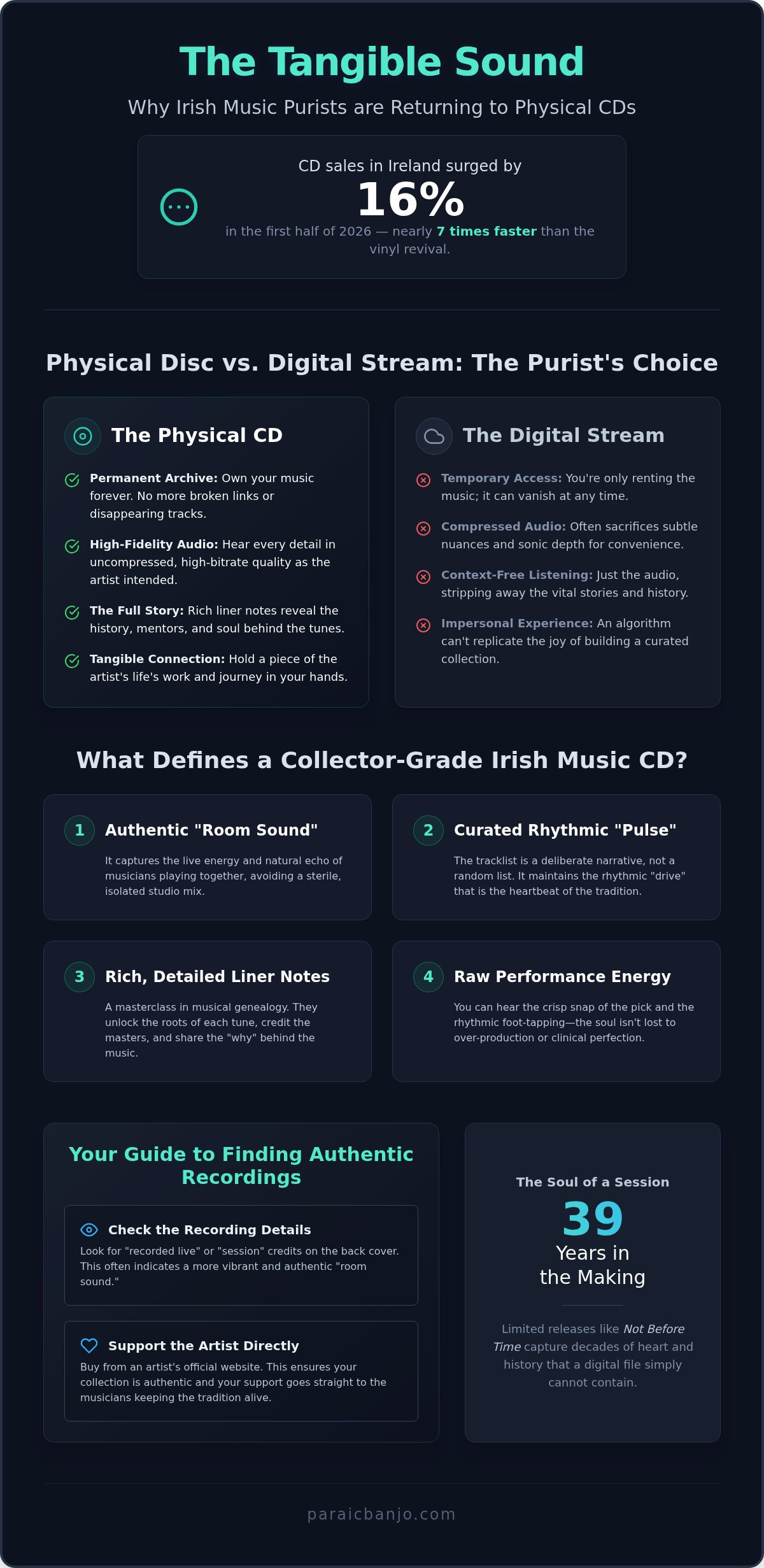
Did you know that CD sales in Ireland surged by 16 percent in the first half of 2026? While digital convenience is everywhere, the most dedicated listeners are returning to tangible media at a rate nearly seven times faster than the vinyl revival. Holding a physical copy of Irish music in your hands is more than just a purchase. It's an invitation into a storied musical tradition that a streaming algorithm simply can't replicate. You likely know the frustration of losing a favorite track to a broken digital link or missing out on the rich history of a tune because there are no liner notes to read.
We agree that the soul of a session lives in the details, from the regional lift of an East Galway fiddle to the specific stories behind a 39 year journey to the studio. In this guide, you'll discover why physical CDs remain the gold standard for traditional purists who demand high bitrate audio and authentic connection. We will show you how to find recordings that preserve the true spirit of the music while ensuring you own a permanent piece of history. Get ready to explore the deep roots of the tunes and learn how your support keeps the tradition alive for the next generation of players.
Table of Contents
The Enduring Appeal of the Physical Copy in Irish Music
CD sales in Ireland grew by 16 percent in the first half of 2026. This isn't just a nostalgic trend; it's a statement of permanence. When you hold a physical copy irish music purists can rely on, you aren't just renting a digital file that could vanish if a platform updates its terms. You're securing a cultural archive. There's a tangible weight to a disc that a digital stream can't match. It represents a real commitment to the art. You aren't just clicking a button; you're holding a piece of a musician's life in your hands. This ritual of selecting a disc and sitting down to listen creates a psychological connection that respects the craft.
Preserving the Story Behind the Strings
Digital tracks often strip away the vital context of a performance. You hear the tune, but you miss the soul. Physical media allows us to dive into the artist's personal journey. This is crucial for Irish traditional music, where the history of a specific tune is as important as the notes themselves. Without detailed liner notes, you lose the names of the mentors who passed the tunes down and the stories of the sessions where they were honed. Keeping niche regional styles alive requires more than just an audio file. It requires the documentation that only a physical release provides. If you want to truly understand the music, you need to read the stories behind the strings.
Why Collectors Value Tangible Assets
There's a unique joy in building a curated collection of traditional irish session music cds. These aren't just plastic cases; they are potential heirlooms. In many musical families, a well-loved physical copy irish music collection serves as a roadmap for the next generation of players. Limited editions, like Not Before Time – 39 Years in the Making, offer aesthetic value that a phone screen cannot replicate. The photography and layout capture the atmosphere of the community in a way that pixels never will.
Actionable Tip: When sourcing CDs, check the back cover for recording details. Look for "recorded live" or "session" credits. This usually indicates a higher level of authenticity and a more vibrant "room sound" that captures the true energy of the players. If you're ready to start your journey, consider a physical release as your first step toward becoming a true guardian of the tradition. It's a choice that supports the artist directly and ensures the music stays preserved for years to come.
Essential Features of a Collector-Grade Traditional CD
A generic souvenir CD often feels flat. It’s usually recorded in a sterile studio where instruments are isolated and the life is sucked out of the performance. A true collector-grade physical copy irish music enthusiasts look for is entirely different. It captures the "room sound." This refers to the natural echo and warmth of musicians playing together in the same space. It’s the difference between hearing a recording and feeling like you’re sitting in the corner of a pub in East Galway. The recording should feel alive, with the subtle textures of the instruments blending naturally.
The tracklist on a quality album isn't just a random list of songs. It's a deliberate narrative. A seasoned player spends weeks, or even months, deciding which jig should follow which reel to maintain the rhythmic "pulse." This drive is the heartbeat of the tradition. If a recording feels too perfect or "grid-like," it has likely lost its soul to over-production. You want to hear the breath, the slight variations, and the collective lift of the group. Authenticity isn't about clinical perfection; it's about the energy shared between players.
The Power of Detailed Liner Notes
Liner notes are a masterclass in musical genealogy. Purists don't just want to hear a tune; they want to know its roots. Who played it first? Where did the artist pick it up? These notes provide the "why" behind the music. They transform a simple listening experience into an educational journey. Organizations like the Irish Traditional Music Archive emphasize this kind of preservation. When you invest in a physical copy irish music collectors prize, you're buying a piece of that archived history. You're learning the names of the masters who kept these tunes alive through the years.
Live Energy vs. Studio Perfection
Traditional music thrives on raw energy. In a soulful tenor banjo recording, you should hear the crisp snap of the pick hitting the strings and the rhythmic foot-tapping of the performers. This "lift" is what makes you want to dance. If the recording is too polished, it becomes background noise. You want the grit. You want the spontaneous moments that only happen when expert musicians are feeding off each other's energy in real-time. This captures the true spirit of a session, making the disc a definitive statement of the artist's passion.
Actionable Tip: Before buying, look for a "technical credits" section on the back of the case. If you see names of specific session musicians rather than just generic "session players," it’s a sign of a high-quality, artist-led project. You can find this level of detail and care in the Not Before Time – 39 Years in the Making physical release.
Physical Media vs. Digital Streams: Why Purists Choose the Disc
While streaming platforms offer millions of songs at your fingertips, they often feel like a fleeting whisper rather than a lasting conversation. In 2026, the resurgence of the CD isn't just about nostalgia; it’s about reclaiming ownership. When you rely on a digital subscription, you’re essentially renting your musical taste. If a licensing deal expires or a platform changes its model, your favorite tracks can vanish overnight. This is what collectors call "digital rot." By choosing a physical copy irish music fans can hold, you ensure that the music remains a permanent fixture in your home, unaffected by the whims of tech giants.
Streaming algorithms are designed for background noise, but traditional music demands your full attention. There is a profound difference between a low-bitrate file and the uncompressed clarity of a disc. Organizations are constantly working at preserving original formats because they know that the nuances of a performance are often lost in translation when squeezed into a digital pipe. A CD provides 1,411 kilobits per second of data, which is far superior to the standard 320 kilobits found on most high-quality streams. That extra data translates directly into a richer, more emotional listening experience.
The Ritual of the Listening Session
Putting on a CD is a ritual that signals to your brain that it’s time to listen. It’s not about skipping through a random playlist; it’s about experiencing a full album as the artist intended. This focus is vital when trying to appreciate the complexities of rhythmic tenor banjo styles. You aren't just hearing a melody; you're feeling the "lift" and the specific regional swing that defines the tradition. It encourages you to sit with the music from the first track to the last, allowing the narrative of the session to unfold naturally. This intentionality creates a deeper bond between the listener and the musician.
Audio Quality: Hearing Every Pluck
For a banjo player or a dedicated listener, the technical specs matter. Standard streams are often compressed, which means the high and low frequencies are shaved off to save space. This strips away the "pop" of the banjo, that crisp, percussive strike that gives the music its drive. On a CD, you hear the full spectrum. You can distinguish the subtle interplay between the banjo and the accompaniment, hearing every pluck and every resonance of the wood. It’s an immersive experience that digital files simply can’t replicate. You deserve to hear the music exactly as it sounded in the room during the recording.
Actionable Tip: To truly hear the difference, try a "deep listen" session. Put on your physical copy irish music disc, use a decent pair of wired headphones, and close your eyes. You’ll likely hear details, like the musician’s breath or the ring of a string, that you never noticed on a streaming app. If you’re looking for that level of detail, the physical version of Not Before Time – 39 Years in the Making is designed for exactly this kind of appreciation. It’s a chance to own a piece of musical history that won't disappear when your Wi-Fi does.
Tips for Sourcing Authentic Traditional Recordings Directly
Finding a truly authentic recording shouldn't feel like a guessing game. While massive global marketplaces treat every album like an interchangeable commodity, buying directly from a musician’s own website guarantees you’re getting the real deal. When you seek out a physical copy irish music enthusiasts can trust, you’re often looking for independent labels or self-released projects. These are the lifeblood of our community. To verify authenticity, look for a clear connection to a specific region or style, such as the East Galway or Clare traditions. A genuine traditional label or artist-led site will always prioritize the history and lineage of the tunes over flashy, commercial marketing.
A secure online storefront is essential for your peace of mind. Look for the padlock icon in your browser and clear contact information before you enter any details. This isn't just about digital safety; it's about human connection. A direct purchase often means you can reach out to the artist if you have questions about the tracks or the instruments used. This transparency is a hallmark of the traditional scene. It’s about building a relationship between the player and the listener that goes far beyond a simple digital transaction.
Supporting the Living Tradition
There is a massive difference in impact when you choose buying traditional irish music direct from the artist. Streaming pennies don't fund new instruments or studio time for niche masters. Direct sales do. This support allows musicians to spend decades, like the 39 years behind my debut, perfecting their craft without corporate pressure. It ensures that regional nuances aren't smoothed over for a mass audience. You’re cutting out the middleman and ensuring the person who actually played the notes is fairly compensated for their lifetime of work. Your purchase becomes a direct investment in the survival of the music.
Global Shipping and Collector Safety
Distance shouldn't be a barrier to growing your collection. When ordering an Irish CD online from the West of Ireland for international delivery, expect a professional service. A dedicated artist-led shop will use robust, padded packaging to ensure your physical copy irish music arrives in pristine condition. Don't settle for "standard mail" without a tracking number. Real collectors want to see their package move from the local post office in Galway to their front door. It adds to the anticipation of that first listen. Most independent artists today use reliable global carriers that provide peace of mind from checkout to delivery.
Ready to add a definitive piece of East Galway history to your shelf? You can pick up your limited-edition copy of Not Before Time – 39 Years in the Making directly from my shop today. It’s the best way to ensure you’re getting an authentic, high-quality recording while supporting the music’s future.
Experience the Pulse of East Galway with 'Not Before Time'
Páraic Mac Donnchadha’s debut album isn’t just another release in a crowded market. It’s a definitive statement of a life lived within the music. After nearly four decades of playing in sessions, festivals, and quiet kitchens across the West of Ireland, the time was finally right to put it all down on record. This isn't a rushed studio project. It’s a carefully curated selection of 18 tracks that breathe with the unique spirit of East Galway and Clare. Owning a physical copy irish music fans can study and treasure allows you to hear the results of that long, patient journey. Every note carries the weight and wisdom of those 39 years of preparation.
A Lifetime in the Making
Why wait 39 years to record? In the traditional world, you don't just "make" an album. You let the tunes settle in your bones. You wait until your own "lift" and "swing" feel like a natural extension of your hands. This album serves as a masterclass in the East Galway style, which is often celebrated for its relaxed, melodic pace. It’s a distinct contrast to the more aggressive, driving energy found in other counties. For banjo enthusiasts, the 18-track selection is a genuine treasure trove. It covers the essential reels, jigs, and hornpipes that define our community. The physical version includes exclusive liner notes that act as a historical map, naming the mentors and the specific sessions that shaped each set. You aren't just buying a disc; you're gaining an education in the genealogy of the tunes.
Your Invitation to the Session
This CD does more than just play audio. It brings the warmth and hospitality of a real traditional session into your own home. You can hear the vibrant interplay between the banjo and the expert musicians who joined me to bring this vision to life. It’s about the spirit of collaboration, not just a solo performance. Because of the depth of the history and the quality of the recording, it’s the perfect gift for an Irish music lover who wants to go deeper than a digital playlist. You’re giving them a piece of musical history they can touch, read, and keep forever. It’s a way to ensure that the subtle "pop" of the banjo and the rhythmic soul of the West are preserved in your collection.
Don't miss out on this limited-edition release. It’s a chance to own a project that truly was a lifetime in the making. Join the journey and order your physical copy of 'Not Before Time' today. Let’s keep the pulse of East Galway beating strong for the next generation of listeners. See you at the session!
Own Your Piece of the Living Tradition
Choosing a physical copy irish music enthusiasts can hold is about more than just audio; it's about safeguarding a legacy. We've explored how a CD offers uncompressed sound that captures the true "pulse" of a session. You've also seen how direct support for artists ensures that regional styles from East Galway and Clare continue to thrive. This isn't just another album on a shelf. It's a definitive archive of a lifetime spent in the music. It provides a sense of permanence that digital files can't match.
My debut project, Not Before Time – 39 Years in the Making, represents nearly four decades of dedication to the craft. With 18 authentic session tracks and extensive historical liner notes, it's designed for those who want to understand the stories behind the strings. You don't have to worry about digital rot or losing access to your favorite sets. You can order your physical copy of 'Not Before Time' directly from Páraic today and join this storied journey. Let's keep the spirit of the session alive in your home. See you at the next tune!
Frequently Asked Questions
Why is a physical copy of Irish music better than streaming?
A physical copy irish music fans own provides permanent access and superior audio quality that digital platforms can't match. Streaming is essentially a rental; if a license expires, your favorite tracks can disappear. A CD offers uncompressed audio, giving you the full frequency range of the instruments. It also turns listening into a dedicated ritual, allowing you to connect with the music without the distractions of a phone or computer screen.
What makes the 'Not Before Time' album a collector's item?
The album Not Before Time – 39 Years in the Making is a collector's item because it represents a definitive milestone in a master's career. It features 18 tracks recorded live with expert musicians, capturing the raw energy of a real session. The extensive liner notes provide a deep dive into the genealogy of the tunes, offering historical context that you simply won't find on a standard digital download or streaming app.
Can I still play a physical CD if I don't have a dedicated player?
You don't need an old-fashioned stereo to enjoy your disc. Most modern computers can use an inexpensive external USB drive to "rip" the music, which means copying the high-quality files onto your hard drive for easy listening. Many DVD and Blu-ray players also function as excellent CD players when connected to your television or speakers. This allows you to maintain your physical archive while enjoying the convenience of digital playback on your own terms.
Are the liner notes included in the digital version of the album?
The detailed historical liner notes are an exclusive feature of the physical CD version. While the digital album provides the same high-quality audio tracks, it doesn't include the tactile booklet filled with stories and regional history. These notes serve as an educational guide, explaining the roots of every reel and jig. To get the full experience and understand the 39 year journey behind the music, the physical version is the best choice.
How long does it take to ship a physical CD from Ireland to the US?
Shipping times can vary depending on your specific location and current postal volumes, as every package is fulfilled directly from Ireland. You can generally expect your order to arrive within a standard international delivery window. Every physical copy irish music order is packed securely in padded materials to ensure it reaches your door in pristine condition. Using tracked shipping is a great way to follow your package's journey across the Atlantic for peace of mind.
Is the physical CD of 'Not Before Time' a limited edition?
Yes, the physical CD of Not Before Time – 39 Years in the Making is a limited-edition release. This status reflects the independent nature of the project and its focus on quality over mass production. Once the current inventory is sold, there is no guarantee of a future production run. This limited availability makes it a significant acquisition for anyone looking to own a permanent piece of traditional Irish musical history from a seasoned master.
Does buying a physical copy support the artist more than digital?
Buying a physical CD directly from the artist provides much more meaningful support than streaming. Direct purchases ensure that the majority of the funds go straight back to the musician, helping to finance future projects and the preservation of regional styles. It cuts out the corporate middlemen who take a large cut of streaming revenues. Your investment helps keep the living tradition of the tenor banjo alive and vibrant for years to come.
What specific regional styles are featured on Páraic Mac Donnchadha's CD?
The album focuses specifically on the vibrant traditions of East Galway and Clare. These regions are famous for their unique rhythmic "lift" and soulful approach to tunes. The 18 tracks serve as a masterclass in these styles, showcasing the subtle nuances and variations that have been passed down through generations. By listening to the interplay between the instruments, you can hear the distinct regional swing that makes this particular corner of Ireland so musically significant.


Comments