A Beginner’s Guide to Irish Music: Tunes, Instruments and Listening Tips

What if you listened for the beat before trying to name the instruments? Irish music can sound fast and richly ornamented at first, and unfamiliar terms like “reel” or “hornpipe” can make a recording feel hard to follow. You don’t need musical training to find your way in. This guide to irish music for beginners starts with the pulse: notice how a tune moves, where the melody rises and falls, and how the musicians play off one another.
If you’ve wondered whether Irish traditional music is the same as “Celtic” music, you’re not alone. We’ll explain the difference, introduce common tune forms in plain language, and help you pick out instruments such as the fiddle, tin whistle, flute, uilleann pipes, bodhrán, guitar, bouzouki and tenor banjo by ear. You’ll also get practical listening tips for hearing the difference between a jig’s lilting swing and a reel’s driving flow. Start with one tune, listen for its rhythm, then enjoy how the instruments weave together. That’s a welcoming first step into a living tradition.
Table of Contents
What Is Irish Traditional Music? A Friendly Starting Point for Beginners
Irish traditional music is a living body of tunes and playing practices rooted in Ireland, learned and shared by musicians and communities over time. It isn’t one fixed sound or a single style. Tunes travel, players bring their own touch, and local histories help shape how the music is played.
That shared life matters. A melody might be learned by ear, passed between players, then played differently by the next musician. The result is music with roots and room to grow: familiar tunes can carry a personal lift, a change in phrasing or a regional flavour. The Music of Ireland overview offers a wider view of the island’s musical history and traditions.
You don’t need to read notation or play an instrument to enjoy it. Listen first. This guide to irish music for beginners starts with hearing how the music moves and how musicians share a tune, rather than asking you to memorise facts before you press play.
What might a beginner notice on a first listen?
Start with the pulse, the steady feeling that carries the tune along. Notice when the melody repeats and whether the energy builds, eases or changes as the players continue. You may recognise a tune’s shape before you know its name. Fast playing and ornamentation, the little turns and decorations around notes, can feel like a rush at first. Give your ears time; repeated listening makes the details easier to follow.
Try this: listen once for the pulse, then replay the same recording and follow the melody. There’s no test and no wrong answer. Just notice what stands out.
Is Irish music the same as Celtic music?
Not exactly. Irish traditional music names a particular tradition; “Celtic” is often used more broadly, especially in marketing, to group music from different places and traditions together. The label can be a starting point, but it doesn’t tell you everything about a recording’s roots or sound.
Use your ears, then look for context. Who’s playing? What tunes are named? Are the musicians or notes connected to a particular place or tradition? Those clues can tell you more than a broad category. Keep listening with curiosity: the musical details bring the tradition into focus.
Jigs, Reels and More: Hear the Rhythms Behind Irish Music
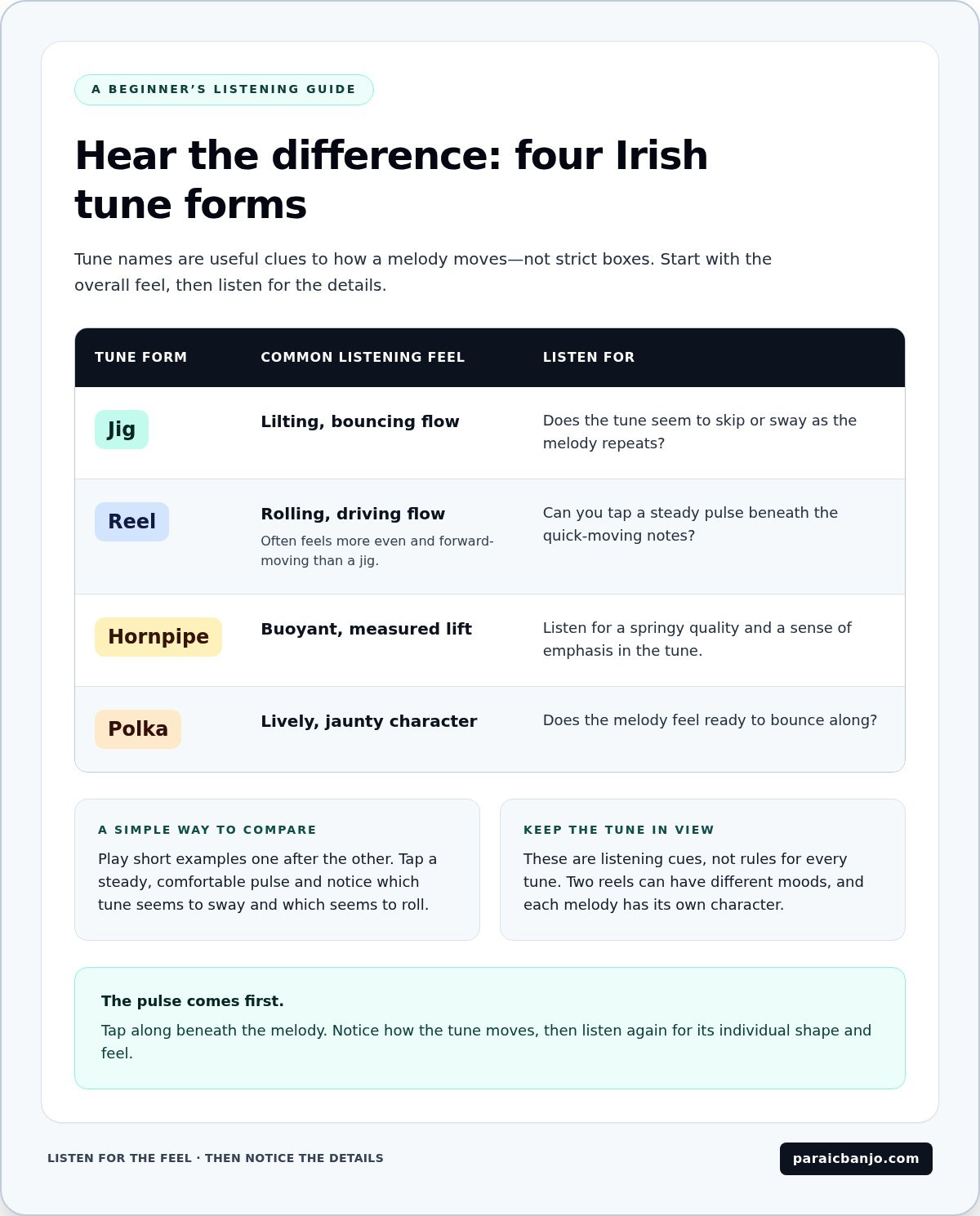
Names such as jig, reel and hornpipe describe tune forms: familiar rhythmic shapes that help musicians know how a tune moves. They’re useful clues, not strict boxes. Two reels can have different moods, and one melody may feel light and playful while another feels driving and bold. In this guide to irish music for beginners, start by hearing the overall feel rather than trying to count every beat.
Tap a steady pulse with your hand or foot. Keep it comfortable and notice how the melody sits on top. That simple habit can help you compare tune forms without needing music theory.
How can you tell a jig from a reel?
Play short examples of each one after the other. A jig often gives the ear a rolling, lilting sensation, while a reel can feel more even and forward-moving. These are listening cues, not rules for every tune. Tap along to the pulse in each recording and notice which one seems to sway and which one seems to roll. Then listen again for the melody’s own character.
Where do hornpipes and polkas fit in?
Hornpipes and polkas are two more tune forms you may come across. A hornpipe can have a buoyant, measured lift; a polka often feels jaunty and lively. Rather than memorising definitions, compare recordings and describe what you hear in your own words. For a closer look, explore a focused guide to Irish reels and jigs.
Ready for a listening example? Try a recording from Páraic Banjo recordings. Tap the pulse and notice how the tune’s shape gives it momentum. Let your ear lead. The names will start to feel less like a vocabulary test and more like useful signposts.
Irish Music Instruments: What to Listen for in a Session Recording
A group recording can sound like one bright, fast-moving stream at first. Listen for layers instead: a melody in the foreground, rhythmic support underneath, and small exchanges between the players. To follow a session recording, listen for the tune carried by the melody instruments, then notice how the other sounds support its pulse and shape.
There isn’t one standard line-up. Some recordings feature a few musicians; others bring several instruments together. Players may share the melody, add accompaniment or shift roles as the tune unfolds. In this guide to irish music for beginners, pick out one sound at a time instead of trying to identify everything at once.
Which instruments might a beginner hear first?
Try these listening clues. They’re starting points, not a test: instruments can blend together, especially in a lively recording.
Fiddle: A bowed string sound that can be smooth and singing, or crisp and driving.
Flute: An airy, rounded tone, with the breath helping give the notes their shape.
Tin whistle: A clear, bright sound that often cuts through the other instruments.
Tenor banjo: A plucked, ringing sound, with individual notes that can stand out clearly in a busy tune.
Bodhrán: A hand-held frame drum that adds rhythmic support in some groups.
Replay the same passage and focus on just one sound each time. Follow the fiddle first, then listen for the whistle or banjo. If you hear a drum, notice how it supports the pulse without assuming it’s present in every group.
How do musicians share the tune?
In a group, one instrument may carry the melody while others add chords or rhythmic lift. The roles can overlap: players might double the tune together, change the emphasis or shape a phrase in subtly different ways. Listen for a moment when the energy shifts, a note is held or accented, or one instrument comes forward. That interplay is part of the conversation.
For another listening pass, compare how the melody sounds when played in unison with how it feels when accompaniment comes through more strongly. Regional context can add another layer, too. The liner notes for Not Before Time - 39 Years in the Making offer musical and regional background, including connections to East Galway and Clare.
For a live-recorded example featuring expert musicians, try Not Before Time listening example. Its 18 tracks give you plenty of chances to follow one instrument, then return to hear how the parts fit together.
How to Start Listening to Irish Music: A Beginner’s Plan
You don’t need a playlist full of “essential” tunes or a notebook of musical terms to begin. Choose one recording that catches your ear and give it your attention. This guide to irish music for beginners works best as a practice in curiosity, not a test: each replay can reveal something new.
What should a beginner listen to first?
Try this simple listening plan. Keep your first impressions; they’re as useful as the details you notice later.
Choose one tune or short recording that makes you want to keep listening.
Listen for the overall feel. Is it buoyant, driving, relaxed or something else?
Replay it and follow one instrument. Notice where its sound stands out and how it moves with the tune.
Listen once more for a detail. It might be a change in emphasis, a repeated melody or a moment when the group’s energy shifts.
Jot down a few words. Note the pulse, a tune form if you know it, or simply the part you enjoyed most.
That’s enough. Return to the same recording another day and listen for something different. The aim is to build a connection with the music, one attentive listen at a time.
How can you approach an Irish music session respectfully?
A session is a shared musical gathering, but the way it works can differ from group to group. If you’re new, begin by listening attentively. Notice how the musicians take turns, choose tunes and signal what comes next. If you’re unsure about local expectations, learn from the people hosting that particular session rather than assuming every gathering follows the same customs.
There’s no need to rush into playing. Give the group your attention, enjoy the exchange and let your understanding grow. For more detail on what to expect, read a beginner guide to Irish session music.
For a recorded place to practise listening closely, explore Páraic Banjo’s recordings. Not Before Time - 39 Years in the Making features 18 tracks recorded live with expert musicians, so you can return to a tune and follow how the players’ parts come together. Take it one listen at a time.
Keep Exploring Irish Music Through Recordings, Stories and Shared Tunes
You’ve got a few ways to listen now: follow a tune’s pulse, pick out an instrument, and notice how musicians shape the melody together. Keep those habits, but don’t turn every recording into homework. Return to the tunes you enjoy. Familiarity makes room for new details, and curiosity about who played a tune or where it comes from can add another layer of pleasure.
How can liner notes deepen a first listen?
Liner notes can connect the sound to the people and places behind it. They may offer background on the musicians, tunes or regional traditions, giving you something specific to listen for when you press play again. Try reading a note after your first listen, then revisit the track. A phrase or musical turn that passed by before may now catch your ear.
Not Before Time - 39 Years in the Making, the debut album by Irish tenor banjo player Páraic Mac Donnchadha, offers one example. Its 18 tracks were recorded live with expert musicians, and its detailed liner notes provide musical and regional context, including connections to East Galway and Clare. The notes can help turn a first impression into a more grounded listen.
Where can a curious beginner go next?
Choose a tune form you’ve enjoyed, then listen to another example. Does it have a similar feel, or does this melody take a different path? You might follow a particular instrument, notice a change in energy or simply let the tune play while you enjoy it. There’s no finish line. Each return can bring a fresh detail.
This guide to irish music for beginners is only a starting point, and no single album represents the whole tradition. Not Before Time - 39 Years in the Making is one example of Irish traditional music played live with fellow musicians. If you’d like another recording to explore, listen to Páraic Mac Donnchadha’s album and let the tunes lead you onward.
Let Your Next Listen Take You Further
You don’t need to master every tune name to enjoy Irish traditional music. Start by feeling the pulse, notice how jigs, reels and other forms move, then listen for the way melody and accompaniment meet. With each replay, you may hear a new detail or catch a tune’s character more clearly.
This guide to irish music for beginners is a starting point, not a checklist. Let your curiosity lead you from the sound to the stories and places behind it. One listening option is Not Before Time - 39 Years in the Making, an 18-track album recorded live with expert musicians. Its detailed liner notes add musical and regional context, including connections to East Galway and Clare.
Explore Not Before Time - 39 Years in the Making as a digital album or physical CD, or choose an individual track. Start with one tune: listen once for the overall feel, then return for the details. The more you listen, the more familiar the music becomes. Enjoy the journey.
Frequently Asked Questions
What is Irish traditional music?
Irish traditional music is a living musical tradition shared and carried forward by musicians and communities over time. It includes a wide range of tunes and ways of playing, not one fixed sound. The phrase “Celtic music” is often used more broadly and may group different traditions together. You don’t need musical experience to enjoy a first recording. Start by listening for the tune’s pulse, melody and character.
How can a beginner start listening to Irish music?
Choose one recording that catches your interest and listen first for its overall feel. On the next play, focus on one sound, such as the fiddle, or tap along with the pulse. Note a tune or moment that stands out, then look for its name or background if you’re curious. This guide to irish music for beginners starts with relaxed listening. Formal theory and instrument lessons aren’t prerequisites.
What is the difference between a jig and a reel?
A jig and a reel are different tune forms, each with a distinct rhythmic feel, though melodies within either form can vary widely. To begin recognising them, compare recordings and tap along rather than trying to read unfamiliar notation. Listen to more than one example of each, noticing whether the tune seems to sway, skip or roll. Repeated listening helps these differences become easier to hear. Explore a dedicated explanation of Irish reels and jigs for more.
Which instruments are commonly heard in Irish traditional music?
You might hear fiddle, flute, tin whistle, tenor banjo or bodhrán, a frame drum played by hand. A fiddle has a bowed, singing tone; a whistle often sounds bright and clear; a bodhrán adds percussion. Instrument line-ups and musical roles vary between groups and recordings. Rather than naming every sound at once, replay a short passage and follow one instrument. Then listen again for another layer in the music.
Do I need to play an instrument to enjoy Irish music?
No, you can enjoy Irish music as a listener. Follow the melody, feel the rhythmic drive, and notice how musicians respond to one another as a tune develops. Pick a recording you like and replay it, focusing on a different detail each time. If you later want to play, accessible tunes and resources for a particular instrument can help you explore that path. Playing is one way to participate, not a requirement for enjoying the tradition.
What happens at an Irish music session?
An Irish music session is a gathering where musicians play traditional tunes together. The setting and customs can differ between groups, so there isn’t one script to learn in advance. At a first visit, listen attentively and observe how the musicians choose tunes and interact. Follow the lead of the people hosting or taking part in that particular session. Taking time to watch and listen is a respectful way to become familiar with its flow.
Comments