Best Irish Session Recordings: A Guide to Authentic Traditional Music in 2026

What if the most polished, studio-perfected album in your collection is actually the furthest thing from the true soul of Irish music? It is a common frustration for many of us. You go looking for the lift of a Friday night session, but you end up with something that sounds sterile and "dead." Finding the best irish session recordings shouldn't feel like a chore, yet so many modern releases trade the rhythmic pulse of the room for a clinical, hollow perfection.
We all know that relief when you finally hear a track that captures the grit of the resin on the bow and the drive of a banjo. In 2026, as more people return to physical media for a deeper connection to the craft, I will show you how to discover music that feels alive. We are going to explore regional gems like the East Galway style and look at how to build a high-quality collection that avoids distorted audio and preserves the tradition. Whether you prefer digital tracks or a physical CD packed with history, it is time to find the music that actually has a pulse.
Table of Contents
What Makes the Best Irish Session Recordings Truly Authentic?
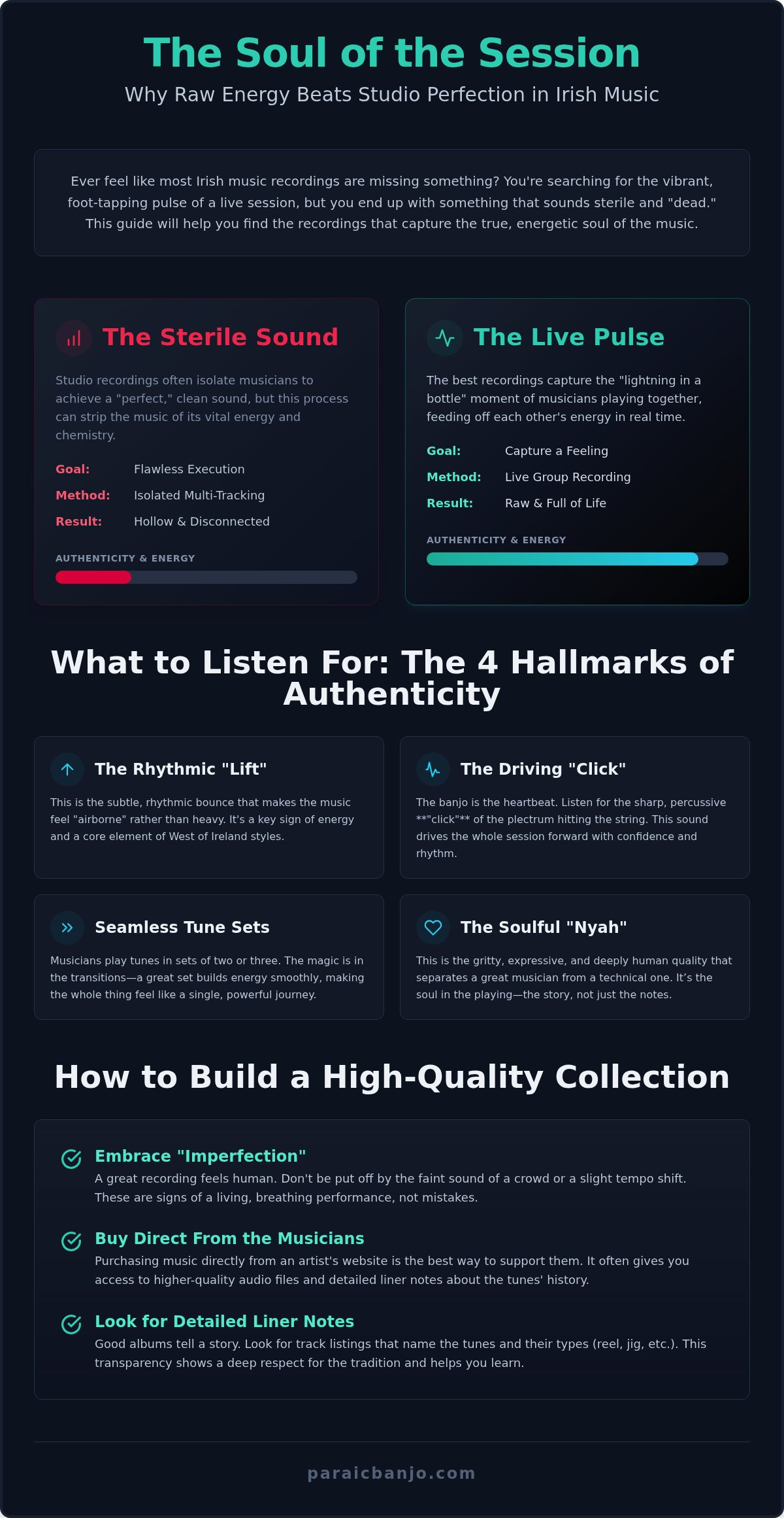
Authenticity isn't about expensive microphones or soundproof booths. It's about capturing that lightning-in-a-bottle moment when a group of musicians locks into a groove. To understand what is an Irish session, you have to look beyond the sheet music. It's a spontaneous conversation between players. The best irish session recordings aren't just collections of tunes; they're snapshots of a rhythmic pulse that feels like a physical heartbeat. If a recording makes you want to tap your foot on the floorboards, it's doing its job. It's that raw, unvarnished energy that separates a true session from a sterile studio project.
Actionable Tip: When you're browsing for new music, listen specifically for the "lift." This is a subtle rhythmic bounce, particularly common in West of Ireland styles like East Galway or Clare, where the music feels like it's slightly airborne rather than being dragged along. If the rhythm feels flat or heavy, the "lift" is missing.
Studio Polish vs. The Pub Pulse
Modern multi-track recording often separates musicians into different rooms to get a "clean" sound. This often kills the soul of the music. Traditional music thrives on chemistry. Live-tracking, where everyone plays together in the same room, captures the micro-adjustments players make to match each other's energy. Don't be put off by a bit of background noise. The faint clink of a glass or the murmur of a crowd can actually ground the listener. It places you right in the middle of the room. This makes the experience feel personal and immediate, rather than something produced on a conveyor belt.
The Role of Imperfection in Trad Music
Purists often lean toward a "raw" sound because it feels human. Perfection can be quite boring. If the tempo fluctuates slightly as the energy in the room rises, that's a sign of life, not a mistake. This leads us to a quality we call "nyah." In Irish music, nyah is the soulful, gritty, and deeply expressive quality in a musician's playing that signals an authentic connection to the tradition. It's the difference between just playing the notes and telling a real story. You'll find this grit in the best irish session recordings, where the focus stays on the spirit of the tune rather than a flawless execution. It is about the feeling in the fingers and the soul in the box.
Hallmarks of a Great Traditional Irish Music Album
Finding the best irish session recordings requires an ear for more than just a catchy melody. You're looking for a specific kind of momentum. A great album should feel like a conversation that never stalls. It's the collaborative spirit between the fiddle, the flute, and the banjo that creates that infectious energy. This deep connection between community and Irish music is what transforms a simple recording into a piece of living history. When you hear musicians responding to each other's variations in real-time, you know you've found something special. It's about the collective "lift" that keeps the room moving.
Capturing the Rhythmic Tenor Banjo Style
In a session environment, the banjo acts as the heartbeat. It provides the melody, of course, but it also serves as the percussion. You should listen for the "click." The "click" refers to the sharp, percussive sound made when the plectrum strikes the string, which gives the banjo its unique rhythmic presence and drives the rest of the group forward. If the banjo is too buried in the mix or sounds too "polite," the whole recording can lose its edge. Different regions have their own approach to this drive. You can learn more about how these styles vary in my guide on East Galway vs Clare music. Whether it's the steady, relaxed pace of Galway or the punchy lift of Clare, the banjo must lead with confidence.
The Importance of Tune Sets
Traditional music is rarely played as single tunes. We group them into "sets," usually three reels or three jigs played back-to-back. The magic happens during the transition. A master musician knows exactly when to shift gears, building the energy so the second and third tunes feel even more powerful than the first. If the transition feels clunky or the energy drops, the set fails. This flow is a key marker of quality when you're building your library. If you want to experience this rhythmic flow for yourself, you might enjoy exploring some individual digital tracks that capture this exact session energy.
Actionable Tip: Always look for albums that clearly list the tune names and types (reel, jig, hornpipe) in the liner notes. This transparency helps you learn the repertoire and understand the history behind the music you're enjoying. It shows the artist respects the tradition enough to document it properly.
From Pubs to Platforms: Essential Session Recordings for Your Collection
Building a library of the best irish session recordings often starts with a look back at the giants. For decades, the only way to hear a real session was to be in the room or own a grainy, third-generation cassette tape. These early recordings were often rough. They had hiss and background noise, but they captured a raw energy that studio albums couldn't touch. This connection to our past remains a huge part of contemporary Irish identity, keeping the music grounded even as the world around us changes. It is a joy to see these old sounds finding new life on digital platforms today.
Iconic Live Session Albums
You can't talk about session recordings without mentioning 'Paddy in the Smoke.' Recorded in a London pub in the 1960s, it proved that the most vibrant Irish music was often happening far from home. It is a masterclass in drive and spirit. Later, 'Music at Matt Molloy's' became a benchmark for many collectors. It managed to balance the spontaneity of a Westport pub with enough clarity to hear every note of the flute and fiddle. These classics teach us that the essence of the music is communal. It's about the shared energy between players, a theme that defines the very "pulse" we look for in any great set of tunes.
The Evolution of Live-Recorded Trad
Technology has finally caught up with the tradition. We no longer have to choose between a "clean" studio sound and a "live" feel. Modern artists now record "live in studio," playing together in one room but using high-end digital equipment. This is a game changer for banjo players. High-quality audio allows you to hear the subtle triplets and intricate ornamentation that often get lost in poor-quality amateur recordings. You get the best irish session recordings possible: the soul of the pub with the precision of a professional master. It is about capturing the "nyah" without the distortion.
Finding that balance is the ultimate goal for any enthusiast. You want to hear the wood of the fiddle and the snap of the banjo string without the sterile atmosphere of a multi-track production. It's about preserving the "lift" while ensuring the listener can appreciate the technical mastery of the performers. If you're looking to build a physical collection, check out Exploring the Best Traditional Irish Session Music CDs for a deep dive into the must-have physical media for 2026. There is nothing quite like holding the liner notes in your hand while the music plays.
How to Build a High-Quality Traditional Music Library
Building a collection of the best irish session recordings is about more than just filling a hard drive or a shelf. It is about curating a legacy. When you start looking for music that truly resonates, you quickly realize that the format you choose changes how you experience the tradition. In 2026, we have seen a significant shift back toward physical media. CD sales in Ireland actually grew by 4.5% in 2025. This tells us that listeners are hungry for a deeper connection to the artist. While digital files offer instant access, they often lack the tactile soul that makes traditional music so personal.
Actionable Tip: Always prioritize albums that offer stories and context alongside the music. A set of reels is much more meaningful when you know it was learned from an old neighbor in East Galway or shared during a rainy night in Clare. These narratives bridge the gap between the listener and the history of the tunes.
The Importance of Detailed Liner Notes
Liner notes act as a map for your musical journey. For a collector, the physical CD is a treasure trove of information that explains the "why" behind every track. These notes often include tune names, the specific regional styles being played, and the history of the instruments used. Without this context, a recording is just sound; with it, it becomes a piece of cultural heritage. If you want to ensure you are getting the real deal, you can check out my guide on How to Buy Traditional Irish Music to learn more about spotting authentic releases.
Supporting Independent Trad Releases
Buying direct from the artist is the most effective way to support the tradition. When you bypass major streaming platforms and purchase an album like Not Before Time – 39 Years in the Making, you ensure the resources go right back into the community. This support allows independent musicians to keep preserving niche regional sounds, like the driving East Galway banjo style, which might otherwise be lost in the shuffle of mainstream pop. It is a direct investment in the future of the craft. You can start building your collection today by choosing to purchase individual digital tracks that carry this same live energy. Each track you buy helps keep the rhythmic pulse of our music beating for the next generation. It is a small act that makes a massive difference for independent creators.
Why 'Not Before Time' is the New Standard for Banjo Purists
After exploring the history of pub tapes and the shift to digital platforms, we arrive at a project that bridges both worlds. Páraic Mac Donnchadha’s debut, Not Before Time – 39 Years in the Making, isn't just another album; it's a definitive statement from a lifetime spent in the heart of the tradition. It sets a new benchmark for what the best irish session recordings should strive for: a perfect balance of technical clarity and that elusive, driving "lift." This album captures the energy of a room where every player is locked into the same rhythmic pulse.
39 Years in the Making: An Authentic Debut
This project represents nearly four decades of dedication distilled into a single release. It carries the weight of a significant career milestone, yet it feels as fresh and vibrant as a Friday night session in a crowded Clare kitchen. You can hear the infectious enthusiasm in every strike of the plectrum, which is the small pick used to pluck the strings. The recording process for Not Before Time – 39 Years in the Making was a deliberate celebration of tradition, prioritizing the live spirit over the sterile isolation of modern booths. This is the sound of a humble master finally sharing his life's work with the world.
18 Tracks of Pure Irish Soul
With 18 tracks covering a rich variety of reels, jigs, and hornpipes, the album provides a complete session experience from start to finish. It captures the rhythmic and soulful East Galway style, known for its steady, relaxed pace that still possesses a powerful internal drive. Páraic didn't record this alone; he brought in expert musicians to create a full, collaborative sound that mirrors the dialogue of a real session. These tracks serve as both an exhilarating listening experience and a vital historical record of regional playing styles. It is a relief to finally have these sets documented with such care.
Actionable Tip: When listening to these tracks, pay close attention to how the banjo interacts with the other instruments. A great session recording is about the conversation, not just the soloist. Listen for how the musicians lean into the rhythm together during the transitions between tunes to build that communal energy.
If you're ready to experience this pulse for yourself and add a cornerstone to your library, you can bring the session home with Not Before Time – 39 Years in the Making. It is the perfect way to support the tradition while enjoying the very best irish session recordings available today.
Bring the Heart of the Session to Your Home
Finding the right sound is about more than just hitting play. It's about feeling that rhythmic drive and the "lift" that makes our music truly breathe. We've looked at how the best irish session recordings capture the raw, unvarnished energy of a live room; from the percussive click of the banjo to the seamless flow of a three-reel set. By prioritizing independent releases and physical media, you aren't just buying music. You're preserving a living heritage for the years to come. It's about keeping the pulse of the tradition strong and healthy.
If you're ready to immerse yourself in that authentic pulse, you can order the Not Before Time – 39 Years in the Making CD today. This debut features 18 tracks of live-recorded mastery that showcase the soulful East Galway rhythmic style. With detailed historical liner notes included, it's a definitive statement of a lifetime's passion. Grab your copy and let the music take you straight to the heart of the west. Keep the tradition alive and keep the tunes flowing. Happy listening.
Frequently Asked Questions
What is the difference between a studio album and a session recording?
Studio albums often use multi-tracking, where instruments are recorded separately, while session recordings capture everyone playing together in real-time. A session recording is about the spontaneous energy of the group. It feels more alive because you hear the micro-adjustments players make to stay in sync. Studio polish can sometimes strip away that pulse we look for. It's the difference between a clinical sound and a heartbeat.
Can I learn to play by listening to Irish session recordings?
Listening is the most traditional way to learn. By hearing the best irish session recordings, you pick up the swing and ornamentation that isn't written on sheet music. Try to slow down the tracks to hear the individual notes. It helps you understand how tunes are phrased and how the banjo drives the rhythm. It's about training your ear to catch the subtle variations in every set.
Why is the tenor banjo so prominent in Irish sessions?
The tenor banjo has a sharp, percussive click that cuts through the sound of fiddles and flutes. It acts as both a melody instrument and a drum. Because it's tuned in fifths, it fits perfectly with the range of the fiddle. Its steady beat helps keep the whole group on track during fast reels or jigs. It provides the essential heartbeat for any lively session.
What are 'liner notes' and why do they matter for Irish music?
Liner notes are the written stories and technical details that come with an album. They matter because they document where tunes came from and who played them. For example, Not Before Time – 39 Years in the Making includes detailed notes about East Galway and Clare traditions. They turn a simple listening experience into a historical lesson. It's like having a map for the musical journey.
Is it better to buy a physical CD or a digital download for traditional music?
It depends on your habits, but physical CDs are seeing a real revival lately. In 2025, CD sales in Ireland grew by 4.5%. A physical copy gives you the tactile experience of the liner notes and better audio quality than most streaming sites. Digital tracks are great for portability, but the CD remains the gold standard for serious collectors who want to own a piece of history.
What does 'lift' mean in the context of an Irish music session?
Lift is that subtle rhythmic bounce that makes the music feel light and energetic. It's not about speed; it's about the swing in the phrasing. When a session has lift, it feels like the music is pushing you to dance. It is the opposite of a heavy or flat rhythm that feels like it's dragging. You can feel it in your feet before your ears.
How can I tell if an Irish music recording is authentic?
Look for recordings that sound like a real conversation between instruments. Authentic music shouldn't sound over-produced or clinical. If you can hear the nyah, which is the soulful and expressive grit, and the rhythmic pulse of the room, it's likely the real deal. The best irish session recordings often come from independent artists who prioritize the tradition over commercial trends. It's about capturing the soul.
Who are some of the most influential Irish banjo players on record?
Listen to legends like Barney McKenna or Kieran Hanrahan for their unique styles. More recently, players like Páraic Mac Donnchadha have set a high bar with albums like Not Before Time – 39 Years in the Making. These recordings show the range of the instrument, from the punchy drive of Clare to the melodic soul of East Galway. It's a wonderful way to hear how the tradition evolves.


Comments