East Galway Music Tradition: How to Pick a Banjo Plectrum

The plectrum that feels easiest in your hand may not give you the sound or response you prefer. There’s no single pick that unlocks the East Galway music tradition: shape, thickness and feel all affect how a banjo responds, but your touch and the tune matter too.
It’s easy to wonder whether you need a thin, flexible pick for ornaments or a thicker one for more control. Instead of relying on a rule, compare picks on your own banjo with a tune you know well. Listen for the differences and notice which pick lets you play comfortably.
This guide explains what plectrum shape and thickness can change, then walks you through a repeatable test. You’ll also find musical context without treating East Galway style as a fixed formula. Listen closely to recorded playing for phrasing and feel, then let your hands and ears guide your choice.
Table of Contents
East Galway Music Tradition: What a Banjo Plectrum Can, and Cannot, Do
How can a pick support comfortable traditional banjo playing without getting in the way of the music? A plectrum is the pick you use to strike the banjo strings. Its shape, thickness and grip can affect how it feels in your hand and how easily you control each stroke. But no particular plectrum creates an authentic regional sound on its own.
The East Galway music tradition is a regional musical context, not an equipment category or a fixed banjo setup. Players bring their own touch to tunes, and the music can’t be reduced to one sound or playing formula. Timing, phrasing and attentive listening matter. Phrasing is how a player shapes a melody, letting notes flow or adding emphasis where it feels right.
What does East Galway music tradition mean in this context?
Here, East Galway refers to the regional roots and musical context behind traditional playing, rather than a rulebook for how every musician should sound. A tenor banjo is the instrument at the centre of this guide. You can find broader background on the tenor banjo, including its tunings and playing styles. Think of the plectrum as one part of your setup, not a marker of where your music belongs.
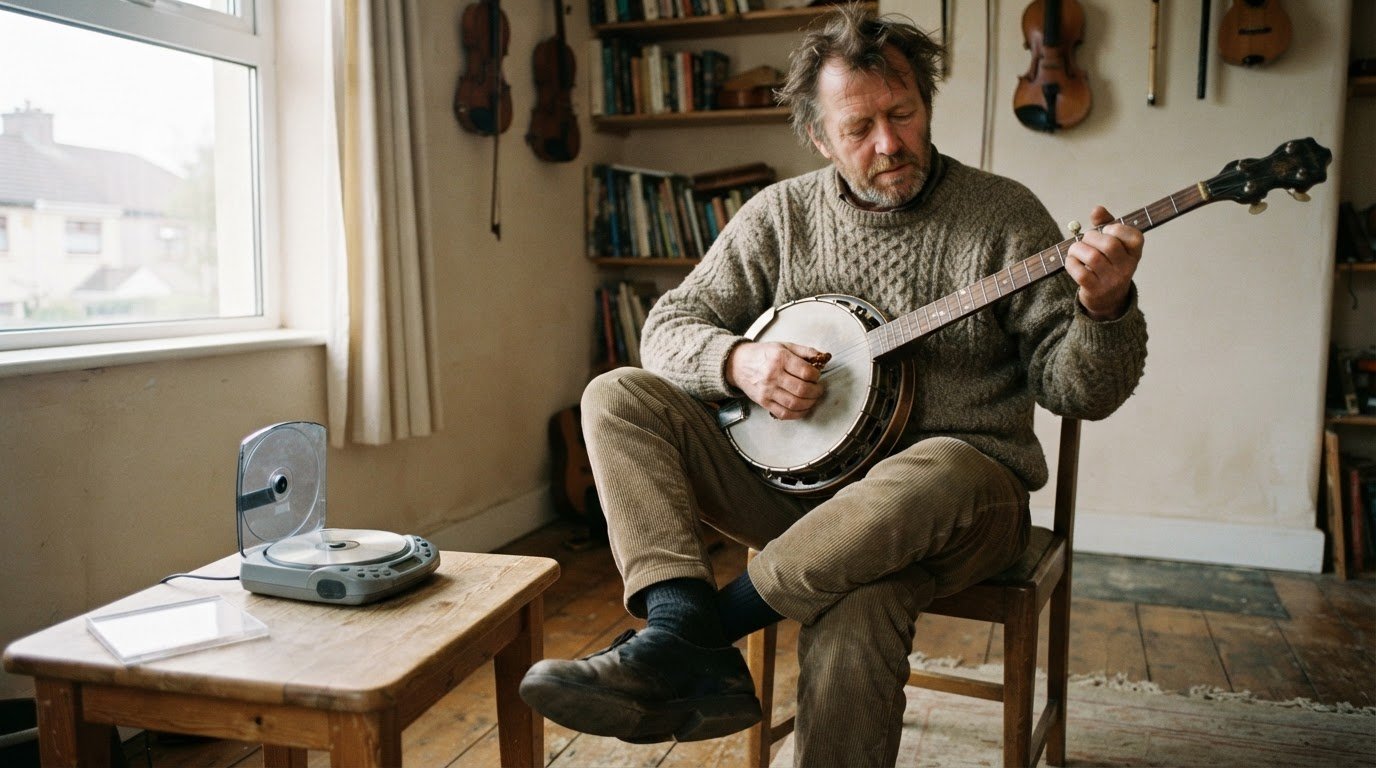
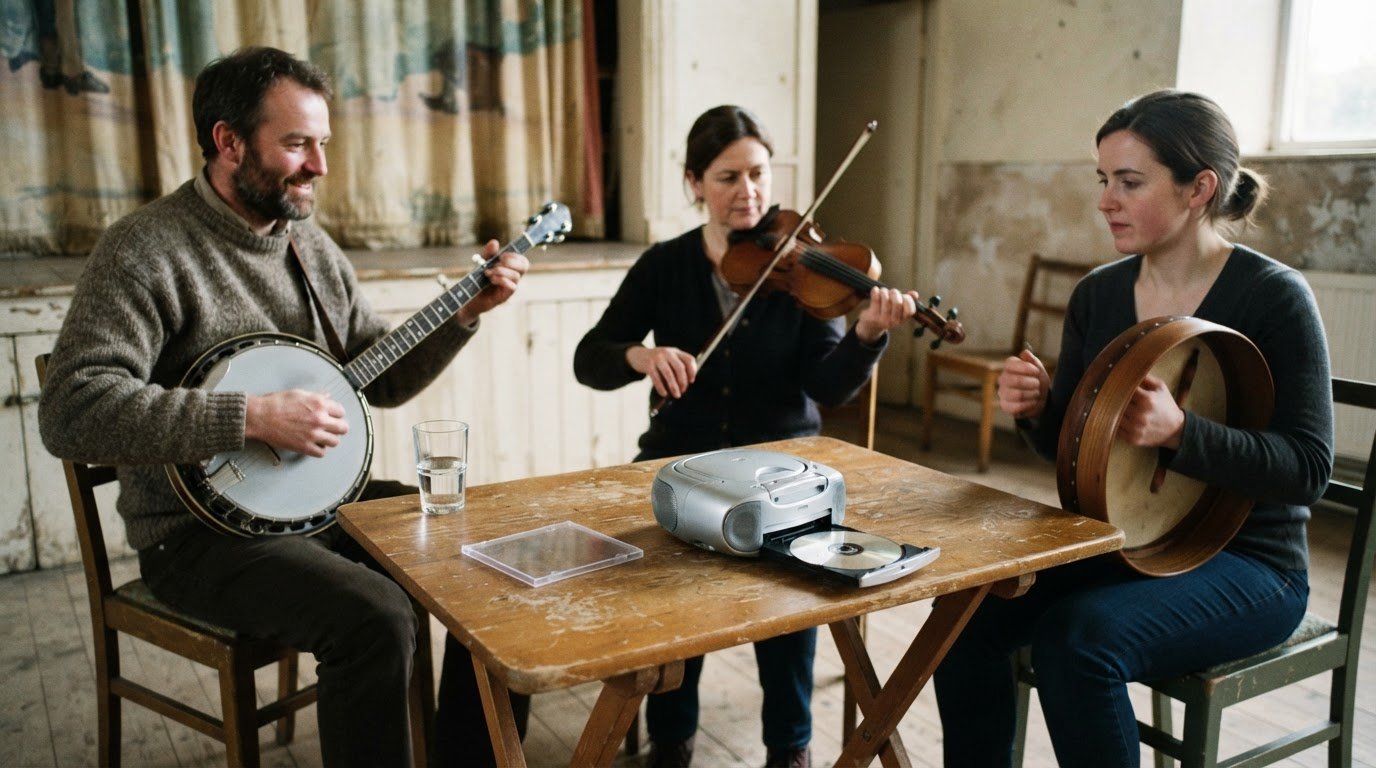
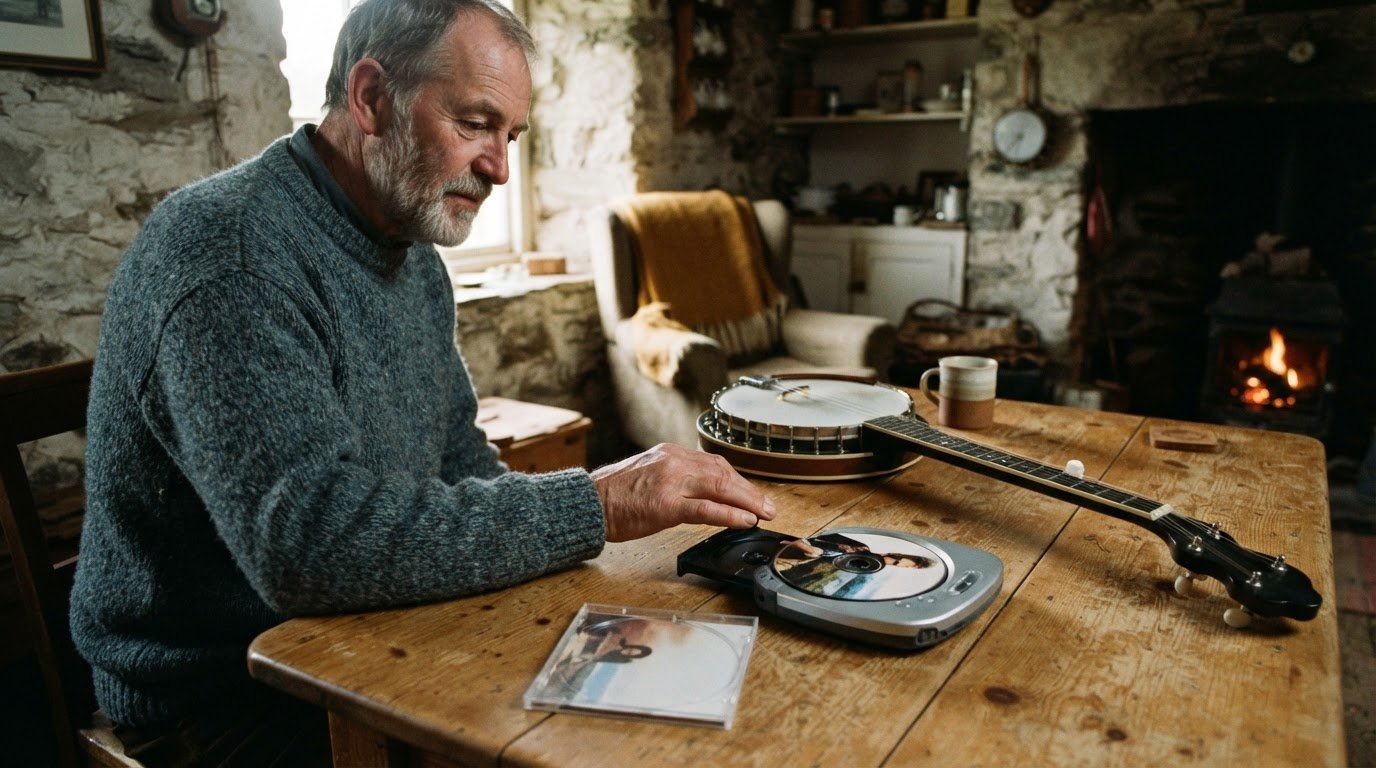
Recordings can help you notice musical details that are hard to describe in words. Páraic Mac Donnchadha’s album Not Before Time - 39 Years in the Making features traditional session music and includes liner notes with context about East Galway and Clare. Listen for how a melody is shaped and how the banjo sits within the music. Use that as an invitation to listen closely, not as evidence that one pick is required.
Does East Galway banjo playing require a particular plectrum?
No. There’s no regional pick to prescribe: the right choice depends on what feels controlled and comfortable in your hand. A pick may influence your playing experience, but it can’t replace practice, steady timing or careful listening to the tune and the musicians around you.
Start with a familiar tune and compare plectrums one at a time. Keep your banjo, grip and playing conditions steady so you can tell what actually changes. Notice whether your strokes feel relaxed and even, and whether the sound stays clear. The next sections show how to compare shape, thickness and feel with a simple, repeatable test. Choose a pick that supports your playing, not one that claims to define a tradition.
How Plectrum Shape, Thickness, and Feel Affect Banjo Playing
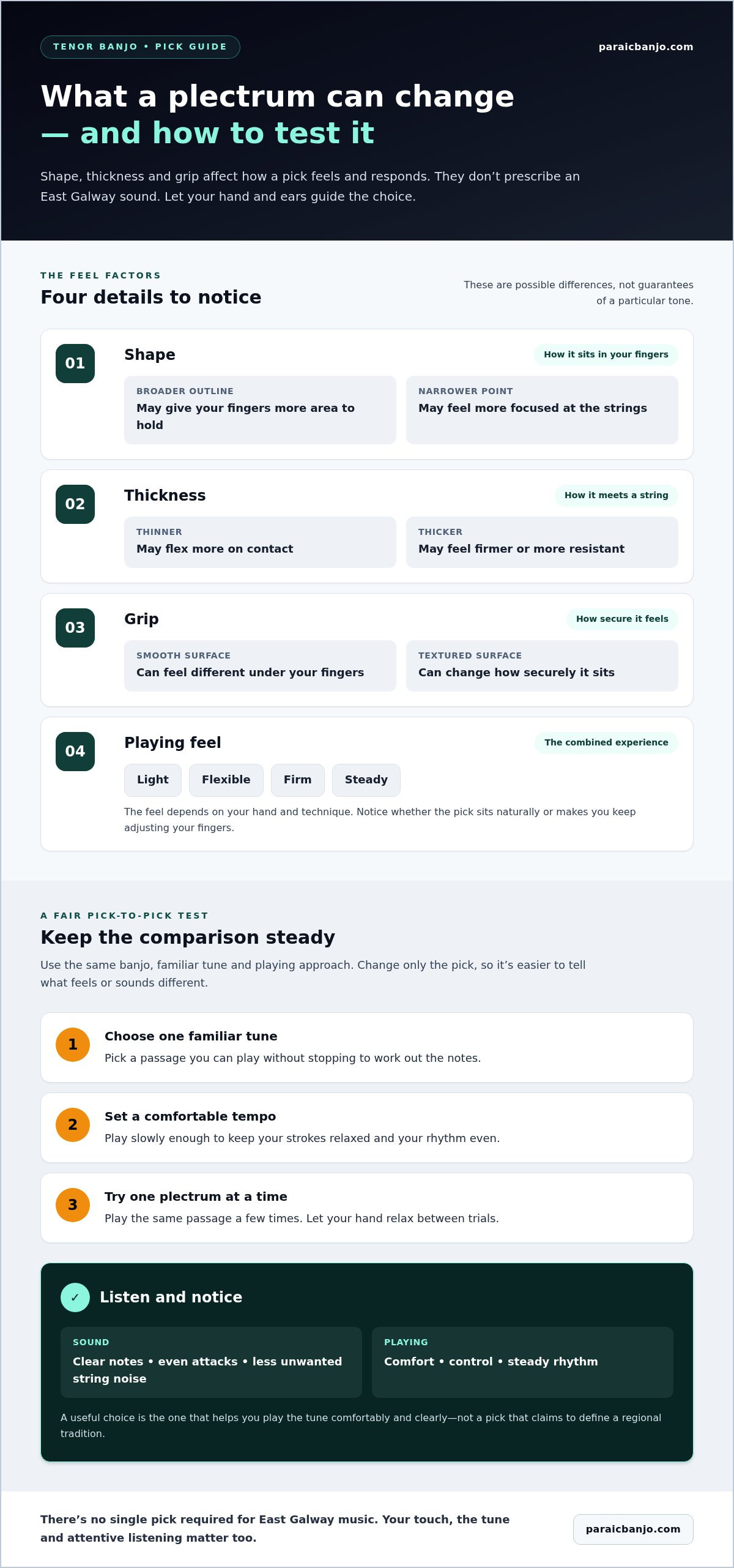
A plectrum’s shape, thickness and surface affect how it sits between your fingers and meets the strings. The same pick can feel different in different hands. Treat these features as ways to describe your playing experience, not as guarantees of a particular sound or a formula for the East Galway music tradition.
How does plectrum thickness change the feel of a stroke?
Thickness describes how thin or thick the pick is. When it contacts a string, a flexible pick may bend slightly, while a firmer one may seem to offer more resistance. Players respond differently: one may enjoy a pick that yields, while another prefers a steadier feel. Neither thickness is inherently better for a particular tune or instrument.
Which plectrum shape or grip feels secure?
Pick outlines range from broad to tapered, and surfaces from smooth to textured. A broader shape may feel substantial between your fingers, while a pointed tip may feel more direct against a string. Texture can change how securely a pick feels, but material and finish don’t guarantee a particular tone. Notice whether the pick sits naturally or whether you keep adjusting your fingers. That’s a useful clue about how well it suits your hand.
Use these observations to name the qualities you prefer. Then test whether you can hear or feel those differences while playing.
How to Test Banjo Plectrums on Traditional Tunes
A fair plectrum test doesn’t need special equipment or a long practice session. Keep the tune, tempo and playing approach steady as you swap picks. That makes it easier to judge how each one feels and sounds, rather than relying on a quick first impression.
What should you listen for when comparing plectrums?
Listen for clear notes and even attacks, meaning each stroke begins cleanly rather than sounding unexpectedly harsh or muffled. Notice whether the rhythm stays steady and whether you hear extra string noise. There’s no single tone that proves a pick suits the East Galway music tradition. Ask instead whether it helps you play the tune comfortably and clearly.
Compare the same short passage each time. Speeding up, tightening your grip or concentrating harder with one pick can affect the result. Keep the tempo manageable and let your hand relax between trials.
How can you make a fair pick-to-pick comparison?
Use this sequence to compare plectrums. Keep the same banjo and tune, and change only the pick.
Choose one familiar tune. Pick a passage you can play without stopping to work out the notes.
Set a comfortable tempo. Play slowly enough to keep your strokes relaxed and your rhythm even.
Try one plectrum. Play the same passage a few times. Pay attention to clarity, steadiness, comfort and unwanted string noise.
Make a quick note. Record whether the grip felt secure, your hand stayed relaxed and the sound was clear.
Swap picks and repeat. Keep the tune, instrument and tempo the same. Compare a small range rather than changing several things at once.
Record a short sample. Listen back to each attempt. Your hands may prefer one pick, while playback can help you hear note clarity and rhythmic consistency.
After comparing at an easy pace, repeat the passage a little faster if that feels comfortable. Don’t force the tempo. If you tense up or your strokes become uneven, return to the slower pace and see which pick lets you stay relaxed.
Try the test again later. A pick that feels unfamiliar at first may become more comfortable, and a strong first impression may change on a second listen. Brief notes help you compare what you experienced rather than relying on memory.
A useful plectrum is one you can control consistently. Use that as your measure when exploring traditional recordings, instead of trying to match a supposed regional formula.
Match Your Plectrum to Your Technique, Tune, and Practice Habits
A pick that suits one player may feel awkward in another’s hand. Start by naming what matters most to you: a secure grip, relaxed movement, consistent strokes or a particular feel against the strings. That gives you a practical basis for choosing, rather than chasing another player’s setup or treating one pick as the answer for the East Galway music tradition.
How should beginners choose a first banjo plectrum?
Begin with a plectrum that feels comfortable and easy to control. Hold it without squeezing, play at a manageable pace and aim for even strokes. If a difficult passage makes you tense, slow it down before blaming the pick. As your technique and preferences develop, revisit your options. What feels natural can change with experience.
Your tunes and tempo affect what you notice. A passage with quick note changes can show whether your hand stays relaxed, while a slower melody can make the feel of each stroke more apparent. These are practical differences between passages, not regional rules. Try a pick across the tunes you usually play before deciding it doesn’t suit you.
For musical context, listen to the East Galway and Clare references in the album’s liner notes. They can help place regional details in perspective without suggesting that every musician from a place plays alike or uses the same equipment.
How can listening help shape your playing choices?
Listen for more than the banjo notes. Notice the phrasing, or how the melody is shaped; follow the pulse, the steady underlying beat; and hear how the instruments work together. These details can inform your musical choices, while your plectrum decision still comes down to what supports your playing comfortably.
Páraic Mac Donnchadha’s album Not Before Time - 39 Years in the Making presents traditional session music with expert musicians, and its liner notes share context about East Galway and Clare. Listen for phrasing and feel, not for a prescribed plectrum sound. Explore Not Before Time - 39 Years in the Making and bring a fresh ear to your next practice session.
Choose Your Banjo Plectrum Through Listening, Testing, and Patience
Once a pick seems promising, practise with it for a while before drawing a conclusion. Familiarity takes time. Use it in a few ordinary sessions, not just a brief comparison, and see how it feels as you play tunes you already know.
What is a simple checklist for choosing a plectrum?
Use these signs to decide whether to keep practising with your current pick or compare other options:
Keep going if the pick stays in place and your playing feels manageable as you settle into it.
Reconsider it if discomfort, slipping or inconsistent control continues across practice sessions.
Change one thing at a time if you compare picks again, so you can tell what has changed.
A plectrum is a personal tool, not a badge of authenticity for the East Galway music tradition. Let the music, your technique and the way the pick feels over time guide you.
How can recorded music deepen your understanding of East Galway tradition?
Give a recording your full attention without searching for a gear formula. Follow the melody, listen to how the musicians shape phrases and notice how the parts come together. Páraic Mac Donnchadha’s Not Before Time - 39 Years in the Making features traditional session music with expert musicians, alongside liner notes sharing stories and historical context about East Galway and Clare.
Explore the album and its regional liner notes, then bring that listening curiosity to your next practice session.
Keep Listening, Testing, and Finding Your Feel
There’s no single plectrum that defines the East Galway music tradition. Shape, thickness and grip can change how a pick feels in your hand, but the best guide is how comfortably and consistently you play. Compare picks on the same familiar tune, listen for clear, steady strokes and practise with your choice before deciding it isn’t right for you.
Keep the music at the centre of the experiment. Páraic Mac Donnchadha’s Not Before Time - 39 Years in the Making brings together 18 tracks recorded live with expert musicians. Its detailed liner notes add stories and historical context about East Galway and Clare, giving you more to explore as you listen.
Explore Not Before Time - 39 Years in the Making, listen for the phrasing and interplay, and bring that curiosity back to your banjo. Trust your hands and ears. The right pick is the one that helps you enjoy the music and play with confidence.
Frequently Asked Questions
Is there a special plectrum for East Galway banjo music?
No single pick is prescribed by the East Galway music tradition. Regional context can guide what you listen for, but it doesn’t dictate your equipment. If you’re exploring the style, pay attention to how musicians shape melodies and keep the pulse moving. Let those details inform your playing, and choose a plectrum for your own needs rather than as a regional marker.
How do I choose a banjo plectrum as a beginner?
Start with a pick that feels manageable instead of trying to copy an experienced player’s exact setup. Focus on holding it without clenching and building a steady stroke on simple passages. You don’t need to settle on a permanent choice straight away. As your technique develops, your preferences may shift, so revisit what feels natural after you’ve practised.
Does a thicker banjo plectrum sound better?
Not necessarily. Thickness can affect how much a pick flexes or resists your stroke, but neither sensation guarantees a better sound. A firmer pick may feel more stable to one player, while another may prefer more give. Consider the response you enjoy and can control. Other players’ preferences can suggest options, but they can’t predict what suits your hand, instrument or musical approach.
Which plectrum shape is easiest to hold for banjo playing?
There’s no universally easiest shape. A broader pick may offer more surface between your fingers, while a tapered shape can feel more focused at the strings. What matters is whether you can hold it naturally through a tune. Notice if you keep readjusting your fingers or squeezing harder than feels comfortable. Those clues can help you decide which shapes to try.
Can changing my plectrum improve my Irish traditional banjo playing?
A different pick may make playing feel more comfortable or help your strokes respond the way you prefer. It won’t supply timing, phrasing or familiarity with a tune. Those develop through practice and listening. If a passage is giving you trouble, slow it down and work through the movement first. Consider changing equipment when the pick itself seems to hinder your playing, rather than expecting a new one to solve every difficulty.
How can I test two banjo plectrums fairly?
Keep the banjo, tuning, tune passage and tempo unchanged, and switch only the pick. Make a brief note about each one, then record a short sample if you want to compare the sound afterward. Listening back can reveal details your hands may not notice while playing. Repeat the comparison another day if the result feels unclear. A first impression isn’t always the one that lasts.
Do I need a particular plectrum to play East Galway tunes authentically?
No. Authenticity doesn’t come from owning a particular pick. It comes from engaging with the music and learning how players handle its melodies, phrasing and pulse. Listen closely to recordings, then bring what you hear into your own practice without assuming there’s one correct setup. A plectrum can support your playing, but it can’t stand in for musical understanding or personal expression.
Comments