Live vs Recorded Irish Session Music: Understanding the Pulse and the Polish
- Paraic Mac Donnchadha

- May 30
- 13 min read
What if the most polished, crystal-clear studio track is actually missing the very thing that makes Irish music come alive? It's a common frustration for many listeners who find themselves caught between the sterile perfection of over-produced Celtic pop and the raw, rhythmic roar of a real pub gathering. When we look at live vs recorded irish session music, the difference isn't just about sound quality; it's about the "lift" in the room. You know that feeling when the floorboards start to hum and the conversation between the banjo and the fiddle becomes something almost electric? That's the pulse we're chasing.
You probably already feel that a session should be more than just background noise, but finding that authentic energy in a digital storefront can feel like a chore. This guide will help you understand the essence of a true session and show you exactly what to look for when you're ready to add to your collection. We'll explore how to spot recordings that refuse to "clean up" the soul of the music, ensuring you feel confident whether you're listening at home or stepping into a session for the first time. If you want to hear this balance in action, you can explore the digital tracks on my album, Not Before Time, which took 39 years to get just right. Let's dive into how you can find that same living energy every time you hit play.
Key Takeaways
Learn why the informal circle of a session is the heart of the tradition and how to navigate the etiquette of these musical gatherings.
Understand the technical and emotional differences between live vs recorded irish session music so you can find albums that capture that infectious rhythmic "lift."
Master the unwritten rules of session participation, including why listening is just as important as playing when you're joining a new circle.
Discover how to spot authentic albums by looking for live-in-studio tracks and detailed liner notes that keep the tradition's stories alive.
See how 39 years of experience were captured in a single live-recorded project by exploring the digital tracks on the debut album, Not Before Time.
Table of Contents
What is an Irish Session? The Heart of the Tradition
Imagine walking into a corner of a pub where the air is thick with the scent of hops and the sharp, bright ring of a tenor banjo. This isn't a performance for an audience. It's a session. At its heart, an Irish session is an informal gathering where musicians come together to play traditional tunes simply for the love of the craft. If you are asking What is an Irish Session?, think of it as a musical conversation. There is no stage. No spotlights. Musicians usually sit in a tight circle or around a wooden table, making the music the primary focus rather than background noise.
The goal here is communal music-making. Nobody is trying to be the star. Instead, everyone works together to create a shared "pulse" that fills the room. When debating live vs recorded irish session music, this is where the live experience wins every time; you can't always bottle the feeling of a dozen instruments breathing as one. It's about the connection between the players and the tradition itself. You can hear this authentic connection in the individual digital tracks on my debut project, which was recorded to capture that exact spirit. The music belongs to the room and the moment.
The Anatomy of a Tune Set
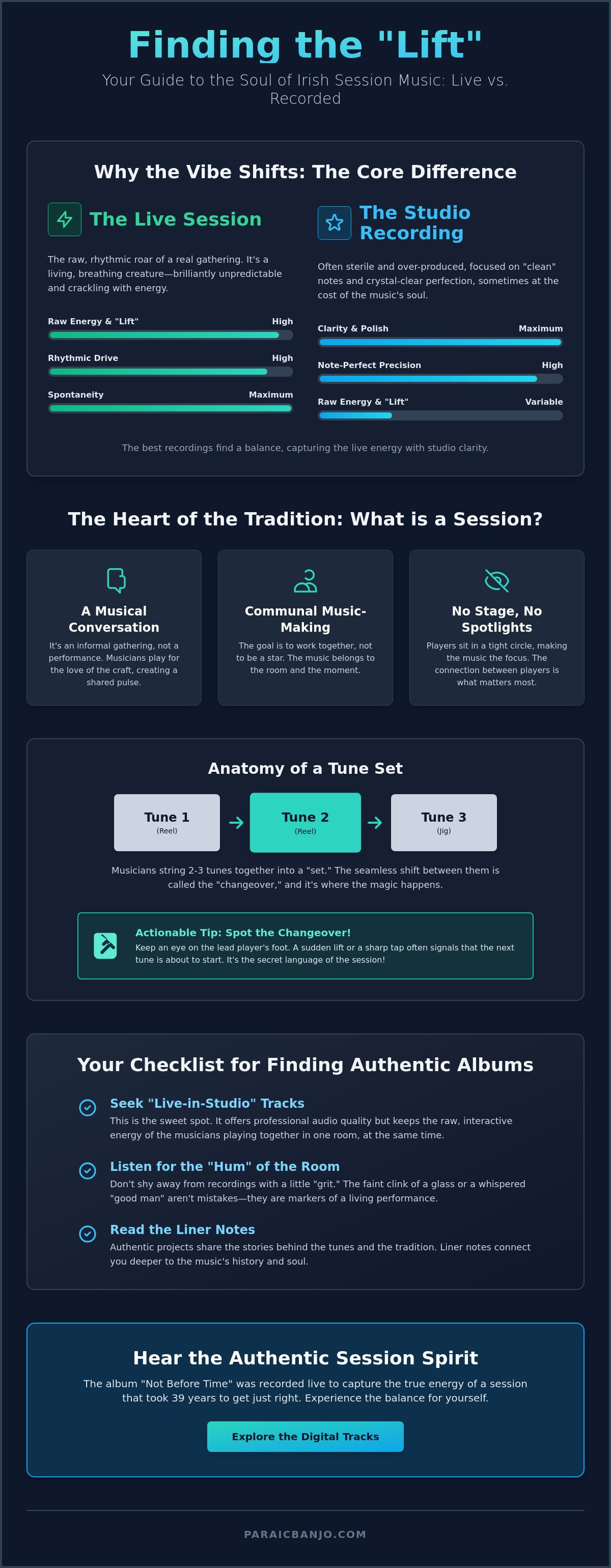
In a session, musicians rarely play just one tune. They string two or three together into what we call a "set." The moment the melody shifts from one tune to the next is the "changeover." It requires a keen ear and quick fingers to keep the energy flowing without a stumble. Tip: If you are watching, keep an eye on the lead player’s foot. A sudden lift of the heel or a sharp tap often signals that the next tune is coming. It's a subtle language that keeps the rhythm tight and the dancers moving.
Open vs. Closed Sessions
You'll encounter two main types of gatherings. Open sessions welcome any musician who knows the repertoire to pull up a chair and join the fray. Closed sessions are usually curated groups of experts. These are often used for high-level recordings because the level of technical precision is higher. Understanding this distinction helps you find the essence of Irish music in its purest form. Whether you're buying a physical CD or browsing digital tracks, knowing the session's "rules" helps you appreciate the incredible skill involved in every bar. Pick up the Not Before Time digital album to hear how a group of veterans handles these dynamics with ease.
Live vs Recorded Music: Why the Vibe Shifts
Have you ever noticed how a session in a crowded pub feels like it's physically pushing you? That's what we call "the lift." When comparing live vs recorded irish session music, this is the first thing that often gets lost in a heavy studio edit. A live session is a living, breathing creature. It’s messy, loud, and brilliantly unpredictable. The energy comes from the musicians reacting to the room, the crowd, and each other in real time. It's a raw, shared experience that a sterile studio environment struggle to replicate.
Studio recordings often get obsessed with "clean" notes. Producers want every pluck of the banjo string to be pristine and every fiddle bow to be perfect. But in a real session, the soul is in the rhythm, not just the pitch. If you strip away the slight grit or the sound of a foot tapping on a wooden floor, you lose the heartbeat. Understanding the tension between live vs recorded irish session music is key to building a collection that actually moves you. This is why many people look to resources like the Irish Traditional Music Archive to understand How to Find Authentic Session Recordings that preserve the original fire of the performance.
Authentic recordings often include the "hum" of the room. It could be the faint clink of a glass or a whispered "good man" after a particularly sharp turn in a reel. These aren't mistakes; they are markers of a living tradition. The best albums find a sweet spot. They give you professional audio quality so you can hear every detail of the instrumentation, but they don't scrub away the raw session spirit. You can hear this balance clearly in the Individual Digital Tracks from my debut release, where the energy of the room stays intact.
The "Pulse" of the Banjo and Fiddle
In a live setting, the rhythm is driving. It’s often slightly "ahead of the beat," creating a sense of urgency and excitement. While recorded tracks might use a metronome for perfect timing, true session players play to each other. Tip: Listen for how the banjo and fiddle "lock in" during a reel. They aren't just playing the same notes; they are sharing a single rhythmic thought. This connection is what makes the floorboards shake and the music feel unstoppable.
The Role of Spontaneity
Live music thrives on "ornamentation." These are the little extra notes, triplets, or slides added on the fly. In a studio, these can be over-planned, but in a session, they are part of a fast-moving musical conversation. If you want the best of both worlds, look for albums that were "recorded live" with all musicians in the same room. This ensures that the spontaneity of the moment isn't sacrificed for the sake of a "perfect" take. It keeps the music honest and full of life.
The Unwritten Rules of the Session Scene
Stepping into a session for the first time can feel like walking into a secret society, but it doesn't have to be intimidating. The most important thing to remember is that every session has a "host" or a leader who keeps the engine running. This person usually starts the tunes and sets the pace. Respecting their lead is the golden rule. If you are new to the circle, it's always a good idea to listen more than you play. This isn't about being exclusionary; it's about soaking up the specific style and repertoire of that local group. Every town has its own favorites and its own way of swinging a reel.
One major faux pas is "noodling." This means playing random notes, practicing your own tunes, or tuning up loudly while someone else is starting a set. It muddies the water and breaks the concentration of the lead players. If you are just there to listen, staying relatively quiet during the sets shows you value the craft. Tip: If a particular melody catches your ear, don't be shy! It's perfectly okay to ask for the name of a tune between sets. Most musicians are happy to share the history of what they're playing once the instruments are at rest.
Understanding these social dynamics is part of grasping the difference between live vs recorded irish session music. In a live setting, the etiquette creates the atmosphere. When you listen to my Individual Digital Tracks, you are hearing the result of these unwritten rules in action, where every player knows exactly when to lean in and when to hold back to let the collective sound shine.
Etiquette for the Non-Musician
You don't need an instrument to be a vital part of the tradition. Listeners provide the energy that feeds the musicians. However, try to avoid using flash photography or making loud phone calls right next to the circle. It breaks the spell for everyone. A simple "well played" or a clap at the end of a set is the best way to show your appreciation. It lets the players know the music is hitting home, which often inspires an even better set to follow.
Learning by Ear
Traditional players rarely use sheet music. We learn by listening to the nuances and the phrasing of those who came before us. This oral tradition is exactly why traditional irish session music cds remain so important for preservation. They provide a roadmap for the next generation of players. Actionable Tip: If you want to learn a tune you've heard, use a recording app on your phone to capture it for later practice. Just be sure to ask the musicians for permission first; it's a small gesture that goes a long way in building rapport within the community.
How to Find Authentic Session Recordings
Finding the "real deal" in a digital world can feel like searching for a specific pebble on a Connemara beach. If you've spent any time browsing online stores, you've likely seen dozens of albums with titles like "Celtic Chill" or "Irish Pub Favorites." My advice? Walk away from those. These compilations are often over-produced for background noise and lack the grit, sweat, and soul of a true musical gathering. To get the best experience when comparing live vs recorded irish session music, you need to look for recordings that value the "live-in-studio" approach. This means the musicians sat in a room together and played at the same time, capturing the eye contact and the shared breath that makes the music move.
The problem with many modern recordings is multi-tracking. This is a technical process where each instrument is recorded separately and layered together later. While it sounds clean, it completely kills the "lift" of a session. You lose that infectious rhythmic energy because the musicians aren't actually reacting to each other in the moment. Instead, seek out independent artists who are deeply rooted in specific regional styles. Whether it's the rolling hills of Clare or the soulful stretches of East Galway, these artists bring a sense of place to their playing that you just won't find on a generic pop-folk record. If you want a definitive example of this raw energy, you can buy the Not Before Time digital album and hear 18 tracks recorded with that authentic session pulse.
Why Liner Notes Matter
Liner notes are the "map" to the music. In traditional circles, they are a piece of heritage. A good set of notes will tell you where a tune came from, who the musician learned it from, and perhaps the history of the instruments involved, like the four-string tenor banjo. These stories turn a simple digital track into a living piece of history. They provide the context that makes the listening experience much richer. When you buy an album, check the notes; they are often the difference between a commercial product and a labor of love.
Identifying Regional Styles
As you listen more, you'll start to hear the "dialects" of Irish music. The East Galway style is famous for being slightly slower and more soulful, giving the melody room to breathe. On the other hand, the Clare style often has a distinct "lilt" or "swing." This lilt is the rhythmic bounce that makes it nearly impossible to keep your feet still. Actionable Tip: Find a common reel, like "The Mason's Apron," and listen to two different versions from these regions. Notice how the tempo and the "swing" of the notes change. It’s a fantastic way to figure out which style speaks to your own heart the most.
Capturing 39 Years of Music: The "Not Before Time" Approach
It took nearly four decades of playing in kitchens, back rooms, and crowded pubs to finally sit down and commit these tunes to a record. This project, 39 years in the making, wasn't about chasing a commercial trend or a polished pop sound. It was about relief and celebration. When I finally gathered a group of expert musicians into the room, the goal was simple. We wanted to capture the "lift" that usually stays within the walls of a local session. This album is my definitive statement on the tradition, bridging the gap between a raw pub gathering and a high-fidelity listening experience.
The debate over live vs recorded irish session music often comes down to what you're willing to sacrifice. Do you want the perfect, sterile note, or do you want the driving, rhythmic soul of the West of Ireland? With 18 tracks that explore the rhythmic depth of the tenor banjo, I chose the soul. We recorded these sets live to ensure that the "pulse" remained the priority. You can hear the eye contact between the players. You can feel the collective breath before a changeover. It's an honest representation of a lifetime spent in the middle of the music.
The Sound of East Galway and Clare
Every track on the album is a carefully curated tune set, designed to flow with the same energy you'd find on a Friday night in Galway. We focused heavily on the regional flavors of East Galway and Clare, where the music has a specific lilt and a soulful swing. This isn't just a collection of melodies; it's a preservation of a specific style of playing that is often smoothed over by big studio labels. If you want to support this kind of authentic work, you can buy traditional irish music directly from independent artists who live and breathe the tradition every day.
Digital vs. Physical: Choosing Your Experience
I know that everyone listens differently these days. For the true purist, the physical CD is a treasure trove. It comes with extensive liner notes that act as a map to the music, detailing the history of the tunes and the instruments used. If you prefer your music on the go, the digital downloads offer high-quality audio that doesn't lose an ounce of the session’s fire. Whether you want the full physical package or individual digital tracks, the energy of the room remains the same. Ready to hear the difference? Explore the tracks on Not Before Time today! It’s been a long road to get here, and I’m thrilled to finally invite you into the circle. Happy listening!
Bring the Spirit of the Session Home
By now, you know that a true session is about more than just the notes on a page. It's about the connection between players and that unmistakable "lift" that makes the room vibrate. Whether you are stepping into a local pub for the first time or browsing for a new favorite album, keep your ears open for the rhythmic soul that defines the tradition. Remember to respect the host, listen for the regional lilts of Clare or Galway, and always prioritize the "pulse" over a sterile studio polish.
Finding the right balance in live vs recorded irish session music doesn't have to be a gamble. My debut project, Not Before Time, was 39 years in the making and features 18 tracks recorded live with a circle of expert musicians to ensure that raw energy stays intact. For the purists, the physical CD includes detailed historical liner notes that act as a map to our shared heritage. You can Order Not Before Time on CD or Digital Download today to experience this lifetime of passion for yourself. Keep the music playing and the conversation going. I'll see you in the circle!
Frequently Asked Questions
What is the difference between an Irish session and a jam session?
An Irish session is built on a shared repertoire of traditional melodies played in unison, whereas a jam session usually involves improvisation over a chord progression. In a session, the goal is for everyone to play the same melody together to create a powerful, collective sound. It’s about honoring the tune’s heritage rather than taking long solo flights. This unified structure is exactly what creates the unique "lift" we look for in the music.
Can I join an Irish session if I am a beginner?
You can certainly join if it is an "open" session, but it’s wise to listen for a while first to gauge the speed. Many beginners start by sitting on the outer edge of the circle and playing quietly until they feel comfortable. If the tunes are moving too fast, don't worry; just soaking in the rhythm is a vital part of the learning process. It’s always polite to check with the host before you unpack your instrument.
Why do Irish musicians play the same tune three times?
Playing a tune three times allows the musicians to settle into the rhythm and explore subtle variations in ornamentation. The first time through establishes the melody, the second builds the "pulse," and the third is often where the music feels most energetic and settled. This tradition ensures everyone in the circle is locked into the same groove before the lead player signals the changeover into the next tune in the set.
What instruments are typically found in an Irish session?
You’ll usually see a mix of fiddles, flutes, tin whistles, and the four-string tenor banjo providing the melodic core. Rhythm is often supplied by the bodhrán, a goat-skin drum, or a guitar using specific traditional tunings. Some sessions also feature the uilleann pipes or the button accordion. Each instrument adds a different layer of texture to the communal sound, creating the rich tapestry of noise that makes the live experience so infectious.
Is it okay to record a live session in a pub?
It is generally acceptable to record for personal learning, but you must ask the musicians for permission before you hit start. Most players are happy to help a fellow enthusiast, but having a phone pointed at them can be distracting during a complex set. If you want to hear that energy without the background clatter of a pub, my individual digital tracks were recorded to capture that exact session fire while maintaining professional audio clarity.
How can I tell if an Irish music CD is "authentic"?
Look for albums that prioritize a "live" feel and include detailed liner notes about the tunes' origins and the players involved. Authentic recordings avoid heavy synthesizers or "new age" pop layering, focusing instead on the raw interplay between the instruments. When evaluating live vs recorded irish session music, the best CDs feel like you’ve been pulled into a room of friends. My project, Not Before Time, uses this honest approach to preserve the genuine West of Ireland sound.
What is a "set" in traditional Irish music?
A set is a group of two or three tunes, usually of the same type like reels or jigs, played back-to-back without a break. Musicians choose tunes that complement each other’s key or melodic flow to keep the energy building throughout the performance. This seamless transition is a hallmark of the tradition and is a major part of the 18 tracks featured on my debut album. It’s how we keep the momentum going all night long.
Why is the tenor banjo so popular in Irish sessions?
The tenor banjo is prized for its bright, percussive tone that can cut through the noise of a crowded pub. Its sharp "drive" helps lead the session and keeps the tempo steady for the other musicians in the circle. Because it is tuned similarly to a fiddle but has a much stronger rhythmic attack, it adds a unique layer of crispness to the melody. It’s been my primary instrument for 39 years because of that incredible power.


Comments