Songs to Make You Feel Like You're in Ireland

A fiddle reel can bring Ireland close before a singer names a single place. For music to make you feel like you're in Ireland, start with the lift of a reel, the pulse of a bodhrán, and a ballad rooted in place. To picture Dublin, listen for “Molly Malone,” the song closely associated with the city.
Irish music can sound lively and wistful, sometimes within the same tune. Its character lies in the details: a dance rhythm that sets your feet moving, an ornamented melody that curls around the beat, or a familiar chorus that invites you to join in. Each offers a different way into the tradition.
Discover how traditional Irish music creates a sense of place, why “Molly Malone” evokes Dublin, and which folk songs and ballads belong on an Ireland-inspired playlist. Move from the sound of a session to songs shaped by memory and storytelling, with listening cues to help you choose the mood. Settle in, press play, and let the tunes do the travelling.
Table of Contents
3. What are the best Irish folk songs and ballads for an Ireland-inspired playlist?
4. Which Irish artists are known for traditional music, such as The Dubliners and The Chieftains?
5. What music is played at Irish pubs and traditional sessions?
Páraic Banjo: Not Before Time - 39 Years in the Making (Physical CD)
1. Irish traditional music and its emotional atmosphere
Irish traditional music creates a sense of place through rhythm, melody, and the way musicians shape a tune. A brisk reel invites movement, while a slower air leaves room for a singer’s story. Fiddle, tin whistle, flute, and banjo each bring a distinct sound, from bright, ornamented notes to a steady rhythmic pulse. For music that makes you feel like you're in Ireland, listen for the shifts between lively dance tunes and reflective ballads, not just one familiar chorus.
That contrast helps connect songs with memory, heritage, and home. A tune can carry the feeling of a gathering, while lyrics about leaving or returning can make distant places feel personal. “Samhradh Samhradh” was first heard of in Dublin in 1730, linking the song with a long musical memory. Bealtaine, celebrated from April 30 to May 1, brings another seasonal association: its name can call to mind springtime, tradition, and songs passed between generations. Listen for the images and seasonal references that give each song its own sense of belonging.
Some songs make their mark through a story. “The Irish Rover” follows a ship and its ill-fated voyage, turning a tale of shipwreck into a memorable singalong. Its lively delivery creates an enjoyable contrast with the misfortune in the lyrics. Songs linked with childhood and home can work differently. Dusty Springfield’s “Goin’ Back” was used in an ESB advertisement in the ’80s, while the Osmonds’ “Love Me for a Reason” was a 1974 hit. Both can stir memories of particular eras, places, and family listening habits.
Traditional melodies also find new life in rock arrangements. Thin Lizzy released its rock update of “Whiskey in the Jar” in 1972, bringing a traditional song into a louder band sound. That change lets listeners hear the tune’s shape through electric guitars and a strong rock rhythm. Other songs are tied to shared memories: “Put ’Em Under Pressure” is associated with Ireland’s sporting memories of 1990, and “Rock ’n’ Roll Kids” dates from 1994. Boyzone, meanwhile, became a pop soundtrack for a generation of youngsters in the 1990s.
For a St. Patrick’s Day or Ireland-themed playlist, start with “The Irish Rover” for a spirited story, then add “Whiskey in the Jar” for a traditional melody in a rock setting. Bring in “Samhradh Samhradh” for an older traditional connection and “Rock ’n’ Roll Kids” for a gentler pop moment. Add “Goin’ Back” for a song tied to memories of home. Play the tracks in that order and notice how the mood shifts from lively storytelling to reflection.
Paul Harrington and Charlie McGettigan's 'Rock 'n' Roll Kids' is from 1994, offering a point of return to the shared memories already evoked by the playlist. As the songs move between a lively story, a rock pulse, and an older melody, the mood can shift without losing its sense of connection. Let the changes in pace and sound sit alongside one another: the emotional thread is not a single tune, but the way songs can make home feel close through different kinds of memory.
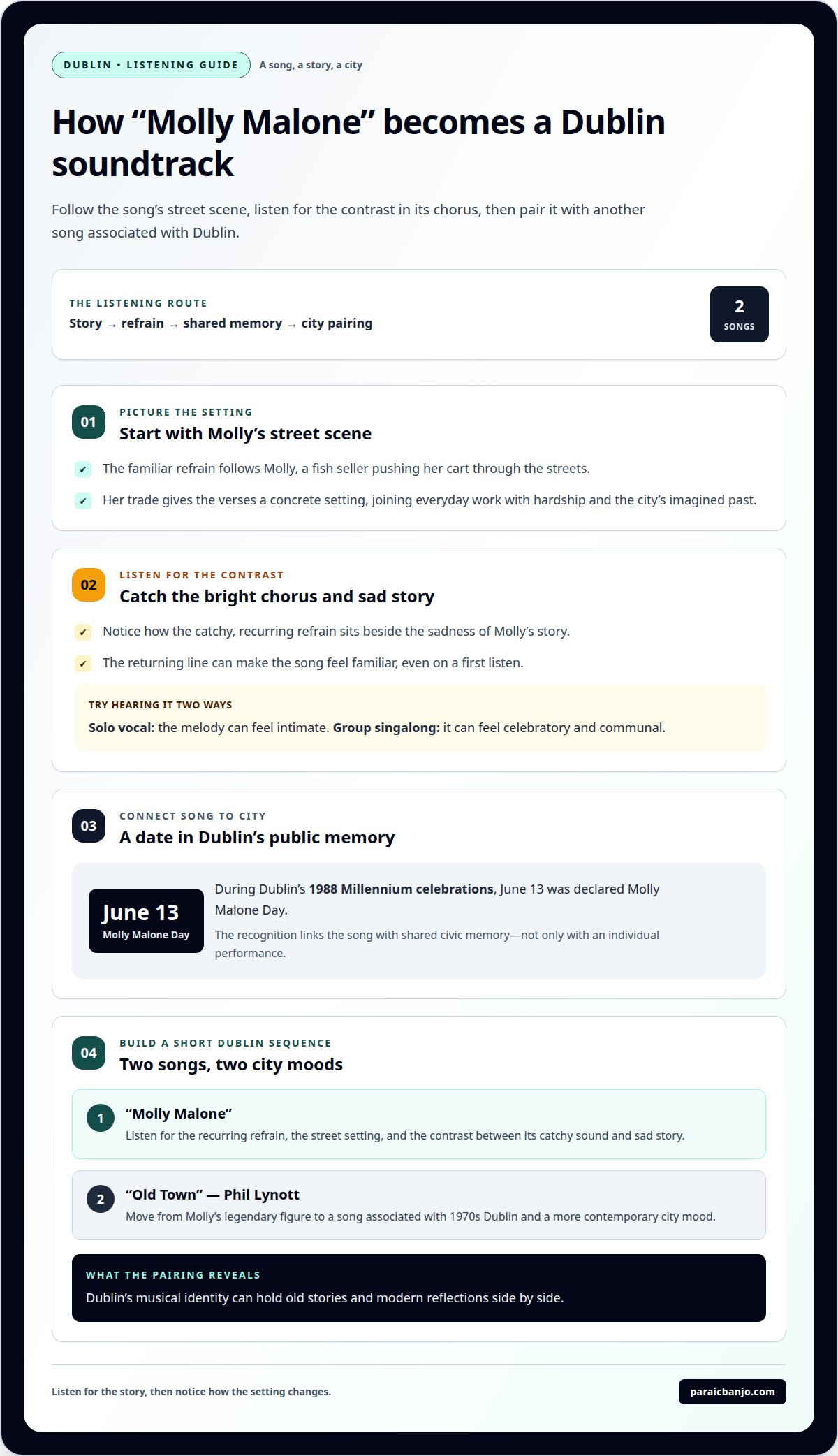
2. Molly Malone and Dublin
“Molly Malone” gives an Ireland-inspired playlist a vivid Dublin connection. Its familiar refrain follows Molly, a fish seller pushing her cart through the streets. The song turns an everyday street cry into a memorable musical image, bringing together work, hardship, and a city’s imagined past. Singers often give the chorus a warm, communal feel, making it easy to picture a crowd joining in. Listen for the contrast between the bright, catchy refrain and the sadness of Molly’s story.
The song’s place in Dublin’s public memory has its own date. During Dublin’s 1988 Millennium celebrations, June 13 was declared Molly Malone Day. That civic recognition helped connect the song with a shared sense of the city, not just an individual performance. It also shows how music can become part of local identity through repeated singing and public remembrance. Add “Molly Malone” to a playlist when you want a song that points clearly toward Dublin rather than a general Irish mood.
To hear why the ballad works, follow its story rather than treating it as background music. Notice how Molly’s trade gives the verses a concrete setting, then listen for the refrain’s return. That repeated line makes the song feel familiar, even on a first listen. Try a solo vocal version, then a group singalong: the melody can feel intimate in one setting and celebratory in another. That contrast is part of its enduring appeal.
Dublin’s musical character also appears in songs beyond “Molly Malone.” Phil Lynott recorded “Old Town,” a song associated with 1970s Dublin. Its urban atmosphere offers a different listening angle: instead of a traditional street ballad, it brings a more contemporary city mood. Place “Old Town” after “Molly Malone” to move from a legendary figure to a song linked with a specific era. The pairing helps show that Dublin’s musical identity is layered, with old stories and modern reflections side by side.
Build a short Dublin sequence with “Molly Malone,” followed by Phil Lynott’s “Old Town.” First, listen for the ballad’s recurring refrain and story; next, notice how “Old Town” changes the setting and tone. This gives an Ireland-themed playlist a clear Dublin focus before you move into reels, session tunes, or broader folk ballads. Keep the song titles together in your playlist notes. They make an easy starting point whenever you want to return to the city’s sound.
3. What are the best Irish folk songs and ballads for an Ireland-inspired playlist?
A strong Ireland-inspired playlist needs more than one mood. Pair a reflective ballad with a lively chorus, then leave room for a song that feels like a farewell. “Song for Ireland” suits the reflective side, while “The Fields of Athenry” brings a narrative ballad into the mix. Add “Danny Boy” for its familiar, longing melody. These choices vary the pace, story, and feeling instead of creating one unbroken run of singalongs.
“Song for Ireland” offers a useful starting point for listeners exploring recordings and compilations. The song is listed as a 1998 release and appears in the 1983 compilation Green Velvet. Keep both details in mind as you explore different versions. Listen for the way a singer shapes the melody and carries its sense of longing. Then compare it with “The Parting Glass,” a farewell song that can bring a quieter, more intimate close to a playlist.
For a story-led stretch, place “The Fields of Athenry” beside “Danny Boy.” Each song gives its words and melody room to unfold. “The Fields of Athenry” tells a story, while “Danny Boy” leans into a lyrical, sustained tune. Listen without skipping ahead and notice how the vocal phrasing changes the mood. Together, they make a good calm section between brighter folk songs.
“Raglan Road” adds another kind of intimacy. Its poetic language and measured delivery suit a moment focused on the words, rather than a room ready for a chorus. Follow it with “The Parting Glass” to let the playlist settle gently. For a more communal finish, move from “Raglan Road” into “The Fields of Athenry,” whose storytelling gives listeners a clear thread to follow. The order matters: reflective songs have more impact when lively tracks don’t crowd them.
Build your playlist in three passes. First, choose a welcoming opener such as “The Fields of Athenry.” Next, place “Song for Ireland,” “Danny Boy,” and “Raglan Road” together for a slower, more reflective middle. Finish with “The Parting Glass” for a farewell rather than a sudden stop. For a St. Patrick’s Day playlist, add a faster, more rhythmic song between these ballads. Keep the quieter choices, too: they give the lively moments room to shine. If you are adapting this concept for an event or celebration, entertainment specialists such as Stevie Dee Wedding DJ often use a similar pacing strategy to blend classic Irish anthems smoothly with upbeat party favorites.
4. Which Irish artists are known for traditional music, such as The Dubliners and The Chieftains?
The Dubliners are a natural starting point if you enjoy strong vocals and memorable choruses. Try “The Wild Rover” for a familiar singalong, then “The Rocky Road to Dublin” for a faster, more driving song. Notice how the group’s delivery makes the lyrics feel direct and communal. That vocal character suits listeners looking for traditional songs with pub-friendly, audience-ready energy. Add both tracks to a playlist and compare their pace and storytelling.
The Chieftains offer a different route into the tradition. Their instrumental arrangements put the tune in the foreground, with traditional instruments carrying melody and rhythm instead of a lead vocal. Listen for fiddle, flute, and pipes trading musical phrases and building momentum without a chorus. “O’Sullivan’s March” gives you a clear example of a tune-led arrangement. Place it beside a Dubliners song to hear the contrast between instrumental playing and group singing.
Planxty is another useful name for an Ireland-focused listening list. The group’s repertoire brings traditional tunes together with songs and ballads, revealing different sides of folk music. Try “The Blacksmith” for a vocal-led song, then “The Jolly Beggar” for a lively narrative. Christy Moore’s voice is especially recognizable in Planxty’s recordings. Listen for how the words and instrumental accompaniment support each other, rather than treating the tune as decoration.
For a more intricate ensemble sound, explore The Bothy Band. Their performances are known for energetic playing, close interplay, and arrangements that let traditional melodies move between instruments. Compare a Bothy Band set with a Chieftains instrumental track: notice the pace, the changes between tune sections, and how each group builds forward motion. Those details help you hear the difference between a steady, spacious arrangement and a more tightly driven session feel.
Try this listening path: begin with The Dubliners’ “The Wild Rover,” move to Planxty’s “The Blacksmith,” then finish with an instrumental tune from The Chieftains or The Bothy Band. The sequence shifts from a chorus-led song to a ballad, then to dance music. Keep the volume comfortable and listen for the lead instrument in each recording. A fiddle often carries a quick melody, while pipes add a fuller, sustained tone. This comparison can help you choose artists to match your preferred mood.
5. What music is played at Irish pubs and traditional sessions?
An Irish pub session often brings musicians together around traditional dance tunes and songs. Reels and jigs are common tune forms: reels have a flowing, even pulse, while jigs have a lilting feel. A fiddle, flute, tin whistle, or banjo might carry the melody, with guitar or bodhrán adding rhythm. The sound depends on the players and the tunes they choose. Listen for a melody passing between instruments, rather than expecting every session to sound alike.
Instrumental sets often link tunes with a similar feel, keeping the music moving between melodies. A reel might lead into another reel, while a jig set keeps its lilting rhythm. Compare a lively instrumental arrangement by The Chieftains with a song-led recording by The Dubliners. Notice how an instrumental tune lets players shape the melody, while a ballad puts the words and vocal delivery up front.
Songs can also shape a pub’s musical atmosphere. A familiar chorus such as “The Wild Rover” gives listeners a chance to sing along, while a slower ballad creates a quieter change of pace. Sessions vary, and some focus mainly on instrumental playing. If you’re making a playlist, alternate a chorus-led song with a reel or jig. That simple switch gives the sequence the lift and release of a live set.
Traditional sessions are often informal, so the music develops through listening and joining in at the right moment. If you attend one, take a moment to hear which tune is underway and how the musicians are keeping time. Avoid talking over a quiet song or starting a separate tune while others are playing. A bodhrán player’s steady pulse or a fiddler’s repeated melody can help you follow the group. Let the musicians lead: shared attention is part of the experience.
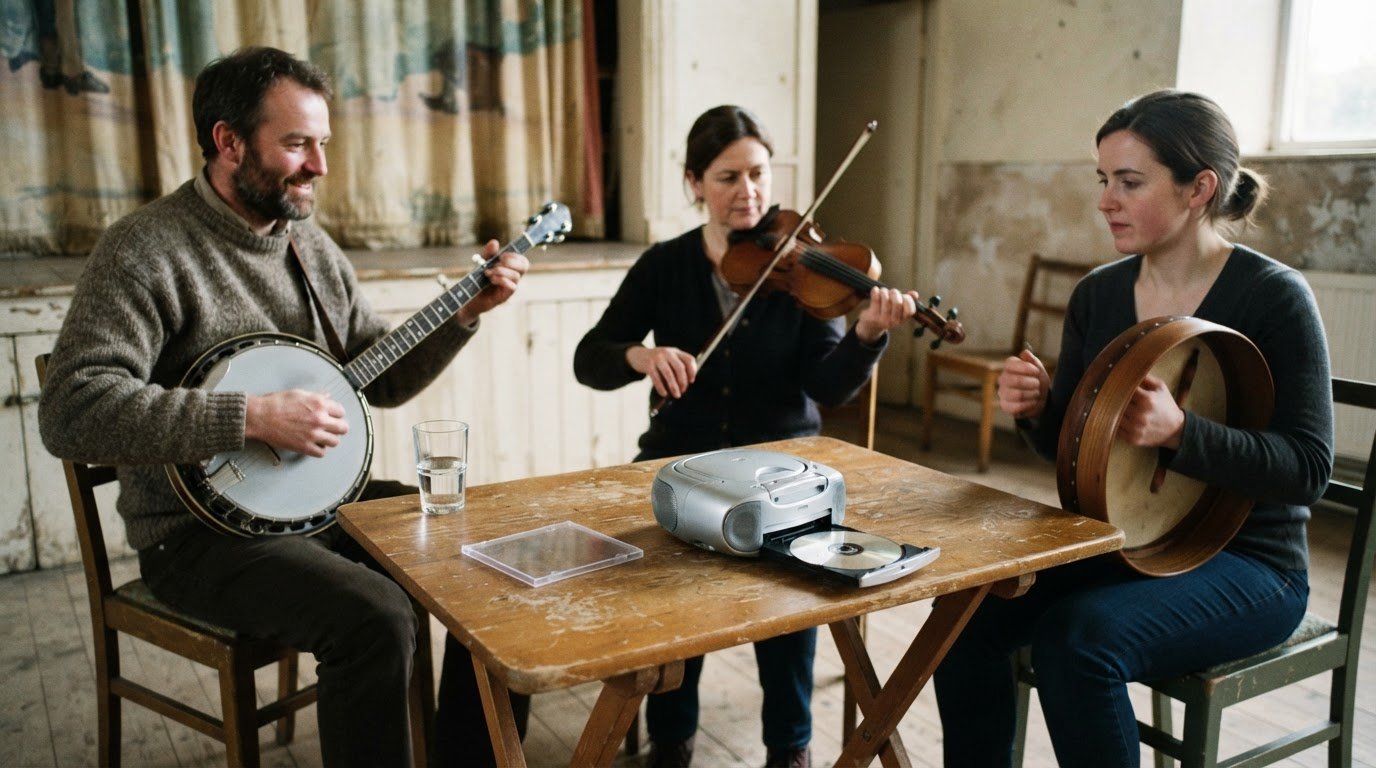
To recreate that session feeling at home, begin with an instrumental set, then add a song with a strong refrain. Follow it with another dance tune, such as a reel, and listen for the change in pace. For a recorded taste of that ensemble sound, explore traditional Irish session music. A banjo’s crisp attack can stand out against the sustained notes of a fiddle or flute, giving the melody a bright rhythmic edge. Keep the sequence varied, and let each tune have room to breathe.
Páraic Banjo: Not Before Time - 39 Years in the Making (Physical CD)
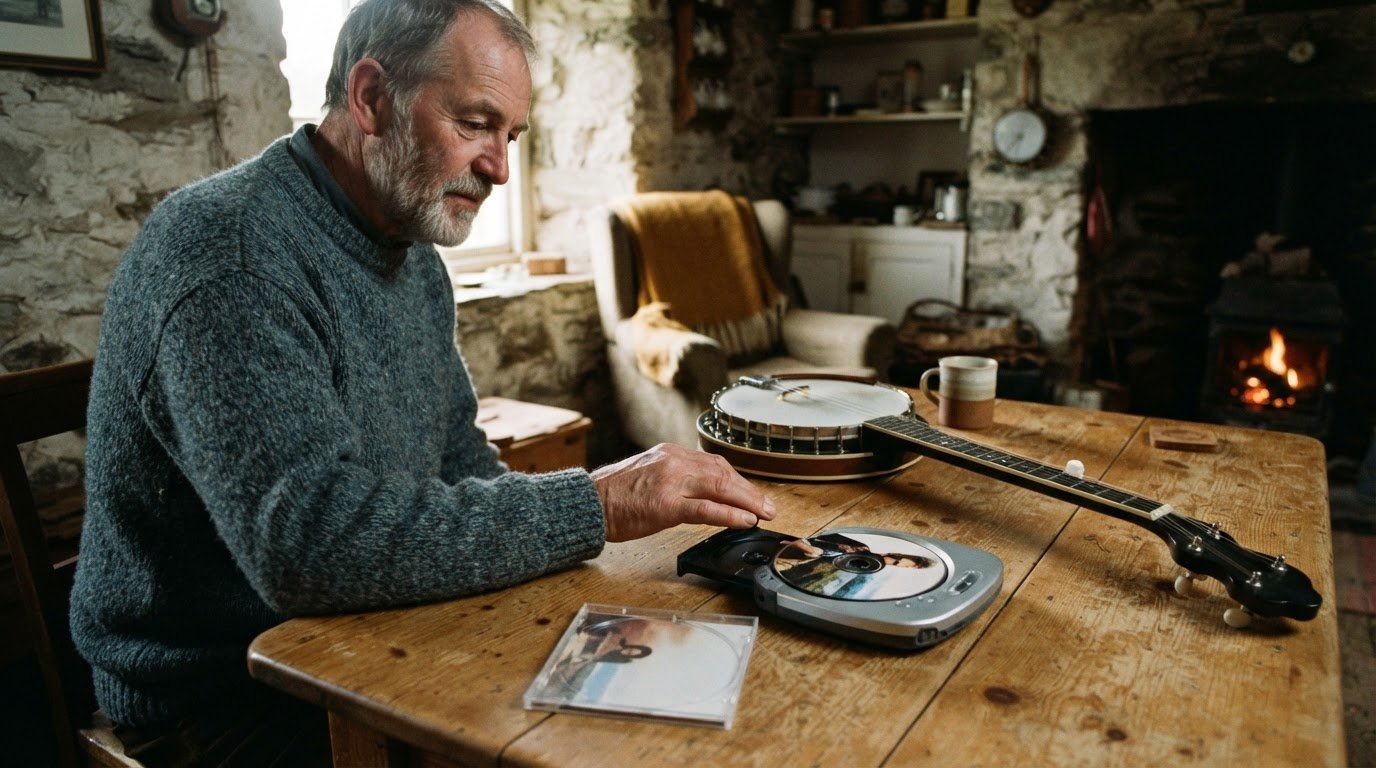
Páraic Banjo’s Not Before Time - 39 Years in the Making is a natural next listen if you want traditional Irish session music in a recorded collection. Its 18 tracks were recorded live with expert musicians, capturing the interplay and rhythmic lift that make a session so engaging. Choose the physical CD to enjoy the album as a disc, the digital album for a complete digital listen, or individual digital tracks to select particular tunes.
Put it on after exploring Irish folk songs and session sounds, and listen for how the banjo sits within the ensemble. To explore the album and its listening options, visit Páraic Banjo.
Keep the Irish music playing
Let your Ireland-inspired playlist grow with your mood. Save a place for a tune that catches your ear, revisit a favorite when you need a lift, and notice how different arrangements change a familiar melody. That’s the pleasure of music to make you feel like you’re in Ireland: each listen can open a fresh path into the sound, whether you’re drawn to a dancing rhythm or a quieter song.
If you’d like to keep exploring traditional Irish music through Páraic Banjo, contact Páraic Banjo about Irish music. Take your time, follow the tunes that stay with you, and enjoy the journey. Slán!
Frequently Asked Questions
What traditional Irish music creates an authentic Ireland atmosphere?
Try “The Kesh Jig” for a buoyant traditional tune, then “The Mason’s Apron” for a reel with a stronger, driving feel. These familiar session choices let you compare how tune type shapes the mood. For a practical listening exercise, play each track twice: first follow the main melody, then listen for the small changes musicians add as they repeat it. Those details make each performance feel alive.
What modern Irish bands and songs have a Celtic or Irish sound?
The Corrs blend pop songwriting with traditional Irish influences, making them a good bridge between contemporary and Celtic sounds. Try “Runaway” for a polished pop track, then “Toss the Feathers” to hear the band play a traditional instrumental tune. Compare the arrangements: one centers on a vocal hook, while the other lets the melody lead. That contrast adds variety without losing the playlist’s Irish thread.
Comments