The Best Irish Banjo Albums: A Collector’s Guide to the Pulse of Tradition in 2026
- Paraic Mac Donnchadha

- Jul 19
- 12 min read
The most powerful Irish banjo music isn't about how fast your fingers fly, but how deeply you can make the room swing. If you've ever felt the frustration of buying a generic 'Celtic' compilation only to find it lacks the grit and pulse of a real session, you aren't alone. You're looking for the best irish banjo albums that prioritize rhythm and soul over flashy, empty speed. It's about finding those recordings where the wood and wire actually speak to the heart of the tradition.
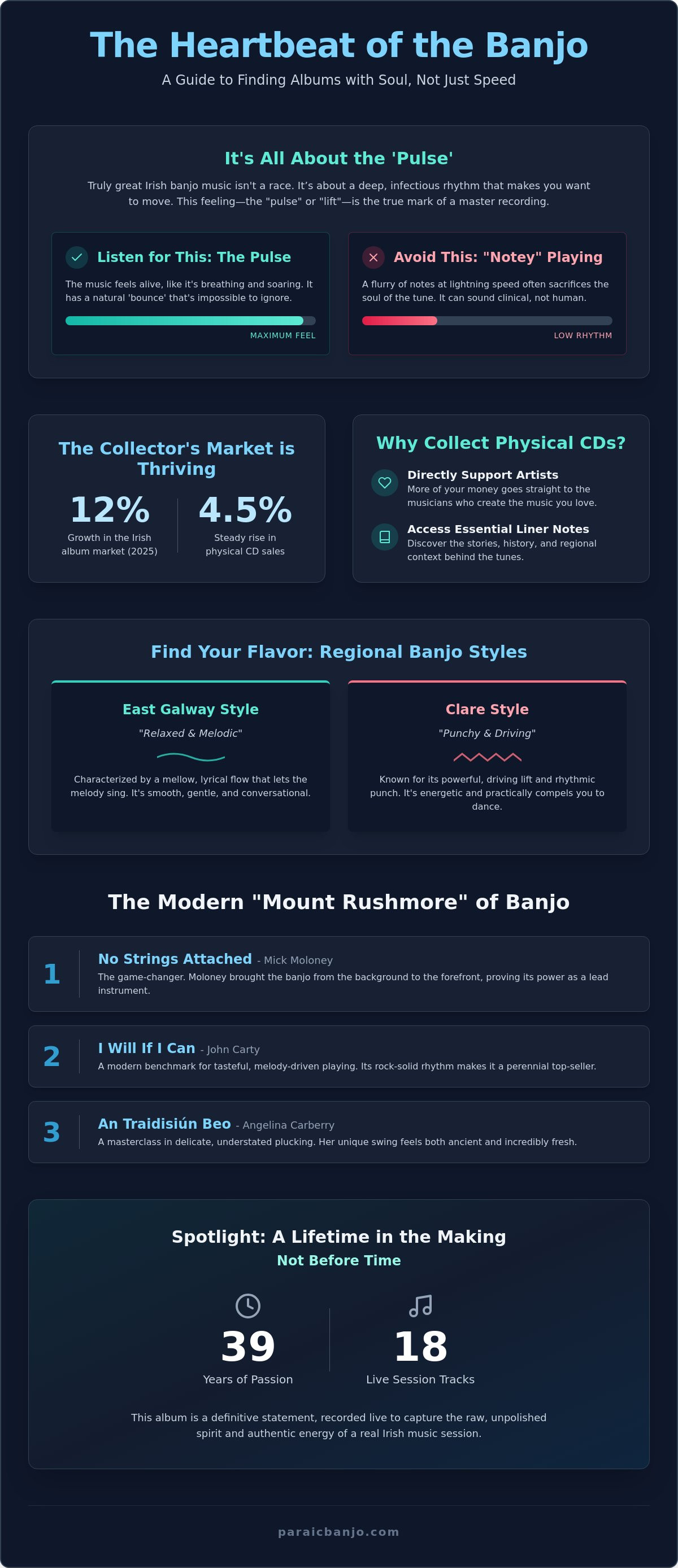
With the Irish album market growing by 12% in 2025 and CD sales seeing a steady 4.5% rise, it's clear that collectors still value the tangible connection of physical media and detailed liner notes. We'll show you how to build a world-class collection by distinguishing between the driving Clare style and the relaxed, melodic East Galway tradition. You'll discover essential recordings, including recent releases and lifetime projects like "Not Before Time," while learning how to support independent artists directly. Let's dig into the tunes that define the pulse of the tradition and ensure your collection is built on authentic, spirited foundations.
Table of Contents
What Makes an Irish Banjo Album 'The Best'?
When you're hunting for the best irish banjo albums, it's easy to get distracted by flashy playing. You might hear a flurry of notes that sounds like a machine gun, but if it doesn't make you want to move your feet, it's missing the point. A truly great album captures "the pulse." This isn't just a steady beat; it's the internal heartbeat of the tune that gives it life and character. While the history of the banjo shows how the instrument traveled and evolved, its role in Irish music is specifically tied to this rhythmic drive. We want music that feels alive, not just technically perfect.
The trap many modern recordings fall into is "notey" playing. This happens when a musician prioritizes technical speed over the soul of the melody. You lose the nuances, the little breaths between the notes, and the subtle variations that make traditional music feel human. We look for albums that sound like a conversation in a pub, not a clinical exercise in a soundproof booth. This is why live-recorded sessions often beat slick studio tracks. They carry the energy of the room. You can hear this honesty in the 18 tracks of Not Before Time, which we recorded live to ensure that session grit remained intact.
Rhythm Over Speed: The Secret of the Greats
In our tradition, we talk about "lift." It's that feeling when the music seems to float and propel itself forward. It's the difference between a tune that plods along and one that soars. The best players don't crowd the music; they leave just enough space for the rhythm to breathe. If you're exploring Individual Digital Tracks to start your collection, keep an ear out for that bounce. Here's a quick tip: as you listen, try to tap your foot on the first and third beats of a reel. If you feel a natural urge to dance, you've found the drive that defines a masterpiece.
The Significance of Regional Flavor
Geography is the silent partner in every great recording. A banjo played in East Galway won't sound like one from Clare, and building a world-class library means looking for the best irish banjo albums that celebrate these regional quirks. Purists often look for these designations because they tell you what to expect. The East Galway style is famously mellow and lyrical, while the Clare tradition is known for its punchy, driving lift. You can dive deeper into these distinctions in our guide on East Galway vs Clare Music: A Guide to the Rhythmic Soul of the West. When an album captures this regional soul, it becomes more than just music; it becomes a map of a specific place. It's exactly why many collectors prefer a Physical CD, as the liner notes often provide the vital context of where these tunes were born.
The Mount Rushmore of Tenor Banjo: 5 Essential Albums
Many rankings you'll find online are stuck in the past, often highlighting the same three recordings from the 1970s. To truly understand the best irish banjo albums, you need a collection that balances historical foundations with the raw energy of modern masters. These five albums represent the pinnacle of the craft, focusing on that elusive "lift" that makes traditional music breathe.
The Pioneers Who Shaped the Sound
Mick Moloney’s No Strings Attached is where the modern story of the tenor banjo begins. Before this, the instrument was often relegated to the background of ceili bands. Moloney brought it to the forefront, proving it could lead with both power and sophistication. His influence is the reason the banjo is a staple in every session today. Following that legacy is John Carty. His 2005 release, I Will If I Can, remains a top seller in 2026 for a simple reason: it's the ultimate benchmark for tasteful playing. Carty doesn't need to show off. He lets the melody do the work, supported by a rock-solid rhythmic foundation.
If you're looking to capture that classic, driving feel in your own listening habits, here's a tip. Look for albums that feature piano or bouzouki accompaniment. These instruments provide a percussive, rhythmic cushion that allows the natural "clack" and resonance of the banjo strings to shine through without being drowned out by heavier orchestration.
Modern Masters Keeping the Tradition Raw
Angelina Carberry’s An Traidisiún Beo is a masterclass in understated plucking. Her style has a unique swing and a delicate touch that feels both ancient and incredibly fresh. It’s a reminder that you don't need to play a thousand notes a second to be a virtuoso. Then there is the definitive statement of a lifetime's passion. My own album, Not Before Time, was 39 years in the making. It features 18 tracks recorded live to capture the authentic, unpolished spirit of a real session. We avoided the clinical feel of modern studios to ensure the "pulse" of East Galway and Clare remained front and center. Explore the tracks of 'Not Before Time' here to hear that session grit for yourself.
Finally, Shane Mulchrone’s Solid Ground represents the modern era of rhythmic precision. It’s a fantastic example of how the tradition continues to evolve while staying rooted in the soil of the music. Building a library of the best irish banjo albums isn't about collecting every CD ever made; it's about finding those specific recordings that make you want to grab your own instrument and join in. If you want to experience the music as it was meant to be heard, start with these five. They are the heartbeat of the tradition.
Listening for the Soul: East Galway vs. Clare Styles
Building a collection of the best irish banjo albums is about more than just picking up popular titles. It’s about understanding the geography of the sound. If you listen closely, the music tells you exactly where it was born. The two most distinct "schools" of playing come from East Galway and Clare. One flows like a gentle river, while the other drives like a heartbeat at a crowded dance. To have a world-class library, you need to appreciate how these regional flavors shape every pluck of the string.
The Mellow Flow of East Galway
East Galway style is often described as soulful or lyrical. It isn't about blinding speed. It’s about how you bend a note or where you place a triplet to make the melody breathe. It has a steady, relaxed pace that allows the tune to really sing without feeling rushed. This is the tradition I’ve spent my life honing. It’s a style that prioritizes the "lonesome" quality of the music, where the banjo sounds almost like a fiddle. You can hear this deep melodic ornamentation and mellow, woody tone on Not Before Time - 39 Years in the Making: The Definitive Irish Banjo Debut. Listen for players who treat the banjo as a storytelling tool rather than a percussion instrument.
The Driving Force of Clare Music
Clare music is the engine of the Irish tradition. It’s punchy. It’s rhythmic. In a Clare session, the banjo acts as a percussive force that gives dancers that vital "lift" we talked about earlier. It’s less about the long, winding melody and more about the "clack" of the plectrum against the strings. This style is designed to cut through the noise of a busy pub and keep everyone in time. It’s an infectious energy that’s hard to ignore.
If you want to identify this style quickly, try this. Listen for the "backbeat" in Clare-style reels. This is a subtle emphasis on the off-beat that makes the music feel like it’s leaning forward. If you find yourself nodding your head aggressively or tapping your toe with real force, you’re likely listening to a classic Clare set. A balanced collection of the best irish banjo albums needs both styles. You want the East Galway recordings for those quiet evenings of reflection and the Clare albums for when you need to feel the raw, unadulterated energy of the tradition. Both are essential to the pulse of the music.
The Collector’s Strategy: How to Build a Meaningful Library
Building a collection of the best irish banjo albums is a journey that goes far beyond simply filling a shelf or a hard drive. It is about fostering a direct connection with the musicians who keep our tradition alive. In an era where streaming services often pay artists mere fractions of a cent, buying directly from the source is the most impactful way to support independent music. When you purchase from an artist's own website, you're ensuring that the resources go back into the craft, allowing for future recordings and the preservation of regional styles. It's a small act that carries the weight of cultural survival.
While digital convenience has its place, the true connoisseur knows that physical media remains the gold standard for traditional music. If you do choose the digital route, always aim for high-quality formats like FLAC or WAV. These lossless files preserve the full frequency range of the instrument, capturing the subtle resonance of the banjo's skin and the sharp attack of the plectrum. Standard compressed files often strip away the very "grit" that makes a session recording feel real. You want to hear the music exactly as it sounded in the room, with every harmonic intact.
Why Purists Still Choose Physical Copies
There is a specific magic in the tactile experience of a physical CD. You aren't just buying a disc; you're acquiring a historical document. Liner notes are essential for any serious student or fan because they provide the "who, where, and why" behind every set of tunes. They offer a map of the people and places that shaped the player's style. For instance, the notes included with Not Before Time provide deep context for 18 distinct tracks, detailing the specific Clare and East Galway influences that informed each arrangement. To understand the nuances of this approach, check out our guide on How to Buy Traditional Irish Music: A Collector’s Guide to Authenticity.
Sourcing Independent Releases in 2026
In 2026, many of the finest recordings never make it to major commercial platforms. These hidden gems are often found through word of mouth or specialized communities. To stay informed, join active forums like 'The Session'. It's a fantastic place to hear about new, artist-direct releases before they hit the mainstream. Engaging with these communities helps you discover the best irish banjo albums that might otherwise fly under the radar. It's about being part of a living, breathing community of listeners. If you're ready to add a definitive statement of passion to your library, you can order your physical copy of 'Not Before Time' for global delivery today and experience the depth of the tradition firsthand.
Spotlight on 'Not Before Time': A Lifetime in the Making
When you're curating a library of the best irish banjo albums, you eventually look for that one project that feels like a definitive statement. For me, that statement is Not Before Time. It wasn't a project rushed into a studio over a weekend. It was 39 years in the making, a long-term development that allowed every tune to settle and every rhythm to find its natural home. This isn't just a collection of songs; it’s a lifetime's passion poured into 18 tracks of pure, unadulterated session music. It represents a celebration of the communities and mentors who shaped my hands over four decades.
The album serves as a bridge between the seasoned masters of the past and the collectors of today. We focused on capturing the raw, woody resonance of the tenor banjo, ensuring that the "pulse" we’ve discussed throughout this guide remains the star of the show. It’s a relief to finally have these sets recorded, and the enthusiasm from the traditional community has been infectious. This is music meant to be shared, felt, and lived.
Capturing the Soul of the Session
One of the biggest mistakes in modern recording is the "over-produced" trap. When you layer too many tracks or polish away every imperfection, you lose the "clack" and the "lift" that makes the music real. We recorded Not Before Time live with a group of expert collaborators because that’s how this music lives. You can hear the interplay between the banjo and the other instruments, creating an organic energy that mirrors a late-night session in the West of Ireland. Whether it’s the driving reels or the winding hornpipes, the goal was to keep that session grit alive. If you’re just starting your journey into the best irish banjo albums, this live approach provides a clear window into the heart of the tradition.
A Resource for Aspiring Players
Beyond the listening experience, I wanted this project to be a resource. For those of you trying to master the instrument, these tracks serve as a rock-solid reference for rhythm and regional style. The detailed liner notes included with the physical CD offer the historical context you need to understand the "place" behind the music. Here’s a practical tip: try playing along with the slower hornpipes on the album to practice your triplet placement before moving on to the faster reels. It’s about building your internal "pulse" one tune at a time. If you’re ready to dive deep, you can start your collection today with 'Not Before Time' and join us in celebrating this storied tradition. Cheers for coming along on the journey!
Start Your Journey into the Heart of the Banjo Tradition
You now have the tools to look beyond flashy speed and find the rhythmic "lift" that truly defines the best irish banjo albums. By understanding the soul of regional styles and the value of detailed liner notes, you're not just a listener; you're a custodian of the tradition. It's about the wood, the wire, and the community that keeps this music breathing. Whether you're drawn to the driving energy of a Clare reel or the mellow storytelling of an East Galway hornpipe, your collection should reflect the raw, unpolished grit of a real session.
If you're ready to own a piece of this musical heritage, my debut album offers a definitive statement of a lifetime's passion. With 18 tracks of authentic session music and 39 years of history behind it, it's a project built for the dedicated listener. We offer worldwide shipping to ensure these tunes reach every corner of the globe. Secure your copy of 'Not Before Time – 39 Years in the Making' here and experience the pulse for yourself. Keep the tunes alive and the rhythm steady!
Common Questions About Irish Banjo Albums
What is the best Irish banjo album for a beginner to listen to?
John Carty’s "I Will If I Can" is widely regarded as one of the best irish banjo albums for those just starting out. It focuses on a clean, steady rhythm that makes it easy to hear the skeleton of the tune. For a beginner, it's vital to hear the melody clearly before trying to add your own ornamentation or speed. This recording provides a perfect template for understanding how a tune should sit.
Why is the tenor banjo used in Irish music instead of the 5-string banjo?
The four-string tenor banjo is the instrument of choice because its GDAE tuning matches the fiddle exactly, just an octave lower. This allows players to use the same fingerings for the complex reels and jigs that define the tradition. The five-string banjo is beautiful, but its open tuning and drone string are better suited for the rolling styles of bluegrass rather than the crisp flat-picking we use in a session.
Who is considered the best Irish banjo player of all time?
Barney McKenna of The Dubliners is the man who truly put the banjo on the map for Irish music. His driving style and unique "clack" set the standard for generations. While many modern virtuosos have pushed the technical limits, Barney’s ability to find the soul of a simple hornpipe remains the benchmark for most purists. He proved the banjo could be a lead instrument with real heart and lift.
Is it better to buy Irish music CDs or download digital tracks?
If you want the full experience, physical CDs are the way to go because they offer uncompressed audio and those vital liner notes. Digital tracks are handy for a quick listen, but the best irish banjo albums deserve to be heard in high-quality formats like WAV or FLAC. This ensures you don't lose the subtle resonance and harmonic depth that heavy digital compression often strips away from the instrument.
What are the characteristics of the East Galway banjo style?
The East Galway style is known for being mellow, lyrical, and deeply melodic. It’s not about how many notes you can cram into a bar; it’s about the "lonesome" quality and the steady, relaxed flow. You’ll hear a lot of fiddle-style ornamentation and a pace that lets the tune breathe. It’s a soulful approach that prioritizes the beauty of the melody over an aggressive rhythmic drive.
Where can I find independent Irish banjo albums that aren't on major streaming platforms?
You can find the most authentic independent releases by visiting artist-direct websites or specialized independent music shops in Ireland. Many traditional musicians prefer to sell their work through their own channels to maintain a direct connection with their audience. Community forums are also excellent resources for hearing about new, self-released projects that might never appear on major commercial streaming services or mainstream digital stores.
Why do traditional Irish music albums have such detailed liner notes?
Liner notes are the historical map of the music. They tell you where a tune came from, who the musician learned it from, and the regional stories that give the music its character. In a tradition built on oral history, these notes serve as a vital link between the past and the present. They turn a simple recording into an educational tool for anyone serious about understanding the craft.


Comments