The Best Irish Instrumental Albums: A Purist’s Guide to Traditional Mastery in 2026

Updated: Aug 17
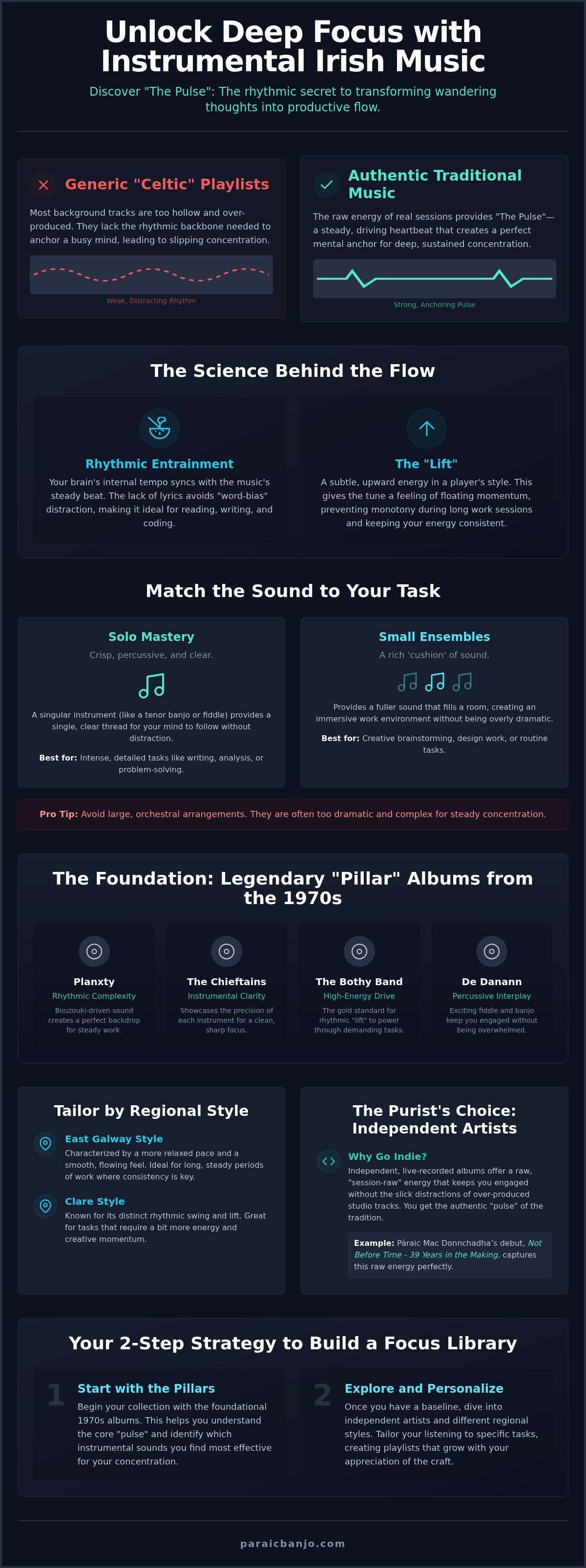
That generic, airy "Celtic" playlist you found online is likely the reason your concentration is slipping. Most background tracks are too hollow to hold your attention; they lack the rhythmic backbone needed to actually anchor a busy mind. When you search for instrumental irish music for focus, you aren't just looking for pleasant noise. You're looking for the "pulse." It's that steady, driving heartbeat found in authentic traditional sessions that transforms wandering thoughts into a sharp, productive flow.
Table of Contents
Why Instrumental Irish Music is the Ultimate Tool for Focus
Traditional Irish music is a melody-driven world where the instruments do all the talking. Instead of lyrics, you have intricate patterns of notes that weave a story. This makes it a powerhouse for anyone seeking instrumental irish music for focus. Unlike pop songs that pull your brain toward vocal hooks, these tunes provide a steady stream of sound that stays out of your way while keeping your mind sharp. It's a joy to share these melodies that have been passed down through generations, serving as a constant, reliable companion for the busy mind.
The secret lies in what we call "The Pulse." It's that driving, heartbeat-like rhythm found in a real session. Many people settle for generic, airy "Celtic" tracks that feel thin or over-produced. Those tracks often lack the grounding energy needed for deep work. Authentic, "session-raw" recordings have a grit and a steady tempo that creates a flow state, helping you stay in the zone for hours. It’s that raw energy I captured in the 18 tracks of my album, Not Before Time - 39 Years in the Making. Whether you choose the physical CD or the digital album, you're getting a definitive statement of a lifetime's passion for the craft.
The Science of the Pulse and Cognitive Flow
When you listen to reels or jigs, your brain experiences something called rhythmic entrainment. This is where your internal cognitive tempo syncs up with the beat of the music. Because there are no lyrics, you avoid "word-bias" distraction, which is vital when you're reading or writing. A key element here is the "Lift." In the History of Irish Traditional Music, lift refers to that subtle, upward energy in a player's style. It’s the difference between a tune feeling like a heavy march and one that feels like it’s floating. This upward momentum prevents the music from feeling monotonous during long study sessions.
Solo Mastery vs. Ensemble Energy
Choosing the right arrangement is a practical step for your productivity. A solo instrument, like the crisp, percussive strike of a tenor banjo, offers a singular thread for your mind to follow. It’s why I focused on pure East Galway and Clare styles for my own recordings; they prioritize clarity and rhythm. Small ensembles can also work well, providing a "cushion" of sound that fills a room. However, if you want to maintain a sharp environment, avoid big orchestral arrangements. They tend to be too dramatic for steady concentration. Stick to independent artists who value the "session-raw" feel and the authentic pulse of the tradition.
Actionable Tip: When building your library, look for tracks described as having a steady "lift." This ensures the instrumental irish music for focus keeps your energy levels consistent without becoming a distraction. You can even start by exploring individual digital tracks to see which instrument speaks to your focus style best.
The Foundation: Legendary Instrumental Albums for Your Collection
To truly understand why instrumental irish music for focus works so well, you have to go back to the giants of the 1970s. These aren't just dusty relics; they are the foundational blueprints that defined the modern "pulse." I've spent nearly forty years immersed in these sounds, and I can tell you that the energy captured on these records is exactly what your brain needs to find its flow. It's a journey I've lived personally, culminating in my own debut recording after decades of development.
Planxty’s self-titled debut, released in 1973, is essential listening. It introduced a bouzouki-driven rhythmic complexity that creates a perfect backdrop for steady concentration. If you prefer precision, The Chieftains (specifically their first four albums) showcase the incredible clarity of traditional instruments. For those days when you need a high-energy drive to power through a task, The Bothy Band remains the gold standard for rhythmic "lift." Finally, De Danann’s recordings highlight the percussive, exciting interplay between the fiddle and the tenor banjo that keeps the listener engaged without being overwhelmed.
Why These 70s Classics Still Work in 2026
In 2026, we see a massive trend toward "raw" and authentic production. Modern listeners are tired of over-produced tracks and are seeking the live-session feel these albums mastered decades ago. These records established the repertoire of tunes we still play in every corner of Ireland. For a solid Introduction to Traditional Irish Music and its core instruments, these foundational albums are your best teachers. Actionable Tip: Start your morning focus session with Planxty to establish a steady, grounding rhythm that lasts all day.
The Tenor Banjo as a Lead Voice
The 1970s marked a turning point for the tenor banjo. It evolved from a loud background instrument into a soulful, melodic lead. This shift influenced every solo banjo player who came after, including myself. The banjo's crisp, percussive strike provides a clear mental thread that's easy to follow while working. You can hear how this tradition continues in the rhythmic tenor banjo style featured on my debut album. It’s a sound that feels both historic and perfectly suited for modern life. If you want to bring this legendary energy into your own workspace, consider adding the digital album to your collection for a direct connection to this storied tradition.
Regional Styles: Using East Galway and Clare Music for Deep Work
Finding the right instrumental irish music for focus often means looking past generic playlists and toward specific regional dialects. Ireland's musical map is diverse. Styles from the West, specifically East Galway and Clare, carry a different weight and rhythm than the more percussive styles found in other parts of the country. I spent decades studying these differences before recording a single note. This deep dive into tradition is what gives a recording its "pulse," that steady anchor your brain needs when the work gets tough. My debut album, Not Before Time - 39 Years in the Making, is built on these very foundations.
The Soul of East Galway
East Galway is famous for its relaxed tempo and lyrical melodies. If you're looking for a sound that feels like a steady conversation, this is it. Legendary composers like Paddy Fahy have defined this region with "lonesome" tunes that are haunting yet grounded. This slower pace is superior for long focus sessions because it doesn't rush the listener. It provides a calm, consistent atmosphere that allows for deep thought. For a deeper look at the technical differences in these rhythms, you can explore my East Galway vs Clare music guide. You'll find that the East Galway banjo style, which I've championed for nearly forty years, is particularly well-suited for this kind of mental clarity.
Authenticity in the Repertoire
To understand the cultural weight behind these styles, it helps to ask, What is Irish Traditional Music? beyond just the notes on a page. Purists like us look for heritage tunes. These are melodies that belong to specific families or small townlands, preserved through generations. When you listen to a solo album dedicated to these regional sounds, you're hearing a story of preservation. Soulful playing is always better than sheer speed. A musician who understands the "lift" of a tune will help you maintain your own energy levels far better than a player who is just trying to show off their fingers. I've always believed that the music should serve the listener, creating a shared space of tradition and focus.
Actionable Tip: Match your music to your task. Choose East Galway recordings when you need "calm focus" for reading or complex problem-solving. Switch to Clare recordings, with their rhythmic swing, when you need "high-energy productivity" to power through a deadline. You can find both styles represented across the 18 tracks of my digital album, making it a versatile tool for your workday.
Modern Masterpieces: Why Independent Artists are the Purists Choice
While algorithm-driven playlists are convenient, they often miss the hidden gems that define the true spirit of the tradition. For anyone seeking authentic instrumental irish music for focus, independent releases are the gold standard. Buying direct from the artist doesn't just support the music; it preserves the specific regional styles that might otherwise be smoothed over by a major label. It's a way of ensuring that the "pulse" remains raw and real, providing a steady rhythmic anchor that helps you stay in the zone. My own journey as an independent artist led to a project I've carried in my heart for nearly four decades.
A Case Study in Authenticity: Not Before Time
My debut album, Not Before Time - 39 Years in the Making, was born from a desire to capture the exact energy of a live session. We used a "live in studio" recording method. This means there was no over-dubbing, which is the technical term for adding extra instrument layers after the initial recording. Instead, we played together in the same room. This captures the micro-adjustments and the shared lift that only happen when master musicians react to each other in real time. For focus, this creates a "session-raw" energy that feels alive rather than sterile. With 18 tracks of pure East Galway and Clare style, it offers a depth of patience and experience that you simply won't find in modern "pop trad" releases.
Actionable Tip: When you're evaluating modern albums to add to your library, look for "live" recording credits in the liner notes. This usually indicates a more authentic sound that avoids the distracting, overly-polished feel of many studio-heavy productions.
The Power of the Independent Debut
Independent, artist-led projects often boast superior sound quality because the musician is involved in every technical decision. We aren't just picking the most "catchy" tunes; we are choosing the ones with the most cultural weight and historical significance. There is a deep sense of relief and celebration in finally putting a lifetime of work onto a disc. It's a definitive statement of passion. If you want a collection that feels like a storied musical tradition rather than a digital storefront, independent releases are the way to go. You can Order Not Before Time here to experience this tradition for yourself, whether you prefer a physical CD or a digital album.
How to Build Your Instrumental Irish Music Library
Building a personal collection of traditional tunes is a journey that never truly ends. It's about more than just filling a shelf or a hard drive; it's about finding the specific "pulse" that resonates with your own rhythm of work. If you are curating instrumental irish music for focus, you want a library that offers both grounding stability and a spark of creative energy. I've spent my life navigating this storied musical tradition, and I've found that a structured approach helps you find the most authentic recordings without getting lost in the hollow, generic stuff.
Step 1 is to start with the "Pillars." These are the legendary 70s albums we discussed earlier that provide the blueprint for modern arrangements. Once your ear is grounded, move to Step 2: Follow the Instrument. If the crisp strike of the banjo or the lyrical flow of the fiddle speaks to you, seek out specialized solo albums. Step 3 is vital: prioritize liner notes. They are the "map" to the history and regional styles. Step 4 is to support the source by buying directly from the artist. Finally, Step 5 is to listen for the story. Learning the names of the tunes creates a deeper connection to the music, making it feel more like a companion than just background noise.
The Physical CD vs. Digital Download Debate
Purists often prefer traditional Irish session music CDs for their high-fidelity sound and the physical connection to the artist. My own debut, 18 tracks of pure East Galway and Clare style, includes detailed historical notes that you just can't get with a streaming link. However, digital downloads offer immediate access for focus sessions when you need to get to work right away. Whether you choose the physical CD or the digital album, you're getting a definitive statement of a lifetime's passion that helps preserve our culture.
Evaluating Authenticity in New Music
When you're looking for new additions, use the "30-second test." Can you feel the rhythmic pulse in your feet immediately? If the music feels airy or lacks a steady beat, it likely won't help your concentration. Always check the credits to see if the musicians are respected in the traditional session community. For a full checklist on finding genuine recordings, visit our guide on How to Buy Traditional Irish Music. Building a library this way ensures the tradition continues and your focus remains unbroken. It’s a joy to invite you into this world. Keep the music playing!
Find Your Rhythmic Anchor in Traditional Mastery
Traditional music isn't just a window into the past; it's a vibrant tool for your present. By choosing the steady "lift" of authentic tunes over hollow background noise, you've unlocked a secret to deeper concentration. You now know that the regional "dialects" of East Galway and Clare offer specific energies, from calm focus to high-energy drive. This journey through instrumental irish music for focus is about more than just sound. It's about preserving a storied tradition while sharpening your own mind.
I've spent 39 years honing my craft to ensure every note carries that essential pulse. My debut project is a definitive statement of that lifetime's passion, featuring 18 tracks of authentic East Galway banjo recorded live with a group of master musicians. Each copy also includes detailed historical liner notes to deepen your understanding of the tunes. It’s a joy to share this work with you at last.
I'm thrilled to invite you into this community of listeners and purists. Start your collection today and feel the difference that real tradition makes in your daily flow. Keep the music alive!
Frequently Asked Questions
What makes instrumental Irish music good for focus?
Instrumental irish music for focus works because it lacks vocal tracks that can pull your attention away from reading or writing. The repetitive nature of reels and jigs mimics rhythmic entrainment, which helps your brain sync with a steady beat. This "pulse" acts as a mental anchor. For the best results, look for recordings with a steady "lift," which is the subtle upward energy in a player's style that keeps your momentum consistent throughout the day.
What is the "East Galway style" of banjo playing?
The East Galway style is characterized by a slower, more deliberate pace and "lonesome" melodies. Unlike faster session styles, it prioritizes a relaxed flow and lyrical expression. I've spent nearly forty years honing this specific approach, which you can hear on my 18-track album. It’s perfect for concentration because it doesn’t rush the listener. If you want to try it, start with a single digital track to see how the relaxed rhythm fits your workflow.
Why should I buy music directly from the artist?
Buying directly ensures that independent projects can continue to preserve rare regional styles. When you choose the physical CD or digital album from an artist's own storefront, you're bypassing big algorithms that often overlook niche traditional mastery. This direct connection helps maintain the "session-raw" energy that purists love. It also gives you access to more detailed materials, like the historical notes I included with my debut to help listeners understand the tunes' origins.
Are modern Irish instrumental albums as good as the classics from the 70s?
Absolutely, provided they avoid over-production. Many modern artists are returning to the "live in studio" methods used in the 70s to capture true session energy. My own debut took 39 years to develop because I wanted it to match the depth and patience of those legendary pillars. When you find an album recorded live with expert session musicians, you get a sound that is both historically grounded and perfectly suited for modern focus needs.
What are liner notes and why are they important for collectors?
Liner notes are the booklets or digital files that provide the "map" to an album's contents. They include the history of the tunes, the names of the composers, and technical details about the regional styles. For collectors, these notes turn an album into an educational resource. I made sure to include extensive notes with my debut so that every listener can feel like a collaborator in the tradition, understanding the storied history behind each of the 18 tracks.
Can I learn the history of Irish music just by listening to instrumental albums?
Listening is the most traditional way to learn, as this is an oral culture. By immersing yourself in instrumental albums, you begin to recognize the "dialects" of different counties and the families who preserved specific tunes. To deepen your knowledge, use the liner notes to look up the names of tunes. This helps you build a mental library of the tradition. It's a great way to turn your focus sessions into a cultural journey through Ireland’s musical heritage.
What is the difference between "Celtic" and "Traditional Irish" music?
"Celtic" is often a generic, commercial term for airy, atmospheric music that can feel hollow. In contrast, Traditional Irish music is a specific, melody-driven folk tradition with a defined rhythmic backbone. Purists prefer traditional recordings because they have the "pulse" and "lift" needed for genuine engagement. If you want instrumental irish music for focus that actually works, skip the generic playlists and look for albums featuring specific instruments like the fiddle, flute, or tenor banjo played in a session style.
Is the tenor banjo a traditional Irish instrument?
The tenor banjo has been a staple in Irish music since it was brought over in the early 20th century. It evolved from a background rhythm instrument into a powerful lead voice. Its crisp, percussive strike makes it excellent for focus because the melody is always clear and easy to follow. You can hear this soulful lead style across my debut album, where the banjo takes center stage alongside other master musicians to create a true session feel.


Comments